- Édouard Bénédictus and the First Patent
- Early Applications and Evolving Threats
- The Inherent Limitations of Traditional Bullet-Resistant Glass
- The Evolution of Security Glazing: Beyond Glass
- The Current Standard: Engineered Retrofit Systems
- Why Today’s Architects Choose Engineered Solutions
- Frequently Asked Questions
Disclaimer: The term ‘bulletproof glass’ is often misleading, as no glass or film combination can completely withstand every physical or ballistic attack. Instead, school and safety officials rely on high-grade bullet-resistant protective glazing and films designed to absorb severe impact, which can help slow, disrupt, or prevent forced entry during active shooter situations and buy vital time for first responders.
The history of security glazing begins not with deliberate engineering but with a fortunate laboratory accident. This event laid the groundwork for a new category of technology, one that has evolved significantly from its revolutionary, yet imperfect, beginnings. Understanding when bulletproof glass was invented and how it has progressed reveals why modern engineered systems are the superior choice for architectural security today.
A Laboratory Mishap in 1903
In 1903, French chemist and artist Édouard Bénédictus was working in his lab when he inadvertently knocked a glass flask from a high shelf. It fell to the floor, and while the glass cracked extensively, the flask did not shatter into pieces. It largely retained its original shape.
Upon inspection, Bénédictus discovered the reason. The flask had previously held a solution of cellulose nitrate, a liquid plastic. As the solvent evaporated, it left a thin, transparent film coating the inside of the glass. This unseen layer was strong enough to hold the fractured glass pieces together, preventing them from scattering.
From a Shattered Flask to a Safety Revolution
While intrigued by the discovery, Bénédictus initially set it aside. The true catalyst for innovation came shortly after, when he read a newspaper account of a car accident detailing the severe injuries a woman sustained from flying shards of a shattered windshield.
Recalling his dropped flask, Bénédictus recognized the life-saving potential of his accidental finding. He envisioned a composite material where a layer of plastic could be sandwiched between two sheets of glass. In an impact, this interlayer would adhere to the glass fragments, holding them in place and preventing a deadly spray of sharp projectiles. This conceptual leap marked the birth of laminated safety glass.
The “Bulletproof” Misnomer
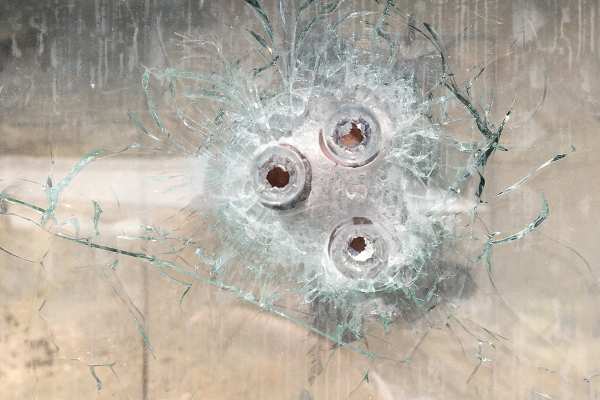
From its inception, this new material was associated with stopping projectiles, leading to the popular term “bulletproof glass.” From a technical and engineering standpoint, however, this term is a misnomer. No transparent glazing material is truly impervious to all ballistic threats under all conditions.
The correct industry term is bullet-resistant glass. This nomenclature accurately reflects the material’s function, which is to resist penetration from a specified caliber of projectile at a certain velocity for a set number of impacts. Modern standards, such as those from UL (Underwriters Laboratories), classify bullet-resistant glazing into different levels of protection. Each level corresponds to the specific type of threat it is engineered to defeat, from small-caliber handguns to high-powered rifles. Understanding this distinction is fundamental to specifying the appropriate level of security for any application.
Édouard Bénédictus and the First Patent
The man behind the invention was more than a chemist. His unique background and persistent efforts transformed a laboratory curiosity into a commercially viable product that launched a new industry focused on safety and security.
Who Was Édouard Bénédictus?
Édouard Bénédictus (1878–1930) was a man of diverse talents, working as a painter, writer, composer, and chemist. This blend of artistic sensibility and scientific curiosity positioned him perfectly to not only invent laminated glass but also to appreciate its potential applications beyond the purely functional.
The Science of Triplex Glass
Bénédictus refined his initial concept by creating a composite of three layers, which he named “Triplex.” This involved a simple but effective sandwich construction:
- Outer Layers: Two sheets of conventional plate glass.
- Interlayer: A single sheet of cellulose nitrate plastic.
These layers were bonded together under heat and pressure using a hydraulic press. The resulting panel appeared as a single, clear sheet of glass, but the cellulose nitrate interlayer provided the critical function of absorbing impact energy and holding the glass together upon fracture. While revolutionary, this early formulation had inherent drawbacks. Cellulose nitrate was prone to discoloration, often turning yellow and hazy with sun exposure, and the lamination process was difficult to perfect, which compromised optical clarity.
The 1909 Patent and the Birth of an Industry
Bénédictus filed for a patent for his invention in 1909, and the Triplex Safety Glass company was formed. Initially, the automotive industry was slow to adopt the new material due to its higher cost. The first major application came with the outbreak of World War I, where Triplex glass was used for the lenses of gas masks and the windshields of military vehicles.
This wartime adoption demonstrated the material’s protective value on a large scale. After the war, its use gradually expanded into the civilian automotive market, cementing its role as a foundational safety feature and creating the basis for the modern security glazing industry. Yet, the heavy, thick, and aesthetically imperfect nature of this early glass highlighted the significant compromises required for protection, a challenge that would drive innovation for the next century.
Early Applications and Evolving Threats
While the discovery was accidental, its application was strategic. The initial laminated safety glass offered a revolutionary improvement in resisting impact and preventing dangerous fragmentation. Its value was quickly recognized in environments where a shattered pane of glass was a life-threatening liability.
World War I: The First Large-Scale Test
The battlefields of World War I provided the first high-stakes testing ground for laminated glass. The material was incorporated into the eyepieces of gas masks, protecting soldiers from chemical agents without the risk of glass shards entering their eyes from nearby explosions. It also found use in the windscreens of military reconnaissance vehicles and aircraft, where it could withstand minor impacts and vibrations that would shatter ordinary glass.
The Gangster Era: A New Defense for Banks
Following the war, the technology migrated from military to civilian use, driven by a new domestic threat. The Prohibition era in the United States saw a rise in organized crime and violent bank robberies. In response, financial institutions and operators of armored transport vehicles began installing thick, multi-layered laminated glass as a new line of defense against common handguns and rifles of the period.
A Symbol of State-Level Protection
The ultimate endorsement of the technology came from its adoption for the protection of government leaders. After the 1933 assassination attempt on President-elect Franklin D. Roosevelt, the U.S. government commissioned specialty vehicles outfitted with thick, laminated security glass and armored plating. This established a new standard for VIP protection, making bullet-resistant glazing an essential component in the vehicles of presidents, diplomats, and monarchs worldwide.
The Inherent Limitations of Traditional Bullet-Resistant Glass
Despite its life-saving applications, traditional bullet-resistant glass was a product of compromises. Its effectiveness in stopping projectiles came at a significant cost to optical quality, structural integration, and architectural aesthetics. These limitations created persistent challenges for engineers and architects.
The Compromise of Clarity
The primary function of a window is to provide a clear view, and this is where early bullet-resistant glazing most notably failed over time. The materials were prone to degradation that severely impacted visual clarity.
- Delamination: The adhesive interlayers, first made from cellulose nitrate and later early forms of polyvinyl butyral (PVB), would fail. Exposure to moisture and temperature fluctuations caused the layers of glass and plastic to separate, creating bubbles and clouding that obscured the view.
- Yellowing: The plastic interlayers were highly susceptible to UV degradation. Sunlight caused a chemical reaction that turned the clear plastic a distinct, unattractive yellow or brown, permanently tinting the window.
- Visual Distortion: The sheer thickness required for ballistic protection, often involving many layers of glass, created noticeable optical distortion. Looking through the glass could be like looking through a thick lens, with bent lines and a distorted perception of the outside world.
The Burden of Weight
To achieve a meaningful level of ballistic resistance, traditional glazing assemblies had to be incredibly thick and dense. A single square foot of Level 3 bullet-resistant glass can weigh over 30 pounds. This immense weight introduced significant engineering problems, requiring substantial reinforcement to building structures to support the load. Door hinges, window frames, and surrounding walls had to be custom-engineered to handle the stress, increasing construction complexity and cost.
The Aesthetic Sacrifice
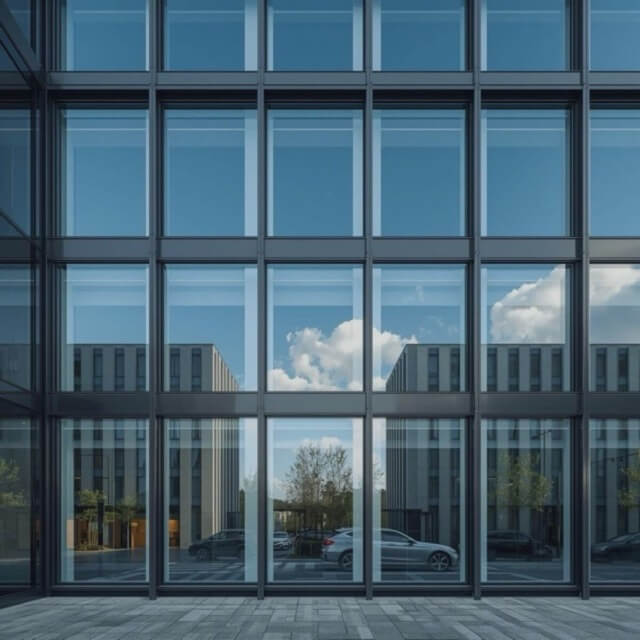
For an architect, security cannot come at the expense of design intent. Traditional bullet-resistant glass presented a near-insurmountable obstacle. The material was not a seamless component but an obtrusive, fortress-like element that dictated the design around it. The required thickness resulted in deep, bulky frames that ruined the clean lines of a modern facade. Instead of providing invisible protection, the glass announced its presence, often communicating a message of fear rather than one of elegant security.
The Evolution of Security Glazing: Beyond Glass
The limitations of glass itself, its weight, brittleness, and thickness requirements, drove engineers to seek superior alternatives. The mid-20th century marked a turning point with the commercialization of new polymers that would redefine the capabilities of security glazing.
Introducing Polycarbonate: A Lighter, Stronger Alternative
The advent of polycarbonate in the 1950s was a pivotal moment in the evolution of security glazing. As a thermoplastic polymer, polycarbonate offers an exceptional strength-to-weight ratio, possessing up to 250 times the impact resistance of glass at a fraction of the weight. This breakthrough allowed for the creation of security glazing that was not only more effective against ballistic and forced entry threats but also substantially lighter and thinner. Unlike glass, which shatters, polycarbonate is ductile. It can deform and absorb a significant amount of kinetic energy without failing, making it a far more resilient barrier.
Multi-Layered Composites for Advanced Threat Mitigation
While polycarbonate offered superior impact resistance, it lacked the surface hardness of glass. The next logical step was to combine these materials, creating multi-layered composites that capitalized on the strengths of each component. These advanced composites typically feature layers of glass, polycarbonate, and specialized bonding interlayers.
This move toward composite construction marked a fundamental change in philosophy. Early bullet-resistant glass relied on brute force, using immense thickness and mass to stop a projectile. Modern security glazing, however, is designed around the principle of engineered energy dispersion. When a projectile strikes a modern composite panel, the energy is managed in a sequence. The outer glass layer shatters, absorbing initial energy and deforming the bullet. The flexible interlayer and ductile polycarbonate core then absorb the remaining kinetic force, dispersing it across a wider area.
The Current Standard: Engineered Retrofit Systems
The evolution of materials and engineering principles has culminated in today’s leading solution: engineered retrofit security glazing systems. These systems move beyond the concept of a “bulletproof window” to offer a holistic security upgrade that integrates with a building’s existing structure and preserves its design intent.
What Are Retrofit Security Glazing Systems?
A retrofit security glazing system is a complete, engineered assembly installed over a building’s existing window or door glass. It is not merely a film or a simple sheet of plastic. Instead, it is a secondary, sacrificial system composed of a security glazing panel, a patented anchoring frame, and a separating air gap. This approach eliminates the need for a highly disruptive and costly full “rip-and-replace” of the primary windows.
The Advantage of an Engineered System
Simple lamination is a component-level solution. The true measure of a modern security system lies in its holistic engineering. Patented retrofit systems are designed from the ground up to function as an integrated unit. The framing system is a structural anchor designed to transfer impact loads from the glazing panel into the building structure itself. The specified air gap between the existing glass and the security panel allows the system to flex and absorb energy without transmitting damaging force to the primary window. This system-level design is what separates a truly engineered solution from a simple piece of transparent armor.
Preserving Design Intent and Aesthetics
For architects and building owners, the primary failing of traditional security glazing was its aesthetic compromise. Engineered retrofit systems resolve this conflict.
- Optically clear polycarbonate ensures maximum light transmission and a view free of distortion or coloration.
- Because the system is installed over existing windows, the original sightlines and facade details are preserved.
- Patented framing can be customized to blend seamlessly with existing window mullions, making the system virtually invisible.
The result is a security solution that respects the architect’s original design. It provides a formidable barrier against forced entry and other threats without compromising the building’s aesthetic, proving that modern security and sophisticated design are no longer mutually exclusive.
Why Today’s Architects Choose Engineered Solutions
While the invention of laminated safety glass was a critical step forward, its direct application as “bulletproof glass” created a legacy of architectural compromises. Today, leading architects and security specifiers overwhelmingly favor modern, engineered systems that provide comprehensive security without sacrificing design.
Overcoming Weight and Thickness
The most prohibitive drawback of historical ballistic glass is its physical mass. Achieving a UL 752 rating required thick, heavy panels that had cascading consequences for building design. Window frames and curtain walls needed heavy reinforcement, driving up costs and complexity. The thickness of the glazing distorted light and reduced clarity. Modern systems, by contrast, utilize advanced materials like polycarbonate and sophisticated anchoring to provide superior protection at a fraction of the weight and thickness.
Integrating Security Invisibly
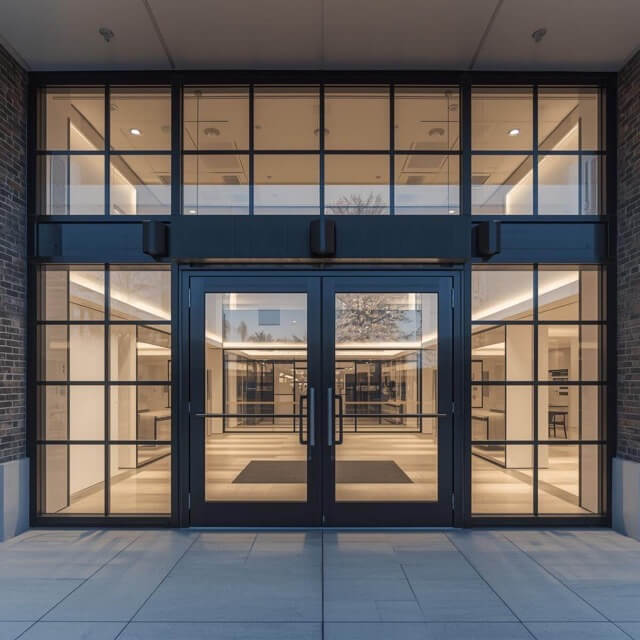
Traditional ballistic glass forced a direct conflict with design vision, demanding that security be overt and disruptive. Installing these heavy panels was a “rip and replace” operation. This is where engineered retrofit security glazing represents a paradigm shift. Systems designed to be installed over a building’s existing windows and doors offer several key advantages for architectural integration.
- They preserve the original glass and framing, leaving the building’s exterior aesthetic unchanged.
- The security component is a discrete, independently anchored system, creating a protective buffer without stressing the existing window assembly.
- Installation is far less disruptive and costly than a full replacement.
This method effectively renders the security solution virtually invisible, allowing architects to add robust protection without compromising the clean lines, historical character, or intended transparency of their designs.
Expanding Protection Beyond Ballistics
The term “bulletproof” created a narrow perception of security. Early ballistic glass was engineered for a single purpose and was often brittle against other common threats. Modern security glazing is engineered for a multi-hazard world. The focus has shifted from single-threat resistance to comprehensive threat mitigation against a wider spectrum of risks.
- Forced Entry: The polycarbonate and polymer construction of modern systems can absorb and dissipate immense energy from repeated impacts by tools, preventing entry.
- Ballistic Threats: These systems are tested and rated to defeat specific ballistic threats with far more efficient and lightweight materials than traditional assemblies.
- Blast Mitigation: Engineered retrofit systems are designed to contain fragmentation from a blast, keeping the original glass in its frame and protecting building occupants from high-velocity shards.
By addressing a wider range of realistic threats, these engineered solutions provide a more practical and effective security posture. They allow architects to specify a single system that protects against the most probable risks, from smash-and-grab crime to active assailant events.
Frequently Asked Questions
When was bulletproof glass invented?
The foundational technology for bullet-resistant glass, known as laminated safety glass, was invented by French chemist Édouard Bénédictus in 1903 after a laboratory accident. He filed for a patent in 1909, and its first major application was during World War I.
Is bulletproof glass actually bulletproof?
No, the term “bulletproof glass” is a misnomer. The correct industry term is “bullet-resistant glass.” No glazing is completely impervious to all ballistic threats. Materials are rated to resist a specific number of impacts from a specific caliber of projectile, as defined by standards like UL 752.
What is the difference between traditional bullet-resistant glass and modern retrofit systems?
Traditional bullet-resistant glass consists of thick, heavy, multi-layered panels of glass and polymer that replace existing windows. This method is costly, structurally demanding, and often compromises aesthetics. Modern retrofit systems are engineered assemblies, typically using lightweight polycarbonate, that are installed over existing windows. They offer comprehensive protection against multiple threats while being virtually invisible and preserving the building’s original design.
Why is polycarbonate used in modern security glazing?
Polycarbonate is a thermoplastic polymer with up to 250 times the impact resistance of glass at a much lower weight. Unlike glass, which shatters, polycarbonate is ductile and can absorb and dissipate immense kinetic energy from ballistic or forced-entry attacks without failing. This makes it a lighter, thinner, and more resilient material for modern security applications.