- The Liability of a Misleading Term
- Bullet Resistant: The Correct Engineering Terminology
- An Introduction to UL Standard 752
- Component vs. System: The Physics of Fenestration Security
- The Superiority of Retrofit Security Glazing Systems
- Integrating Ballistic Protection Without Sacrificing Aesthetics
- Conclusion: Embracing Engineered Fenestration Security
- Frequently Asked Questions
The term bullet proof window glass is pervasive in popular culture and preliminary security discussions. From an engineering and risk-mitigation standpoint, however, it is a dangerously misleading misnomer. Relying on this simplistic concept creates vulnerabilities that a properly engineered system is designed to eliminate. True security begins with a precise understanding of the materials, the threats, and the integrated nature of a protective assembly.

The Liability of a Misleading Term
In the world of material science and ballistic engineering, nothing is truly “proof.” Every material has a failure point. The term “bullet proof” implies absolute, unconditional protection against any projectile, which is a physical impossibility. This fallacy encourages a checklist approach to security, where installing a single product is mistaken for a comprehensive solution.
This misconception can lead to catastrophic failures. A building owner who believes they have installed “bullet proof” windows may overlook critical vulnerabilities in the window frame, the anchoring system, or the surrounding wall structure. An attacker does not need to defeat the glass if the entire window assembly can be dislodged from its opening with minimal effort. Using this ambiguous term in project specifications can also create significant liability, as it lacks the specificity required for professional due diligence. Engineers, architects, and security consultants must instead rely on precise, standardized language that defines a system’s performance against a known, quantified threat.
Bullet Resistant: The Correct Engineering Terminology
The correct and professionally accepted term is bullet resistant. This language is fundamentally different because it is conditional. It signifies that a material or, more accurately, a complete system has been tested and proven to resist a specific type of projectile for a specific number of shots under controlled laboratory conditions.
This distinction is not mere semantics. It is the core of responsible security design. “Resistant” acknowledges that different threats require different levels of protection. A system designed to stop rounds from a 9mm handgun will not perform the same against a high-powered rifle. Using the term bullet resistant forces a more critical conversation about the specific threats a building faces and the appropriate level of protection required. The most significant danger of the “bullet proof” myth is the false sense of security it provides by focusing on a single component, when true ballistic window protection is only achieved when the glazing, frame, and anchoring are engineered to work in concert.
Understanding Ballistic Ratings and UL 752 Rated Windows
To move from ambiguous marketing terms to verifiable security performance, the industry relies on independent testing and certification. For ballistic resistance in the United States, the primary standard is UL 752, a rigorous specification that provides a clear framework for architects and building owners.
An Introduction to UL Standard 752
Underwriters Laboratories (UL) is a global safety certification company that has set standards for over a century. UL 752, “Standard for Bullet-Resisting Equipment,” outlines the testing requirements for materials and systems designed to resist ballistic attack. This standard is the benchmark used to rate the protective capabilities of windows, doors, and other security barriers. A UL 752 rating provides objective, third-party validation that a product performs as specified.
Decoding the Levels: From Handguns to High-Powered Rifles
The UL 752 standard is organized into different levels, each corresponding to a specific ballistic threat. This tiered system allows for the precise matching of a security solution to the anticipated risk level. Some of the most commonly specified levels for architectural applications include:
- UL Level 1: Resists three shots from a 9mm full metal copper jacket with lead core.
- UL Level 2: Resists three shots from a .357 Magnum jacketed lead soft point.
- UL Level 3: Resists three shots from a .44 Magnum lead semi-wadcutter gas checked.
- UL Level 8: Resists five shots from a 7.62mm rifle lead core full metal jacket, often specified for high-risk government and corporate facilities.
The Science of Testing
Achieving a UL 752 rating involves a stringent and repeatable testing protocol. A sample of the security system is installed in a test fixture as it would be in a real-world building. A specific firearm, calibrated with specific ammunition, is fired from a set distance. For a test to be successful, two primary conditions must be met. First, the projectile cannot penetrate the sample. Second, no fragmentation or spalling from the interior surface can occur. This criterion is critical for occupant safety, as high-velocity fragments can be as lethal as the bullet itself.
Why the Rating Applies to the System, Not Just the Glazing
This is the most critical takeaway for any architect or building owner. A UL 752 rating is not awarded to a piece of glass in isolation. It is awarded to the entire tested assembly or system, which includes the security glazing, the framing that holds it, the seals, and the hardware. When a manufacturer states their window system is one of the UL 752 rated windows, it means the entire assembly successfully withstood the test protocol. Simply purchasing a UL-rated glazing panel and installing it into a generic frame does not create a UL-rated opening. This fact underscores the necessity of a holistically engineered system.
Component vs. System: The Physics of Fenestration Security
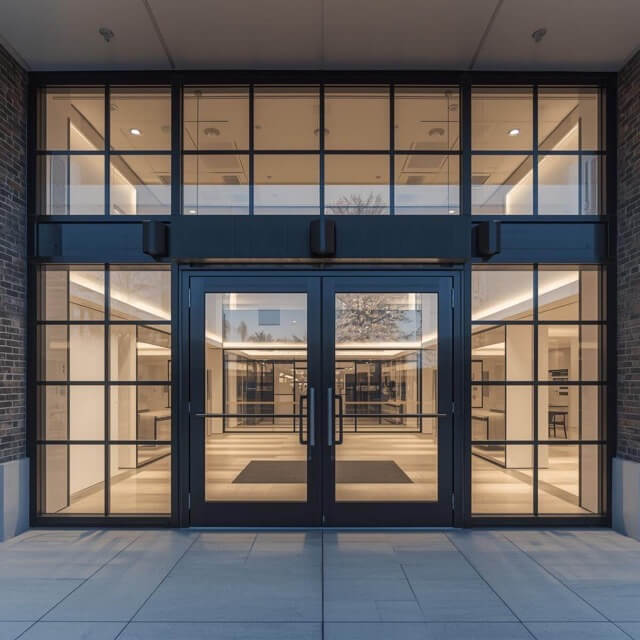
True ballistic protection is not achieved by a single component but by an engineered system where every part works in concert. A ballistic-rated window assembly is only as strong as its weakest link. When a projectile strikes, its kinetic energy does not simply vanish. The glazing absorbs and dissipates a tremendous amount of force in a fraction of a second. If the surrounding assembly is not engineered to manage this energy transfer, the system will fail, even if the glass itself does not break.
The Weakest Link: How Standard Frames Fail
Standard commercial window frames are designed for wind loads and thermal performance, not ballistic impacts. When a ballistic-rated glazing panel successfully stops a projectile, the force is transferred directly into the frame that holds it. This sudden, massive load can lead to several catastrophic failure modes:
- Frame Deformation: The frame can bend, twist, or rupture, creating a gap or causing the glazing to fall out.
- Anchor Failure: The fasteners holding the frame to the wall can be ripped from the surrounding substrate.
- Complete Dislodgement: The entire window assembly can be violently blown into the building, creating a massive breach.
The Inadequacy of Glass-Only Replacement
A common but deeply flawed approach to security upgrades is the simple replacement of an existing glass unit with a heavy piece of ballistic glass. This method completely ignores the critical role of the framing and anchoring. The original frame was never engineered to support the increased weight of ballistic glazing, let alone the dynamic forces of an attack. When an impact occurs, the standard frame remains the point of failure. The ballistic glazing will perform its function, but the frame will give way, leading to a complete breach of the building envelope.
The Superiority of Retrofit Security Glazing Systems
Recognizing the weaknesses of glass-only solutions and the high cost of full replacement projects, engineering has shifted to a more intelligent approach: the retrofit security glazing system. This method provides comprehensive, tested protection while preserving the building’s original design and operational continuity.
A retrofit security glazing system is an engineered, ballistic-rated assembly designed to be installed on the interior of an existing window. It functions independently of the original window, which is left untouched. The system consists of ballistic-rated glazing captured in a robust framing system that is anchored directly into the building’s structural supports.
The Patented Engineering of the BulletShield System
The BulletShield system represents the pinnacle of this retrofit philosophy. Its patented design utilizes a proprietary extruded aluminum frame that is precisely anchored to the structure around the window opening. This frame is designed to secure a panel of bullet resistant glazing, typically a glass-clad polycarbonate composite.
Crucially, the entire system is mounted on the interior side of the glass line. From the exterior, the building’s appearance is completely unchanged. The original facade, sightlines, and architectural details are perfectly preserved. On the interior, the slim-profile frame is designed to be as unobtrusive as possible, often appearing as a deliberate part of the existing window trim. This “virtually invisible” integration provides a level of security that does not force a choice between safety and design.
How Retrofit Systems Manage Impact Forces
A key engineering advantage of a retrofit system like BulletShield is its ability to create a new, superior load path for impact forces. When a projectile strikes the ballistic glazing, the energy is absorbed and transferred through the robust BulletShield frame directly into the building’s structural columns. This process completely isolates the original, vulnerable window from the ballistic event. The existing frame is not required to handle any impact energy, preventing it from failing.
The glazing used in these advanced systems is a sophisticated composite known as glass-clad polycarbonate (GCP). This multi-layered laminate is engineered for maximum performance. An exterior glass layer deforms the bullet, inner polycarbonate layers absorb its energy, and an interior glass layer provides scratch resistance and protects occupants from spall.
Integrating Ballistic Protection Without Sacrificing Aesthetics
Modern, engineered retrofit systems render the compromise between security and design obsolete. By shifting the focus from replacing glass to reinforcing the entire window opening from the interior, it is now possible to achieve formidable levels of security that are, for all practical purposes, invisible.
The central dilemma for any architect tasked with integrating security is the perceived trade-off with design. The conventional image of ballistic protection involves thick glass with a distinct greenish tint, housed in bulky, industrial frames. An engineered retrofit system dismantles this dilemma. By decoupling the security layer from the exterior building envelope, the solution respects the original design, eliminating the need for aesthetic compromise.
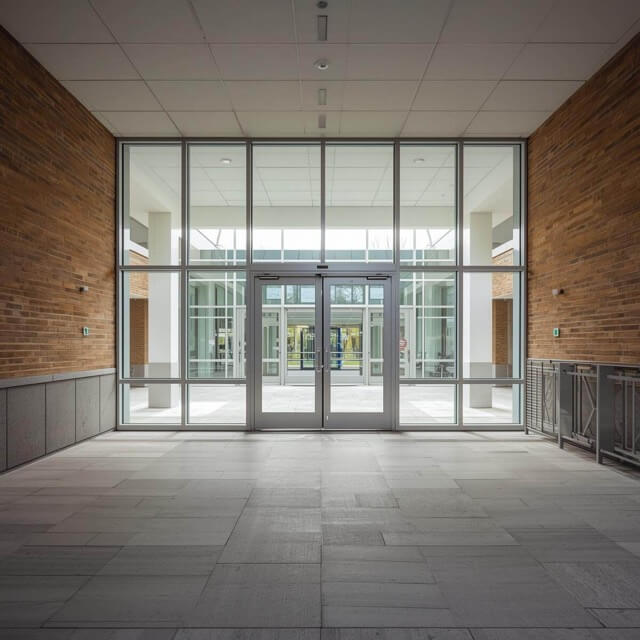
The key is the over-glazing, or back-glazing, retrofit. From the exterior, the building’s appearance remains unchanged. On the interior, the system is engineered for discretion, with a low-profile framing system that can be concealed or designed to align with existing mullions. This preserves original architectural glass and maintains the integrity of the original sightlines, proving that a building does not need to “look” secure to be secure.
Conclusion: Embracing Engineered Fenestration Security
The journey from a superficial understanding of “bullet proof window glass” to a technical appreciation for engineered ballistic systems marks a critical evolution in architectural security. True threat mitigation is not found in a single product but is achieved through a disciplined, engineering-first methodology that addresses the entire fenestration assembly.
We have established that the performance of the security glazing is only one part of the equation. A UL-rated pane of glass or polycarbonate is rendered ineffective if the system holding it in place fails under ballistic impact. A projectile transfers an immense amount of kinetic energy upon impact, and a holistically engineered approach recognizes that the frame, mullions, and anchorage must be fortified to manage these forces.
For architects, specifiers, and building owners, this requires a new set of criteria for implementing security solutions.
- Move Beyond Product Specifications: Demand a complete window system tested and certified to defeat a specific threat level.
- Evaluate the Complete Opening: A thorough threat assessment must analyze the existing framing and surrounding wall conditions.
- Prioritize Engineered Retrofit Solutions: Patented retrofit systems are purpose-built to reinforce existing fenestration without the architectural compromises of a full replacement.
- Demand Systemic Verification: Insist on test reports that verify the performance of the complete assembly, ensuring all components work in concert.
The perceived conflict between robust security and elegant design is rapidly becoming obsolete. Advanced engineering and innovative retrofit systems prove that safety does not require aesthetic sacrifice. By invisibly reinforcing existing window systems, these solutions preserve the architect’s original vision. This represents the future of architectural security, where protection is not an imposing afterthought but an integrated, unseen layer of resilience, allowing for spaces that are open, welcoming, and uncompromisingly safe.
Frequently Asked Questions
What is the difference between bullet proof and bullet resistant glass?
“Bullet proof” is a misleading marketing term that implies absolute, unconditional protection, which is physically impossible. The correct engineering term is “bullet resistant.” This signifies that a complete window system has been tested and certified by a body like Underwriters Laboratories (UL) to stop a specific type of projectile under controlled conditions.
Can I make my windows bullet resistant by just replacing the glass?
No. This is a common and dangerous misconception. True ballistic protection depends on a complete system. A standard window frame is not designed to handle the weight of bullet resistant glazing or the immense kinetic energy of a ballistic impact. Even if the new glass stops a bullet, the frame will likely fail, causing a complete breach of security.
What does a UL 752 rating mean for a window?
A UL 752 rating certifies that an entire window assembly, including the glazing, frame, and anchoring method, has successfully passed a standardized test against a specific ballistic threat. The rating is not given to the glass alone but to the complete system, ensuring every component works together to provide the stated level of protection.
Will ballistic window protection ruin my building’s appearance?
Not with modern solutions. Advanced retrofit systems like BulletShield are installed on the interior of your existing windows. From the outside, your building’s appearance remains completely unchanged, preserving the original architectural glass and facade. The interior framing is low-profile and designed to be “virtually invisible,” integrating seamlessly without compromising aesthetics or sightlines.