- Understanding UL 752 Ratings from Level 1 to Level 8
- How Threat Assessment Determines the Necessary Protection Level
- The Material Science Behind Ballistic Glazing
- Correlating UL Rating with Material and Fabrication Costs
- Full Replacement vs. Patented Retrofit: The True Impact on Bulletproof Windows Cost
- The Hidden Costs of Full Window Replacement
- The Superior ROI of Retrofit Security Glazing
- Navigating Architectural Complexity and Project Cost
- Conclusion: Reframing the Bulletproof Windows Cost as a Strategic Investment
- Frequently Asked Questions
While the installation method is the largest variable in total project cost, the material composition of the security glazing itself is the next most significant factor. The price of the glazing is directly proportional to its ability to defeat a specific ballistic threat. This capability is standardized and certified through Underwriters Laboratories (UL) 752 ratings, providing a clear, empirical basis for specification and the overall cost of bullet resistant glass.
Understanding UL 752 Ratings from Level 1 to Level 8
The UL 752 standard is the definitive industry benchmark for evaluating the ballistic resistance of materials. It is not a subjective measure but a pass/fail test protocol where a material must withstand a specified number of shots from a specific caliber weapon without penetration. A higher rating indicates resistance to a more powerful ballistic threat. For architects and security specifiers, understanding this hierarchy is fundamental to aligning protection with project requirements and budget.
- UL 752 Level 1: Rated to stop three shots from a 9mm handgun. This is often considered the baseline for protecting against common handguns and is suitable for facilities facing risks of low-level armed robbery or spontaneous violence.
- UL 752 Level 2: Withstands three shots from a .357 Magnum. This level offers increased protection against higher-powered handguns.
- UL 752 Level 3: Protects against three shots from a .44 Magnum, representing a significant step up in stopping power for high-caliber handguns.
- UL 752 Levels 4 through 8: These higher levels are specified for threats from high-powered rifles and automatic firearms. Level 8, for example, is rated to stop five shots from a 7.62mm rifle. These levels are reserved for high-risk government, military, and critical infrastructure facilities.
How Threat Assessment Determines the Necessary Protection Level
Selecting a UL 752 rating is not an arbitrary decision or a matter of choosing the “strongest” option. It is a calculated outcome derived from a formal Threat, Vulnerability, and Risk Assessment (TVRA). This assessment, ideally conducted by a qualified security consultant, analyzes several key factors like asset value, geographic location, historical data, and known threats. The TVRA provides an objective basis for specifying a protection level, such as UL Level 1 for a retail storefront or UL Level 3 for a courthouse lobby. This data-driven approach allows an architect to justify the specification to a client, connecting the chosen solution directly to a defined risk.
The Material Science Behind Ballistic Glazing
Achieving a UL 752 rating relies on advanced material science, primarily involving two categories of transparent armor.
All-Polycarbonate Glazing
Polycarbonate is a thermoplastic polymer renowned for its exceptional impact strength and optical clarity. In ballistic applications, it functions by deforming and absorbing the kinetic energy of a projectile, effectively “catching” the bullet within its layers. Its primary advantage is its light weight relative to its strength, which can reduce the structural load on existing window frames.
Glass-Clad Polycarbonate and Laminated Glass
Laminated security glazing consists of multiple layers of glass bonded together with interlayers of other materials, such as polyvinyl butyral (PVB) or polycarbonate. When struck, the outer glass layers fracture and break apart, distributing the impact energy. The flexible interlayers then absorb the remaining energy and contain the projectile, preventing penetration. This composite structure provides excellent durability and resistance to weathering.
Correlating UL Rating with Material and Fabrication Costs
The correlation between a UL 752 rating and material cost is direct. As the protection level increases, so does the complexity, thickness, and weight of the glazing assembly, which in turn drives up fabrication costs.
A UL Level 1 all-polycarbonate panel may be 0.75 inches thick, while a UL Level 3 panel may be 1.25 inches thick. This increases both raw material cost and the complexity of handling. For laminated glass composites, achieving higher ratings involves adding more layers of glass and more sophisticated interlayers. A UL Level 8 assembly is a massively thick and heavy unit, requiring specialized equipment to fabricate, transport, and install. This intricacy during fabrication is a primary contributor to the material’s per-square-foot price. This material cost is only one piece of the comprehensive financial picture.
Full Replacement vs. Patented Retrofit: The True Impact on Bulletproof Windows Cost
While the properties of security glazing are a vital consideration, the single most impactful decision influencing the total project cost is the installation methodology. The choice between a full window replacement and a retrofit installation creates a significant divergence in budget, timeline, and architectural impact. Focusing on the per-square-foot ballistic glass price alone obscures these far more substantial expenses.
Defining Full Window Replacement
A full window replacement is an exhaustive process that involves the complete removal of the existing window unit, including the frame, sash, and glass. The entire assembly is demolished and extracted from the rough opening in the building’s wall. A new, factory-assembled ballistic-rated window is then installed. These units are engineered as a single, integrated system with ballistic glazing pre-installed in a heavy-duty frame.
Defining Retrofit Security Glazing
A retrofit security glazing system is an over-glazing solution. This method involves installing a new, independent protective shield on the interior or exterior of the existing window. The original glass and frame remain in place, completely undisturbed. This approach creates a secondary protective barrier. The retrofit system is custom-fabricated to fit the exact dimensions of the existing window opening and is anchored directly to the surrounding frame or mullion structure.
The Engineering Behind Patented Retrofit Systems
Advanced retrofit solutions are highly engineered to manage and dissipate violent impact energy. The core components include a protective glazing shield, a custom-extruded aluminum frame, and a patented anchoring mechanism. The frame creates a critical air gap, or standoff, between the existing glass and the new shield. This gap is essential for absorbing attack energy, allowing the shield to flex upon impact without shattering the primary glass. The system is mechanically anchored to the existing window mullions or building structure, transferring the immense kinetic energy of a ballistic impact into the building’s structural frame rather than the weaker original window.
Initial Cost Comparison Deception
When evaluating only material costs, a high-performance ballistic window unit and a patented retrofit system can appear deceptively similar in price per square foot. This narrow comparison is the source of many misguided budget estimations. A client might see two similar quotes and assume the total project costs will be comparable. This is a fundamental error. The true expense of a security upgrade is revealed only when the hidden costs associated with the installation method are properly accounted for.
The Hidden Costs of Full Window Replacement
A bid for a full window replacement often omits numerous ancillary expenses that can dramatically inflate the final project cost. These hidden factors create significant financial and operational burdens that are almost entirely avoided with a retrofit approach.
Demolition, Debris Removal, and Structural Modification
Full replacement begins with invasive, labor-intensive demolition. Old windows become construction debris that must be transported and disposed of, incurring additional fees. Ballistic-rated windows are also substantially heavier than standard commercial windows. This added weight often exceeds the load capacity of the existing wall structure, requiring costly structural modifications like reinforcing the window opening’s head, jambs, and sill. These upgrades are rarely included in the initial window quote but are an absolute requirement for a safe installation.
High Cost of Specialized Installation Labor
Installing a new ballistic window unit is not a task for a standard glazing contractor. The weight and bulk of the units demand specialized crews with experience in heavy-lift installations. This often necessitates cranes, scaffolding, or mechanical lifts, especially for windows on upper floors. The coordination of this equipment and the larger, more specialized teams drive labor costs significantly higher than those for a retrofit installation.
Business Interruption and Operational Downtime
For any active facility, operational downtime is a direct and substantial cost. Full window replacement is inherently disruptive, generating significant noise and dust while leaving a hole in the building envelope. This disruption often forces the closure of entire sections of a building. The resulting financial impact includes lost revenue, the cost of displacing employees, and compromised security during the project. These business interruption costs can easily exceed the material cost of the windows themselves.
Risk of Aesthetic and Architectural Compromise
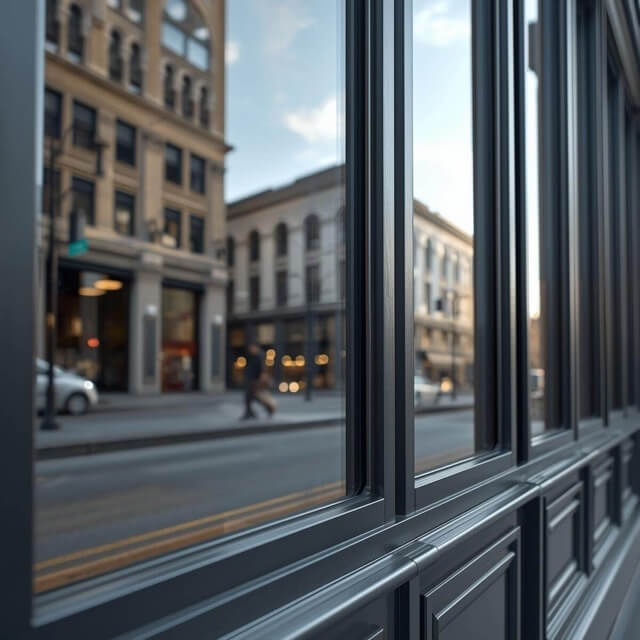
Preserving the original design intent is paramount for architects and building owners. Full window replacement poses a significant threat to a building’s aesthetic integrity. It is often impossible to find a stock ballistic window that matches the sightlines, profiles, and finishes of the original windows, especially in older or unique buildings. The result is a visible and often jarring alteration to the facade. A retrofit system, by contrast, is designed to be architecturally unobtrusive, preserving the original windows and adding robust security that is often nearly invisible.
The Superior ROI of Retrofit Security Glazing
While the upfront cost of materials is a necessary data point, a true financial analysis extends to the total cost of implementation and long-term ownership. When viewed through this lens, the return on investment for retrofit security glazing becomes exceptionally clear, primarily through the dramatic reduction of costs associated with full window replacement.
How Retrofits Reduce Installation Time and Labor Costs
A full-frame window replacement project can extend from days into weeks or months, multiplying labor costs. The project expands to include demolition, removal, disposal, and the work of multiple specialized trades to repair the surrounding wall and finishes.
Retrofit installation, by contrast, is a model of efficiency. The process involves installing a new, discreet ballistic glazing system to the interior of the existing window. The existing window and wall assembly remain untouched, eliminating the cost of demolition and repair. Installation is handled by a single team of specialized technicians, drastically reducing the number of trades required. An installation that would take weeks as a full replacement can often be completed in a matter of days with a retrofit approach, providing significant and predictable cost savings.
Preserving Architectural Integrity and Building Aesthetics
Full-frame ballistic replacements often force a compromise on a building’s invaluable aesthetic and historical character. Modern ballistic frames are typically larger and more utilitarian, and achieving a perfect match for existing profiles is often impossible.
A retrofit solution makes no such demands. Because the security glazing is mounted on the interior side of the glass, the building’s exterior façade remains completely unchanged. The original window frames, sightlines, and architectural details are fully preserved. This approach allows for the seamless integration of modern security performance without sacrificing the architectural vision, a critical consideration for historic properties and facilities with a strong design identity.
Long-Term Value and Multi-Hazard Defense
The value proposition of a retrofit system extends well beyond the initial installation. By adding a second glazing layer, the system creates a new insulating air gap that can significantly improve the window’s thermal performance, leading to measurable reductions in heating and cooling costs.
The same material composition and robust anchoring that defeat a ballistic attack also make the system exceptionally resistant to forced entry. The glazing can withstand sustained assaults from tools like sledgehammers and pry bars, providing critical minutes for law enforcement to respond. This inherent durability provides a multi-hazard defense solution, enhancing protection against blast pressure and impact from wind-borne debris. This transforms a single-purpose expenditure into a comprehensive risk mitigation strategy.
Navigating Architectural Complexity and Project Cost
A building’s unique architectural characteristics are a primary driver of final project cost. A successful security implementation depends on a system’s ability to adapt to the building’s specific conditions. Here, the flexibility of a retrofit solution provides a distinct advantage over the rigid constraints of full-frame replacement.
Historical Buildings and Preservation Requirements
Historical buildings present the most stringent challenges. Preservation standards often strictly prohibit alterations to the exterior façade and original windows, making full-frame replacement impossible. Retrofit systems are uniquely suited for these environments. Following a detailed assessment, often involving 3D laser scanning to capture precise geometries, a custom system can be engineered. This system is installed from the interior with minimal physical impact, anchoring discreetly to existing structural elements.
Curtain Walls and Modern Facades
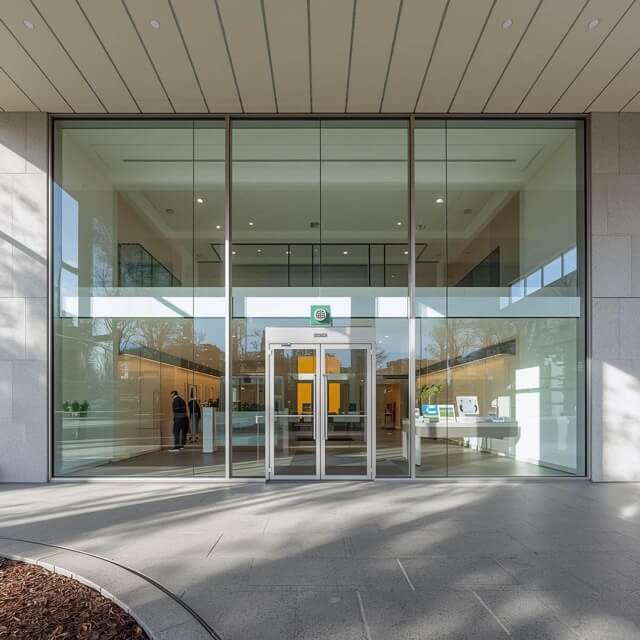
Modern glass curtain wall systems present a different set of engineering challenges. An engineered retrofit system addresses this by using custom anchoring mechanisms that attach directly to the vertical and horizontal mullions. This ensures that the immense load from a ballistic or forced-entry impact is safely distributed across the robust structural grid, maintaining the integrity of the overall facade. Replacing curtain wall sections with ballistic-rated units is logistically complex and prohibitively expensive.
Custom Window Shapes, Sizes, and Frames
Architectural designs featuring non-standard window shapes, such as arches or circles, can cause costs to spiral with a full-replacement approach. Fabricating custom-shaped ballistic-rated windows is a highly specialized and expensive process. A retrofit strategy simplifies this complexity. The retrofit glazing is independent of the exterior frame and can be precision-cut to match any shape or size, providing seamless protection without the exponential cost increase of custom replacement frames.
Conclusion: Reframing the Bulletproof Windows Cost as a Strategic Investment
The decision to implement ballistic security is a significant one. A successful project requires moving beyond a superficial comparison of material costs. True diligence lies in a comprehensive evaluation of the total investment, where the method of installation emerges as the most critical financial and architectural determinant.
Why a Total Cost of Ownership Analysis is Essential
Focusing on the per-square-foot price of security glazing is a common but critical misstep. A Total Cost of Ownership (TCO) analysis provides the only accurate framework for understanding the true financial impact of a security upgrade.
A thorough TCO analysis accounts for:
- Material and fabrication costs
- Installation labor
- Associated construction costs like demolition and structural modifications
- Business disruption from operational downtime
- Long-term maintenance and energy performance
- The value of preserving the building’s original design
The Compelling Case for Retrofit Solutions
When viewed through the lens of TCO, the argument for retrofit security solutions becomes clear and compelling. By engineering a system that integrates with existing window frames, retrofitting addresses security vulnerabilities without the radical and costly intervention of a full tear-out.
Financially, this approach eliminates the largest and most unpredictable cost centers: demolition, structural alterations, and subsequent restoration. The installation is faster and less invasive, dramatically reducing labor costs and business disruption. Architecturally, retrofit systems preserve the original sightlines and character of the building’s facade. For historic properties or buildings with a distinct architectural identity, this preservation is a core requirement.
Empowering Architects to Justify Security Specifications
For architects, the TCO framework is a powerful tool for client communication. It provides a data-driven narrative to shift the conversation from a prohibitive price tag to a strategic discussion about value and risk mitigation. By presenting a clear comparison between full replacement and retrofit TCO, you can demonstrate a path to achieving robust security that is both financially responsible and architecturally sensitive. This approach positions the architect as a strategic advisor, guiding the client toward a solution that protects their assets, their people, and their original design vision.
Next Steps in Your Security Strategy
Understanding cost analysis is the first step. The next is to apply it to your project. Begin by revisiting your professional threat assessment to confirm the required protection levels. With this data, identify the most critical vulnerabilities within your building envelope. The final step is to engage a security glazing specialist for a consultative assessment. This will allow you to translate your security requirements and architectural constraints into a viable, budget-conscious retrofit solution, transforming a complex challenge into an achievable security objective.
Frequently Asked Questions
What is the biggest factor affecting bulletproof windows cost?
The single largest factor that determines the final project cost is the installation method. A full window replacement involves extensive demolition, potential structural modifications, and significant business disruption, making it far more expensive than a retrofit security glazing solution, which is installed over the existing windows with minimal disruption.
Is a higher UL rating always better for ballistic glass?
Not necessarily. The appropriate UL 752 rating should be determined by a professional Threat, Vulnerability, and Risk Assessment (TVRA). Selecting a rating that is too low provides inadequate protection, while over-specifying a higher rating than necessary leads to needless expense. The goal is to match the protection level to the specific, identified threats.
Will retrofit security glazing ruin the look of my building?
No. High-quality retrofit security glazing systems are engineered to be architecturally unobtrusive. They are typically installed on the interior of the existing windows, preserving the building’s original exterior facade, sightlines, and overall aesthetic. This makes them an ideal solution for historic buildings or properties with a strong design identity.
Does retrofit security glazing offer benefits beyond ballistic protection?
Yes. The robust materials and anchoring systems used for ballistic resistance also provide exceptional forced entry protection, delaying intruders who use tools like sledgehammers or pry bars. These systems can also offer protection against blast waves and impacts from storm debris, creating a multi-hazard defense solution that increases the overall safety and resilience of the building.