When districts search for school safety solutions, they often find expensive systems that promise everything but deliver frustration. This guide cuts through the noise with practical upgrades, realistic timelines, and strategies that protect students without overwhelming educators or IT teams.
Table of Contents
- Immediate School Safety Solutions for 2024–2026 — Practical lockdown tools, visitor management, and staff alert options you can deploy this year
- Understanding Today’s School Safety Risks — The mix of threats districts face and why layered solutions matter
- Core Components of a Comprehensive Solution — Building blocks from physical security to behavioral threat assessment
- Why Implementation Fails (And How to Fix It) — Common technology pitfalls and vetting criteria
- Designing a Practical Plan — Phased approach from assessment to district-wide rollout
- Technology That Supports Educators — Human-centered design for teachers and IT
- Extending Safety Beyond the Classroom — Buses, athletics, and community partnerships
- Why Choose Our Solutions — What makes our approach different for school districts
- FAQs About School Safety Solutions
Immediate School Safety Solutions Schools Can Deploy This Year
Districts don’t need multi-year overhauls to make meaningful progress. These upgrades can be implemented during the 2025–2026 school year with minimal disruption.
Classroom Lockdown Hardware
Code-compliant door locks run $150-300 per unit with 1-2 hour installation. Automated Lock Infrastructure allows district-wide “one-button” lockdowns through networked electronic locks. Reinforced classrooms include policies to keep classroom doors locked while occupied, with security film on interior glass panels to delay intruders.
More than 400,000 Hideaway Helper lockdown shades have been installed since 2013 in over 6,000 schools and organizations across the USA and Canada. The Hideaway Helper classroom door window shade deploys in just one second to cover windows completely during emergencies.
Standardized Lockdown Kits
Each classroom needs a wall-mounted kit containing bleed control supplies, LED flashlight, two-way radio, water, and student accountability forms. Effective lockdown products should be simple to implement and maintain without adding burdens to IT staff.
Rapid Staff Alert Tools
Wearable Panic Buttons are silent devices for staff that trigger immediate alerts to emergency services with precise location details. Wearable Duress Systems provide real-time location data to first responders. Elementary schools benefit from panic badges ($20-40/staff), while secondary schools may prefer mobile apps for teen familiarity.
Quick-Win Procedures
Visitor Management Systems (VMS) use digital check-ins that screen visitors against watchlists and issue temporary badges with granular access. Single Point of Entry routes all visitors through a monitored entrance during school hours.
Pre-Semester Checklist: Audit exterior doors, distribute one kit per classroom, activate alerts for staff, and run two drills before students arrive.
Understanding Today’s School Safety Risks
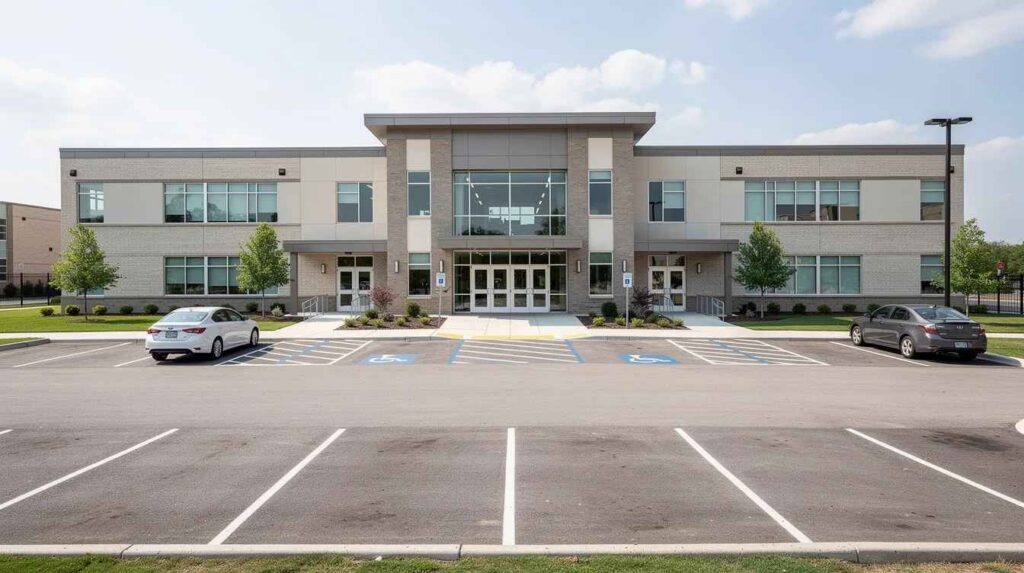
Effective violence prevention in schools requires a comprehensive approach that addresses potential threats and intervenes with appropriate support. Today’s risks span external threats, internal concerns, and operational disruptions.
External Threats: Unauthorized visitors account for 25% of incidents per recent Secret Service data. Community incidents can spill onto campus without warning.
Internal Concerns: Bullying escalates to violence in 40% of cases. Self-harm incidents rose 35% post-COVID, with mental health crises preceding 50% of larger events.
Operational Disruptions: Power failures impact 30% of rural schools annually. Network outages from ransomware crippled communications for 48+ hours in over 1,600 school attacks in 2025.
Districts face duty of care mandates under Title IX and state tort laws—85% of parents now demand safety audits. The sections below provide a roadmap from awareness to solutions.
Core Components of a Comprehensive School Safety Solution
Effective school safety is a layered system, not a single product. These building blocks create defense in depth.
| Layer | Components |
|---|---|
| Physical | Secure vestibules, classroom locks, lockdown shades, AI cameras, lighting |
| People | Drills, staff certification, student programs, defined roles for SROs |
| Communication | Integrated Mass Notification triggers simultaneous alerts through intercoms, desktop notifications, and text messages |
| Procedural | Visitor management, arrival/dismissal protocols, after-hours policies |
| Data | Incident reporting, near-miss logs, threat assessment records |
Behavioral Threat Assessments involve multidisciplinary teams evaluating concerning behaviors to prevent escalation. The Behavioral Threat Assessment (BTA) system is a model for building sustainable, school-based threat assessment to identify and manage threats before they escalate. John Van Dreal’s work on the Salem-Keizer Cascade Model is considered a gold standard for multiagency student violence prevention.
Behavioral Integration embeds safety into Multi-Tiered Systems of Support (MTSS) to address root causes. Trauma-Informed Drills are conducted regularly and communicated clearly to minimize stress during lockdowns, evacuations, and shelter-in-place scenarios. Anonymous Reporting Tools allow untraceable reports on bullying, self-harm, or potential violence.
Why Many School Safety Technologies Fail (And How to Avoid the Traps)
Systems that are hard to implement, trust, and maintain create false confidence. Here’s what goes wrong:
- Implementation: Hidden cabling costs average $5,000 extra per building. Rollouts clash with academic calendars, delaying 40% of projects.
- Reliability: 50% of gyms and portables have coverage dead zones. Batteries fail in 20% of drills.
- Maintenance: Frequent firmware updates, complex dashboards, and staff turnover erase institutional knowledge.
Effective school safety technology should reduce delays in emergency response by being easy to implement, trust, and maintain, ensuring systems work as designed during crises.
Vetting Checklist:
- 99.5% uptime SLA guarantees
- Offline operation capability
- ISO 27001 cybersecurity certification
- Scalability to multiple campuses
Designing a Practical School Safety Plan for Your District
Every district differs, but strong safety plans share common steps.
Phased Approach:
- Assess via vulnerability tools (2-4 weeks)
- Prioritize top 20% of risks (1 month)
- Pilot in 10% of schools (3 months)
- Scale district-wide (6-9 months)
Stakeholder Engagement: Involve teachers, classified staff, students, parents, SROs, and local police/fire. First Responder Collaboration includes inviting local law enforcement and fire departments to participate in active-scenario training.
Vulnerability Assessment: Map entry points, blind spots, interior doors, and communication bottlenecks. Convert findings into prioritized action lists using ESSER III remnants or Title IV grants.
Documentation: Update emergency operations plans annually using FEMA templates. Distribute classroom flip charts and substitute teacher packets.
Technology That Supports, Not Overwhelms, Educators and IT
Technology should simplify responses, not add complexity.
Educator-Friendly Features: One-button activation, clear visual/audible feedback, minimal training requirements—no complex logins during emergencies.
IT-Friendly Architecture: Cloud-first but resilient, minimal on-premises hardware, secure integrations with SIS platforms, and bandwidth-conscious design under 1Mbps.
Continuous monitoring of school safety systems is essential to ensure reliable coverage and connectivity, especially in critical areas like parking lots and athletic fields. AI-Enhanced Surveillance can detect brandished weapons, gunshots, or aggressive behaviors and alert security immediately. AI Video Analytics prioritize human-in-the-loop verification to reduce false alarms by requiring security reviews before sending alerts.
Non-Invasive Environmental Sensors monitor bathrooms and locker rooms for vaping and shouting without invasive surveillance. Specialized sensors detect vaping, smoke, or loud aggressive noises where cameras aren’t allowed. Automating workflows and coordinating with public safety officials provides situational intelligence for rapid emergency response.
Extending School Safety Beyond the Classroom
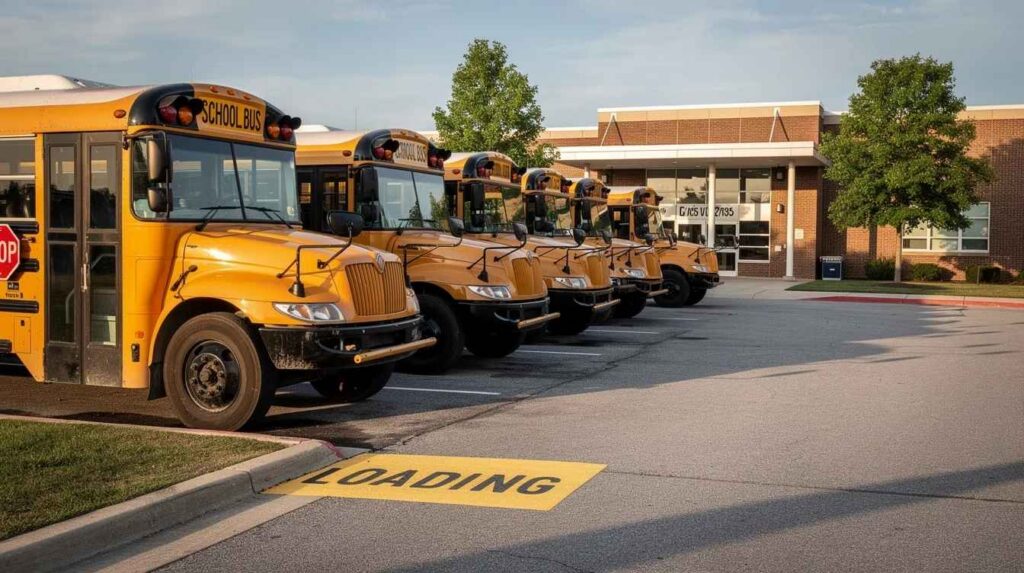
Effective school safety covers buses, athletics, and community facility use.
- Transportation: Bus loading zone protocols, driver-campus communication, field trip tracking, reunification planning
- Athletics: Stadium entry control, crowd management, AED grids with under 3-minute response
- Support Facilities: District offices and alternative campuses need consistent standards
- Partnerships: Coordinate with mental health providers and other organizations for post-incident support
A district-wide view prevents weak links where students or staff spend time outside main campus buildings.
Why Choose Our School Safety Solutions
Our approach is student-centered and educator-informed. We design technology that stays out of the way until needed.
- Philosophy: Products developed with input from thousands of teachers across the country
- Implementation: Vendor-led process with clear milestones and training sessions
- Reliability: Solutions operate during power or network disruptions, reaching every learning space including portables
- Partnership: Dedicated account management, ongoing training refreshers, and help interpreting safety data
Ready to explore how we can meet your specific safety needs? Schedule a walkthrough tailored to your campuses and timeline.
FAQs About School Safety Solutions
What’s the first step with limited funds? Secure doors, basic procedures, and staff training deliver the highest risk-reduction per dollar—approximately $2 reduced risk per dollar spent on locks versus $0.50 for cameras.
How often should we run drills? Quarterly lockdown and evacuation drills meet most state requirements. Rotate scenarios to combat the 30% drill fatigue rate while building preparedness.
How do we choose between alert systems? Decision criteria: school size, age levels, and connectivity. Apps work for large secondary schools; badges suit elementary settings with 90% urban connectivity versus 60% rural.
How do we keep students from feeling scared? Use “prepared not scared” framing with age-appropriate communication. This reduces student anxiety by 40% per APA research.
How long does rollout take? Realistic range: 4-12 weeks depending on district size. Pilots accelerate implementation by revealing issues early.
Have specific questions for your board or parent meetings? Connect with our team for tailored answers.
Conclusion: Turning School Safety Plans Into Everyday Practice
Strong school safety solutions combine layered physical measures, trained people, reliable communication, and continuous improvement. Moving from one-time purchases to culture change makes the difference.
Your 90-Day Actions:
- Secure classroom doors and windows and deploy lockdown shades
- Update visitor management procedures
- Schedule staff training with local first responders
Connect with our team for a no-obligation campus review aligned with your next school year. Safer schools are achievable through steady, practical steps taken together—and we’re proud to support districts making that commitment.