The term “bulletproof glass film” has become a lightning rod for confusion. If you’ve searched for ways to protect school windows, office entrances, or retail storefronts, you’ve likely encountered bold claims about films that promise to stop bullets. Here’s the reality: no thin peel-and-stick film transforms regular glass into a bulletproof barrier—but that doesn’t mean security film is useless. Understanding what these products actually do is essential before you invest.
Table of Contents
- What Is “Bulletproof” Glass Film?
- Does Bulletproof Film Really Exist?
- How Bullet-Resistant Glazing Works
- Film vs. Bullet-Resistant Glass
- Where Film Systems Make Sense
- 2024–2026 Cost Benchmarks
- Why Choose Us
- FAQs
What Is “Bulletproof” Glass Film?
No thin bulletproof film for ordinary glass windows exists. However, heavy-gauge security window film and full ballistic glazing systems are often marketed under that misleading name.
Security film consists of multi-layered polyester sheets—typically 8–21 mils thick, with heavy-duty variants reaching approximately 40 mils—bonded to existing glass with high-performance adhesives. The micro-layered polyester in the film absorbs and spreads kinetic energy from an impact, but here’s the critical distinction:
- What film does: Holds broken glass fragments in place after impact, acting as a web (shatter retention). Injury prevention is achieved by using the film as a fragment retention layer to prevent glass shards from flying inward during a shooting or blast event.
- What film doesn’t do: Security films are typically 8–14 mils thick and cannot stop a bullet’s penetration through standard glass.
- Terminology matters: “Security film” refers to fragment-retention products; “ballistic glazing” denotes full UL 752-rated systems independently tested to stop bullets.
The film can be applied invisibly to existing windows without replacing the window frame, preserving the building’s original appearance. The effectiveness of security film relies on an anchoring system that bonds the film to the window frame. Modern 2024–2026 installations may combine security film, mechanical anchors, and specially laminated glass—but the film alone is never the bullet-stopping layer.

Does Bulletproof Film for Glass Really Exist?
Bulletproof window film as a single peel-and-stick product that makes normal glass fully bulletproof is a myth. This misconception grew online between 2018–2024, fueled by viral videos and aggressive marketing using terms like “active shooter film” or “ballistic window film.”
Some manufacturers achieved limited bullet resistance only when their thick films were applied to unusually thick glass (1/2” or 3/4” laminated units)—which is not what most buildings have. Security window film is not bulletproof and does not stop bullets unless installed on ballistically rated glass, though ballistic window film systems designed for anti-breach performance can significantly slow down intruders even when the glass is penetrated.
Key facts to understand:
- Typical school/office glass: Most buildings use 1/4” tempered or insulated glass units. Adding film to door glass or office windows of this thickness provides zero ballistic stoppage.
- Marketing vs. testing information based reality: Claims like “bullet resistant film” must be verified against standards like UL 752 Level 1 (9mm handgun) or Level 3 (.44 Magnum). Without test reports, treat claims skeptically.
- Film still matters: While security window film can help hold shattered glass in place and reduce the risk of injury from glass fragments, it will not prevent the glass from breaking during a ballistic attack.
- Delay, not denial: The film can delay forced entry by keeping shattered glass intact for up to 60 seconds—valuable time for lockdown and response. However, it cannot prevent a determined intruder from gaining access.
How Bullet-Resistant Glazing Actually Stops Bullets
Real bullet resistance comes from the glazing construction, frame, and anchoring—not surface film. Bulletproof glass is engineered to protect against ballistic threats and is made from materials that can deflect bullets, shrapnel, and other projectiles while maintaining transparency.
There are four primary types of bulletproof glass commercially available, and understanding these options alongside advanced overglazing systems for ultimate ballistic resistance is key to choosing the right level of protection:
- Acrylic: Lightest option, suitable for UL 752 Level 1 protection
- Laminated polycarbonate: Flexible, handles Levels 1–3
- Glass-clad polycarbonate: Rigid construction, rated up to Level 8
- Insulated glass with ballistic interlayers: Combines thermal performance with protection
Bulletproof glass is generally made of laminated glass and polycarbonate, which work together to enhance protective capabilities against ballistic threats. While no material is completely impervious, bulletproof glass can stop certain types of bullets from specific firearms, and different bullet-resistant materials are ranked by performance to help match construction choices to likely threats.
Understanding UL 752 ratings:
| Level | Threat | Typical Thickness |
|---|---|---|
| 1 | 9mm handgun | 1–1.25” |
| 3 | .44 Magnum | 1.25–1.5” |
| 4 | .30-06 rifle | 2”+ |
| 8 | 7.62mm rifle | 3–4” |
| Bulletproof glass can vary in effectiveness depending on its thickness and composition, as well as the type of threat it is designed to withstand. Bulletproof glass is designed to withstand specific ballistic threats, with effectiveness dependent on the caliber of ammunition and the glass’s rating. |
Frames are critical: Bullets often exploit weak frames. Proper ballistic frames with 1–2” glazing bites and anti-displacement anchors are essential—non-compliant installations can drop ratings by 50%.
Bulletproof Glass Film vs. Bullet-Resistant Glass
Security film systems primarily provide intrusion delay and glass retention on existing glass, similar to other shatter-resistant glass protection options. Ballistic glass is purpose-built to absorb and stop bullets while preventing reach-through.
Direct comparison:
| Factor | Security Film | Bullet-Resistant Glass |
|---|---|---|
| Stops bullets | No (on standard glass) | Yes (when properly rated) |
| Installation | Retrofit, 1–2 days | Full replacement, weeks |
| Cost per sq ft | $8–40 installed | $50–150+ installed |
| Lifespan | 10–20 years | 25+ years |
| Best for | Broad coverage, delay | Critical entry points |
| Optical clarity | 85–95% VLT | Similar with clear options |
| Typical deployment strategy: |
- Film: Classrooms, interior glass, side windows, back doors, corridor glazing
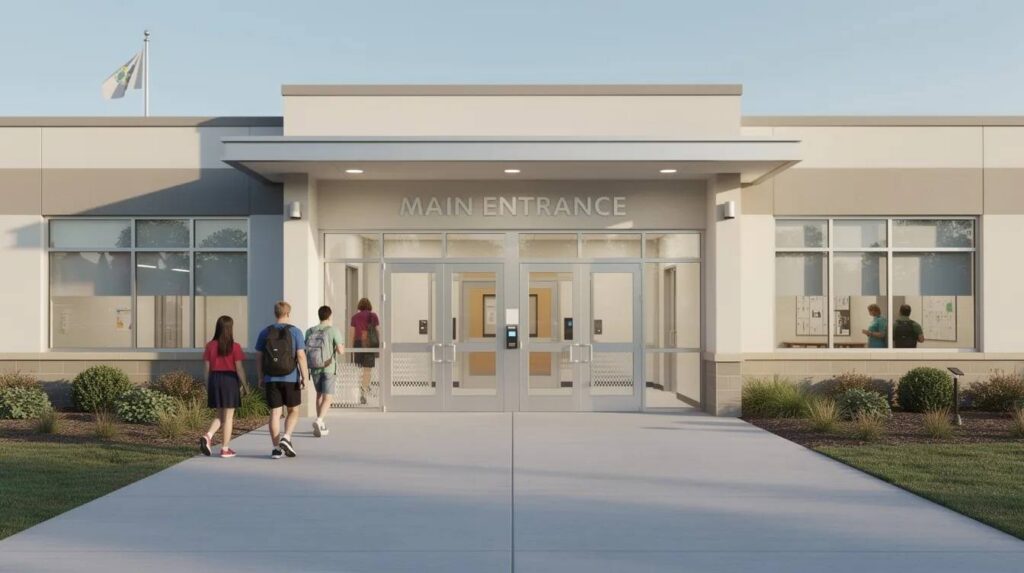
- Ballistic glass: Main entrances, entrance vestibules, reception areas, transaction windows
- Hybrid approach: Film on non-ballistic openings creates layered, cost effective solution when combined with retrofit bullet-resistant panels at high-risk points
Where Bullet-Resistant Film Systems Make Sense
While film alone isn’t a bulletproof window solution, robust security films (20–40 mil) with frame anchoring provide powerful safety measures for delaying forced entry and reducing injuries.
Common environments using security film:
- K–12 schools and universities (85% of U.S. districts added film 2020–2025)
- Churches and houses of worship using bullet-resistant glass security solutions
- Retail storefronts and pharmacies—retail and commercial spaces use the film to protect against “smash-and-grab” burglaries
- Government lobbies and high traffic areas, especially schools following updated standards for reinforcing window and door glass
- Financial institutions for secondary windows where full ballistic glass may be too expensive
The film is used in schools and public buildings to slow active shooters for emergency services to respond. Active shooter mitigation encompasses techniques, materials, and security measures designed to prevent and slow individuals attempting harm. Schools should conduct site assessments to identify points of weakness, such as unlocked doors and vulnerable glass.
Priority locations within buildings:
- Exterior entry doors and sidelites
- Ground-floor glass windows (60% of breaches occur here)
- Interior sidelites by office doors
- Corridor glazing near secure spaces
Implementing a closed campus policy, locking doors during school hours, and limiting visitor access are recommended measures. The film also helps glass withstand high winds and debris during storms, offering natural disaster mitigation. Additional benefits include blocking up to 99% of harmful UV rays and reducing cooling costs by up to 30% by reflecting solar heat, especially when integrated with advanced polycarbonate security retrofit systems.
Residential security installations are also common in homes in high-crime areas to protect families from break-ins and accidental glass breakage, mirroring the comprehensive security window and door solutions used in commercial and institutional buildings.
How Much Do Bullet-Resistant Solutions Cost? (2024–2026 Benchmarks)
Budget often determines whether you upgrade with security film or invest in full ballistic glass. Here are typical industry ranges:
Security film (professionally installed):
- Standard 8–14 mil: $8–15 per square foot
- Heavy-duty 20–40 mil with anchoring: $20–40 per square foot
- Example: 100 sq ft school door system: $2,000–4,000
Ballistic glazing systems:
- Level 1 (handgun): $50–80 per square foot
- Level 3 (magnum): $100–150 per square foot
- The cost of bulletproof glass can range significantly, with prices for glass that can stop high-power rifle rounds averaging around $500 per square foot
- Installation costs for bulletproof windows can start from $7,000 to $10,000 for small systems, while mid-size systems may cost between $15,000 and $25,000
Cost drivers: Number of openings, access constraints (occupied school vs. new construction), frame modifications, and after-hours work requirements.
Note: Actual pricing depends on site-specific survey. Use film as a phased approach—start with highest-risk openings, expand as funding or grants become available.
Choosing the Right Partner for Bulletproof Glass Film (Why Choose Us)
Working with a provider who is transparent about what film can and cannot do—and who specifies systems based on independent testing rather than hype—makes all the difference for school safety and building protection.
Our core strengths:
- Experience with security and safety glazing projects since well before 2020
- Nationwide deployment capability with factory-trained installers
- Systems designed around standards (UL 752, EN 1063, forced-entry tests) with available test reports
- Consultative process: on-site risk assessment, priority identification, layered proposals
We help many schools, houses of worship, and commercial clients pursue grants and phased upgrades—including 2024–2026 school security funding cycles under programs like the Bipartisan Safer Communities Act.
Ready to protect your building? Schedule a security glass assessment to receive honest recommendations tailored to your specific vulnerabilities and budget.
Bulletproof Glass Film FAQs
Can any window film make my existing glass bulletproof?
- No—standard architectural window glass with film applied will not become truly bulletproof
- Film primarily keeps broken glass in place and helps delay entry, not stop bullets
- Limited ballistic performance requires specially engineered systems combining thick glass, interlayers, and professionally specified films—all independently tested together
- Look for documented UL 752 reports rather than marketing terms
What’s the difference between security film and ballistic glass?
- Security film is a retrofit layer for injury reduction and intrusion delay
- Ballistic glass is purpose-built, multi-layer glazing designed to absorb and stop bullet threats
- Ballistic systems are thicker, heavier, and require new frames—significantly higher cost
- Both can work together: film for broad coverage, ballistic glass for critical entry points
How thick must glass be for film to help with ballistic threats?
- Lab tests show partial bullet resistance only when heavy-gauge films are applied to very thick glass (1/2” or thicker laminated units)
- Most school settings and offices use thinner glass (around 1/4”), where film won’t stop bullets but reduces spall
- Have security professionals assess your insulated glass or window glass thickness before assuming any ballistic benefit
How long does security film last?
- Quality interior-applied films typically last 10–20 years under manufacturer warranties
- Bulletproof windows require regular inspections and maintenance, with recommended replacement every 20 years due to UV exposure degrading protective layers
- Inspect every 3–5 years for edge lift or adhesive failure
- Extreme UV or coastal environments may shorten effective life
Will security film void my existing glass or window warranty?
- Impact varies by window manufacturer—some endorse specific films, others don’t
- Have your provider review manufacturer documentation before installation
- Select films carrying glass-breakage or seal-failure coverage when possible
- Reputable installers summarize warranty implications before work begins
Does bulletproof glass film affect visibility or natural light?
- Most modern clear security films maintain 85–95% visible light transmission with excellent optical clarity
- Tinted and reflective options exist if solar heat gain is a concern
- Review film samples on-site in both daytime and nighttime conditions before deciding
Can security film be installed while my building is occupied?
- Yes—film can typically be installed correctly during normal hours with minimal disruption
- Installers work room by room, coordinating with class schedules or operations
- Larger projects (main entrances in active schools) often scheduled for evenings, weekends, or breaks
- No need to remove entire windows in most cases
A layered security approach—combining film on broad openings, ballistic glass at hotspots, proper locks, and procedures addressing building vulnerabilities, as seen in integrated bulletproof window, door, and film systems—creates meaningful protection. There’s no such thing as a single product that solves every threat, but understanding your options puts you in control of real security decisions.