Table of Contents
Understanding Tested Security Glazing (Quick Overview)
Key Security Glazing Test Methods and What They Prove
Types of Tested Security Glass and Where Each Is Used
How Tested Security Glazing Is Applied in Real Facilities
What to Check Before You Specify or Buy “Tested” Security Glazing
Why Choose Impact Security for Tested Security Glazing Retrofits
FAQs About Tested Security Glazing and Security Glass
Understanding Tested Security Glazing (Quick Overview)
Tested security glazing is designed to protect against forced entry, ballistic threats, and blasts. Unlike standard glass or basic safety glazing-which is designed mainly to reduce injuries rather than resist intentional attacks-security glazing systems use multi-layered assemblies of glass, polycarbonate, interlayers, and engineered framing to stop determined adversaries. High-security glazing includes burglar-resistant, bullet-resistant, and blast-resistant glass, each verified through rigorous testing against specific threat categories.
The effectiveness of security glazing depends on recognized testing standards for specific threats. “Tested” means a complete assembly-security glass, frame, anchors, and hardware-has passed a defined test method (ASTM, UL, EN, or similar), not merely that a single pane is “strong.” Tested security glazing is constructed by laminating multiple layers of glass around polycarbonate materials, and security glazing materials include acrylic, polycarbonate, and laminated glass depending on the protection level required.
In 2026, the growing demand for attack resistance spans smash-and-grab forced entry, active shooters, rioting and vandalism, and blast events at commercial buildings, schools, and government buildings. Impact Security-a U.S. manufacturer and installer of retrofit glazing systems including DefenseLite, BulletShield, RiotLite, and AccessShield-focuses on upgrading existing windows, doors, storefronts, and curtain walls without full replacement. The sections below will help building owners, architects, and security professionals compare test standards, understand real-world conditions performance, and choose the right level of resistant glass for their next project.
Key Security Glazing Test Methods and What They Prove
Understanding which test method applies to your facility is the difference between verified protection and marketing guesswork. Security glazing includes several performance ratings based on testing standards like ASTM F1233 for forced entry, UL 752 for ballistic resistance, and ASTM F1642 for blast performance.
Forced entry test methods. ASTM F1233 evaluates forced entry resistance with various tools-hammers, chisels, crowbars, and pry bars-simulating a determined manual attack on commercial doors and windows. ASTM F1233 tests forced-entry glazing for resistance to blunt-force attacks across rating classes that determine how long the assembly can resist forced entry before an opening appears. For detention facilities, ASTM F1915 applies Security Grades requiring up to hundreds of repeated impacts over extended durations. UL 972 measures burglar resistance using a 5-pound steel ball dropped repeatedly without glass penetration, a standard commonly applied to storefronts.
Ballistic standards. Bullet-resistant glass is rated according to UL 752 or NIJ 0108.01 standards for gunfire protection. UL 752 covers Levels 1 through 8: Level 1 stops three rounds of 9 mm FMJ; Level 8 stops 7.62×51 mm NATO rifle rounds. ASTM F3561 extends this by testing complete glazing systems subject to multi-shot rifle fire followed by forced entry tools, simulating how active shooters actually attack buildings.
Blast resistance. ASTM F1642 was published in 1966 for bomb blast testing and remains the primary test method for evaluating glazing systems under airblast loadings, classifying hazard levels from “no break” to “high hazard.” AAMA 510-06 was published in 1976 for blast hazard mitigation. The newer ASTM F2912 provides performance ratings for blast-rated systems at federal buildings, embassies, and airports.
European and UK standards. EN 356 sets requirements for glass resistance to manual attacks, with classes P1A through P8B. Burglar-resistant glass meets European standard EN 356 for manual attack, and glass classified P6B to P8B withstands 12 blows from a hydraulic hammer. Bullet-resistant glass is tested to European standard EN 1063 for ammunition impact across classes BR1–BR7. Blast-resistant glass is tested to European standard EN 13541 for explosive force, classifying resistance from ER1 through ER4. Credible security glass suppliers always provide specific test reports-standard name, level, lab, and date-rather than vague claims.
Types of Tested Security Glass and Where Each Is Used
Different types of tested security glazing serve distinct threat profiles. Here is how the major categories break down for commercial and institutional projects.
Forced entry resistant glazing uses laminated glass and hybrid glass-polycarbonate systems to resist forced entry tools and repeated impacts. Laminated glass consists of panes with interlayers that remain intact even when broken, holding fragments together. These systems are tested to ASTM F1233, EN 356 P6B–P8B, and UL 972, and protect retail storefronts from smash-and-grab theft, pharmacies from overnight break-ins, and school vestibules from manual attack.
Bullet-resistant glass combines multiple layers of glass and polycarbonate with ionoplast or PVB interlayers, tested to UL 752 and EN 1063 classes. Lower levels handle handgun calibers for service windows and financial institutions; higher levels stop rifle rounds for government buildings and law enforcement facilities. Polycarbonate glazing offers superior impact resistance compared to standard glass, which is why it appears in nearly every ballistic assembly and is a core component of bulletproof glass options for ultimate ballistic resistance. These systems protect people against specific calibers and shot patterns-not all threats equally.
Blast-resistant glazing uses flexible interlayers and an engineered framing system to keep glass attached to the frame under explosive pressure, verified through ASTM F1642 and F2912. Riot-resistant glazing handles bricks, bats, and crowbars during civil unrest, with solutions such as DefenseLite PRO retail security glazing specifically designed to protect high-risk storefronts. SGCC-certified safety glazing reduces risks of death or serious injury upon impact, but security-grade systems go further by resisting sustained, intentional attack.
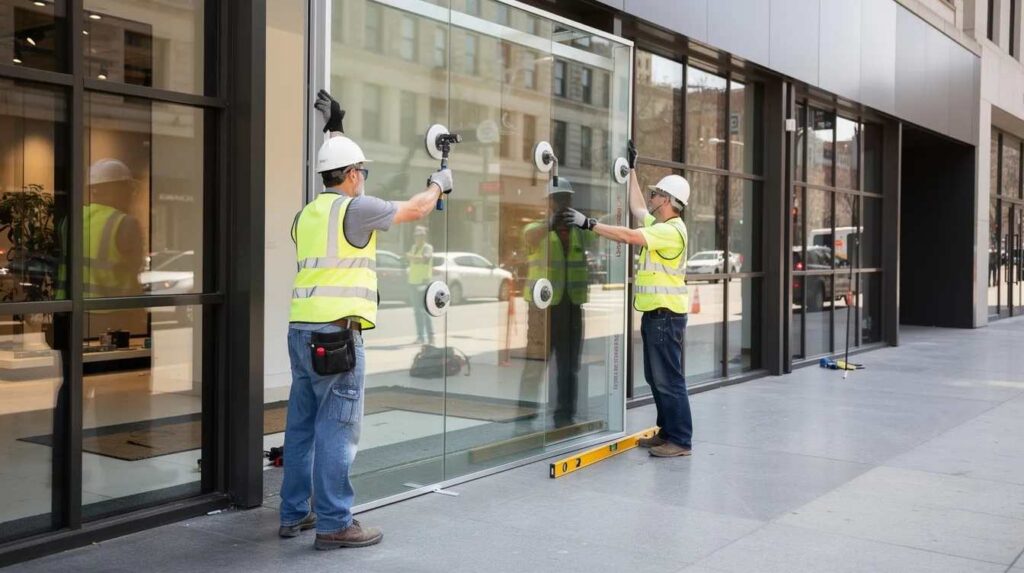
Retrofit glazing solutions mount over existing glass, delivering forced entry resistance and ballistic resistance without demolishing existing frames-reducing downtime and cost for occupied buildings. Systems like the DefenseLite overglaze retrofit system use engineered polycarbonate panels and vented frames to add protection, durability, and energy benefits without changing the existing glass. Full replacement assemblies offer maximum design flexibility but involve greater disruption.

How Tested Security Glazing Is Applied in Real Facilities
Tested security glazing performs across a wide range of building types, each with distinct risk profiles and performance requirements.
- Storefronts and commercial buildings. Loss-prevention teams at national retail chains reference UL 972 and ASTM F1233 to specify forced-entry-resistant glazing for glass doors and display windows, especially to protect against after-hours smash-and-grab using various tools. High-end retailers use storefront security solutions for glass doors and windows to protect merchandise from organized theft rings.
- Schools and higher education. Schools install security glazing to enhance student safety, with design teams specifying ballistic-rated vestibule glass (UL 752) and forced-entry-resistant sidelites for reinforcing school window and door glass as part of active shooter mitigation. Retrofit panels minimize disruption during the school year.
- Government, utilities, and law enforcement. High-security glazing is used in government buildings and financial institutions, where occupants need combined forced entry, ballistic, and blast protection. Courthouses and 911 centers often require UL 752 ballistic resistance levels, typically Levels 3–8, along with ASTM F1642 blast testing. Airports incorporate high-security glazing for threat protection at check-in halls and control facilities.
- Healthcare, pharmacies, and behavioral health. Hospitals use high-security glazing in emergency rooms to protect staff and controlled substances, often as part of broader active shooter mitigation solutions for clinical areas. Behavioral health settings require anti-spall, ligature-resistant materials that achieve safety without a fortress appearance.
- Correctional and institutional projects. Security glazing is essential in correctional facilities, where ASTM F1915 grades determine resistance to sustained attacks by inmates using improvised tools, fire, and chemical attacks, and where BulletShield ballistic retrofit panels can be used to harden vulnerable glazing without full replacement.
What to Check Before You Specify or Buy “Tested” Security Glazing
Before committing budget, contractors, architects, and facility managers should verify these items:
- Verify the actual test standard and level. Require exact designations-“UL 752 Level 3,” “ASTM F1233 Class 2,” “EN 356 P6B”-and confirm whether the report covers the full assembly or glass-only. Reject vague terms like “bulletproof” or “impact glass” without documentation.
- Confirm third-party lab and test date. Tests should come from accredited labs (HP White, UL, Intertek) with results recent enough to reflect current materials and manufacturing quality.
- Consider code and life-safety compatibility. Coordinate with fire resistance requirements, egress hardware, and ADA compliance. Polycarbonate-heavy systems may affect fire performance in corridors or stairwells.
- Evaluate retrofit feasibility. Retrofit security glazing that mounts over existing glass suits occupied buildings, historic facades, and tight budgets. Full replacement assemblies may be necessary when existing frame conditions cannot support added load.
- Align threat level with real risk. Not every storefront needs rifle-rated glass. Many achieve the highest standards of protection they actually need with robust forced entry resistant glazing. A professional security assessment helps determine the right match.
- Ask about warranty, maintenance, and optics. Confirm service life, scratch resistance, energy efficiency benefits, and whether the system maintains clear visibility over time-critical for retail and public-facing spaces.
Why Choose Impact Security for Tested Security Glazing Retrofits
Impact Security (founded 2016, Marietta, Georgia) specializes in retrofit security glazing for existing buildings nationwide, with fabrication centers in Marietta, GA and Glendale, AZ plus a certified installer network. Learn more about Impact Security’s background and security glazing expertise, as the company delivers tested, assembly-level performance rather than selling components without verified data.
- DefenseLite provides forced entry resistant retrofit shields for windows, doors, and storefronts-virtually invisible from the street.
- BulletShield delivers transparent ballistic retrofit panels tested to UL 752 at multiple levels for armed robbery and active shooter scenarios.
- RiotLite and AccessShield address riot and vandalism protection and secure transaction windows in high-traffic environments.
- Engineering teams provide project-specific calculations, drawings, and test summaries to support architects, security professionals, and design teams.
- Turnkey service covers on-site assessment, threat and code review, fabrication, professional installation, and warranty support for schools, national retailers, hospitals, government agencies, utilities, and financial institutions.
Impact Security’s retrofit approach preserves daylight, sightlines, and customer-friendly storefronts while quietly upgrading protection to tested performance levels.
Ready to protect your facility? Request a free security glazing assessment from Impact Security to match the right level of protection to your building’s actual risk profile.
FAQs About Tested Security Glazing and Security Glass
Is tested security glazing the same as bulletproof glass? “Bulletproof” is misleading. Tested security glazing covers distinct categories-burglar-resistant, bullet-resistant glass, and blast-resistant glazing- each requiring different test methods. A forced entry shield tested to ASTM F1233 will not stop bullets, and a UL 752-rated panel may not resist prolonged tool attacks. Bullet-resistant glass solutions for churches and places of worship illustrate how different environments require tailored combinations of ballistic, forced entry, and safety glazing. Always match the test standard to the threat.
How do I know which test level my building actually needs? Start with a professional risk assessment. Retail theft scenarios typically call for UL 972 or ASTM F1233; active shooter concerns require UL 752 ballistic levels; critical infrastructure may need combined ballistic and blast ratings per ASTM F2912. Your insurer and local codes can also help determine the appropriate level.
Can I upgrade my existing windows and doors, or do I have to replace everything? Retrofit systems like DefenseLite and BulletShield install over existing glass and frames, delivering tested performance with less cost, disruption, and waste than full replacement. This approach works well for occupied commercial buildings, schools, and facilities with access constraints.
Will security glazing make my building look like a bunker? Modern transparent security glass and retrofit shields are designed to be low-profile. Many maintain over 85% light transmission and are nearly invisible from the street, preserving storefront appeal and natural daylight for occupants.
How much does tested security glass cost, and what affects pricing? Key cost drivers include threat level (forced entry vs. ballistic vs. blast), size and number of openings, retrofit vs. full replacement, project location, and required certifications. Forced entry glazing for a small retail storefront costs significantly less than rifle-rated ballistic glass for an entire building facade.
How long does installation take for a typical commercial building? Small retail projects may take one to two days. Multi-building campus installations run several weeks, with off-site fabrication and phased scheduling to minimize business interruption during early work and throughout the project.
Does security glazing also help with energy efficiency or noise reduction? Many laminated and multi-layer glazing systems deliver secondary benefits including improved acoustics and thermal performance. Ask Impact Security about options that combine security with comfort and energy efficiency for your industry and building type.