Table of Contents
Introduction: Why Vandal Proof Window Protection Matters in 2026
How Vandal Proof Window Protection Works (And What It Can Actually Stop)
Comparing Vandal Proof Glass Options: Laminated Glass vs. Polycarbonate Shields vs. Films
Best Applications for Vandal Proof Window Protection in Commercial and Public Buildings
How Impact Security’s Retrofit Systems Protect Existing Glass Windows and Doors
What to Consider Before Choosing a Vandal Proof Window Solution
FAQs About Vandal Proof Window Protection
Why Choose Impact Security for Vandal Proof Window Protection
Next Steps: Schedule a Security Glazing Assessment
Introduction: Why Vandal Proof Window Protection Matters in 2026
Since 2020, smash-and-grab theft, civil unrest, and targeted vandalism have forced building owners to rethink how they protect glass openings. Retail corridors, K–12 schools, and transit hubs share a common vulnerability: exposed glass windows and door glass remain the primary failure points in building security. Consider that 80% of burglaries involve entry through windows or patio doors, and the average loss from a single “three-minute burglary” at a jewelry retailer now exceeds $42,000.
Vandal proof window protection means strengthening glass so it cannot be easily broken, breached, or graffitied—while preserving natural light and normal appearance. It is not about turning a building into a bunker. It is about making existing openings dramatically harder to defeat, buying critical response time, and keeping occupants safe inside.
This guide focuses on modern retrofit solutions—polycarbonate shields, laminated glass upgrades, and security films—that strengthen existing glass windows and doors instead of requiring full replacement. Vandal-proof window protection enhances safety and security for various properties, from single storefronts to multi-site government portfolios. Vandal-proof window systems also minimize replacement costs and injuries from broken glass, making them a practical investment rather than an emergency expense.
Impact Security has delivered these solutions across U.S. schools, retailers, and government facilities since 2016. The sections below walk through how these systems work, how they compare, and what to consider before choosing one.
How Vandal Proof Window Protection Works (And What It Can Actually Stop)
No system is 100% indestructible. What modern vandal proof glazing does is dramatically increase the effort, tools, time, and noise required to breach glass windows and door glass—turning a three-second smash into a multi-minute ordeal that triggers alarms and deters vandals.
Common materials for vandal-proof protection include security window films and polycarbonate shields, each addressing different threat levels:
- Thrown bricks, rocks, and air gun pellets—vandal shields can stop missiles like these outright
- Repeated impacts from bats and hammers—specialized, impact-resistant glass withstands strikes from these objects
- Forced entry with pry bars and crowbars—security films and reinforced glass delay break-ins and protect against vandalism
- Graffiti and acid etching—anti-graffiti films protect glass surfaces from scratches and paint
- Opportunistic smash-and-grab theft—the delay alone is often enough to prevent loss
Retrofit systems create a “sacrificial shield” mounted in front of existing glass. The outer layer—polycarbonate or laminated glass—absorbs impact energy, cracks but holds, and keeps glass fragments from entering the building. Using an attachment system helps prevent the entire glass pane from being pushed in, which is critical when intruders use sustained force.
It helps to understand three protection tiers. Vandal resistant systems handle everyday abuse: graffiti, thrown objects, and blunt impacts. Forced-entry resistant systems delay or prevent breach using hand tools, suitable for retail and schools. Ballistic resistant systems stop firearm rounds, tested under standards like UL 752. Testing frameworks such as ASTM F3561 now evaluate full fenestration systems—including frame, anchorage, and hardware—after simulated attack sequences, ensuring the entire unit performs under real-world conditions.
Comparing Vandal Proof Glass Options: Laminated Glass vs. Polycarbonate Shields vs. Films
There is no single unbreakable glass solution. Instead, effective vandal proof window protection combines various types of glass, plastics, and interlayers matched to each threat profile.
Laminated glass consists of two or more glass panes bonded with PVB or SGP interlayers. When struck, laminated glass holds shards in place when broken rather than scattering dangerous glass fragments. Laminated glass can significantly improve window damage resistance, and because it is difficult to penetrate, it enhances security considerably. Laminated glass delays entry by a few minutes—enough time for alarm response in most scenarios. It is commonly used in schools, hospitals, and storefronts where appearance matters. The cost range runs roughly $25–$60+ per square foot installed.
Polycarbonate shields represent the strongest alternative to normal glass. Polycarbonate panels are 200–300 times stronger than normal glass, and products like DefenseLite are engineered to be 250 times stronger than glass and nearly invisible once fitted. An 8 mm Hammerglass panel equals 24 mm armoured glass strength, and Hammerglass is certified as Security Class P8B, resisting 70 axe strokes. Clear polycarbonate shields and security films offer high optical clarity and impact resistance, so they are often mistaken for standard glass windows after installation. Installed cost ranges from $60–$150+ per square foot depending on threat level.
Security window film is applied to existing glass and prevents glass from shattering inward when struck. Films are flexible and budget-friendly at $5–$15 per square foot installed. Security films delay entry for 60 to 90 seconds during break-ins—useful, but not equivalent to a full engineered system. Tinted security films enhance privacy for both residential and commercial properties, and security films can improve a window’s energy efficiency and lower cooling costs, delivering energy savings alongside added protection. For lower-risk scenarios, security window film may suffice for protection.
A school district might upgrade door glass to laminated glass while adding polycarbonate shields over vulnerable first-floor windows. A jewelry retailer could layer film plus a polycarbonate retrofit over high-value display windows for the best result.
Best Applications for Vandal Proof Window Protection in Commercial and Public Buildings
Vandal proof window protection delivers the highest ROI where glass openings face repeated risk and where a single breach carries outsized consequences. Polycarbonate security glazing is suitable for high-risk areas such as retail stores and schools.
- Retail chains and convenience stores: storefront glass windows and door glass are the easiest path for thieves to gain access. Reinforcing these openings can prevent a single event that costs tens of thousands in merchandise and property damage.
- K–12 schools and universities: expansive glazing in vestibules and ground-floor classrooms must protect students from vandalism and forced entry while preserving light and sightlines.
- Government buildings, transit stations, and courthouses: protest activity and civil unrest create sustained risk; ballistic-rated systems may be required.
- Healthcare facilities and financial institutions: high public traffic, transaction windows, and mission-critical operations demand solutions that reduce risk without disrupting the office environment.
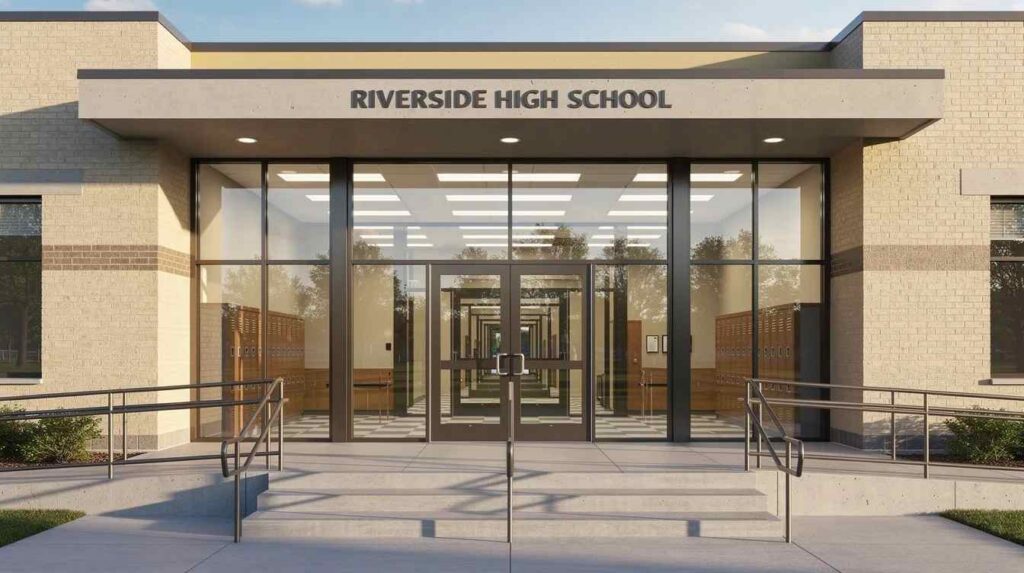
Door glass, sidelites, and curtain walls are prioritized first in phased plans because once an intruder can break through these openings, they can reach inside, unlock hardware, and gain full access in seconds, which is why many facilities adopt commercial security window solutions for doors and storefronts.
How Impact Security’s Retrofit Systems Protect Existing Glass Windows and Doors
Impact Security is a U.S. manufacturer and installer specializing in retrofit security glazing. Every system is designed, manufactured, and installed over existing glass windows, door glass, and storefronts—reducing downtime and replacement costs compared to full glass replacement.
DefenseLite is a clear polycarbonate shield system that attaches to existing frames with custom aluminum extrusions, creating a standoff from the original glass. Panels are engineered to flex and absorb energy during attacks, and because each unit is manufactured to precise specifications, the result retains the building’s appearance. BulletShield is the ballistic-resistant companion system for higher-threat locations, configured to defeat handgun or rifle attacks depending on the selected UL 752 level. Additional solutions include riot-resistant and forced-entry configurations plus custom safe-room glazing.
Impact Security is headquartered in Marietta, Georgia, with fabrication centers in Marietta, GA and Glendale, AZ. A national dealer and installer network serves multi-site portfolios across the United States. For facilities managers, practical benefits include minimal business disruption during installation, no need to remove existing glass, and the possibility of energy savings and noise reduction that complement the security upgrade.
What to Consider Before Choosing a Vandal Proof Window Solution
Selecting the right system requires balancing threat level, budget, building aesthetics, and operational constraints. A quick site assessment is usually the best starting point.
- Threat profile: Is the risk opportunistic vandalism, targeted forced entry, or a ballistic event? Each demands a different tier of protection.
- Existing glazing type and condition: single-pane, insulated glass units, or laminated glass already in place will determine what can be added.
- Frame strength and anchorage: reinforced window frames are crucial for maximizing the effectiveness of strong glazing. Weak frames can fail before the glass does.
- Code and egress requirements: fire-safety and emergency exit doors must retain their opening functions.
- Visibility, natural light, and architectural appearance: modern shields are nearly invisible, preserving the market appeal of retail and campus environments.
Polycarbonate shields should be cleaned with non-abrasive products to maintain long-term clarity. Laminated glass requires intact edge seals to prevent moisture ingress.
Avoid common mistakes: relying solely on roller shutters that change the building’s look and carry additional cost in maintenance, trusting generic “unbreakable glass” claims without verified testing, or applying only basic window film in a high-risk environment. Products like Hammerglass ADD-ON can be installed over existing windows, Hammerglass SINGLE replaces outer panes in existing sashes and frames, and Hammerglass INSULATE integrates into existing fenestration—but installation of Hammerglass requires recommended installers for quality. In higher-threat locations, DefenseLite Pro systems provide enhanced impact security glazing. Vandal shields can be installed without planning permission in most jurisdictions, simplifying the project timeline.
Collaborate early with security consultants, architects, and vendor engineers so vandal proof window protection integrates with alarms, cameras, and access control.
FAQs About Vandal Proof Window Protection
Is there really such a thing as unbreakable glass?
No glass is literally unbreakable. What the market calls “unbreakable glass” is typically polycarbonate or ballistic laminated glass that is extremely break-resistant. Polycarbonate panels are 200–300 times stronger than standard glass and deform rather than shatter, but given enough force, tools, and time, any material will eventually fail. The goal is delay and deterrence, not invincibility.
Can I upgrade my existing glass windows without replacing the frames?
Yes. Retrofit systems like DefenseLite mount directly over current glass and frames using custom extrusions. Schools and storefronts routinely add polycarbonate shields or laminated overlays without removing a single pane, avoiding the cost and disruption of full replacement.
How thick do vandal proof panels need to be?
Thickness depends on the threat. Security films range from 8–14 mil. Laminated glass for forced-entry resistance typically runs ½ inch to over 1 inch. Polycarbonate retrofit panels start around 3/16 inch for vandal resistance. An 8 mm Hammerglass panel is as strong as 24 mm armoured glass, demonstrating that engineered composites achieve high strength at reduced thickness.
Will vandal proof window protection make my building look like a fortress?
Not at all. Most polycarbonate shield systems are clear, use slim aluminum extrusions, and are virtually indistinguishable from normal glass once installed. Color-matched framing and high light transmission preserve retail merchandising, campus design, and overall appearance.
How much does vandal proof window protection cost?
Ballpark ranges: security film $5–$15 per square foot installed, laminated glass $25–$60+, polycarbonate or ballistic systems $60–$150+. The money invested in a single storefront retrofit often costs less than one burglary loss—the choice becomes straightforward when you compare the value of prevention against the cost of repeated damage.
How long do these systems last, and what about warranties?
Quality polycarbonate shields and laminated glass typically carry manufacturer warranties of 10–20 years covering clarity and impact performance. UV coatings protect against yellowing. Professional installation by certified installers and manufacturer-backed warranties—like those offered by Impact Security—are the foundation of long-term durability and customer confidence.
Why Choose Impact Security for Vandal Proof Window Protection
Since 2016, Impact Security has focused exclusively on B2B and B2G security glazing solutions for windows, door glass, storefronts, and curtain walls. That specialization means every product—from DefenseLite to BulletShield—is field-tested across U.S. schools, retailers, transportation hubs, and government sites.
- End-to-end service: on-site assessment, engineering, custom fabrication, professional installation, and aftercare
- Proven, tested solutions that are manufactured and fitted as complete systems, not off-the-shelf panels
- A national network of certified installers capable of handling single facilities and multi-state portfolios
Impact Security coordinates with facility managers, architects, and security teams to meet code, appearance, and operational requirements. The result is reduced breakage and downtime, increased occupant safety, and peace of mind during periods of unrest or elevated crime.
Next Steps: Schedule a Security Glazing Assessment
If you are interested in hardening your building against vandalism or forced entry through glass, the next step is simple: request a free estimate or site assessment with Impact Security. Whether you manage a retail chain, a school district, or a government facility, the process starts with a walkthrough of your property to identify high-risk openings.
From there, the team will discuss laminated glass versus polycarbonate shield options and deliver a phased proposal to match your budget and timelines. Before reaching out, gather basic information—building type, approximate number of glass openings, and any locations with prior incidents—to speed up the consultation, or share those project details directly through the DefenseLite contact form.
Effective vandal proof window protection is achievable without sacrificing visibility, natural light, or your building’s architectural character. Take the first step today.