Introduction: Why Burglar Resistant Windows Matter in 2026
Over 70% of break ins occur through windows and doors, and despite overall property crime declining roughly 8% between 2023 and 2024, forcible entry still accounted for more than 55% of nearly 780,000 U.S. burglaries last year. Glass windows remain the fastest way burglars gain entry into commercial buildings, schools, hospitals, and retail storefronts. The problem isn’t that facilities lack alarm systems or security cameras – it’s that standard windows shatter in seconds, giving most burglars a clean path inside before any response arrives.
Let’s be clear about terminology: no window is truly burglar proof. The phrase burglar proof windows implies total invincibility, which doesn’t exist. What does exist – and what makes a significant difference – is burglar resistant glazing that delays forced entry by several minutes, denies clean access, and deters potential intruders from completing an attack. This article focuses on commercial, institutional, and government facilities where smash-and-grab, riots, and forced entry are primary threats, and where hardening existing glass without full replacement is the smartest path forward.
Table of Contents
What Is Burglar Resistant (Burglar Proof) Windows, really?
How Burglars Actually Attack Glass Windows and Doors
Retrofit vs. Replacement: Options for Burglar Proof Windows
Combining Burglar Proof Windows with Alarm Systems and Motion Sensors
Key Considerations Before You Invest in Burglar Proof Windows
Why Choose Impact Security for Burglar Resistant Window Solutions
Frequently Asked Questions About Burglar Proof Windows
Next Steps: How to Upgrade Your Glass Windows for Enhanced Protection
What Is Burglar Resistant (Burglar Proof) Windows, really?
Burglar resistant windows are not simply thicker glass. High-quality security windows consist of an effective combination of glass, locks, and frames working together. They incorporate reinforced glass or polycarbonate glazing, multi-point locking systems that secure windows at several points to prevent forced entry, and reinforced frames that improve the overall security effectiveness of the assembly. Without all three elements, even expensive glazing can fail because the window frames or anchors give way first.
Regulations reference specific performance tiers. In Europe, the resistance class system (RC2 through RC4) grades windows by how long they withstand progressively heavier tool attacks. RC2-rated windows are a solid baseline for most facilities in terms of burglar protection, resisting casual break-in tools for at least three minutes. In the U.S., standards like UL 972 test smash-and-grab resistance, while ASTM F3561 evaluates full systems – glazing, frame, anchorage – under simulated active-shooter and forced-entry scenarios.
Here’s how common window types compare:
- Standard annealed or tempered glass windows: shatter quickly under blunt force; a single pane offers virtually zero delay against tool attacks
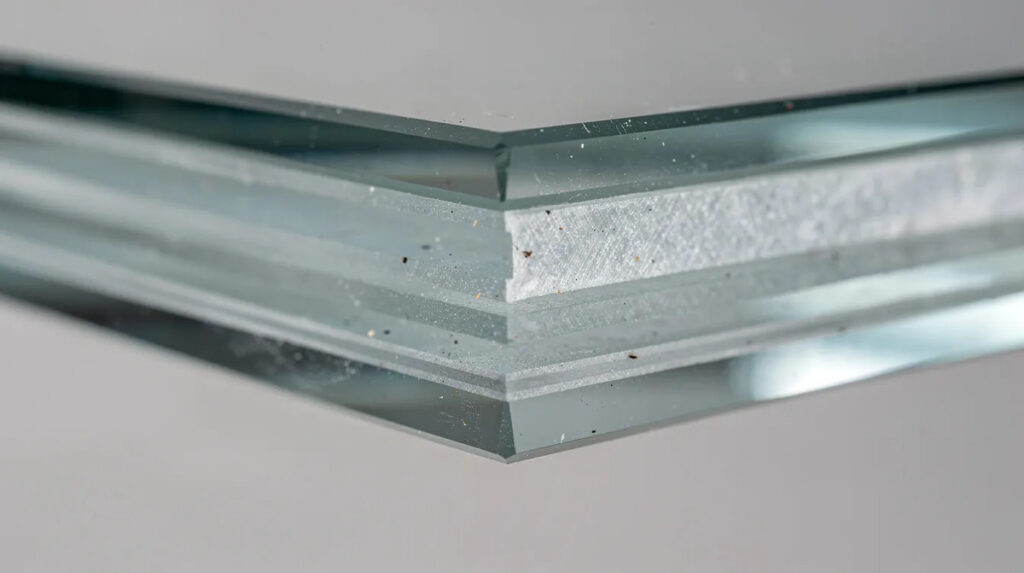
- Laminated glass: features a tough plastic layer that holds glass together when broken, providing moderate forced entry resistance
- Polycarbonate and multi-layer security shields (like DefenseLite systems): polycarbonate is 250 times stronger than glass, offering maximum protection through multiple layers of engineered material
How Burglars Actually Attack Glass Windows and Doors
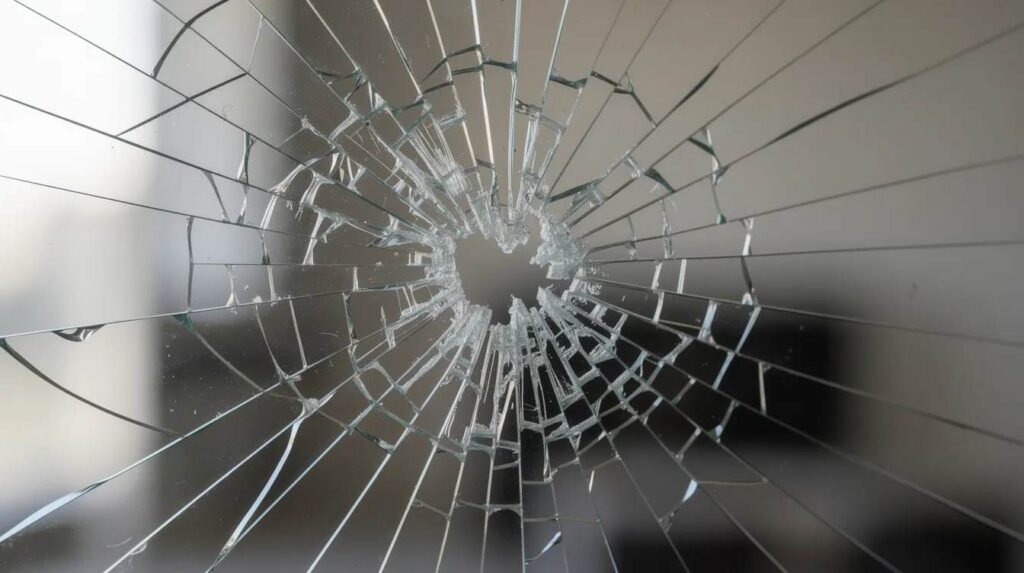
Since 2019, U.S. retail districts have experienced waves of coordinated smash-and-grab thefts. Hospitals and schools have faced vandalism and forced entry during civil unrest, with projectiles shattering standard windows in seconds. Most burglars want to be in and out in under two to three minutes – making resistance time the critical factor, not invincibility. If breaking glass takes too long or produces no clean entry hole, attackers typically abandon the attempt.
Common attack methods include hammers, bricks, and bats for quick smash-and-grab; crowbars and screwdrivers for prying at window frames and latches; breaking small openings near panic hardware or latch points; and coordinated group attacks during riots or civil unrest. Attackers target vulnerable windows – especially those on ground floor windows, sidelites, transoms, and glass near door hardware. Regular window locks are often easy for thieves to bypass, and many standard window locks (including common latches, keyed locks, and sliding locks) provide minimal resistance. An unprotected storefront is an easy target visible in plain sight.
Retrofit vs. Replacement: Options for Burglar Proof Windows
Most commercial and public buildings don’t need full window replacement to achieve effective protection. Retrofit security glazing over existing glass can be faster, less disruptive, and significantly more cost-effective – especially those facilities with dozens or hundreds of openings across multiple locations. Security window film can enhance the strength of existing windows, and security films are engineered to be tear-resistant, though film alone has limits under heavy tool attacks.
Three primary solution categories exist:
- Retrofit polycarbonate security shields mounted over existing glass – systems like DefenseLite that attach engineered panels to existing windows using vented extrusions and security-tipped anchors, preserving existing architecture while adding serious resistance
- Containment-grade laminated glazing or security glass inserts – thicker laminated glass or glass-clad polycarbonate panels that replace only the glass pane within existing frames
- Full replacement high-security windows tested to RC2–RC4 or equivalent U.S. standards – complete units with new glazing, frames, hardware, and multi-point locking systems
Which option fits which facility:
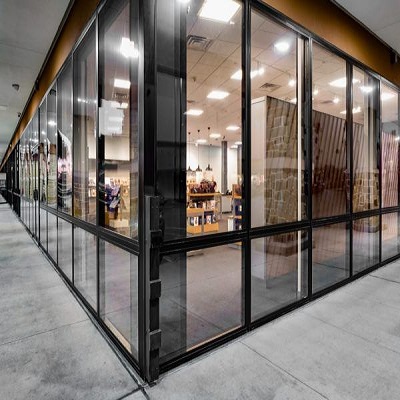
- Retail chains and pharmacies: retrofit storefront polycarbonate shields for speed and brand preservation across many locations
- Schools and universities: shield overlays for entrances and classrooms; laminated inserts for labs and admin areas
- Government and critical infrastructure: full replacement or safety and security glass systems for maximum protection
- Healthcare, banks, and financial institutions: blended approach pairing high forced-entry ratings with optical clarity
How Impact-Resistant and Polycarbonate Systems Work
Impact-resistant windows use tempered or laminated glass combined with advanced interlayers or polycarbonate layers, making them a core component of burglar-proof window systems. Laminated glass works through multiple layers – typically two or more glass sheets bonded with a PVB or ionomer interlayer. When struck, the glass cracks but the laminated interlayer holds broken pieces together, reducing injury risk and denying attackers a clean hole. The same interlayer also blocks significant UV radiation to protect interior furnishings, and thicker laminated glass blocks outside noise more effectively than standard windows.
Polycarbonate panels flex and deflect energy from impacts rather than shattering. Polycarbonate safety shields are nearly impenetrable by thieves because the material absorbs repeated blows without fracturing. These shields are secured to window frames with structural silicone, mechanical fasteners, and heavy-duty framing to keep everything in the opening during an attempted break in or blast event.
It’s critical to understand that hurricane impact windows – built for flying debris and wind pressure – are not the same as dedicated forced-entry glazing. Impact resistant windows can withstand impacts from storm debris and attempted break-ins, and they are tougher than standard single-pane glass, but security-rated forced-entry systems are specifically tested under repeated tool attacks that hurricane windows may not survive.
Combining Burglar Proof Windows with Alarm Systems and Motion Sensors
Mechanical resistance at entry points comes first – it buys the time that electronic security needs to function correctly. Alarm integration can enhance detection for windows, but alarm systems and motion sensors alone cannot prevent break ins. They detect and alert; forced entry security glazing prevents access.
Internal security sensors can alert you if a window is opened or the glass is broken. Security cameras provide real-time alerts for unusual activity and help identify suspicious activity. Alarms can alert homeowners and authorities during break-ins, and integrating alarm systems with monitoring enhances home security effectiveness significantly.
Consider a scenario: a smash-and-grab crew hits a pharmacy with standard glass – they’re inside and gone in 90 seconds. The alarm fires, but police arrive seven minutes later. Now picture that same storefront with retrofit burglar resistant glazing: the glass pane stays intact, the crew can’t break through, the security system captures footage, and the attempt fails before entry. That’s the big difference between detection alone and layered window security.
Best practices for combining systems:
- Prioritize all the windows and doors on ground-level windows and ground-floor windows first
- Link alarms to professional 24/7 monitoring for fastest response
- Ensure cameras cover all major glazing areas and potential entry points
- Install motion sensor lights around vulnerable areas and high-risk areas – motion sensors deter burglars by eliminating hiding spots
- Regularly inspect and test alarm and sensor functionality
Key Considerations Before You Invest in Burglar Proof Windows
Before selecting a system, assess your threat profile (smash-and-grab, active assailant, riots), building type, existing glass type and framing condition, and any code, historic, or landlord constraints. Casement windows are harder to force open compared to sliding windows, and different window types require different solutions. For sliding windows, track locks clip onto the track to prevent opening, while pin locks slide into the window frame to secure double hung windows closed.
Professional installation is critical for maximizing the security of windows – properly installed commercial security window solutions outperform identical products with poor anchorage by orders of magnitude. Insurance discounts may be available for enhanced security features, and security-rated windows may attract higher resale value for your property. Landscaping can also create barriers that hinder intruder access; planting thorny bushes beneath ground-floor windows eliminates easy approach paths. Thorny bushes also improve a building’s curb appeal while adding security against potential intruders approaching at ground level. Here are some practical tips before choosing: PET security film is optically clear and stackable in layers for basic enhancement, while security laminate or full polycarbonate shields provide maximum burglar protection for high-risk areas. Security films can hold glass in place after repeated blows, making them a reasonable starting point for lower-threat scenarios.
Common Mistakes to Avoid with Burglar Proof Window Projects
- Relying only on security film where repeated heavy tool attacks are expected – film delays but doesn’t deny entry under sledgehammer-level force
- Upgrading glass but leaving weak aluminum storefront frames and window bars untouched – attackers simply pry the frame
- Ignoring sidelites, transoms, and glass doors next to “secured” openings – these remain vulnerable windows and potential entry points
- Assuming security cameras or a security system alone will prevent forced entry – they record crimes but don’t stop them
- Choosing DIY installation for complex retrofit framing systems – improper anchorage causes system failure regardless of glazing strength
- Skipping security bars or reinforced glass on ground level windows while protecting upper floors – most burglars target the easiest access
- Failing to treat all the windows in a space – leaving even one unprotected opening gives intruders their path
Why Choose Impact Security for Burglar Resistant Window Solutions
Impact Security, LLC, through its DefenseLite product family, is a U.S.-based manufacturer and installer founded in 2016 and headquartered in Marietta, Georgia, with fabrication centers in Georgia and Arizona. The experienced team provides turnkey service from initial assessment through engineering, fabrication, professional installation, and warranty – covering every step so facility managers don’t have to coordinate multiple vendors.
Core solutions for burglar protection and beyond:
- DefenseLite Pro and RiotLite for forced entry and riot protection over existing windows
- BulletShield for bullet resistance threats – ballistic-rated glazing retrofitted over existing glass
- Custom safe-room and access control glazing for high-risk facilities requiring enhanced protection
Benefits customers consistently report:
- Dramatically reduced smash-and-grab losses and fewer board-ups
- Discreet appearance that preserves storefront branding, daylight, and home’s curb appeal
- Ability to retrofit occupied buildings with minimal downtime across new construction and existing facilities
- Other benefits including noise reduction and energy savings that keep staff comfortable and help keep every family safe inside
Frequently Asked Questions About Burglar Proof Windows
Can burglar proof windows completely stop a break in? No glazing is 100% burglar proof, but burglary-resistant windows typically delay break-in attempts by several minutes – long enough for alarm systems to trigger response and for most burglars to abandon the attempt. They significantly slow down intruders during break-in attempts, which is the goal.
How long do forced-entry resistant windows hold up under attack? Depending on the resistance class and product, systems range from three minutes (RC2 baseline) to well over fifteen minutes under sustained tool attacks. Impact resistant windows are 250 times stronger than standard glass and can absorb dozens of hammer or crowbar strikes.
What is the difference between burglar resistant and bullet resistant glass? Burglar resistant glazing is designed to resist tools, blunt force, and prying. Bullet resistance requires different construction – typically glass-clad polycarbonate or multi-layer laminates tested to UL 752 standards. Impact Security’s BulletShield addresses ballistic threats specifically.
Can I retrofit burglar proof windows onto existing storefronts or curtain walls? Yes. Retrofit polycarbonate shields mount directly over existing glass and existing windows without replacing frames. Impact resistant windows use tempered or laminated glass within existing openings. Impact resistant windows have reinforced frames for added durability even as retrofits.
Do burglar proof windows work with existing alarm systems and sensors? Absolutely. Security glazing pairs seamlessly with glass-break detectors, window contacts, and motion sensors. The glazing provides physical delay while the security system handles detection and real time alerts.
Will security glazing change the appearance of my building? Modern retrofit systems are nearly invisible. DefenseLite panels are optically clear with minimal profile, preserving existing architecture and sightlines. They won’t compromise your building’s appearance or deter burglars any less by being visible.
How do I know what level of protection my facility needs? Start with a professional threat assessment. Impact Security’s team evaluates your building type, vulnerable areas, entry points, and operational requirements to recommend the right resistance class and product combination for effective protection.
Next Steps: How to Upgrade Your Glass Windows for Enhanced Protection
Burglar resistant windows are fundamentally about buying time, deterring potential intruders, and hardening every glass entry point – without sacrificing aesthetics, daylight, or operational continuity. Whether you need to protect a single retail storefront or hundreds of openings across a national portfolio, the security measures that make the biggest difference start with the glass itself.
Here’s your path forward:
- Schedule a security glazing assessment with Impact Security to identify all vulnerable windows and doors
- Receive a site-specific design and estimate covering the right product mix for your threat profile
- Plan phased installation to minimize downtime across locations or campuses
Every day without burglar resistant glazing is another day your facility remains an easy target. Rising smash-and-grab activity, the ongoing cost of board-ups and glass replacement, and the responsibility to protect your people and assets all point to the same conclusion: act now. Request a free estimate for bulletproof windows and doors with security window film or connect with a certified DefenseLite dealer to explore glass security and security window film solutions to get started.