Introduction: Why Glass Door Security Matters in 2026
Between 2020 and 2025, U.S. cities experienced a surge in smash-and-grab theft, organized retail crime, and civil unrest targeting street-level storefronts, school lobbies, and government entrances. In nearly every case, the fastest way inside was through the glass doors. Standard tempered door glass meets basic building codes but fails under a brick, hammer, or pry bar in seconds-often less than thirty.
This article is for facility managers, security directors, and property owners who need to navigate real glass door security solutions for commercial, educational, and governmental buildings. Effective security solutions for glass doors focus on preventing shattering and delaying forced entry, not on residential DIY fixes from amazon. As a U.S. manufacturer and installer of retrofit security glazing-including DefenseLite, BulletShield, RiotLite, and AccessShield-Impact Security brings direct experience providing protection across hundreds of facilities nationwide.
Here is what you will learn:
- The real risks glass doors present and how entry attempts succeed
- A spectrum of options from hardware upgrades to advanced glazing
- How retrofit security glazing systems work without replacing your doors
- When ballistic or blast-resistant solutions are necessary
- Steps to get a professional assessment and estimate
Table of Contents
Use this quick navigation to find the section most relevant to your facility:
Understanding the Real Risks of Glass Doors
Core Glass Door Security Options: From Basic to Advanced
Retrofit Security Glazing Systems for Glass Doors
Ballistic & Blast-Resistant Glass Door Solutions
How a Professional Glass Door Security Upgrade Works
FAQs About Glass Door Security and Forced-Entry Protection
Why Choose Impact Security for Your Glass Door Security Project
Next Steps: Get a Glass Door Security Assessment and Estimate
Understanding the Real Risks of Glass Doors
Glass doors are often the weakest opening in an otherwise robust building envelope. In roughly two-thirds of commercial burglaries, offenders force entry rather than finding an unlocked door-and when the façade is glass, that forced entry happens fast. Reinforced security glass can withstand repeated blows from a hammer, but standard tempered panes absolutely cannot. Attackers exploit the glass around locks to reach inside, shatter full-lite panels for quick body passage, or target sidelites and transoms that many property owners forget to secure.
High-security glass can withstand multiple intense blows from tools, yet most commercial buildings still stock basic tempered glazing that fails within seconds under repeated impact. Reinforced security glass withstands repeated blows from tools, but the reality is that most facilities have never upgraded from what the builder originally installed.
Risk profiles vary by facility type. Street-level retail and pharmacies face smash-and-grab theft and looting, often late evening. K-12 schools and government facilities are concerned with keeping intruders out during active shooter scenarios, where every second of delay matters.
Hospitals and behavioral health centers must balance occupants’ safety with visibility for patient monitoring and de-escalation.
The core concept in physical security is delay time: how long your glass door security can keep a motivated attacker out, buying time for law enforcement or on-site personnel to respond. Solutions are measured in minutes of resistance-not by whether they are absolutely impenetrable.
Key vulnerabilities to understand:
- Glazing around locks allows reach-in attacks
- Full-lite panes and sidelites offer easy opening for intruders
- Strong frames and locks become irrelevant if the glass itself is weak
- Adjacent storefront windows and transoms are often left unprotected

Core Glass Door Security Options: From Basic to Advanced
Glass door security is most effective when you layer multiple approaches, from hardware to advanced glazing. Here is the spectrum, from basic to strong.
Hardware and locks. High-security locks prevent doors from being easily pried open. Multi-point locks engage bolts at several points simultaneously for better resistance against prying, and multi-point locking systems secure glass doors at several locations along the frame. Reinforcing the frame or strike plate helps resist kicking and prying. A double cylinder deadbolt prevents unlocking through broken glass-a simple add that makes a real difference.
Electronic access and detection. Card readers, keypads, and mag locks integrated with aluminum storefront systems control who can enter. Alarms and glass-break sensors immediately alert occupants or monitoring services when activated. Standalone glass door sensors trigger alarms on glass breakage, giving security teams a quick heads-up even if the barrier itself is breached, and advanced door retrofit solutions like AccessShield can further harden entrances against unlawful access.
Privacy and visibility strategies. Film, blinds, and shades reduce target visibility-intruders are less likely to act when they cannot see valuable stock inside. These are easy, low-cost steps but do not physically stop entry.
Traditional physical barriers. Steel bars, security grilles, and roll-down shutters present strong protection but are visually intrusive and can conflict with brand aesthetics and historic façades. Security screens are effective solutions for sliding doors and other openings, but they change the look and may reduce daylighting. Security screens and polycarbonate shields prevent forced entry by making it difficult to smash through.
Security film. Security film is a thin, transparent film applied to glass that prevents shattering easily. Security film strengthens glass doors and delays intruders by holding broken panes together. Security window films prevent glass from shattering inward upon impact, and security window films hold glass together upon impact to prevent smash-and-grab entry. Security film holds glass shards together during break attempts, and security films enhance safety during explosions or severe weather events by keeping glass in the frame. Film is a cost-effective first step at around $8–$20 per square foot installed, but it will eventually fail under sustained, tool-assisted attack when compared to engineered systems like DefenseLite versus basic security glass film.
Laminated and impact-resistant glass. Laminated glass has a tough interlayer that holds the glass together when broken, and laminated glass significantly delays forced entry and can discourage intruders. It is a meaningful upgrade over tempered glass but still has limits against determined, tool-equipped attackers.
Engineered glazing products. ArmorPlast AP25 is a polycarbonate-based security glazing solution that provides a glass-like surface with unbreakable strength. ArmorPlast AP25 provides a virtually unbreakable barrier, representing the kind of advanced product designed to stop sustained attacks-not just slow them down, similar in concept to DefenseLite impact-resistant overglaze security systems.
The rest of this article focuses on advanced glazing-based glass door security solutions because they preserve transparency, beautiful sightlines, and design while drastically improving forced entry performance.
Retrofit Security Glazing Systems for Glass Doors
Retrofit security glazing adds a forced-entry resistant shield over existing glass doors and sidelites, creating a barrier without removing the original glass. This approach is ideal for facilities that cannot shut down for full door replacement or want to reduce price and disruption.
Impact Security’s DefenseLite systems use a clear polycarbonate or composite shield mounted on a custom aluminum extrusion that floats in front of the existing glass. The shield is mechanically anchored to the existing door or storefront framing to absorb and redistribute impact energy.
DefenseLite’s polycarbonate shields withstand repeated breach attempts, flexing under attack instead of shattering and denying intruders a hole even after dozens of blows. Impact-resistant security shields are made of polycarbonate and provide strong protection across a wide range of attack scenarios. Impact-resistant glass is designed to withstand strikes from objects like bricks, bats, and hammers, and the broader family of DefenseLite polycarbonate glass security and bullet-resistant products extends this protection to a variety of high-risk environments.
Shields are optically clear and can be powder-coated to match existing metal frames, making them nearly invisible from a distance. They preserve brand presentation, daylight, and the open world feel of a glass entrance while greatly increasing glass door security. Reinforced doors buy critical time for security personnel to respond to intrusions-minutes rather than seconds. Modern glass doors meet or exceed traditional security standards when paired with these retrofit systems.
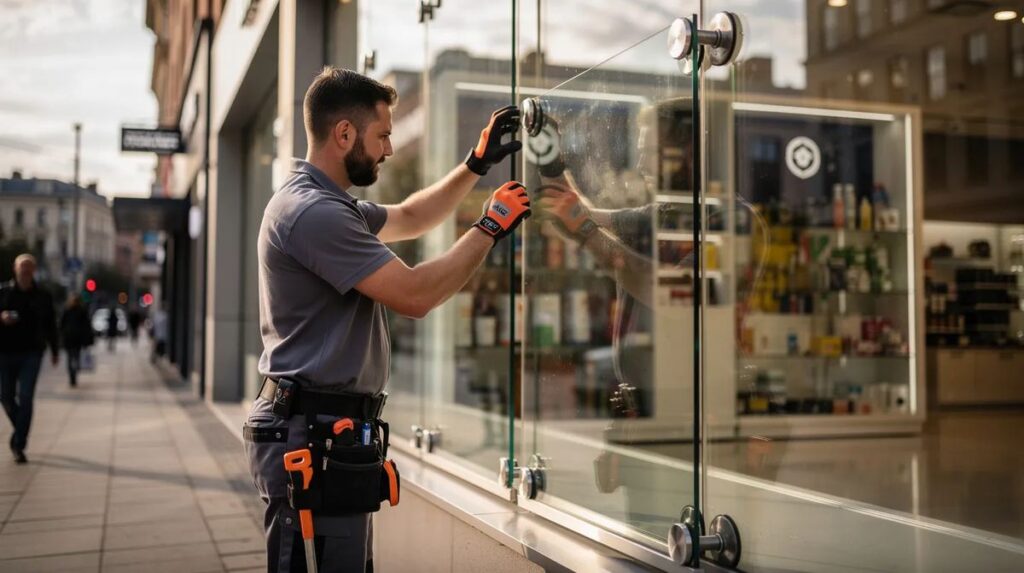
These retrofits work on single and double glass doors, full-lite aluminum doors, sidelites, transoms, and nearby storefront windows. They are ideal for retail chains, banks, schools, police facilities, and municipal buildings, and specialized storefront security solutions for glass doors and windows help retailers address smash-and-grab risks without losing visibility. Compared to total door replacement, retrofit shields offer lower cost, less disruption, faster installation, and the ability to target specific vulnerable openings instead of replacing an entire façade.
Key benefits:
- Several minutes of forced-entry delay versus seconds for bare tempered glass
- Optically clear, discreet appearance that preserves visibility
- Retrofit in place-no need to remove existing doors or frames
- Compatible with existing hardware, access control, and panic bars
Ballistic & Blast-Resistant Glass Door Solutions
When the threat profile includes gunfire or explosives-courthouses, police stations, critical infrastructure, data center environments, or certain K-12 facilities-standard forced-entry glass door security is not enough. Ballistic-resistant retrofit solutions like Impact Security’s BulletShield mount over existing glass door assemblies and adjacent glazing to provide UL 752-rated ballistic resistance. BulletShield is rated to UL752 ballistic standards for storefronts, and DefenseLite’s BulletShield is rated to UL752 ballistic standards, meaning the system has been tested to stop specified caliber rounds while remaining in the frame.
Riot Glass doors have a UL 752 Level 1 ballistic resistance rating, making them a strong fit for facilities facing handgun-level threats. Even after ballistic impacts, properly engineered glazing remains intact enough to keep intruders out-a critical factor for active shooter mitigation where slowing ingress into lobbies saves lives. For federal, military, and certain urban high-risk sites, glass doors and adjacent glazing may also need to withstand blast pressures, and engineered systems such as BulletShield ballistic-resistant retrofit panels can be designed to meet specific blast and ballistic criteria while maintaining clear sightlines that protect occupants without turning a space into a bunker.
Balancing security with egress requirements, ADA compliance, and fire codes is essential. Work with experienced engineers and certified installers who understand both security and life-safety codes, and who can explore the right configuration for your facility.
Consider ballistic or blast-resistant glass door solutions when:
- Credible threats from bullets or explosives exist
- The facility houses sensitive operations or high-value targets
- Active shooter mitigation is a stated security requirement
- Non-ballistic forced-entry shields alone are not sufficient for the threat level
How a Professional Glass Door Security Upgrade Works
Upgrading glass door security can be planned and executed with minimal disruption when handled by an experienced provider. Here is how Impact Security’s process works:
- Site assessment. A security glazing specialist inspects existing glass doors, measures openings, and reviews risk profile and incident history-onsite or via virtual consultation.
- Threat and goals analysis. Define whether the main concern is smash-and-grab, forced entry, active shooter, or civil unrest, and establish desired delay and performance in order to find the right fit.
- Engineering and specification. Custom design of retrofit framing, glazing thickness, and fiberglass or metal anchoring based on door dimensions and code requirements.
- Fabrication. Custom panels and frames are manufactured in Impact Security’s U.S. fabrication centers in Marietta, GA and Glendale, AZ.
- Installation. Certified installers work during low-traffic or off-hours. Most glass door retrofits are completed in hours, not days.
- Testing and hand-off. Functional checks of doors, locks, and access control, plus warranty and maintenance review.
For a small retail entrance, expect several weeks from assessment to completed retrofit. For multi-site rollouts, phased programs with standardized door security packages keep work on schedule. All retrofits maintain compatibility with mag locks, panic hardware, ADA operators, and existing access-control cabling.
FAQs About Glass Door Security and Forced-Entry Protection
Are glass doors ever truly secure, or should I replace them with solid wood or metal doors? Modern glass doors combined with forced-entry or ballistic glazing can meet or exceed the performance of many opaque doors while preserving visibility and aesthetics. You do not need to sacrifice your building’s safe, welcoming appearance to achieve effective protection.
What is the difference between security film and a retrofit security glazing system? Security film holds broken glass together and delays intruders, but determined attackers with tools can eventually punch through. Engineered polycarbonate or composite shields like DefenseLite are designed to stay intact under repeated, heavy attacks-providing minutes of resistance rather than seconds, and detailed DefenseLite product FAQs explain how the system manages impact, ventilation, and long-term performance.
How long can a security glazing system delay forced entry through a glass door? Well-designed retrofit shields can deliver several minutes of delay under sustained attack with common tools like bricks, bats, and hammers. The goal is buying enough time for law enforcement or security to respond-not necessarily absolute invincibility.
Will glass door security retrofits make my entrance look fortified? No. Shields are optically clear, low-profile, and color-matched to existing frames. Most clients and occupants do not notice the added layer at all.
Can I upgrade just the glass doors, or do I need to secure all the windows? Start with doors and adjacent sidelites-these are the most common entry points. Protecting only one opening while leaving nearby storefront windows vulnerable creates a weak link that intruders will easily exploit. A risk-based approach lets you prioritize within budget.
How much does it cost to secure commercial glass doors? Costs depend on size, threat level, number of openings, and whether you need ballistic versus non-ballistic protection. Retrofits are typically less expensive than full door and storefront replacement. Contact Impact Security for a tailored estimate.
Why Choose Impact Security for Your Glass Door Security Project
Impact Security is a specialized partner for glass door security and protective glazing-not a generalist hardware supplier. With proven product lines including DefenseLite for forced-entry protection, BulletShield for ballistic retrofit, RiotLite for civil unrest scenarios, and AccessShield for secure entry management, the company covers the full threat spectrum. Turnkey support means assessment, engineering, fabrication, professional installation, and ongoing service from a single provider, with national dealer and installer coverage to place experts wherever your facility is located, all detailed in the company’s About Impact Security, LLC overview.
Impact Security’s clients include retail chains hardening glass doors against smash-and-grab events, school districts adding forced-entry and ballistic protection to main entry doors, and government facilities enhancing lobby and control room entrance security. For higher-threat applications, DefenseLite Pro advanced impact security glazing delivers additional strength and durability while remaining visually unobtrusive. All products undergo test and performance validation under live forced-entry and ballistic conditions, and installations are handled by certified professionals who understand both security and building codes. The result: increased delay time, minimal visual change, sustainability of your building’s design, and solutions tailored to each facility’s risk and budget.
Next Steps: Get a Glass Door Security Assessment and Estimate
Unprotected glass doors remain the fastest way into most facilities. Waiting until after an incident is far more costly-in dollars, downtime, and safety-than proactive upgrades. For retailers and street-facing businesses, smash-proof anti-theft glass panels for smash-and-grab prevention can be a critical part of that proactive strategy. Request a free glass door security assessment and estimate from Impact Security, with options for onsite walk-throughs or initial virtual consultations.
Before you reach out, gather this information to make the process quick and effective: the number and type of glass doors, any recent security incidents, existing door security equipment, and design constraints. Multi-site and institutional customers-school districts, retail chains, healthcare systems, municipalities-should explore phased or standardized programs across their portfolios.
Impact Security is a long-term security partner, not just a product vendor. Contact the team todayby phone, email, or web form to take the first step toward protecting your people and your property.