School shootings are at the highest level in 20 years, and 40% of educators feel less safe than they did five years ago. In this climate, entry door security for schools is no longer a nice-to-have line item. It is the foundation of every credible school safety plan in 2026.
This article covers what school administrators and facilities managers actually need to know about securing main entrances, classroom doors, and emergency exits. You will learn how to evaluate your current doors, prioritize upgrades based on risk, avoid common code pitfalls, and use available funding to implement practical, code-compliant solutions. The focus is not just on better door locks, but on layered physical barriers, smart access control systems, and upgraded glazing that work together to buy critical response time.
Impact Security is a U.S.-based manufacturer and installer of retrofit security glazing systems, with fabrication centers in Marietta, GA and Glendale, AZ. We work directly with school districts and government-funded safety upgrade programs across the country, delivering turnkey solutions from assessment through installation and warranty service.
Table of Contents
The Current State of School Door Security in 2026
Designing a Single, Secure Point of Entry
Classroom Doors and Classroom Security Locks
Glazing, Door Frames, and Forced-Entry Resistance
Access Control Systems, Key Fobs, and Credential Management
Emergency Exits, Egress, and Code Compliance
Budgeting, Grants, and Phased School Door Upgrades
Why Choose Impact Security for Entry Door and Classroom Door Protection
How the Retrofit Door Security Process Works with Impact Security
FAQs: Entry Door Security for Schools
Call to Action: Plan Your School’s Entry Door Security Upgrade
The Current State of School Door Security in 2026
By 2019-20, 97% of schools had some form of door lock in place, and 91% of schools use video cameras for monitoring. Those numbers sound reassuring until you look closer. According to the National Center for Education Statistics, 1 in 4 public schools lacked classroom doors that lock from inside. Firearms incidents at K-12 schools grew by 324% over the most recent decade compared to the prior one, meaning the threat environment has changed far faster than most school building infrastructure.
Surveillance systems and mass notification platforms are now common, and they help document incidents like vandalism and bullying while acting as a deterrent against potential crimes. But cameras do not stop an intruder from breaching a glass sidelight in three seconds flat. Many campuses still have vulnerable individual classroom doors, unprotected sidelights next to mortise locks, and exterior doors propped open for convenience.
This is where the principle of “time and layers” becomes essential. A layered approach integrates physical barriers, electronic access control, and real-time monitoring so that each component buys additional seconds and minutes for lockdown and emergency response. Doors, frames, hardware, and glazing must work together across the entire school. No single product solves the problem alone.
Designing a Single, Secure Point of Entry
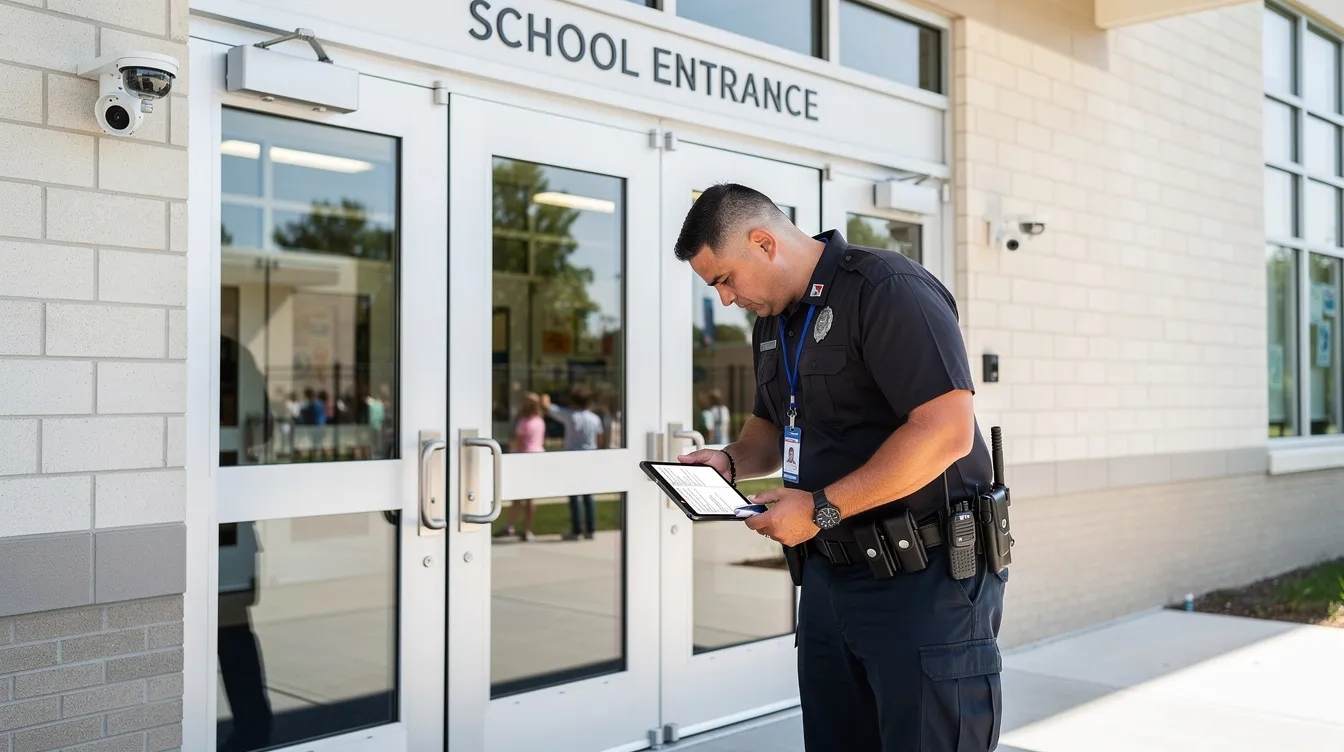
Maintaining a single controlled public entrance during the school day enhances security more than almost any other measure. Most schools are moving towards secure vestibules for main entryways, where all other exterior doors remain locked from the outside, functioning only as emergency exits. Schools should funnel visitors through a single secure entryway for screening before granting access to the school building.
Best practices for the main entry include a secure vestibule with two sets of doors, intercom and video verification, and forced-entry resistant glazing that cannot be easily smashed out. Visitor management systems combine identification verification with video intercoms to authenticate every guest before they proceed past the front office. Automatic door closers prevent doors from being propped open after use, and strict policies against propping doors open maintain a secure perimeter throughout school hours.
Impact Security’s retrofit glazing solutions, such as DefenseLite and AccessShield, can be installed over existing storefront glass in vestibules and entry points without full door replacement. This means you harden the most critical entry points on your school property without the cost and disruption of demolishing and rebuilding your front entrance. Door position switches alert school staff and security personnel if a door is propped open or unlatched, and IP cameras monitor traffic at entry points with advanced analytics to detect unauthorized access.
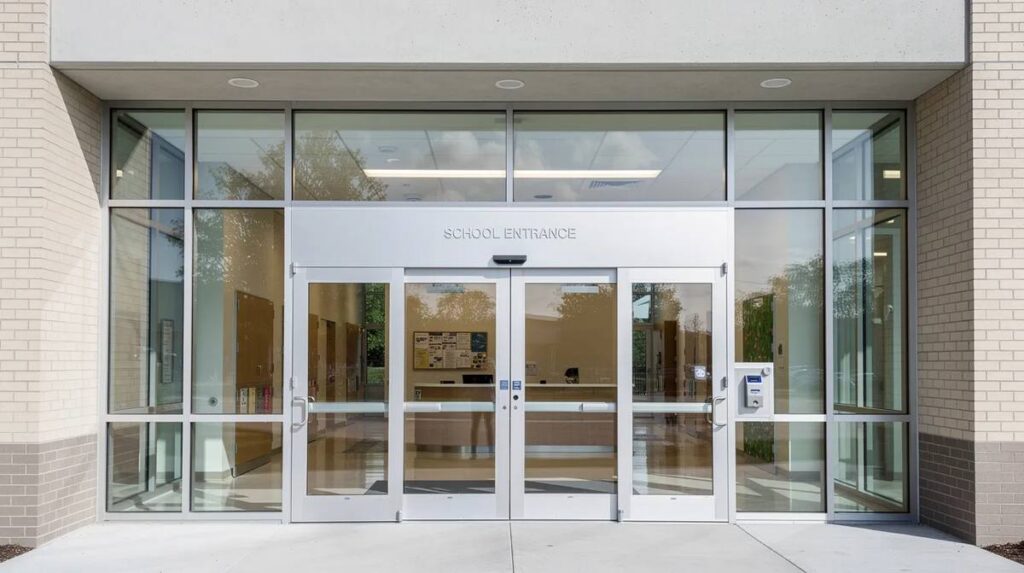
Daily operations matter just as much as hardware. Funnel all visitors through the office, never use magnets or wedges to defeat door locks, and integrate access control so a staff member can buzz in verified guests without unlocking all perimeter doors.
Classroom Doors and Classroom Security Locks
Interior classroom doors are the last line of defense if an intruder breaches the main entry. Classroom doors should be intruder-resistant and lockable, because once an attacker is inside a school environment, the ability to secure classroom doors is what separates a lockdown from a catastrophe. Ideally, classroom doors should be bulletproof or intruder-resistant, using solid core or steel doors paired with code-compliant classroom security locks.
Classroom doors should be capable of secure locking from the inside without a key. This requirement, codified in NFPA 101, ensures that any staff member can initiate a local lockdown instantly without stepping into a hallway. The lock must allow free egress from inside at all times, while providing an exterior key or credential override for emergency responders.
Understanding lock types matters for school administrators making purchasing decisions. Cylindrical lever locks are the most common in schools, while mortise locks offer heavier-duty performance for high-traffic doors. Classroom function locks require a key from outside but may not allow locking from inside without opening the door. Classroom security function locks solve this by enabling lock engagement from inside without opening the door, which is the current standard for safer schools.
Keep classroom doors locked during instruction. Avoid unapproved barricade devices that violate life safety codes. Train school staff on quick, repeatable lockdown procedures that every staff member can execute under stress.
Key Features to Look for in Classroom Door Locks
When evaluating school safety door locks and classroom door locks, look for these specific requirements:
- Lockable from inside without opening the door
- Free egress at all times, no special knowledge or tools required
- Exterior key or credential access for administrators and emergency responders
- Compatible with existing door prep (cylindrical or mortise)
- Hardware height between 34 and 48 inches above the floor
Key-operated locks are common but complex to manage across a campus with hundreds of openings. Classroom security locks that connect to networked access control enable remote lockdowns and provide audit trails, but they require power, network infrastructure, and IT support. Standalone mechanical locks with classroom security function offer a budget-friendly alternative with no electronics to maintain, though they lack lockdown capabilities across the entire school from a central location.
Improvised add-ons like drop bars, wedges, or aftermarket barricade devices may seem like a quick fix, but they can trap occupants and violate fire codes. State fire marshals consistently prohibit devices that require special knowledge, multiple motions, or tools to release from inside. These devices compromise life safety and can expose your district to liability.
Vision Panels, Classroom Door Windows, and Privacy
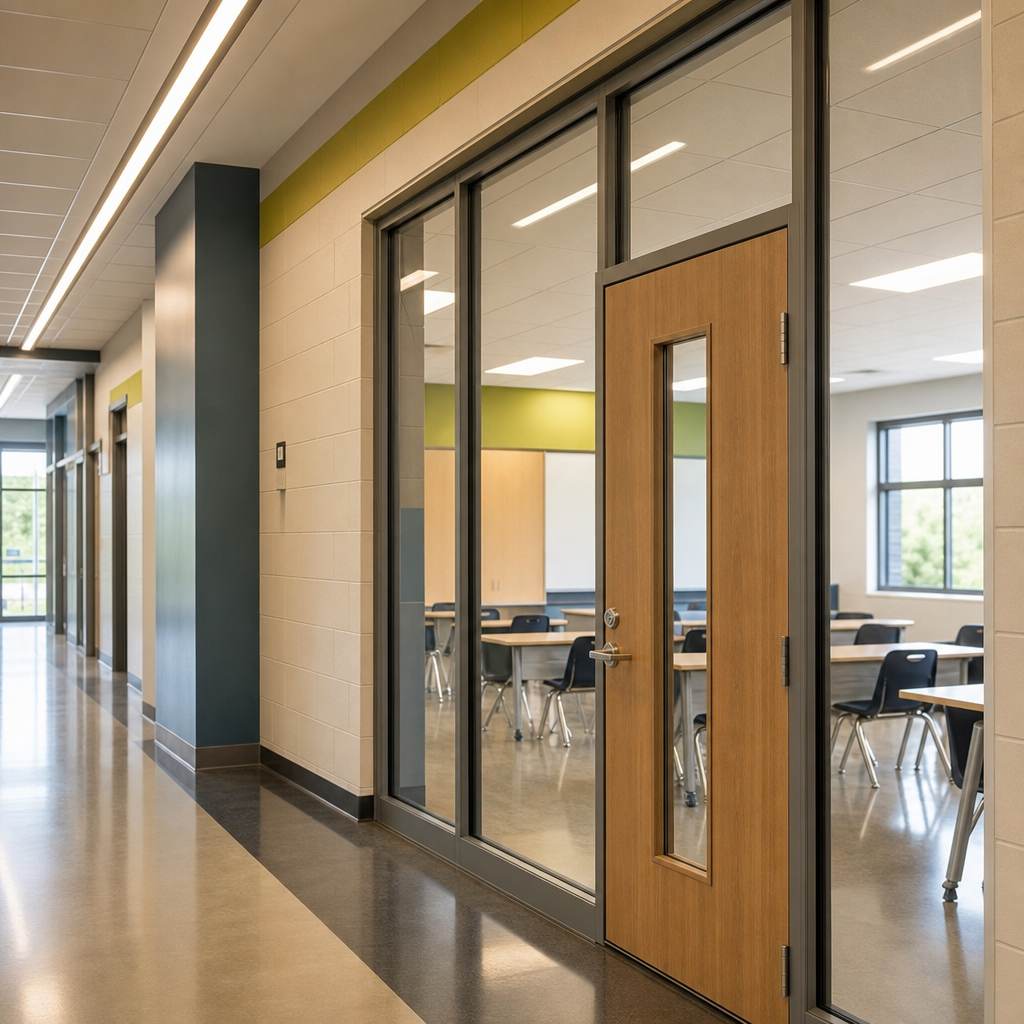
Vision panels in classroom doors serve a dual purpose: they support supervision and transparency but can become a weak access point if made with standard annealed or tempered glass. An attacker can shatter a tempered glass vision panel and reach through to manipulate the door hardware in seconds.
Forced-entry resistant polycarbonate shields, glass-clad polycarbonate, or DefenseLite retrofit panels can be installed over existing classroom door glass to deter forced entry and prevent quick smash-and-reach attacks on the lock. These systems maintain visibility while resisting sustained physical attacks with hammers, tools, and other implements.
Lockdown shades or quick-deploy coverings allow staff to block line of sight during an incident while maintaining code-compliant egress and fire ratings. Many districts have upgraded hundreds of classroom door windows incrementally during summer breaks, treating classroom door protection as a phased, multi-year project rather than an all-or-nothing investment.
Glazing, Door Frames, and Forced-Entry Resistance
In many school attacks, intruders bypass high-end door locks simply by breaking adjacent glass or sidelights, then reaching in to operate the hardware. The door itself may be strong, but if the glass beside it shatters on the first hit, the lock is irrelevant. This is the central vulnerability that retrofit security glazing addresses.
Retrofit security glazing involves custom clear shields installed over existing glass in doors, sidelites, and storefronts. These forced-entry security glazing systems are tested to forced-entry and ballistic standards, specifically ASTM F3561-22, without requiring full door replacement. Reinforced door frames and high-security locks resist forced entry attempts, but only when paired with glazing that cannot be quickly breached. Impact Security’s systems, including DefenseLite Pro impact security glazing, BulletShield, and RiotLite, can be engineered for specific threats: smash-and-grab, sustained forced entry, or handgun protection at typical school entry doors.
When evaluating existing frames and mullions, confirm they can support security glazing. Reinforce weak anchorage points. Maintain fire and life safety ratings where interior doors require fire-rated assemblies. The full system (glazing, frame, hardware, and anchorage) must perform as a unit.
Common Vulnerabilities Around School Entry Doors
Security professionals conducting assessments at school buildings routinely identify weak access points in these key areas:
- Narrow sidelights next to door locks on main entrances
- Large glass lites at front vestibules and glass doors
- Interior lobby doors with standard safety glass
- Unprotected windows adjacent to emergency exits and stairwell doors
A common break-in scenario involves an intruder shattering glass beside a mortise lock, reaching through to operate the strike plate or thumb-turn, and gaining entry in under ten seconds. Another involves prying aluminum storefront door frames that lack reinforcement.
Combining security glazing with robust door hardware (reinforced strikes, continuous hinges, and heavy-duty mortise locks) extends attack time from seconds to several minutes, which is often enough for a complete lockdown and emergency response. As additional security, many retrofit glazing systems also reduce outside noise and improve insulation, which matters for classrooms near busy roads or playgrounds.

Access Control Systems, Key Fobs, and Credential Management
Modern school door security relies on electronic access control systems that replace traditional keys with keycards, fobs, or mobile credentials. Access control systems grant or deny entry based on credentials, providing a level of management that physical keys simply cannot match. Electronic credential systems offer better access control than traditional keys because lost cards can be deactivated instantly, and access control systems can alert staff when doors are propped open.
Integrating exterior door locks with an access control platform allows scheduled locking programming that ensures doors lock automatically based on school hours. It also enables audit trails of who used which door and when, plus automated lockdown capabilities that allow administrators to lock all doors simultaneously during emergencies. Centralized monitoring connects access control and surveillance systems for 24/7 oversight, and electronic access control provides a centralized management option for securing entrances across multiple buildings.
Credential options for K-12 environments include:
- RFID cards or key fobs for daily staff access
- Mobile credentials via smartphone for security professionals and administrators
- PIN pads for restricted areas like server rooms or storage
- Visitor badges issued through the front office visitor management system
- Biometric authentication using fingerprint or facial recognition for secure areas such as front offices or safe rooms
IP cameras provide real-time monitoring and high-quality images at entry points. Video surveillance acts as a deterrent against potential crimes while surveillance systems help document incidents for review. Facilities teams should integrate access control with directory services for automatic removal of departing staff access, with clearly defined offboarding procedures.
Balancing Security, Usability, and Student Wellness
Over-restrictive door policies and excessive metal detectors can create a prison-like school environment that undermines the learning atmosphere. Entry security should integrate physical security equipment with policies and procedures in a way that preserves an open, light-filled campus. Well-designed access control plus secure glazing allows you to restrict access without making students feel surveilled at every turn.
Practical examples include daytime schedules that keep main entrances locked but allow quick buzz-through for parents during school hours, while interior circulation between classroom doors flows without constant badging for students. Thoughtful zoning, clear signage, and consistent staff training help avoid bottlenecks during arrival, dismissal, and after-school events. Mobile devices carried by staff can receive instant alerts, but technology must support, not replace, human procedures like visitor screening, drills, and consistent enforcement of keeping doors closed and latched.
Emergency Exits, Egress, and Code Compliance
Any door security upgrade must respect fire codes, requirements under the Americans with Disabilities Act, NFPA 101 (the Life Safety Code), and local building codes. Compliance with fire and life safety codes is critical when implementing security measures, and all security modifications must meet Americans with Disabilities Act standards for hardware height, operation, and accessibility.
Panic bars are essential for safe evacuation during emergencies. Exterior emergency exits should always be locked from the outside, always openable from inside with one motion via panic hardware, and monitored via door position switches tied to the access control or alarm systems. Emergency procedures should allow rapid evacuation while maintaining security.
For assembly spaces like gyms, cafeterias, and auditoriums, specify panic hardware on all emergency exits with fail-safe electrified locks where required. Clear exit signage must remain visible even after retrofit glazing is applied over sidelights and doors. Never add chains, hasps, padlocks on panic doors, or unofficial barricades to stairwell doors or interior doors. Engage your local fire marshal early in any door security project to avoid costly rework.
Budgeting, Grants, and Phased School Door Upgrades
Many school districts must stretch limited safety budgets while complying with state mandates and regulations like Alyssa’s Law. A phased approach based on risk makes resources pass further. Schools should conduct routine audits to identify vulnerabilities in door security, and regular inspections verify the functionality of locks, frames, and hinges in school doors before problems become emergencies.
Recommended prioritization framework:
- Main entries and vestibules (highest impact per dollar)
- Front offices, nurse stations, and admin suites
- Classroom doors and interior corridor doors lacking secure locks
- Secondary exterior doors and perimeter doors
Cost drivers include the number of openings, choice of security glazing protection level, existing door hardware condition, complexity of access control integration, and labor for installation during school breaks.
Regular maintenance checks are essential for security systems to remain functional over time.
Federal and state school safety grants are available through resources like SchoolSafety.gov, bond initiatives, and state-level programs. Impact Security works alongside security consultants and integrators to design phased, multi-year implementations that align with available funding cycles and emergency planning requirements.
Why Choose Impact Security for Entry Door and Classroom Door Protection
Impact Security specializes in retrofit security glazing systems, including DefenseLite, BulletShield, RiotLite, and AccessShield, engineered specifically for doors, classroom windows, and storefronts across K-12 campuses. Our active shooter mitigation solutions are tested to recognized forced-entry and ballistic standards, including ASTM F3561-22, and installed over existing glass to minimize operational disruption.
We offer nationwide coverage through certified dealers, with fabrication centers in Marietta, GA and Glendale, AZ. Our turnkey approach covers assessment, engineering, fabrication, installation, and warranty service. Common school projects include hardening main entry vestibules without replacing existing doors, adding forced-entry resistant shields over classroom door windows, and building custom safe-room solutions for front offices or nurse stations.
What sets us apart is the ability to coordinate with your existing door hardware, access control vendors, and security policies. We work within your building codes, fire ratings, and ADA requirements, delivering a school security solution that is both tested and compliant.
How the Retrofit Door Security Process Works with Impact Security
The process begins with an initial consultation where school administrators share concerns, floor plans, and security priorities. An Impact Security team then conducts a site survey to identify weak access points, assess existing doors and glazing, and document current hardware conditions across the school building.
From there, our engineers develop specifications for glazing and framing tailored to your threat profile and budget. Fabrication occurs at our facilities, with custom-cut panels prepared for each opening. Installation is typically scheduled during summer breaks to minimize classroom disruptions, with most school entry door projects completing assessment in spring, fabrication in early summer, and installation before the fall semester.
Throughout the process, Impact Security collaborates with facilities managers, security professionals, architects, and Authorities Having Jurisdiction to confirm that every upgrade supports code compliance, egress, and ADA requirements. We deliver as-built drawings, product data sheets, and test reports that help districts justify funding and meet audit or inspection requirements.
FAQs: Entry Door Security for Schools
How do we know if our current classroom doors are secure enough?
Test whether each door can be locked from inside the classroom without opening the door. If it cannot, it does not meet NFPA 101 classroom security function requirements. Also inspect vision panel glass, the strike plate, frame condition, and hinges. If any of these components are weak, the door is a vulnerability regardless of the lock type.
What’s the difference between security film and a retrofit glazing system like DefenseLite?
Security film is a thin adhesive layer applied to existing glass that may slow down breakage but is not a substitute for a fully tested forced-entry system. DefenseLite is a rigid polycarbonate shield with engineered framing that achieves up to ASTM F3561 Level 8 performance, providing minutes of resistance rather than seconds.
Can we upgrade glass around existing door locks without replacing the entire door?
Yes. Retrofit glazing systems are designed to be installed over existing glass in doors, sidelites, and storefronts. This means you can harden the glazing around your current mortise locks or classroom door locks without removing or replacing the door itself.
Will stronger door security interfere with emergency exits and fire codes?
It should not, when specified correctly. All security glazing and hardware upgrades must maintain free egress from inside, panic hardware operation, and fire ratings. Engaging your local fire marshal and AHJ during the planning phase prevents compliance issues.
How long does it take to retrofit entry doors and classroom doors in an active school?
Most projects are completed during a single summer break. Assessment and engineering happen in spring, fabrication occurs in early summer, and on-site installation wraps before fall classes begin. Smaller projects covering a single vestibule can be completed in days.
Are there grants or funding sources that help pay for school door security upgrades?
Yes. Federal resources through SchoolSafety.gov, state-level active threat mitigation grants, bond initiatives, and programs tied to laws like Alyssa’s Law all provide funding pathways. Impact Security regularly helps districts align project scopes with available grant timelines and requirements.
Call to Action: Plan Your School’s Entry Door Security Upgrade
Protecting students starts at the door. If your district has not conducted a formal door and glazing security assessment, now is the time to identify where your campus is most vulnerable and what upgrades will have the greatest impact.
Impact Security offers free, no-obligation assessments including remote plan reviews and on-site surveys for school districts across the United States. Gather your existing floor plans and door schedules, prioritize your main entrances and classroom corridors, and contact our team by phone or web form for a custom proposal tailored to your threat profile and budget.
Strengthening school entry doors, classroom doors, and emergency exits is one of the most impactful, practical steps any district can take to make every school safe for students and staff today.