Glass is often the weakest point in a school building. When a classroom door is locked and reinforced, the path of least resistance shifts to the nearest window or vision panel. Classroom window security addresses this gap head-on: it aims to provide privacy during lockdowns, delay intruders from breaching openings, and prevent unauthorized entry into occupied spaces where students and teachers are sheltering.
This guide covers the specific risks facing classroom windows today, how common window coverings compare with engineered security glazing, best practices for lockdown readiness, how retrofit projects work from assessment to installation, mistakes that waste budgets, and how to select the right solutions for your district. If you manage facilities or campus safety for a K-12 school, this is the playbook.
Table of Contents
Why Classroom Window Security Matters in Modern School Safety Plans
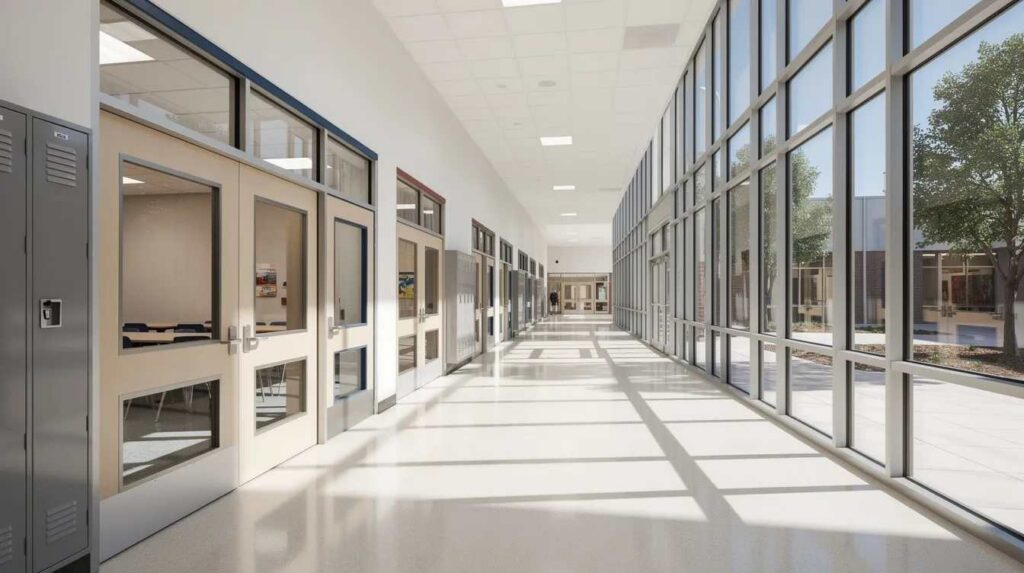
Key Risks Facing Classroom Windows and Vision Panels
Classroom Window Coverings vs. Physical Security Glazing
Best Practices for Classroom Window Security During School Lockdowns
Retrofit Security Glazing for Classroom Windows and Doors
How a Classroom Window Security Retrofit Project Typically Works
Common Mistakes Schools Make with Classroom Window Security
Selecting the Right Classroom Window Security Solutions for Your District
Why Choose Impact Security for Classroom Window and Door Glazing Upgrades
FAQs About Classroom Window Security and School Lockdowns
Next Steps: Strengthening Classroom Windows with Impact Security
Why Classroom Window Security Matters in Modern School Safety Plans
Between 2018 and 2025, multiple incidents exposed how glass becomes the critical failure point in a lockdown. At Sandy Hook Elementary in 2012, the attacker shot through a glass panel next to locked entrance doors and walked in. At Parkland in 2018, the shooter attempted to fire through hurricane-proof windows and reportedly failed because the glazing held. The difference between those outcomes was the glass itself. Securing classroom windows is vital for school safety, and every district should be evaluating its glazing as seriously as its door hardware and access control.
Classroom windows serve a dual purpose that creates tension for safety planners:
- They bring in natural light, allow teacher supervision of hallways and outdoor areas, and create open, welcoming learning environments.
- They also represent critical vulnerabilities during a forced entry attempt, an active threat, or even severe weather-particularly ground-floor openings and door window vision panels in high-traffic corridors.
Uncovered windows can expose students to potential harm by giving an intruder direct sight into occupied rooms. Active shooter events last an average of 8 minutes, and many conclude before law enforcement arrives. This means that delaying entry by even 60 to 90 seconds through stronger glass and coverings can be the difference between containment and breach. Integrating windows into the overall security plan enhances safety far more than treating them as an afterthought. Classroom window security must work with door locks, access control, and lockdown procedures to form a coherent defense.
Key Risks Facing Classroom Windows and Vision Panels
Not all window damage comes from intentional attacks. Schools face four distinct impact categories, and each one requires a different response.
- Forced entry and active threat scenarios. An intruder may use tools, firearms, or blunt objects to breach classroom windows or the small vision panel beside a classroom door. Breaking that door window glass can let someone reach in and manipulate a lock in seconds. This is the highest-stakes risk and the one that drives most security upgrades.
- Vandalism and everyday abuse. Rocks, bricks, BB guns, and thrown sporting equipment around playgrounds, parking lots, and athletic fields cause repeated glass breakage in schools across every district. A middle school in a suburban area may replace several panes per year. The cumulative cost and disruption add up fast.
- Storm and weather events. High winds, tornadoes, derechos, and hail from 2020 through 2025 shattered unprotected classroom windows in districts across the Midwest, Southeast, and Gulf states. Glass breakage from storms sends shards inward, creating a fire hazard and injury risk for anyone in the room. Laminated or impact-rated glazing retains fragments and keeps openings sealed.
- Accidental impacts. Students colliding with glass, lab carts rolling into vision panels, custodial tools striking windows during routine cleaning-these everyday incidents crack standard glass and create liability exposure. Safety glazing helps, but higher-threat environments need more.
Each risk type may call for a different combination of window coverings, security glazing, or framing and hardware upgrades.
Classroom Window Coverings vs. Physical Security Glazing
There is a significant gap between hiding occupants from sight and physically stopping someone from getting through the glass. Most schools need both capabilities, but it helps to understand what each one actually does.
- Lockdown window coverings. Pull-down blackout shades are inexpensive and easy to install, and they serve one purpose well: blocking visibility into classrooms during an emergency. Products like ALP Lockdown Shades require no tools for installation, making them incredibly easy to deploy. Roller blinds and stick-on blackout clings using an adhesive strip or Velcro strip offer similar concealment. Covering windows reduces visibility for potential intruders, but these fabric-based solutions do nothing to stop glass from shattering or a person from climbing through.
- Privacy and semi-security options. Frosted and one-way window films reduce sight lines during normal school days and support everyday privacy in administrative offices and counseling rooms. Security films can delay entry during forced break-ins by holding broken glass in place, but they do not strengthen the frame or lock area and offer limited standalone protection.
- Physical security glazing. Forced-entry-resistant retrofit panels, such as engineered polycarbonate shields like DefenseLite or laminated glass systems, mount directly over existing glass to create a physical barrier that resists repeated impacts. These are engineered to keep glass from being breached-not just concealed.
- The layered answer. Effective security strategies require a layered approach. Use window coverings for fast visual concealment during school lockdowns, and pair them with security glazing to delay or prevent an intruder from gaining access. One without the other leaves a gap.
Best Practices for Classroom Window Security During School Lockdowns
Here are specific, actionable steps administrators and safety teams can implement now.
- Pre-install code-compliant shades on every vulnerable opening. Every classroom door window and accessible classroom window should have a blackout shade or lockdown covering that deploys in one motion. Blackout shades provide immediate privacy during lockdowns, and products like Blackout EZ shades provide immediate privacy during lockdowns as well. Choose standard sizes or custom sizes based on exact glass width and length measurements to eliminate gaps. A shade that leaves a visible gap at the w x l edges defeats its purpose.
- Standardize lockdown procedures. Written protocols should specify when to cover classroom windows, how to position students away from glass, and how to coordinate with the main office and law enforcement. Rapid-deployment coverings reduce visibility to enhance security during lockdowns, but only if every teacher knows exactly how and when to use them. Proper training on emergency procedures is crucial for window management.
- Drill regularly. Practice at least twice per semester. Include window covering deployment in every drill, verify that sight lines are eliminated, and time responses. Allowing teachers to rehearse these steps builds muscle memory that matters in a lockdown emergency.
- Keep window areas clear. Keep the areas around windows clear for rapid access during emergencies. Objects stacked on sills or leaning against glass can obstruct shade deployment, create projectiles, or slow evacuation.
- Maintain window hardware. Best practices include maintaining secure and well-functioning windows. Window locks and latches should be regularly inspected and maintained-a lock that sticks or a latch that doesn’t engage is a vulnerability hiding in plain sight.
- Balance normal-day visibility with protection. On regular school days, classrooms benefit from natural light and supervision through windows. Use partial coverings, glazing that remains clear but impact-resistant, and policies that still allow teachers to monitor hallways and exterior areas.
Retrofit Security Glazing for Classroom Windows and Doors
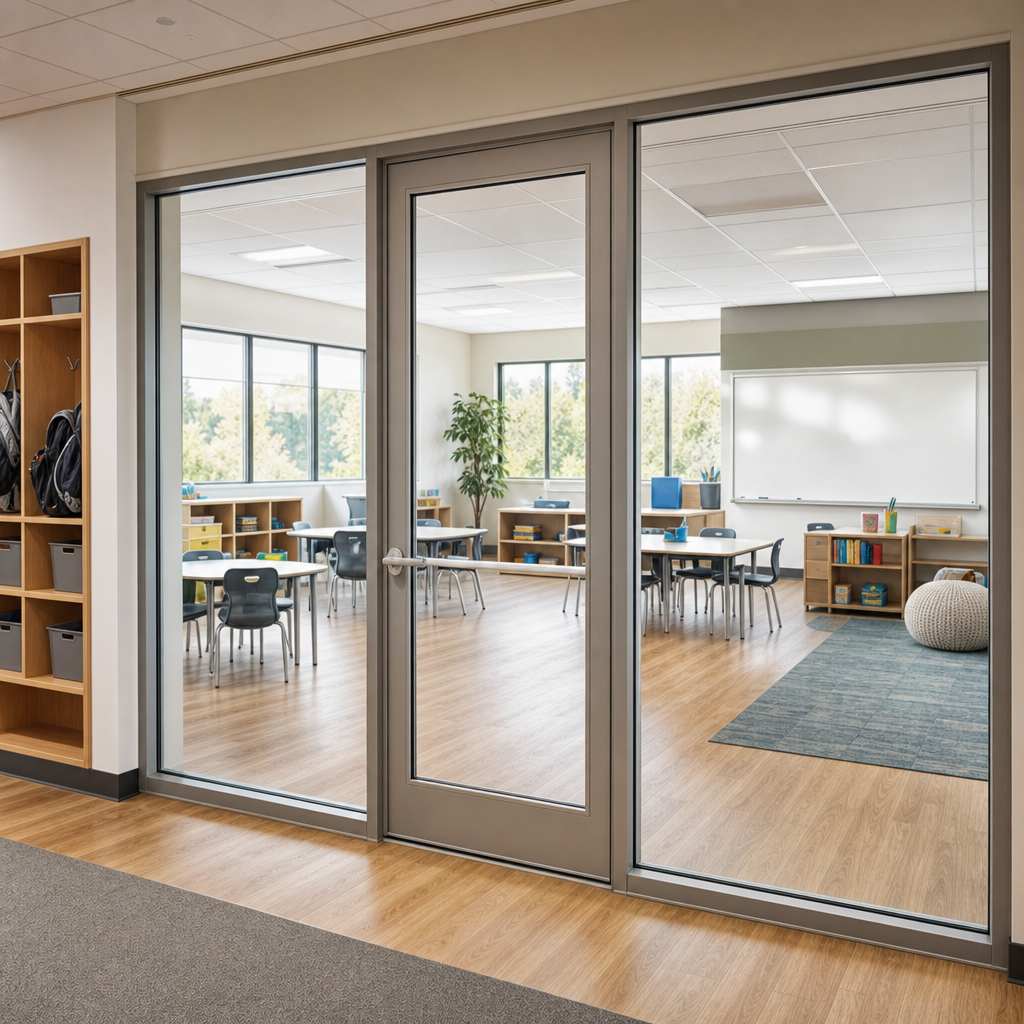
Most K-12 campuses were built before current threat realities existed. Replacing every window is rarely feasible, which is why retrofit glazing-adding engineered shields over existing glass-has become the practical standard. This approach preserves the original window frame and structure while dramatically increasing the opening’s resistance to impact and penetration.
Retrofit systems are ideal for aging campuses built before 2000, where window sizes, framing materials, and structural conditions vary widely from building to building and room to room, making forced-entry security glazing retrofits especially valuable.
- Forced-entry-resistant systems. Products like Impact Security’s DefenseLite retrofit security glazing mount over existing classroom windows, door sidelites, and vestibule glass to keep intruders from getting through even after repeated blunt-force impacts. These systems create a shield that holds when standard tempered or annealed glass would shatter and fall away in seconds.
- Ballistic-resistant options. For school districts facing elevated threat levels, ballistic glass and BulletShield overglazing can resist breakage and bullets. Systems like BulletShield are designed to mitigate certain firearm threats and buy valuable time for law enforcement to respond. Ballistic glass resists breakage and delays intruder access across a range of tested scenarios. Ballistic glass also delays forced entry during emergencies, extending the window of protection well beyond what standard glazing can offer.
- Blast and riot protection. Exterior classroom windows near public streets or parking lots face risks from vehicle impacts, severe weather debris, and civil unrest. Laminated polycarbonate shields and ballistic-rated security window films contain broken glass and protect occupants from flying fragments, addressing both storm and human-caused threats.
- Additional features beyond security. Many retrofit glazing systems include UV and solar control coatings, noise reduction properties, and energy efficiency gains. These additional features help schools meet budget and sustainability goals while improving protection-a great value proposition when presenting upgrades to school boards.
How a Classroom Window Security Retrofit Project Typically Works
If your district is planning upgrades for a 2026 bond program or grant cycle, here is a realistic step-by-step overview.
- Site assessment. Security glazing professionals walk each building, photograph and measure every classroom window, classroom door vision panel, media center, office, and key corridor opening. They document frame types, hardware conditions, and the correct size for each opening.
- Threat and code review. Solutions are aligned with local fire codes, egress requirements, and existing school security standards. This includes coordination with authorities having jurisdiction and local law enforcement to ensure that new glazing does not create a fire hazard or block required evacuation routes.
- Engineering and fabrication. Custom-sized panels are produced in controlled facilities based on precise field measurements. Impact Security operates fabrication centers in Marietta, GA and Glendale, AZ, allowing rapid turnaround for school districts nationwide.
- Installation scheduling. Work is phased during school breaks, evenings, or weekends to avoid disrupting instruction. Pilot installations in sample classrooms come first, allowing teachers and principals to test how the new glazing works with existing window coverings and room layout. Easy installation methods mean most panels go in within one to two hours per opening.
- Teacher and staff orientation. Staff learn how the new classroom window systems work alongside existing classroom doors, locks, access control, and lockdown procedures. This step ensures that everyone knows how to use every layer of protection in emergency situations.
Common Mistakes Schools Make With Classroom Window Security
Budget pressure leads to shortcuts. Shortcuts lead to wasted money and false confidence.
- Relying only on blackout fabric shades or low-cost curtains. These hide occupants but leave classroom windows completely vulnerable to quick forced entry. A shade does not completely block a fist, a tool, or a bullet from passing through glass.
- Ignoring classroom windows when upgrading door hardware. Districts spend heavily on high-security classroom door locks while leaving a small, unprotected vision panel right beside the lock. An intruder breaks that panel, reaches in, and the expensive lock becomes irrelevant.
- Choosing generic window films without certification. Off-the-shelf safety film with no tested rating against forced entry, ballistic, or blast standards gives a false sense of security. If the product has not been tested to ASTM E2395, F3561, or similar standards, you do not know what it will actually do under stress.
- Overlooking code and egress rules. Window modifications should comply with fire and building codes. Installing non-rated bars, boards, plywood, or ad-hoc coverings can interfere with evacuation and violate fire safety requirements-creating legal liability on top of safety risk.
- Failing to standardize across campus. Mixing many different window coverings, glazing types, size window configurations, and hardware from building to building confuses teachers and first responders during emergencies. Consistency saves lives.
Selecting the Right Classroom Window Security Solutions for Your District
Every district’s mix of risks, building ages, and budgets is different. A one-size-fits-all product purchase almost always leaves gaps.
- Create a prioritized list of openings. Prioritize security upgrades on vulnerable windows like ground floors, classroom windows facing exterior grounds, classroom door windows in high-traffic corridors, entrances, and administrative offices. These are the openings an intruder is most likely to target first.
- Layer your approach. Combine impact-resistant retrofit glazing with fast-deploy window blinds and window coverings. This addresses both visibility control and physical breach resistance-two different problems that require two different tools.
- Demand documented testing. When comparing vendors, require evidence of testing to ASTM forced-entry standards such as F3561 and E2395, plus blast and ballistic ratings where applicable. Third-party certifications are the only reliable way to compare products. Resources like the ASTM F3561 standard specifically evaluate full fenestration systems, not just glass alone.
- Pilot before you deploy district-wide. Install in a sample school or wing first. Collect feedback from principals, teachers, and school resource officers on light transmission, ease of shade deployment, and compatibility with existing tools and hardware before committing to a campus-wide rollout.
Why Choose Impact Security for Classroom Window and Door Glazing Upgrades
Impact Security is a specialized U.S. manufacturer and installer of retrofit security glazing systems built specifically for high-risk environments, including K-12 schools, government facilities, and commercial properties. The company operates nationwide through a network of certified dealers and installers, with a focus on B2B and B2G projects.
- Products like DefenseLite are engineered to mount over existing classroom windows and doors to resist forced entry, vandalism, and riot conditions-without tearing out and replacing entire window units. This protect-in-place approach saves time, money, and instructional days, and DefenseLite product FAQs address common technical and installation questions for facilities teams.
- BulletShield and other ballistic-resistant systems serve higher-threat campuses, safe rooms, and administrative areas that need additional protection against firearm threats as part of broader active shooter mitigation strategies.
- Impact Security provides turnkey service: on-site assessment, custom engineering, fabrication in Marietta, GA and Glendale, AZ, professional installation, and ongoing warranty support. There is no need to coordinate multiple vendors, and their security glazing expertise and company background help districts navigate complex projects with confidence.
- The company has deep experience working with school districts, government agencies, and code officials across the United States, including coordination with bond programs and grant funding requirements that many districts depend on.
- Impact Security’s systems are designed to work alongside existing access control, cameras, and classroom door hardware to create a cohesive school security strategy-not a standalone fix, and AccessShield door retrofit systems extend that protection to the doors themselves.
FAQs About Classroom Window Security and School Lockdowns
Do we need both classroom window coverings and security glazing to improve school safety? Yes. Coverings like blackout shades address visibility-they keep an intruder from seeing who is inside during a lockdown. Security glazing addresses the physical barrier-it prevents or delays someone from breaking through the glass. Each element plays a critical role in a layered defense, and one does not replace the other.
Can retrofit security glazing fit our existing classroom windows and standard sizes? Retrofit panels are custom fabricated based on precise field measurements, so they accommodate virtually any window sizes, including non-standard openings common in older buildings. Lead times typically run several weeks from measurement to delivery, with easy-to-install mounting systems that minimize disruption.
How do these systems perform in emergency situations such as school lockdowns or active threats? Systems tested to ASTM F3561 Level 8 have withstood combined ballistic and forced-entry assaults for over 13 minutes in lab conditions. Since active shooter events last an average of 8 minutes, that delay can cover the entire duration of a typical event and buy valuable time for law enforcement response.
Will security glazing make our classrooms darker or harder to ventilate? Clear laminated glass and polycarbonate panels preserve optical clarity and light transmission. UV and solar coatings can manage glare and heat. If existing windows are operable, retrofit systems can be designed to maintain ventilation. Classrooms stay bright and functional.
How much does a classroom window security upgrade cost, and are grants available? Cost depends on variables like window count, threat level, and product type. Retrofit approaches are generally less expensive than full window replacement. Many state and federal school security grant programs-including those in Tennessee, Texas, and other states with recent mandates-can offset costs. Impact Security’s team can help identify applicable funding resources.
How long does installation take per classroom window? Most individual panels install in one to two hours. Campus-wide projects are phased over summer breaks, weekends, or evenings so that instruction is not interrupted. A pilot classroom or wing can often be completed in a single day, giving your team a chance to evaluate the results before scaling up.
Next Steps: Strengthening Classroom Windows with Impact Security
Classroom window security is not a luxury line item-it is a top priority that ties your lockdown procedures, classroom doors, and access control into a complete safety system. Every day that vulnerable glass remains unprotected is a day your other security measures have a gap.
- Facilities directors, superintendents, and campus safety leaders can request a free assessment or estimate from Impact Security for their classroom windows, doors, and other vulnerable glass openings across the district.
- Reach out through the online request form, call directly, or schedule a walkthrough with a certified dealer or installer in your region. Impact Security’s team will coordinate with your timeline and budget.
- Most upgrades can be completed as retrofits without major construction, allowing schools to dramatically improve protection before the next academic year begins. The process starts with a single conversation.