Table of Contents
Introduction
Why Lobby Security Glazing Matters
Threats Facing Commercial Lobbies
Types of Lobby Security Glazing
Bullet-Resistant & Ballistic Protection Options
Retrofit vs. New Construction Lobby Solutions
Design, Aesthetics & Occupant Experience
Planning, Cost & Implementation
Why Choose Impact Security
FAQs
Next Steps & Call to Action
Introduction: What Is Commercial Lobby Security Glazing and Why It Matters in 2026
Commercial lobby security glazing refers to enhanced, impact resistant glazing systems engineered specifically for entrance areas, reception zones, and atriums of commercial buildings. These systems range from laminated security glass to bullet resistant glass and glass clad polycarbonate assemblies, all designed to protect building entrances from high-risk threats while preserving the welcoming character of your space.
Between 2024 and 2026, rising smash and grab crime, active threat incidents, and civil unrest have forced building owners and facility managers to harden lobby glass – without turning their lobbies into bunkers. Security glazing can enhance occupant safety and delay unauthorized entry, making it a foundational layer in any modern security strategy.
Impact Security, the U.S. manufacturer behind DefenseLite and BulletShield, specializes in retrofit security glazing for existing commercial properties including financial institutions, healthcare facilities, and Fortune 500 headquarters. In this article, you’ll learn about the threats lobbies face, glazing options for both forced entry and ballistic protection, retrofit methods, design considerations, costs, and how to choose the right solution.
Why Lobby Security Glazing Is Critical for Commercial Building Security
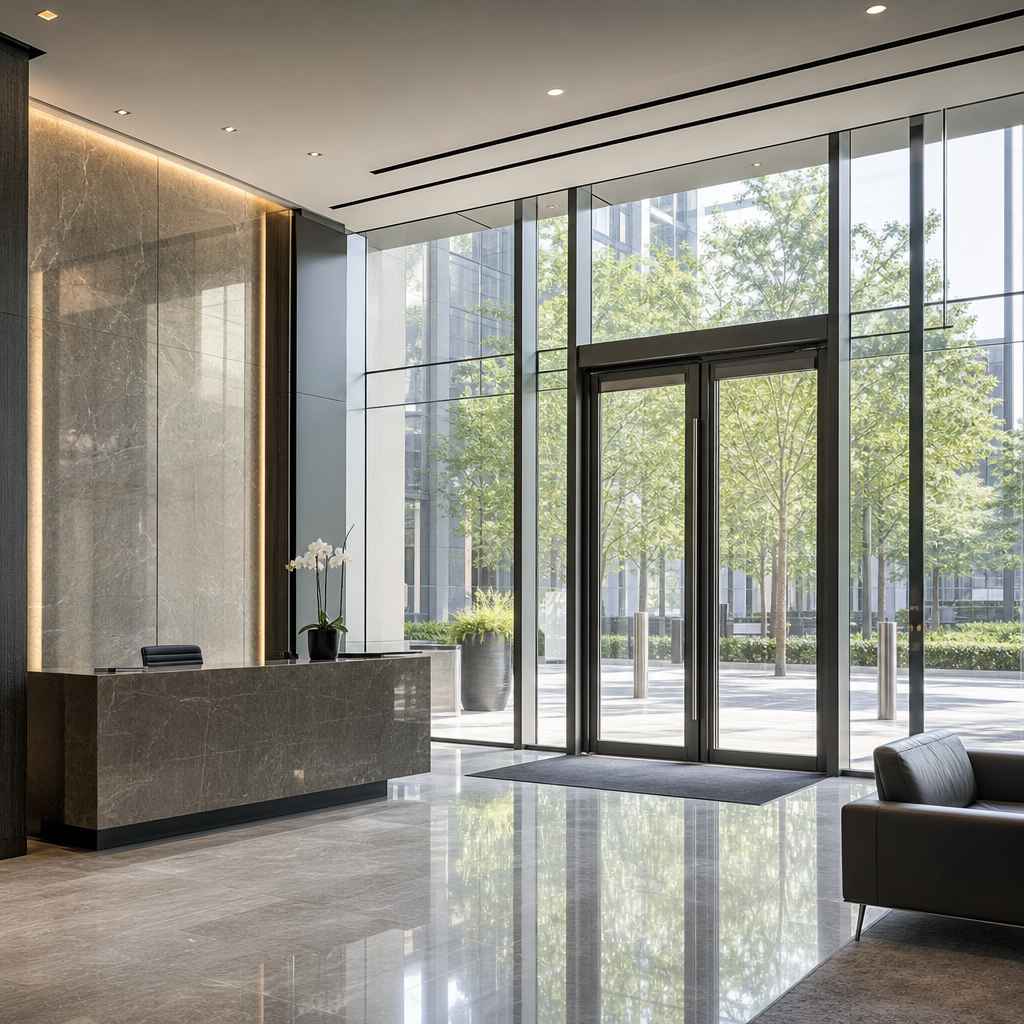
Commercial lobbies serve a dual role: they welcome occupants and visitors alike while acting as the primary security boundary for office towers, hospitals, government buildings, and mixed-use complexes. That makes them the most vulnerable entry points on any property.
Standard commercial glass – whether annealed or tempered – typically shatters after just a few blunt-force impacts. Once breached, it creates a wide-open access point and scatters dangerous flying glass shards. Security glass delays intruders, allowing time for response teams to intervene. It also slows down unauthorized access to building entrances, giving forced entry resistant doors and windows, access control systems and on-site personnel the seconds they need to lock down an entire facility.
Lobby security glazing works alongside access control, cameras, guards, and intrusion detection as part of layered commercial building security. The key goals are straightforward: delay or deny forced entry, provide physical protection for occupants, and keep the building operational after an incident by minimizing damage and downtime. Security glazing can also provide ballistic resistance for sensitive areas like reception desks and teller lines. And beyond safety and security, security glass enhances property value and attracts quality tenants – a real consideration for commercial properties competing for leases.
Common Threats Facing Commercial Lobbies and Entry Spaces
Threat profiles vary by location and building type, but lobby glass is consistently targeted because it is accessible and publicly visible. A proper glazing strategy starts with understanding what your building actually faces.
Forced entry attempts remain the most common threat. Burglars or disgruntled individuals use sledgehammers, bricks, or crowbars against lobby doors and sidelites. Standard glass can fail in under 30 seconds under repeated blows. Security glazing is designed to absorb impact forces from blunt objects and delay forced entry attempts significantly, buying critical response time.
Smash and grab incidents are increasingly common in mixed-use or retail-connected lobbies where luxury brand displays or electronics kiosks sit just inside glass walls. Storefront security solutions for glass doors and windows deter theft by making glass difficult to breach quickly, turning what was a 15-second break-in into several minutes of visible, noisy effort.
Vandalism and civil unrest – thrown objects, rioting, politically motivated damage – target high-profile corporate or government offices in city centers. Riot glass and reinforced shields absorb repeated impacts without catastrophic failure.
Ballistic threats include armed robberies, targeted violence, and active shooter events at banks, hospitals, corporate campuses, and municipal buildings. Active shooter mitigation solutions and UL 752 bullet resistant standards define the tested protection levels these spaces require.
Less obvious risks include insider threats accessing card readers or security desks through compromised glass, undermining access control systems entirely. Security glazing reduces the risk of injury from flying glass during incidents, protecting everyone inside.
Types of Security Glazing Solutions for Commercial Lobbies
Commercial lobby security glazing spans a spectrum – from enhanced laminated glass to fully ballistic assemblies – chosen based on threat assessment, building codes, and budget. Different levels of security glazing are suitable for different types of buildings, so understanding the materials matters.
Laminated security glass bonds multiple glass plies with PVB or ionoplast interlayers. Laminated layers prevent shattering into dangerous shards, and laminated security glass absorbs impact and delays forced entry. It is ideal for storefronts and lobbies in lower threat environments – corporate offices, hospitality, and retail spaces where forced entry resistance is the primary concern. Laminated security glass holds together when struck, keeping the opening intact.
Polycarbonate glazing is made from impact-resistant plastics and delivers exceptional performance against repeated heavy blows. Polycarbonate is highly durable and can absorb heavy impacts, making it the go-to for high risk retail environments and interior lobby separations like reception counters and other safety and security glass applications. Acrylic is best for low- to moderate-threat environments where lighter protection suffices.
Glass clad polycarbonate combines glass and polycarbonate layers into a hybrid makeup that delivers high-level ballistic protection. BulletShield retrofit security glazing panels and similar glass clad polycarbonate systems are best for high-threat environments and are widely used in government and military buildings, critical infrastructure lobbies, and executive suites.
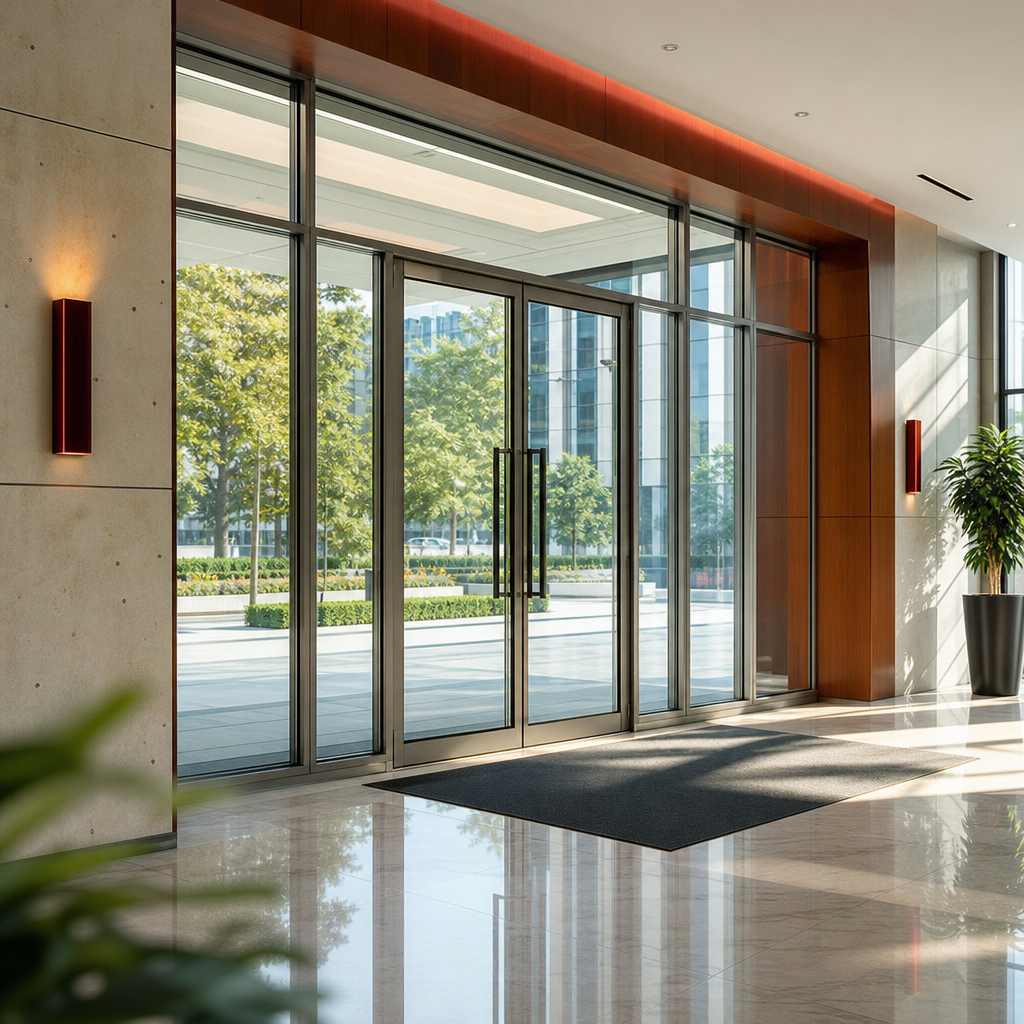
Security framing methods enhance the effectiveness of security glazing – reinforced aluminum or steel frames anchored to structure ensure the panel stays in place. Security glazing is engineered to remain in its frame even when damaged, so the barrier holds.
Impact Security’s DefenseLite (forced entry and riot resistant) and BulletShield (ballistic protection) mount over existing glass as retrofit shields rather than requiring full replacement – a key advantage for existing structures.
Bullet-Resistant & Ballistic Protection for Lobbies Exposed to Higher Threats
There’s an important distinction: “bullet resistant” is the accurate industry term, while “bulletproof” is technically inaccurate. No glazing system is infinitely impervious. Building owners should look for tested, certified bullet resistant glazing that meets published safety standards.
UL 752 defines eight protection levels. For most commercial applications:
| UL 752 Level | Typical Caliber | Common Lobby Applications |
|---|---|---|
| Level 1 | 9mm handgun | Corporate lobbies, retail entries |
| Level 3 | .44 Magnum | Financial institutions, healthcare facilities |
| Level 5–7 | .223/5.56mm rifle (AR-15) | Government buildings, critical infrastructure |
Specialized ballistic-rated glazing resists certain firearm threats by using laminated glass, polycarbonate, or glass clad polycarbonate layers that absorb and dissipate bullet energy without allowing penetration to the protected side. Comprehensive bulletproof windows and doors and glass security solutions comply with standards for ballistic and forced entry resistance, giving specifiers confidence.
Practical use cases include bank lobbies with bullet resistant teller lines, hospital emergency department entries, data center reception areas, and municipal building lobbies open to the public. You should select glazing based on specific threats like forced entry or ballistic attacks – not assumptions.
Critically, the entire assembly must perform: matching ballistic glass with properly engineered framing, doors, and hardware ensures the glazing, not just the panel, meets requirements. Impact Security’s BulletShield retrofit system adds ballistic protection to existing lobby storefronts without full façade demolition.
Retrofit vs. New Construction: How Lobby Security Glazing Is Implemented
Most 2024–2026 projects are retrofits on existing commercial properties, though new construction increasingly specifies security glazing at main entrances from day one. Purpose-built commercial security window solutions integrate security glazing from the start, but retrofit remains the faster, less disruptive path for most buildings.
Retrofit security glazing involves stand-off shield systems mounted to the interior or exterior of existing glass. Backglazing reinforces existing windows without exterior changes – a major advantage when preserving architectural character or avoiding landlord-tenant disputes. Laminated security glass holds together when struck, so even the original pane contributes to the barrier.
Solutions like DefenseLite and BulletShield preserve existing glass and framing, enable faster installation schedules, and deliver lower total project cost versus full replacement.
Security glass delays forced entry attempts by intruders, and security glass installation is crucial for high-risk entry points like ground-floor lobbies and side entrances.
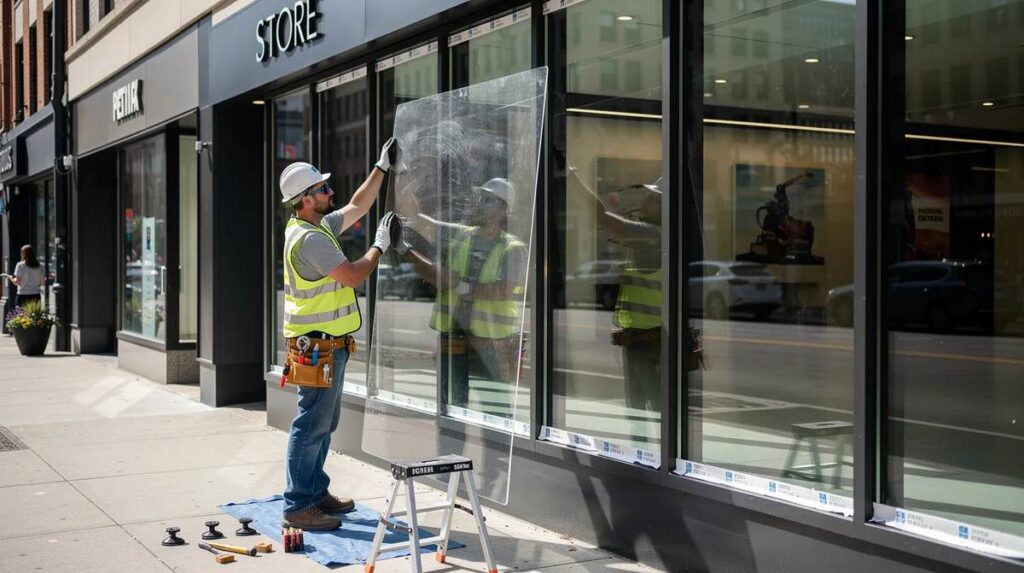
A typical Impact Security project follows this workflow:
Full replacement is appropriate during major façade renovations, when existing glass is severely damaged, or when upgrading to blast-resistant curtain wall systems in high risk environments.
- On-site risk assessment and threat modeling
- Measurement and engineering
- Fabrication at facilities in Marietta, GA or Glendale, AZ
- Phased installation by certified crews during off-hours
- Final inspection, warranty, and ongoing service
Integration with life-safety features is non-negotiable: egress routes, panic hardware, ADA compliance, and access control transitions must all remain code-compliant throughout the upgrade.
Design, Aesthetics, and Occupant Experience in Secure Commercial Lobbies
Modern commercial lobby security glazing must support branding, transparency, and daylighting – not just protection. Security glazing enhances the architectural appearance of commercial lobbies when thoughtfully specified.
Clear, low-distortion security glazing maintains views and natural light while eliminating the visual “jail bar” aesthetic that older solutions created. Security glazing maintains visibility and aesthetic appeal while providing protection, and architects should consider aesthetic requirements when selecting security glazing. Retrofit shields use neutral or custom-colored framing to blend with existing mullions, stone, wood, or metal finishes.
Impact Security engineers lobby systems to minimize reflections, color shift, and haze. Reception desks, digital directories, and artwork remain clearly visible from inside and outside. Security glass can enhance property value and tenant appeal – tenants want to feel safe without feeling confined.
The secondary performance benefits matter more than most people expect:
- Security glazing can provide UV protection and reduce energy costs. Security glass blocks harmful UV rays, protecting interiors and furnishings.
- Security glazing can improve energy efficiency and noise reduction – critical for busy street-level lobbies in commercial spaces where bulletproof windows and doors with security window film and similar systems are deployed.
- High-performance security glazing reduces heat transfer significantly, contributing to energy efficiency goals.
Occupants and visitors alike feel safer when security is integrated subtly into the architecture rather than expressed as overt fortification.
Planning, Cost, and Implementation Considerations for Lobby Security Glazing
Costs vary widely based on performance level, lobby size, existing framing, and whether the approach is retrofit or new construction. Assess your building’s risk profile before choosing security glazing – this single step prevents both over-specification and dangerous under-protection.
Key considerations affecting investment include:
- Square footage of glass and height/access complexity
- Required ratings (ASTM F3561 forced entry, UL 752 ballistic, blast)
- Hardware and access control integration
- Phasing constraints in occupied commercial spaces
DefenseLite retrofit systems typically run $45–$90 per square foot installed, depending on scope and performance level, and DefenseLite vs. security glass film comparisons highlight why these engineered shields justify the investment. Ballistic-rated assemblies cost more, driven by material thickness and weight.
Prioritization matters: focus first on primary public entrances, reception desk sightlines, and ground-floor glass adjacent to high-value assets. Secondary doors and upper levels can often use lighter-duty glazing. Security glass can be customized for aesthetic and functional needs, so a tiered approach keeps budgets realistic.
Many building owners now coordinate lobby glazing upgrades with other capital projects – access control upgrades, lobby remodels, or tenant improvements – to share costs and minimize disruption. Weekend or overnight installation keeps lobbies open during business hours, with coordination between security teams, tenants, and visitors.
Why Choose Impact Security for Commercial Lobby Security Glazing
Impact Security is a U.S. manufacturer and installer focused exclusively on protective glazing for doors, windows, storefronts, and high-traffic lobbies. Founded in 2016, the company has protected thousands of retrofit openings across banking, healthcare, education, national retail brands, and federal and state government offices, as detailed in their About Impact Security, LLC company overview.
Core solutions for lobbies include:
- DefenseLite – forced entry and riot-resistant shields for commercial applications
- BulletShield – bullet-resistant glazing retrofit for existing storefronts and vestibules
- SafeSuite – integrated safe-zone partitions creating hardened reception areas inside open lobbies
Impact Security provides turnkey service: threat assessment, engineering, in-house fabrication in Marietta, GA and Glendale, AZ, a certified national dealer and installer network, and post-installation warranty. Unlike generic glass shops or film installers, Impact Security delivers tested, purpose-built security systems – not standard glass or adhesive films with limited forced entry or ballistic performance. The company serves Fortune 500 corporate campuses, multi-site healthcare systems, and large school districts nationwide.
Frequently Asked Questions About Commercial Lobby Security Glazing
Below are the questions facility managers, security directors, and property owners ask most often when evaluating lobby glazing upgrades.
Can I upgrade my lobby glass without replacing the entire storefront or curtain wall?
Yes. Retrofit shield systems like DefenseLite and BulletShield mount over existing glass and framing, preserving the original storefront or curtain wall while significantly boosting forced entry or ballistic protection. This approach is faster and more cost effective than full replacement and can usually be installed during off-hours with minimal disruption.
What’s the difference between security film and true security glazing for lobbies?
Security films help hold broken glass together and slightly delay entry, but they are not equivalent to engineered laminated glass, polycarbonate, or bullet-resistant glazing systems tested against high-energy attacks. For high-risk commercial spaces facing ballistic threats or repeated heavy impacts, purpose-designed security glazing or retrofit shields are the right security glazing choice.
Will bullet-resistant lobby glass look different from my existing commercial glass?
Modern ballistic glazing is designed to appear as clear as standard glass, with only minimal thickness differences and visual clarity maintained. Framing can be color-matched to existing mullions for a cohesive look. Impact Security works with architects to preserve sightlines, branding, and natural light while upgrading protection.
How long does a typical lobby security glazing retrofit take?
Small single-tenant lobby projects may be completed in a weekend. Multi-story glass atriums or large corporate lobbies may require phased work over several weeks. Lead times include site assessment, engineering, fabrication, and scheduling around building occupancy – Impact Security plans installations around tenant and visitor traffic patterns.
Which UL 752 level do I really need for my commercial lobby?
Many commercial buildings select UL 752 Level 1–3, depending on whether they are in higher-crime urban areas or house particularly sensitive operations. Government buildings and law enforcement facilities may need higher levels. A formal threat and risk assessment helps right-size bullet resistant glass performance and avoid accidental damage from over- or under-specifying.
Does lobby security glazing affect emergency egress or fire code compliance?
Properly designed systems maintain required door clearances, panic hardware, and exit widths. Impact Security coordinates with local code officials and fire marshals as needed. Glazing upgrades typically improve life-safety by reducing broken glass hazards during natural disasters and other incidents while keeping evacuation routes fully functional.
Next Steps: How to Get Commercial Lobby Security Glazing for Your Building
Commercial lobby security glazing is a critical layer of commercial building security – especially for high-visibility commercial properties and public-facing commercial spaces. The right security glazing solution protects people, operations, and assets while keeping your lobby open, bright, and welcoming.
Start by assessing your lobby and ground-floor glass: identify main entrances, reception sightlines, nearby high-value assets, and known threat concerns. Then engage Impact Security to request a free estimate, schedule an on-site or virtual review with a security glazing specialist, and receive a proposal with recommended resistance levels and retrofit options tailored to your building.
Whether you manage a new building project or need to upgrade existing structures, Impact Security’s certified dealer network is ready to support 2026 capital projects and security initiatives across the United States. Facility managers, security directors, architects, and building owners can all connect directly for expert guidance.
Upgrading your lobby glazing today reduces risk from forced entry, smash-and-grab attempts, and ballistic threats – while preserving the space your occupants and visitors expect. Take the first step and request your free assessment now.