Table of Contents
Why Secure Entry Glazing Systems Matter
Understanding Secure Entry Glazing Systems
Forced Entry Resistance: First Line of Defense
Ballistic Glass vs. Forced Entry Glazing
Beyond Burglary: Bomb Blast, Fire Protection, and Multi-Threat Glazing
Real-World Applications of Secure Entry Glazing Systems
Standards and Testing: How to Verify Entry Resistance Claims
Retrofit vs. Replacement: Strengthening Existing Glass Openings
Design and Installation Best Practices
Common Mistakes to Avoid When Specifying Secure Entry Glazing
Why Choose Impact Security
FAQs About Secure Entry Glazing Systems
Next Steps: How to Move Forward
Introduction: Why Secure Entry Glazing Systems Matter in 2026
Doors, windows, and storefronts remain the weakest points in any building’s security envelope. Between 2000 and 2022, 1,375 school shootings were documented across the United States, with 327 school shootings recorded in the 2021-22 academic year alone. Active shooter incidents caused 328 casualties during that same two-decade span. Meanwhile, smash-and-grab retail crime surged across major cities from 2020 through 2025, exposing how quickly standard glass fails under a few hammer strikes.
Secure entry glazing systems are complete assemblies of glass, polycarbonate, or hybrid materials combined with engineered framing systems and hardware, all designed to resist forced entry, bullets, and blasts while remaining transparent and code-compliant. Security glazing can delay forced entry during active shooter events, giving occupants critical seconds to shelter and first responders time to arrive.
This guide is written for facilities managers, school district leaders, retail loss-prevention teams, healthcare security directors, and government owners who need to improve security at existing glass openings without tearing down and rebuilding entire façades. Impact Security, the parent company behind DefenseLite and BulletShield, specializes in exactly this type of retrofit security glazing and building protection systems.
In the sections ahead, you’ll learn how secure entry glazing systems work, how to choose between forced entry and ballistic glass, what standards matter, how retrofits compare with full replacements, and what a typical project timeline looks like-with realistic budget ranges and performance expectations throughout.
What Are Secure Entry Glazing Systems?
A secure entry glazing system is not simply thicker glass bolted into an existing frame. It is an integrated solution combining glazing (glass, polycarbonate, or hybrids), framing, anchorage, and hardware engineered to increase entry resistance at doors, windows, storefronts, vestibules, and curtain walls. Secure entry glazing systems integrate with heavy-duty framing for enhanced security because the entire assembly is tested together-glass, fasteners, locks, and frames-since intruders attack the weakest link, which is often the edge detail or the lock, not the center of the panel.
These systems address several distinct threat categories:
- Forced entry using crowbars, hammers, bricks, and cutting instruments
- Ballistic threats from handguns and rifles
- Bomb blast overpressure and fragment control
- Fire rated requirements around corridors and exits
Standard tempered safety glass shatters into small, relatively harmless pieces, but it fails almost instantly under a deliberate attack. Forced entry resistant or bullet resistant glazing, by contrast, remains intact and bonded after repeated impacts, keeping the barrier functional.
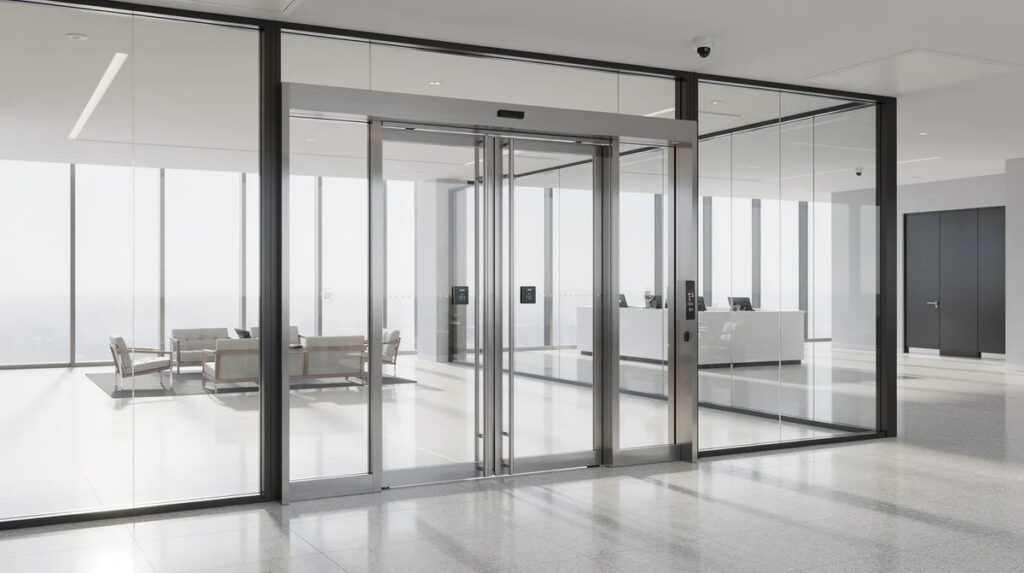
There are two primary deployment types. Full replacement fenestration systems with secure framing are common in new construction. Retrofit security glazing-like DefenseLite and BulletShield-installs over existing windows to add a second shield without removing the original glass. Modern security glass can integrate aesthetics with safety features, and these glazing systems resist vandalism and ballistic threats while maintaining visibility and natural light for building occupants. Many modern systems also provide UV filtering, noise reduction, and modest energy efficiency improvements that benefit long-term operating costs.
Forced Entry Resistance: First Line of Defense for Doors and Storefronts
Forced entry resistance means delaying or preventing someone from creating a human-sized opening through glazing using common tools. The goal is straightforward: buy time. Time for building occupants to shelter in place, time for alarms to trigger, and time for first responders to arrive. Forced-entry resistant glass delays intruders, buying critical response time that can mean the difference between a close call and a tragedy.
From 2018 through 2025, forced entry attacks on retail stores, pharmacies, and public buildings followed predictable patterns: sledgehammers or bricks through storefront glass, repeated kicks at glass doors, prying at framing systems with crowbars, and coordinated group attacks during civil unrest. Forced-entry rated glass delays unskilled intruders who rely on speed and brute force, and security glass can delay intruders by 60 to 120 seconds-often enough to prevent intruders from completing a breach before police arrive.
Several U.S. standards govern how forced entry resistance is measured:
- ASTM F1233 tests forced-entry resistance of glazing systems using defined sequences of blunt-force tools, sharp tools, and various weapons. It tests forced-entry resistant glass with up to 41 sequences of escalating severity.
- ASTM F1915 assesses glazing resistance to blunt and sharp objects, primarily for correctional facilities and high risk environments.
- ASTM F3561, released in 2022, evaluates forced-entry resistance after ballistic weakening-measuring whether a glazing system can still prevent intruders from gaining access after being shot.
At the highest end, Security Grade 1 requires 60 minutes and 600 impacts resistance before a pass-through opening is created.
Multi-layer composite glazing can resist repeated strikes from tools during break-in attempts. Effective configurations include laminated glass with PVB or SGP interlayers, polycarbonate shields, glass-clad polycarbonate, and multi-layer composites. Laminated glass can provide forced-entry resistance with multiple layers that absorb and distribute impact energy across the panel rather than concentrating it at the point of contact.
Impact Security’s DefenseLite impact-resistant overglaze security system is engineered specifically for this purpose-installed on the interior side to keep intruders outside even if the outer glass breaks, with vented extrusions to prevent condensation inside the glazing cavity.
Ballistic Glass vs. Forced Entry Glazing: Choosing the Right Protection
The term security glass covers a broad spectrum. Within it, ballistic glass (bullet resistant glazing) and forced entry glazing solve fundamentally different problems, and many projects don’t need both at every opening.
Ballistic glass is engineered to resist bullet penetration from specific firearms. Ballistic glass is rated across eight levels based on UL 752 standards, ranging from Level 1 (9mm handgun) through higher levels that address rifle threats like 5.56mm and 7.62mm rounds. These levels are not strictly cumulative-a Level 3 rating (tested against .44 Magnum) does not automatically cover every lower-level scenario because shot patterns and velocities differ. Security glass can resist bullets and minimize injury from attacks, but the protection is only validated up to the tested threat level.
Forced entry resistant systems, in contrast, are tested for multiple blows from blunt objects, prying, and cutting instruments. The objective is to delay entry long enough to prevent intruders from gaining access, rather than stopping projectiles.
When is ballistic protection critical? Active shooter mitigation in K-12 schools and educational buildings, police stations, courthouses, federal buildings, and cash handling rooms in financial institutions. When is forced entry only typically sufficient? Retail stores, pharmacies, cannabis dispensaries, convenience stores, and corporate lobbies where burglary, smash-and-grab, and civil unrest are the primary concerns.
Hybrid secure entry glazing systems combine both capabilities. Products like BulletShield retrofit bullet resistant glazing panels from Impact Security pair bullet resistant glazing with framing systems and hardware tested to maintain integrity after multiple gunshots and subsequent forced entry attempts. Certification ratings like ASTM F3038 and UL 752 indicate the security performance of glazing, and ASTM F3561 provides system-level testing for this exact scenario-forced entry resistance after ballistic attack.
Base your decision on a formal threat and vulnerability assessment rather than guesswork, ideally coordinated with security consultants and local law enforcement.
Beyond Burglary: Bomb Blast, Fire Protection, and Multi-Threat Glazing
Some facilities-especially government buildings, airports, and critical infrastructure-must consider bomb blast mitigation, fire rated performance, and multi-hazard design on top of standard forced entry resistance. Certain security glazing systems are designed to protect against blast events using laminated glass combined with engineered framing systems that flex and absorb blast pressure while remaining attached to their anchors.
Blast-resistant glazing is tested to GSA or ISO standards that focus on controlling flying glass fragments, maintaining edge bite, and verifying anchorage performance-not merely “not breaking.” The framing system must transfer blast loads back to the building structure without pulling free, which is fundamentally different from simply installing thick glass.
Fire protection adds another layer of complexity. Fire rated security glazing is used around exit corridors, stairwells, and fire barriers with ratings of 45, 60, 90, or 120 minutes. Adding ballistic or forced entry resistant glass cannot compromise those fire protection ratings. Security glazing must meet fire safety and energy efficiency codes, which means architects must coordinate across disciplines-fire protection engineers, security consultants, and glazing manufacturers-to ensure that a secure entry glazing system still satisfies IBC, NFPA, and local code requirements.
Impact Security specializes in adding forced entry and ballistic performance to existing openings. When full blast rated or fire rated assemblies are required, the secure entry glazing design often combines retrofits with new code-compliant frames specified by the project’s design teams.
Real-World Applications of Secure Entry Glazing Systems
Secure entry glazing systems are tailored by sector. Each vertical faces different threat profiles, budgets, and aesthetic demands. Here’s how protection designed for specific threats plays out across industries.
Schools and Universities
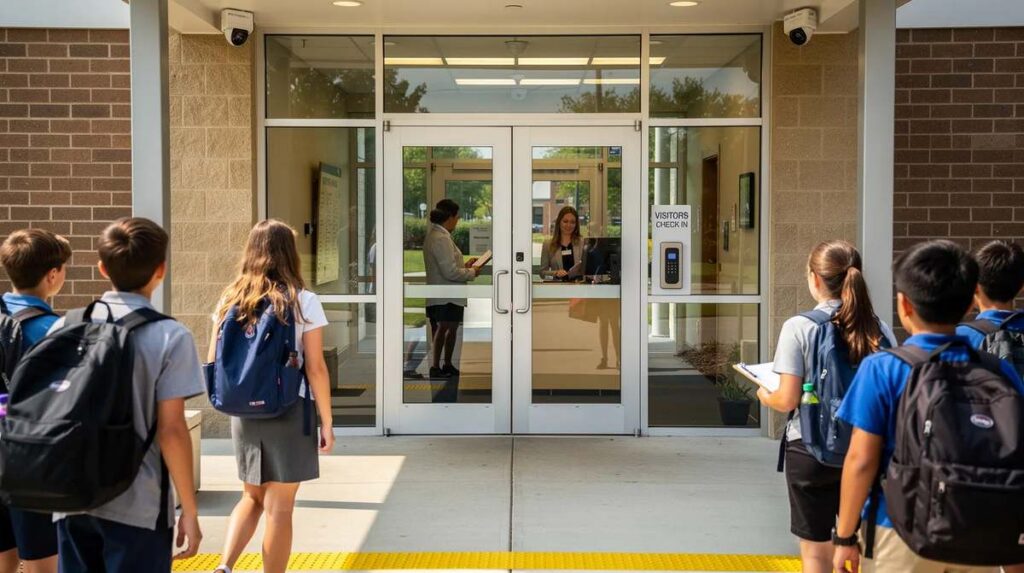
Secure vestibules at main entries, classroom sidelights and vision panels, interior office windows, and exterior ground-floor glazing use forced entry resistant or ballistic glass to delay active shooter threats and forced entry attempts while maintaining visibility for staff. ASTM F3561 is the standard for school security glazing, specifically developed to evaluate whether glazing can still protect occupants after ballistic weakening from gunfire, and school security updates on reinforcing window and door glass increasingly reference this testing as a baseline. Daycare centers and educational buildings benefit from solutions that protect people without creating an institutional feel.
Healthcare
Hospital emergency department entrances, triage windows, pharmacies, and behavioral health units require shatter-resistant or bullet resistant glass that balances visibility with life safety, and specialized hospital security glazing solutions focus on reinforcing these exact high-risk areas. These systems reduce injury risk for staff while maintaining the open environment patients need.
Retail and Hospitality
Street-level storefronts, hotel lobbies, jewelry counters, and cash wraps benefit from clear, forced entry resistant glazing that deters smash-and-grab theft without making interior spaces look like a bunker. Polycarbonate materials provide exceptional impact resistance compared to standard glass, and energy-efficient glazing options can lower energy costs through reduced heat transfer-a meaningful benefit for large retail footprints.
Financial and Corporate
Bank teller lines, ATM vestibules, transaction windows, corporate data centers, and executive lobbies use a mix of bullet resistant glazing and forced entry resistant systems to protect people and high-value assets.
Government and Public Safety
City halls, courthouses, police stations, and federal buildings often mandate secure entry glazing at public lobbies, interview rooms, and service counters. These secure buildings address both targeted attacks from human aggressors and regulatory standards for maximum security.
Impact Security’s retrofit approach-DefenseLite for forced entry and riot protection, BulletShield for ballistic resistance-is designed to be visually subtle and compatible with existing glass across all of these sectors.
Standards and Testing: How to Verify Entry Resistance Claims
Not all security products marketed as “bulletproof glass” or “security glass” deliver what they promise. Buyers should insist on documented test reports from accredited labs, not just brochure language.
Key U.S. test standards relevant to secure entry glazing systems include:
| Standard | What It Measures | Key Detail |
|---|---|---|
| ASTM F1233 | Forced entry resistance of security glazing materials and systems | Tests with blunt-force tools, sharp tools, and chemical agents across defined sequences |
| ASTM F1915 | Glazing resistance to physical abuse | Four grades based on duration and number of impacts; used for correctional facilities |
| UL 752 | Bullet resistance across defined calibers | Eight levels from handgun to rifle threats |
| ASTM F3561 | Forced entry resistance after ballistic weakening | Released in 2022; evaluates whether glazing still prevents a pass-through opening after gunfire |
| GSA / UFC | Blast rated glazing performance | Focuses on fragment retention, anchorage, and overpressure loads |
Security glazing standards include resistance to forced entry and bullets, and test methods typically involve full-size mockups-glass, framing systems, anchorage, and hardware-attacked according to defined test procedures, mirroring the performance expectations for safety and security glass protection for windows and doors.
Performance ratings specify whether the glazing prevents penetration, limits spall (ejected glass fragments that can reduce injury to occupants), and resists creation of a pass-through opening for a defined time period through rigorous testing.
Specifiers should request complete test reports that identify the exact construction tested-glass thicknesses, interlayers, polycarbonate types, framing model, and fastening pattern-to avoid substitutions that have never been validated. Impact Security’s DefenseLite and BulletShield solutions are independently tested to forced entry, UL 752 ballistic, and project-specific criteria, with reports available for design teams and code officials during submittals.
Retrofit vs. Replacement: Strengthening Existing Glass Openings
Retrofit secure entry glazing systems are interior-mounted shields added over existing windows and doors to create a protected air space and a second line of defense. Unlike full replacement, retrofits preserve the original glass and framing, dramatically reducing cost and disruption.
Here’s how the two approaches compare:
| Factor | Retrofit | Full Replacement |
|---|---|---|
| Cost | Lower (often 40-60% less) | Higher (new frames, glazing, finishes) |
| Installation time | Days per opening | Weeks to months |
| Disruption | Minimal; often interior work | Significant; exterior construction |
| Aesthetic impact | Virtually invisible from outside | Full design control |
| Fire/blast ratings | Added around existing rated assemblies | Built in from the ground up |
| Best for | Operational facilities, phased upgrades | Deteriorated frames, new construction |
Impact Security’s retrofit process works in practical terms: site assessment, field measurements, custom-fabrication of polycarbonate or ballistic shields, powder-coated aluminum framing, and vented extrusions to control condensation-all installed on the secure side of existing glass. A properly engineered retrofit can achieve maximum protection levels of forced entry security glazing for doors and windows, delivering forced entry resistance and penetration resistance even on legacy storefronts and curtain walls that were never designed for security.
Scenarios ideally suited to retrofit include active K-12 schools that cannot close for construction, 24/7 hospitals, retail chains needing consistent branding, and historic buildings where exterior appearance must be preserved. Owners should view retrofits as part of a longer-term master security plan that anticipates future upgrades, maintenance, and potential code changes.

Design and Installation Best Practices for Secure Entry Glazing Systems
Even the best ballistic glass or forced entry resistant glazing will underperform if the framing system, anchorage, or installation details are weak or non-compliant. The glazing system is only as strong as its weakest connection point.
Structural considerations come first. Heavier security glazing and polycarbonate shields require frames and substrates-steel, aluminum, or reinforced wood-designed to carry added loads, resist prying, and transfer forces back to the building structure. Key design details include:
- Adequate edge cover on laminated glass (typically 3/4 inch minimum)
- Proper screw spacing for retrofit framing
- Tamper-resistant fasteners accessible only from the secure side
- Integration with access control hardware (electric strikes, maglocks) so security and egress functions both work as intended
Coordination with fire and life safety is essential. Hardware must be listed and installed so that doors still meet egress requirements. Security glazing cannot obstruct sprinkler patterns or required vision lines in corridors without proper engineering. Glass experts should verify that added layers don’t compromise natural disasters resilience or code requirements for the specific project.
Impact Security’s turnkey delivery model handles the full sequence: threat and vulnerability assessment support, on-site survey, engineering shop drawings, U.S.-based fabrication in Georgia and Arizona, installation via certified dealers, and post-installation inspection with warranty service, aligning with its broader active shooter mitigation solutions for schools and workplaces. Owners should insist on trained installers familiar with secure entry glazing-not general glass contractors-because incorrect gaskets, shims, or anchorage choices can void test data and drastically reduce forced entry resistance.
Common Mistakes to Avoid When Specifying Secure Entry Glazing
Many security glazing projects underperform not because of bad security products but because of early planning and specification mistakes.
Treating security glazing as a commodity. Choosing purely on price without confirming the UL 752 level, ASTM performance class, or whether the exact assembly was system-tested leads to gaps. A bullet resistant panel installed in an untested frame may fail at the frame, not the glass.
Misallocating the budget. Without a formal security assessment, organizations often over-secure low-risk openings (back-of-house windows) while leaving high-risk public entry vestibules with basic tempered glass. Security measures should follow a tiered strategy based on actual threat exposure.
Conflicting with fire codes and accessibility. Adding bars, interior shutters, or poorly designed security film that impedes egress, violates ADA sightline requirements, or disrupts rated exit corridors creates liability. Every security upgrade must preserve life safety and code compliance.
Relying on untested products. DIY window films or generic polycarbonate sheets from hardware suppliers may improve shatter resistance marginally, but they do not offer certified forced entry resistance or bullet resistance and can create a false sense of security. They won’t prevent intruders from breaching the opening under a determined attack.
Skipping early collaboration. Security consultants, architects, glazing engineers, and manufacturers like Impact Security should align on budget, aesthetics, maintenance, and realistic threat levels before specifications are locked in. Retrofitting after-the-fact is always more expensive and disruptive.
Why Choose Impact Security for Secure Entry Glazing Systems?
Impact Security is a U.S.-based manufacturer and installer specializing in retrofit secure entry glazing systems. DefenseLite provides forced entry resistance and riot protection designed for retail stores, schools, and healthcare facilities, while DefenseLite Pro advanced impact security glazing offers increased strength for higher-threat commercial applications. BulletShield delivers bullet resistant glazing for environments where ballistic attack is a credible threat.
Founded in 2016, Impact Security operates fabrication centers in Marietta, Georgia and Glendale, Arizona, with a nationwide network of certified dealers serving educational buildings, healthcare systems, retail chains, government agencies, and financial institutions. The company has deployed systems across hundreds of facilities throughout the United States.
The turnkey value is significant. Impact Security handles site assessments, engineering support, custom fabrication, professional installation, and warranty-backed service-reducing the burden on facility teams and architects to coordinate multiple vendors for a single specific project.
Technical advantages of the systems include:
- Multi-layer polycarbonate or glass-clad shields tailored to defined security level requirements
- Vented extrusion framing to manage condensation in the air gap
- Slim profiles designed to be virtually invisible from the street
- Proven performance in forced entry and UL 752 ballistic testing
- Impact resistance and penetration resistance validated through independent labs
Retrofit secure entry glazing from Impact Security can be installed with minimal disruption-often from the interior-allowing 24/7 facilities like hospitals and data centers to remain operational during upgrades. For organizations that need to protect occupants without sacrificing openness, this approach delivers enhanced security at a fraction of the cost and timeline of full replacement.
FAQs About Secure Entry Glazing Systems
The following questions address concerns decision-makers commonly raise when first exploring secure entry glazing systems, from costs and timelines to performance and code compliance.
What is the difference between bullet resistant and bulletproof glass?
“Bulletproof” is a misleading marketing term. All legitimate standards use “bullet resistant,” meaning the glazing is tested to stop specified bullets under defined conditions-not every possible threat. UL 752 defines eight levels, from Level 1 (9mm handgun) through higher levels addressing rifle threats. Protection is guaranteed only up to the rated level and shot pattern used in testing. Always ask for the exact UL 752 level and test reports when evaluating bullet resistant glazing.
How much do secure entry glazing systems typically cost?
Forced entry retrofit shields generally fall in the low-to-mid double-digit dollars per square foot range, while ballistic solutions cost more depending on the UL 752 level required. Retrofit systems like DefenseLite and BulletShield typically cost significantly less than full demolition and replacement of storefronts or curtain walls, especially when factoring in downtime and interior repairs. Request a site-specific estimate from Impact Security, since volume, phasing, and regional labor rates all affect final pricing.
Will secure entry glazing systems make my building look like a fortress?
No. Modern forced entry resistant and bullet resistant glazing is designed to be highly transparent, with slim framing and color-matched finishes that blend with existing storefronts. Retrofit systems from Impact Security are mounted on the interior and are virtually invisible to casual observers from the sidewalk. In some cases, owners choose subtle visual cues at main entries to signal security to potential offenders without alarming visitors.
Can secure entry glazing be added to existing windows and doors?
In most commercial and institutional buildings, retrofit secure entry glazing can be added over existing glass and frames, provided the underlying structure is sound. Impact Security’s team evaluates frame conditions, anchorage, and wall construction during site surveys to confirm feasibility and recommend any localized reinforcement. Only in cases of severe deterioration or non-compliant fire-rated openings would full replacement be recommended instead.
How long does installation take, and will it disrupt operations?
Design and fabrication are often measured in weeks (typically four to eight for custom shields), while on-site installation for a typical entry or small building is usually completed in days. Retrofit systems are often installed from the interior during off-hours or weekends, allowing schools, clinics, and retail locations to keep operating with minimal downtime. For multi-building campuses or nationwide rollouts, discuss phasing plans with Impact Security in advance.
Do secure entry glazing systems require special maintenance?
Maintenance is straightforward: clean polycarbonate or glass with manufacturer-approved, non-abrasive cleaners, inspect framing and fasteners periodically, and repair any ballistic damage or vandalism promptly. Polycarbonate shields in DefenseLite and BulletShield feature hardcoat surfaces engineered to reduce scratching and provide long service life under normal conditions. Impact Security and its certified installers offer maintenance guidelines and ongoing service agreements for high-risk facilities.
Will secure entry glazing affect fire and building code compliance?
Properly designed secure entry glazing systems maintain required egress widths, door operation, and hardware function. For openings required to be fire rated, fire-rated glazing and framing must still meet their listed ratings; security layers are designed around those requirements. Involve code consultants and Impact Security early in design so that security upgrades support-rather than conflict with-life safety mandates and local code requirements.
Next Steps: How to Move Forward with Secure Entry Glazing
Secure entry glazing systems are one of the most effective security measures available to strengthen buildings without sacrificing openness, visibility, or daily usability. They protect people, delay entry during targeted attacks, and help building occupants feel safer in their environments-from schools to retail stores to government buildings.
Start with a structured threat and vulnerability assessment, ideally coordinated with local law enforcement or security consultants, to identify which entries and openings are highest priority. From there, working with Impact Security follows a simple path:
- Initial conversation – share building plans, threat concerns, and budget parameters
- On-site assessment – Impact Security’s team takes field measurements and evaluates existing conditions
- Solution recommendation – review forced entry, bullet resistant, or hybrid options tailored to your security level
- Detailed proposal – receive a phased budget with timelines, test documentation, and installation scope
Multi-site owners-school districts, retail chains, healthcare networks-should consider pilot installations at one or two locations to validate performance and gather stakeholder feedback before a broader rollout.
Contact Impact Security today for a free estimate, schedule a site walkthrough with a certified dealer, or reach the DefenseLite contact team to discuss your project in detail, or request sample specifications and test reports for your upcoming projects. With the right secure entry glazing system in place, your facility can dramatically reduce risk from forced entry, active shooters, bomb blast, and natural disasters while maintaining the welcoming, daylit environments occupants expect.