Table of Contents
Overview of Bank Teller Window Protection Today
What’s at Risk Without Secure Bank Teller Windows
Types of Bank Teller Window Glass and Ballistic Ratings
Teller Window Designs (Baffle, Hole & Backer, Arched, Sliding)
Integrated Bank Security: Doors, Counters, and Transaction Windows
How Impact Security Retrofit Systems Work for Existing Bank Windows
FAQs About Bank Teller Windows and Bullet-Resistant Glazing
Why Choose Impact Security for Bank Teller Window Protection
Next Steps: Request a Bank Security Glazing Assessment
Introduction: Why Bank Teller Window Protection Still Matters in 2026
Digital banking continues to grow, yet physical bank branches remain targets for crime. In 2023, there were 1,263 bank robberies reported across U.S. financial institutions, and over 90% of bank robberies target teller counters, the exact zones where employees handle cash and serve customers face-to-face. Banks with protective glass can deter potential robberies effectively, making glazing upgrades one of the highest-impact investments a branch can make.
Bank teller windows have come a long way from heavy steel cages and wire mesh. Today’s bullet resistant teller windows use optically clear glazing, sleek framing, and modern bandit barrier designs that protect employees without making customers feel unwelcome.
Bank teller window glass protects against ballistic threats while preserving the open, approachable atmosphere most banks want.
This article walks you through specific bank teller window glass options, teller window layouts including baffle window, hole and backer, arched transaction windows, and sliding systems, plus how retrofit security glazing from Impact Security can harden existing bank windows without rebuilding your branch.
Whether you manage a single credit union location or oversee dozens of bank branches, you’ll find practical guidance here.
What’s at Risk Without Bullet-Resistant Bank Teller Windows?
Without properly rated physical security at teller lines, your branch faces a cascade of risks that cameras and alarms alone cannot prevent. Armed robberies, smash-and-grab attempts, civil unrest, and even insider threats exploit weak bank windows every year. Ballistic barriers have become more effective in deterring robberies over the last decade, and modern bullet-resistant transaction windows give banks flexible, high-communication designs for secure customer service, yet many branches still rely on standard glass that shatters on impact.
- Standard annealed or tempered glass offers zero resistance to handgun rounds or forced entry tools. When it fails, tellers and customers face direct physical danger. Protective glass can improve employee morale and safety by giving staff confidence that a real barrier stands between them and a threat.
- A single incident can shut a branch for days. Loss of cash, check stock, and sensitive documents compounds with insurance claims, rising premiums, and regulatory scrutiny. Cash protection strategies like time-delay safes and limited cash exposure in drawers help, but they cannot replace a physical barrier at the teller window.
- Reputational damage hits community banks and regional institutions especially hard. One televised robbery can erode years of trust in smaller towns that depend on one or two local bank branches.
- Since 2020, smash-and-grab tactics and organized crime patterns have spilled over from retail into financial institutions. Large unprotected glass areas on branch facades invite opportunistic damage during civil unrest.
- High-definition surveillance systems monitor teller lines and entrances, discreet silent alarms allow tellers to signal for help during threats, and employee training improves response to robbery and suspicious behavior. But these electronic and personnel measures record or respond after the fact. Only engineered ballistic barriers and backer windows actually stop or slow bullets and forced entry in real time. Clear lines of sight in branch layouts help staff monitor customer activity effectively, yet visibility alone does not create a physical barrier.
Bank Teller Window Glass and Ballistic Ratings: Getting Protection Level Right
No glazing is truly “bulletproof,” but properly specified bank teller window glass stops the handgun threats most common in bank crime. Bullet-resistant teller windows typically meet UL 752 Levels 1-3, the standard rating system for architectural bullet resistant glazing. Bullet-resistant materials absorb impact energy to prevent penetration, and bullet-resistant glass can absorb energy from ballistic impacts across these rated levels.
- Core materials used in teller window glazing include monolithic acrylic, laminated polycarbonate, glass-clad polycarbonate, and multi-layer composites. Acrylic and laminated polycarbonate are common bullet-resistant materials. Ballistic acrylic is the lightest glazing option for bullet resistance, making it ideal for interior applications, while glass-clad polycarbonate offers superior scratch resistance and optical clarity for high-visibility openings; comparing these to best options for ultimate ballistic resistance in bulletproof glass helps clarify where traditional laminated glass and advanced overglazing each make sense.
- UL 752 handgun levels relevant to most banks: Level 1 stops 9mm rounds, Level 2 handles .357 Magnum, and Level 3 resists .44 Magnum. Transaction windows must meet UL 752 Levels 1-3 for protection, with Level 3 increasingly preferred in 2024-2026 for its added margin of safety and forced entry resistance. Bullet-resistant materials meet UL 752 Levels 1-3 standards across these configurations.
- Higher levels (4-8) address rifle threats. Level 8 glass can stop military-style rifle fire but requires assemblies exceeding 2.5 inches thick with substantial structural reinforcement. Impact Security typically reserves these for vault corridors, exterior bank windows at high-risk sites, or guard booths where the threat assessment justifies the added weight and cost.
- Modern systems capture glass fragments (spall control) to protect staff on the safe side of the glazing. Retrofit polycarbonate shields upgrade standard glass performance by adding a transparent, energy-absorbing layer over existing openings.
- When evaluating any teller window system, request UL 752 test reports, shop drawings, and engineering data. This documentation is essential for insurer acceptance, regulatory compliance, and audit readiness.
Key Teller Window Designs: Baffle, Hole & Backer, Arched, and Sliding Systems
Most modern bank teller windows fall into a few proven configurations that balance bank security, clear visibility, and easy communication. Design choice affects CCTV sightlines, sound quality, ADA access, and how deal trays and transaction drawers integrate into teller counters. Custom teller window designs improve security and customer experience simultaneously, and bullet-resistant transaction windows protect against ballistic impacts while they are designed to facilitate communication while providing security. Common materials include acrylic and laminated polycarbonate across all configurations, and many banks now rely on retrofit overglazing like BulletShield ballistic security panels to upgrade existing frames without full replacement.
Baffle Teller Windows: Open Sightlines with Hidden Protection
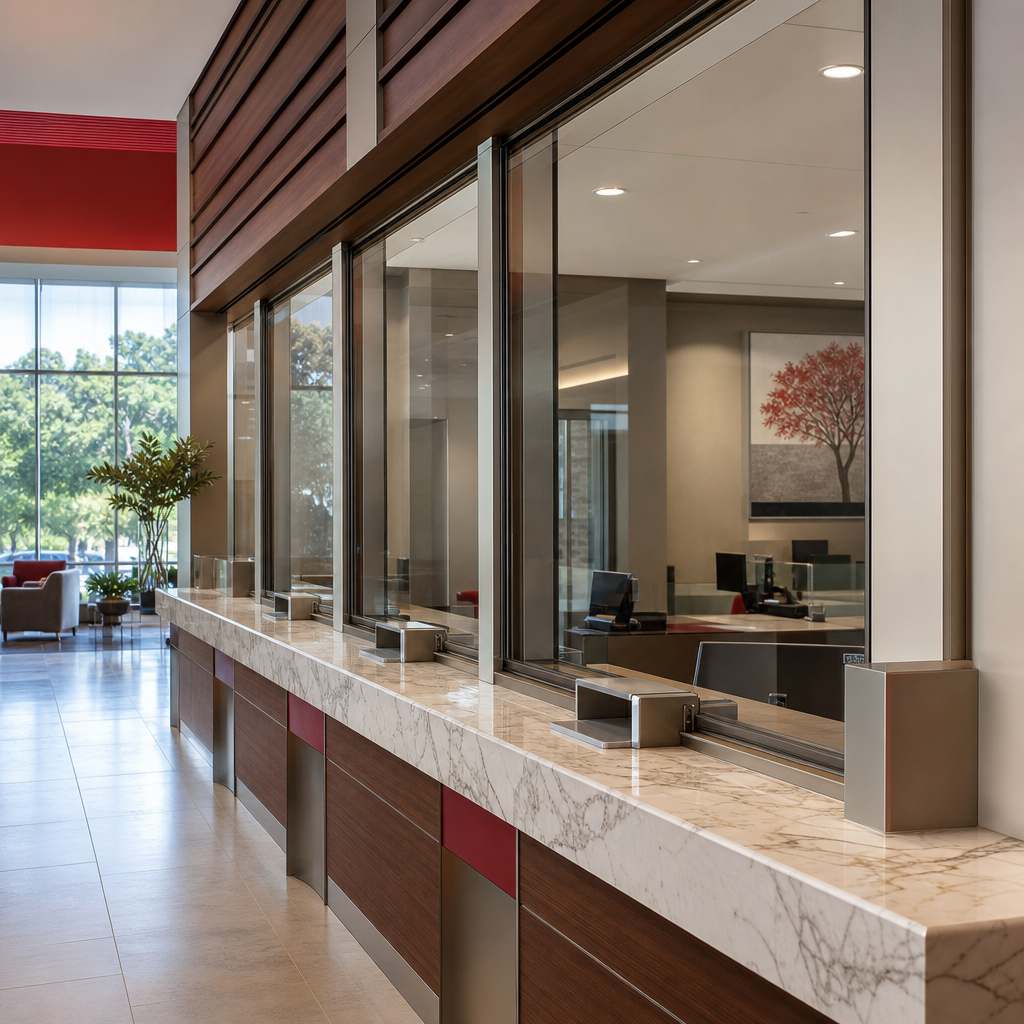
Baffle windows provide unobstructed views for customer interaction by offsetting overlapping panes of bullet resistant glazing to block direct ballistic paths while maintaining an open central view. Baffle windows provide excellent visibility and communication because air gaps between panes allow natural voice transmission, often eliminating the need for electronic intercoms while keeping a continuous barrier. This baffle window design is ideal for branches focused on hospitality, open-concept lobbies, and high-visibility teller lines where managers and CCTV need clear views. Impact Security can retrofit baffle-style shields in front of existing counters with minimal structural changes.
Hole and Backer Windows: Reliable Voice Clarity for Busy Counters
Hole and backer windows feature a voice port for communication, using a circular opening paired with a bullet resistant backer plate that deflects potential shots while channeling sound directly. The predictable acoustics make these ideal for high-volume branches, credit union locations, and cash express locations handling hundreds of transactions daily. Integrated stainless-steel deal trays and larger pass-throughs for documents and coin keep operations moving, with optional speaker/mic systems for noisy environments. These teller windows remain a standard in 2026 because they deliver consistent performance across a wide range of building layouts.
Arched Transaction Windows: Blending Design with Security
Arched transaction windows enhance visibility and voice clarity while bringing an aesthetically pleasing design element to flagship branches, historic renovations, and premium retail banking spaces. The curved backer softens visual line and pairs with stone, wood, or metal casework, all while meeting UL 752 Levels 1-3. The smaller arched backer positions near the speaker’s mouth for clear communication without visible electronic hardware. Custom finishes, tint options, and architectural millwork integration create a cohesive, welcoming look that doesn’t sacrifice protection.
Sliding Teller and Transaction Windows: Controlled Access by Staff
Sliding teller windows and vertical lift transaction windows are most common at drive-up lanes, ancillary transaction windows, and mixed-use counters that occasionally handle payments. Heavy-duty ballistic frames with sliding sashes lock into place, and proper staff training ensures panels stay closed during cash handling or when a threat is perceived. Drive-through windows are often pre-engineered, bullet resistant units with laminated glass and integrated transaction drawers. Impact Security can add retrofit shields or secondary glazing to existing sliding transaction windows to raise their security rating without replacing the whole assembly.

Beyond the Glass: Doors, Counters, Backer Windows, and Integrated Bank Security
A secure bank teller window is only as strong as the weakest surrounding element. A multi-layered approach enhances bank teller window protection by ensuring doors, walls, counters, and backer windows all work together at consistent ratings, often incorporating bulletproof windows and doors with glass security systems that address both ballistic and forced-entry threats.
- Ballistic doors for teller lines, cash rooms, and manager offices should match UL 752 Level 3 with steel or ballistic fiberglass cores and electric strikes for controlled staff access. Access control systems restrict entry to teller areas from the public.
- Teller counters and under-counter panels hide ballistic fiberglass behind casework, paired with steel cash drawers and kick panels that stop rounds fired at low angles. Operational procedures ensure teller desks are secure and reduce risks during cash handling.
- Backer windows and wall panels behind teller stations prevent flanking shots or penetration from adjacent spaces, critical in open-concept branches and corner locations, and retrofitting these areas with advanced bullet-resistant wall panels can dramatically improve protection without major reconstruction.
- Guard booths and secure vestibules at high-risk sites use bullet resistant glass and interlocking doors to slow access before customers reach the teller window, and in some facilities these assemblies are also specified to meet GSA/ISC blast-resistant performance standards alongside ballistic and forced-entry criteria.
- Impact Security teams engineer systems so bank windows, teller stations, vestibules, and safe rooms share consistent ballistic ratings and aesthetics that integrate seamlessly with your facility’s existing design. Security measures at teller windows require adherence to regulations, and consistency across every element is the only way to eliminate weak links.
How Impact Security Retrofits Existing Bank Teller Windows and Transaction Areas
Most banks don’t need to demolish existing bank windows. Retrofit security glazing systems install over current glass, often after hours, with minimal downtime. The perfect solution for branches that need upgraded protection without a full renovation, especially when partnered with a specialist like Impact Security, LLC and its retrofit security glazing expertise.
- Assessment: Impact Security or certified dealers evaluate existing teller windows, transaction windows, and backer windows on-site. The team reviews your threat profile, measures every opening, and confirms structural capacity. Routine security assessments help identify vulnerabilities in bank operations before they become incidents.
- Engineering and fabrication: Custom-fit polycarbonate shields, framing, and hardware are designed at fabrication centers in Marietta, GA and Glendale, AZ to match each opening precisely, including curved arched transaction windows and non-standard sizes.
- Installation: Phased work, typically evenings or weekends, keeps at least part of the teller line operational throughout the project. Clean, low-noise methods and coordination with your bank security team minimize disruption to daily operations.
- Performance upgrades: Beyond ballistic resistance, retrofits improve forced entry resistance, reduce smash-and-grab risk, and can preserve historic or branded façades when paired with comprehensive bulletproof window and door security solutions. Some systems also reduce noise transfer and UV exposure.
- Maintenance: Use approved cleaners for bank teller window glass surfaces, schedule periodic inspections of framing and fasteners, and rely on Impact Security for repairs, replacements, and system upgrades over time. Regularly testing alarm systems ensures functionality and enhances bank security as part of your ongoing safety program.

FAQ: Bank Teller Window Protection and Security Glazing
These are the questions bank leaders, architects, and facility managers ask most often about teller windows and bullet resistant glass.
Do we need to close our branch to upgrade bank teller windows to bullet resistant glass?
Most Impact Security retrofit projects are completed after hours or over weekends. Installation is phased so that part of the teller line stays operational while the other section is upgraded. Typical multi-branch rollouts handle one branch per weekend, keeping your customers served without interruption.
What UL 752 level is recommended for bank teller window glass?
Levels 1-3 are standard for teller windows, with Level 3 increasingly preferred for modern bank branches because it covers .44 Magnum threats and provides stronger forced entry resistance. High-risk facilities may choose Level 4 or above for exterior bank windows or guard booths after a formal threat assessment.
Will bullet resistant teller windows make it harder for customers to hear tellers?
Not with the right design. Baffle teller windows allow natural voice transfer through air gaps. Hole and backer windows channel sound through a dedicated voice port. Arched transaction windows position the opening near the speaker’s mouth. Optional electronic talk-thru devices handle locations where ambient noise is high, ensuring clear communication at every teller station.
Can we keep our existing storefront look and still add bullet resistant protection?
Yes. Retrofit shields mount over existing glass with low-profile framing, allowing banks to retain branding, daylight, and open lobby designs. The transparent panels add protection without altering the branch’s visual identity, so your customers see virtually no change.
How long do bank teller window protection projects typically take?
Standard systems run six to ten weeks from approved drawings to installation. Variables include branch count, custom arched windows, coordination with other renovations, and site-specific structural requirements. Impact Security provides detailed timelines during the assessment phase.
Is bullet resistant glass the same as security window film?
No. Bullet resistant glazing systems are multi-layer composites engineered and tested to meet UL 752 standards. They stop bullets. Security or safety window film may delay forced entry and reduce shattering, but it cannot stop ballistic impact; specialized ballistic window film systems are best used as part of a layered security strategy for delaying intruders rather than as standalone bullet-stopping solutions. Film serves as a supplement for storefronts, but for teller windows, engineered glazing is the only reliable solution.
Why Choose Impact Security for Bank Teller Window Protection?
Impact Security is a U.S.-based specialist in security glazing for banks, credit unions, government agencies, churches, and offices requiring hardened glass openings, providing bullet-resistant glass security solutions for places of worship alongside commercial projects. The company focuses on retrofitting existing buildings rather than requiring full replacements.
- End-to-end capability from site assessment and engineering through fabrication in Georgia and Arizona to professional installation and long-term service and support.
- Proven experience with financial institutions nationwide, from small community banks to multi-branch networks requiring standardized teller window designs across every location.
- Ability to integrate ballistic bank windows, teller windows, backer windows, and doors into cohesive systems that preserve branding, daylight, and customer experience while meeting every security need.
- Solutions tuned to modern risks: forced entry, active shooter mitigation, civil unrest, and smash-and-grab, while still meeting everyday needs like quick transactions, easy communication, and clear visibility for staff and customers.
- Seamless collaboration with architects, general contractors, and security consultants on new construction and remodels, providing detailed drawings, UL 752 test data, and submittal packages that keep your project on track.
Next Steps: Strengthen Your Bank Teller Windows and Transaction Areas
Teller windows remain the focal point of most robbery attempts at financial institutions. Upgrading bank teller window glass and related openings is one of the most effective ways to protect your employees, customers, and assets while keeping criminals at bay and branch operations running smoothly.
- Schedule a security glazing assessment with Impact Security to review current teller windows, transaction windows, doors, and exterior bank windows across your facility or branch network.
- Gather floor plans, photos, and any existing glass specifications before the consultation to speed up recommendations and pricing from the Impact Security team.
- Contact Impact Security by phone or online form to request a free estimate, discuss retrofit options, and plan phased upgrades across multiple branches.
Improving bank security doesn’t mean closing branches or turning lobbies into fortresses. Modern bank teller window protection can be nearly invisible to customers while dramatically improving safety for everyone inside your branch. Take the first step and create a safer environment today.