When an active shooter event unfolds, survival often depends on physical barriers and equipment that were put in place long before the first shot. This guide examines the products engineered to protect people in schools, offices, healthcare facilities, and houses of worship—where roughly 70% of mass shootings occur.
Table of Contents
- Introduction: Active Shooter Protection Products in 2026
- The Reality of the Threat: Why Facilities Are Investing Now
- Key Types of Active Shooter Protection Products
- Portable Ballistic Shields & Emergency Response Panels
- Ballistic Glazing & Retrofits for Doors and Windows
- Hardened Doors, Frames, and Classroom Locking Hardware
- Active Shooter Armor Kits & Tactical Gear for Responders
- How These Products Support “Run, Hide, Fight” & Layered Security
- Standards, Testing, and What Claims You Should Question
- How to Choose the Right Active Shooter Protection Partner
- FAQs: Active Shooter Protection Products
- Conclusion: Building a Safer Future, One Layer at a Time
Introduction: Active Shooter Protection Products in 2026
According to the U.S. Department of Homeland Security, an active shooter is defined as an individual actively engaged in killing or attempting to kill people in a confined and populated area, typically using firearms. Most incidents conclude in under five minutes—well before police officers typically arrive. This reality has driven organizations across the country to invest in protection products that act immediately.
Ballistic protection products, including advanced armor systems, are increasingly being integrated into schools and public facilities to enhance safety against potential active shooter incidents. This article covers the core categories: ballistic shields, retrofit glazing systems, hardened doors and locks, body armor kits, and classroom hardware.
Our focus is life safety—products that stop bullets, slow attackers attempting to gain entry, and buy the critical 60-120 seconds that save lives.
The Reality of the Threat: Why Facilities Are Investing Now
From 2014 to 2024, active shooter incidents in North America increased across schools, offices, healthcare settings, and houses of worship. FBI and non-profit tracking data show dozens of incidents annually, with the gap between the first shot and law enforcement arrival ranging from 3 to 18 minutes.
Attackers exploit predictable weak points:
- Standard tempered glass that shatters instantly
- Hollow-core doors that offer no resistance
- Unsecured interior classrooms and offices
- Lack of body armor for teachers, administrators, and responders
Delaying entry by even 60-120 seconds dramatically increases survival rates. This window allows students and employees to evacuate, barricade, or hide while first responders close the distance. Facilities are now moving from isolated security cameras or basic films to layered systems combining multiple product types.
Key Types of Active Shooter Protection Products
Before examining each category in depth, here’s a quick reference of the major product types:
- Portable ballistic shields and panels – Lightweight, rated armor that staff or responders grab to block fire during movement
- Ballistic glazing retrofits – Clear protective layers installed over existing windows to resist both bullets and forced entry
- Bullet- and forced-entry-resistant doors and frames – Hardened barriers with rapid interior locking
- Active shooter armor kits and plate carriers – Staged body armor enabling seconds-from-seat deployment
- Classroom door and hardware upgrades – Code-compliant locking devices for secure interior spaces
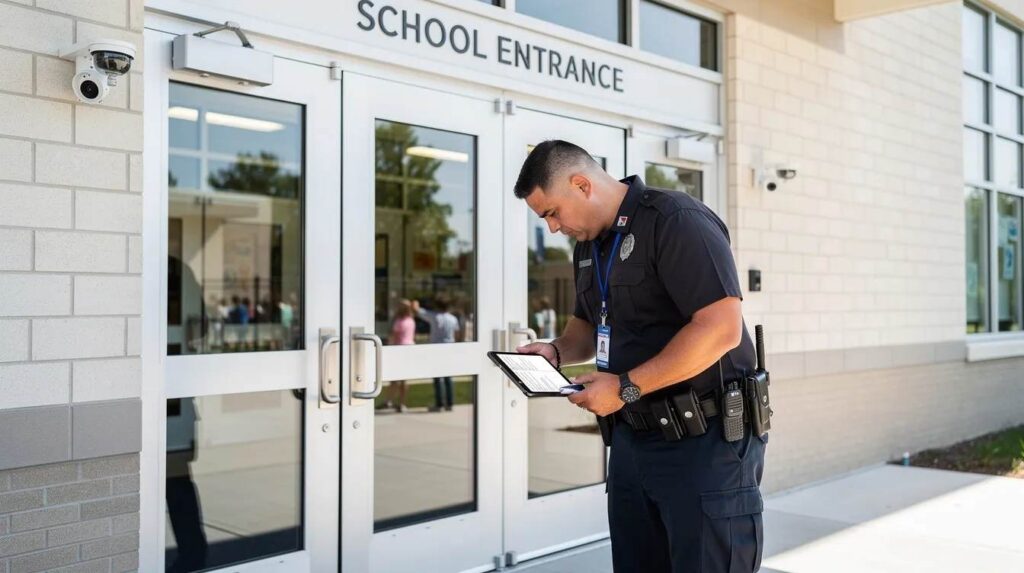
Effective facility defense strategies mix these products—ballistic glazing at main entries, interior door solutions for classrooms, and deployable shields for staff.
Portable Ballistic Shields & Emergency Response Panels
Portable ballistic shields provide immediate cover that teachers, staff, or security personnel can deploy during an attack. Emergency Response Shields (ERS) are designed to stop ammunition from assault rifles, shotguns, and handguns, providing immediate protection in active shooter situations.
Typical products include:
- Wall-mounted ballistic “whiteboard” shields for classrooms
- Handheld shields stored in offices or reception areas
- Rolling corridor panels creating safer evacuation routes
Modern shields use materials derived from Department of Defense armor and federal law enforcement technology—ceramic-composites or high-density polyethylene rated to threats including 5.56mm and 7.62mm NATO rounds, plus armor piercing rounds.
Use cases for implementation:
- Equipping each classroom with a mounted shield teachers can deploy in seconds
- Staging panels near main entries for security personnel
- Providing shields in SRO offices for rapid response deployment
These tools support the “Run” component of emergency doctrines by enabling movement behind actual ballistic protection rather than desks or furniture.
Ballistic Glazing & Retrofits for Doors and Windows
Standard tempered or laminated glass is the weakest point in most buildings—and the first target attackers breach. Reinforcing window and door glass to ASTM F3561 standards is a key active shooter mitigation technique, using bullet resistant glass to slow down attackers and prevent entry into buildings.
Ballistic glass retrofit systems use clear polycarbonate shields to prevent shooters from gaining entry through glass. Products like BulletShield retrofit security glazing install over existing windows without full replacement, maintaining visibility and natural light.
Bullet-resistant glass options for ultimate ballistic resistance, such as that used in products like BulletShield, are engineered to withstand ballistic attacks and are often rated to UL 752 ballistic standards. Quality systems are also tested to ASTM F3561-23, which evaluates resistance to both gunfire and subsequent forced-entry attempts using prying and ramming tools.
Installing bullet-resistant glass as part of broader active shooter mitigation solutions can significantly enhance school security by slowing down an active shooter, making it less likely for them to continue their attack once they encounter resistance at entry points.
Critical distinction: Security film alone is not ballistic and does not meet ASTM F3561 requirements. Complete systems must include tested glass, frame, fasteners, and sealants—verified through accredited lab reports—but properly specified ballistic window films that delay forced entry can still contribute valuable anti-breach performance when used as part of a layered system.
Hardened Doors, Frames, and Classroom Locking Hardware
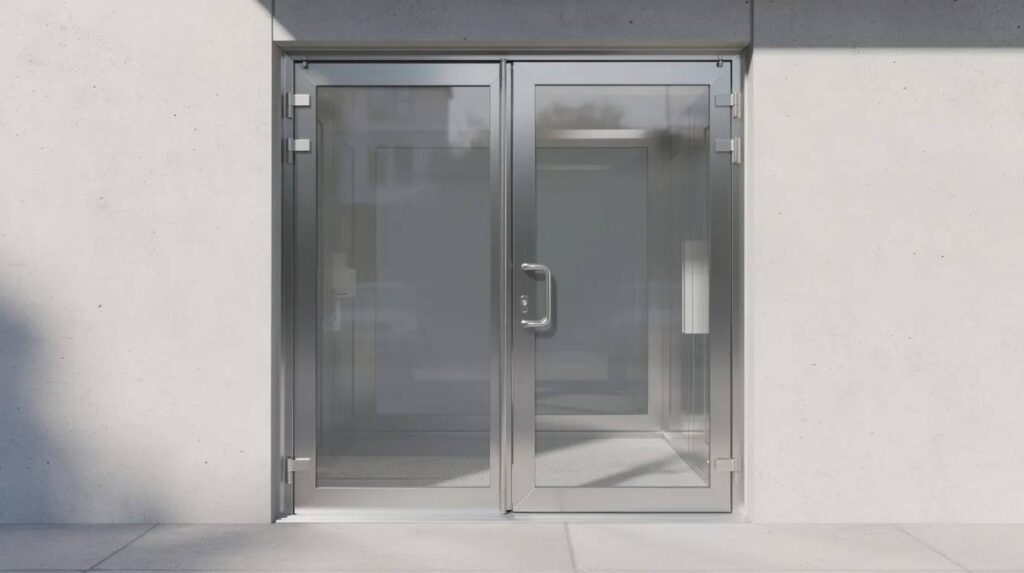
Interior doors determine whether an attacker reaches occupants. According to a 2015 report by the Sandy Hook Advisory Commission, doors that lock from the inside are most effective in securing classrooms, as they prevent teachers from having to go into the hallway to lock the door during an active shooter situation.
Key hardware categories include:
| Product Type | Function | Resistance Rating |
|---|---|---|
| Portable door barricade devices | Wedge inswinging doors into floor | Varies by model |
| Sleeve devices | Prevent outward-swinging doors from opening if lock is breached | 550+ lbs force |
| Bolo Stick | Floor-mounted steel pin system | Over 4,200 pounds of force |
| Smart lockdown systems | Electronic locking with intrusion detection | 2,000+ lbs holding force |
| Devices such as the Sleeve can prevent an outward-swinging door from being opened if the lock is breached, deploying in approximately 2 seconds without door modifications. |
Code compliance matters: Ad hoc barricades like wedges or aftermarket bars may violate fire and life safety codes. Consult local authorities having jurisdiction (AHJ) before purchasing. Doors with glass lites should feature small vision panels positioned away from hardware, protected with shatter-resistant glazing, especially in churches and other houses of worship using bullet-resistant glass security solutions.
Active Shooter Armor Kits & Tactical Gear for Responders
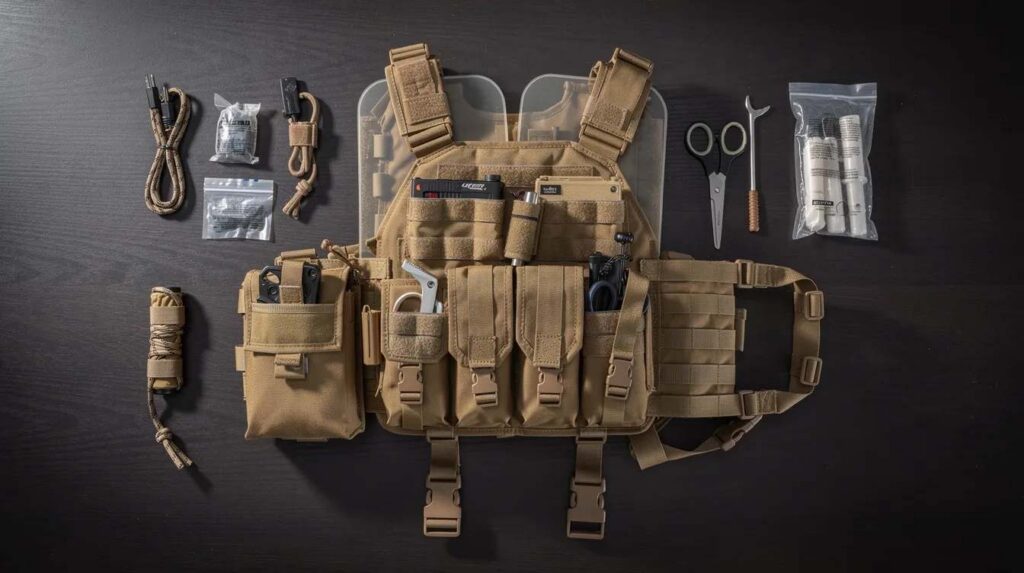
Active shooter kits are designed to provide immediate-access body armor and tactical gear for law enforcement and first responders, enhancing their readiness in high-threat environments. These kits close the gap between first shots and the arrival of fully equipped tactical teams.
Standard kit components:
- NIJ-certified Level IIIA soft armor (handgun protection) or Level III/III+/IV hard plates (rifle protection)
- Rapid-donning plate carriers
- Magazine and medical pouches
- Optional side plates
Most bullet-resistant backpacks are rated NIJ Level IIIA, which stops common handgun rounds but not rifle fire unless upgraded. Bullet-resistant backpacks often use layers of high-performance fibers like Kevlar or Dyneema to absorb bullet energy.
Tactical gear for responders must be designed for rapid deployment, allowing first responders to don their equipment quickly during active shooter situations, which can save lives. The effectiveness of tactical gear is often measured by its ability to provide protection against various threats, including handgun, rifle, and armor-piercing rounds, which are common in active shooter scenarios.
Medical integration is critical: The leading cause of preventable death in traumatic events is massive bleeding, which emergency kits aim to stop. Tourniquets and hemostatic gauze are key components of trauma kits used for stopping blood flow and aiding clotting. Individual first aid kits contain key medical supplies for treating life-threatening injuries before professional help arrives.
How These Products Support “Run, Hide, Fight” & Layered Security
Active shooter protection products work best when aligned with established response doctrines like “Run, Hide, Fight” or “Avoid, Deny, Defend.”
How products map to doctrine:
- Deny/Hide: Ballistic glazing and hardened entries delay or prevent access, giving occupants time to secure in place
- Run: Portable shields and secure corridors enable safer evacuation to exits
- Fight/Defend: Armor kits and staged equipment allow trained personnel to engage threats
Gunshot detection systems provide near-instant notification of indoor gunfire to law enforcement, reducing response time. Biometric alert systems can trigger immediate law enforcement alerts upon activation, further accelerating the response process.
Visible physical security—reinforced entries, clearly labeled safe rooms—can deter attackers, sometimes causing them to abandon plans. However, no single product guarantees survival. Layered defense combining infrastructure, policies, training, and drills tailored to each facility’s layout delivers the strongest protection.
Standards, Testing, and What Claims You Should Question
Credible active shooter protection products must be independently tested and certified—not just marketed as “bulletproof.”
Key standards to verify:
| Standard | Application | What It Tests |
|---|---|---|
| UL 752 | Glass, shields | Ballistic penetration resistance (Levels 1-8) |
| NIJ | Body armor | Protection levels (IIIA through IV) |
| ASTM F1233 | Glazing | Fragment resistance |
| ASTM F3561-23 | Window systems | Combined ballistic + forced-entry resistance |
| ASTM F3561-23 uniquely tests the entire system—glass, frame, fasteners, sealant—after gunfire, using prying and impact tools simulating real attack behavior, complementing UL 752 and NIJ ballistic resistance standards that define specific protection levels for glass and armor. |
Red flags to watch:
- Claims that security film alone meets ballistic or ASTM F3561 requirements
- Vague “bulletproof” marketing without specifying rounds, angles, or test sequences
- Inability to provide current test reports from accredited laboratories
Always request documentation matching your specific threat concerns (rifle vs. handgun, number of rounds, attack methods) and, for facilities facing combined blast and ballistic risks, verify that systems are rated to relevant GSA/ISC blast resistant performance standards.
How to Choose the Right Active Shooter Protection Partner
Selecting a vendor matters as much as selecting products. Engineering quality, installation precision, and long-term support all impact performance during an active shooter situation.
Selection criteria:
- Proven experience securing schools, offices, and healthcare facilities
- Capability to conduct comprehensive site assessments
- Code-compliant designs developed in collaboration with AHJ, law enforcement, and fire officials
- Multiple product categories for integrated, layered solutions
Active shooter mitigation techniques include conducting site assessments to identify vulnerabilities such as unlocked doors and weak glass, which can be targeted by shooters to gain entry into buildings.
Working with a partner offering glazing, doors, shields, and armor kits ensures cohesive defense rather than piecemeal fixes. Look for transparent testing documentation, training support, and ongoing consultation from assessment through implementation.
Ready to evaluate your vulnerabilities? Schedule a security assessment to identify gaps and develop a prioritized protection roadmap.
FAQs: Active Shooter Protection Products
What is an active shooter protection system? A system combining physical products (glass, doors, shields, armor), procedures, and training designed to slow attackers, protect occupants, and support emergency response. Effective systems integrate multiple layers rather than relying on single solutions.
Do I need bulletproof or bullet-resistant glass? Most architectural products are “bullet-resistant” to a tested level, not truly “bulletproof.” Specify the threat level you’re protecting against (UL 752 Level 3 for handguns, Level 8 for rifles) and verify independent test reports.
What do active shooter protection products cost? Prices range widely—individual shields and backpacks start in the hundreds, armor kits run $500-$5,000, and full entry retrofits can reach tens or hundreds of thousands depending on facility size and rating requirements.
Are barricade devices code-compliant? Not all devices meet fire and life safety codes. Coordinate with your local AHJ before purchasing. Devices that impede emergency egress can create liability and inspection failures. Code-compliant options exist—verify before installation.
How long do these products delay an attacker? Quality glazing and door systems tested to ASTM F3561-23 can provide 60-120+ seconds of delay—enough time for evacuation, barricading, or law enforcement arrival in most cases.
Conclusion: Building a Safer Future, One Layer at a Time
Active shooter prevention requires more than hope—it demands tested barriers, trained personnel, and integrated systems. While no product eliminates risk entirely, layered active shooter protection dramatically increases survival by delaying attackers and shielding occupants behind independently verified barriers.
Focus on standards-based products tested to UL 752, NIJ, and ASTM F3561-23. Align physical security upgrades with your emergency response plans and regular training. Don’t wait for the next incident to examine your facility’s vulnerabilities.
Take action now: Contact our team to schedule a comprehensive security assessment. We’ll help you evaluate your current defense posture and develop a prioritized roadmap for ballistic glazing, shields, hardened doors, and armor kits tailored to your mission, facility, and budget.
Every 60 seconds of delay can mean lives saved. Start building your layered defense today.