Table of Contents
- Introduction to Bullet Resistant Fiberglass Panels
- What Is Bullet Resistant Fiberglass?
- How Bullet Resistant Fiberglass Works
- UL 752 Bullet Resistance Levels and Key Specifications
- Common Applications for Bullet Resistant Fiberglass Panels
- Key Benefits of Bullet Resistant Fiberglass Panels
- Installation and Detailing Considerations
- Testing, Certification, and Compliance
- Why Choose Our Bullet Resistant Fiberglass Solutions
- Frequently Asked Questions
- Next Steps: Planning Your Project
Introduction to Bullet Resistant Fiberglass Panels
Since the early 2000s, rising threat awareness has fundamentally changed how architects and building owners approach facility security. What started as standard practice in banks has expanded into schools, courthouses, healthcare facilities, and corporate offices. The driving force behind this shift? Bullet resistant fiberglass panels that provide serious ballistic protection without turning buildings into fortresses.
This article focuses specifically on UL 752-rated bullet resistant fiberglass wall panels—the architectural-grade composite sheets used in walls, counters, and millwork. We’re not talking about the pink insulation in your attic. These are engineered flat rigid sheets designed to stop bullets.
First, let’s address the terminology. “Bulletproof” is a marketing myth. No material stops every projectile. The accurate term is “bullet resistant,” meaning panels are rated to defeat specific calibers—whether that’s 9mm handguns at Level 1 or 7.62mm NATO rifle rounds at Level 8. Compared to steel or concrete barriers, fiberglass offers significantly lower weight, easier field fabrication, and non-spalling behavior that reduces secondary injury risks.
What Is Bullet Resistant Fiberglass?
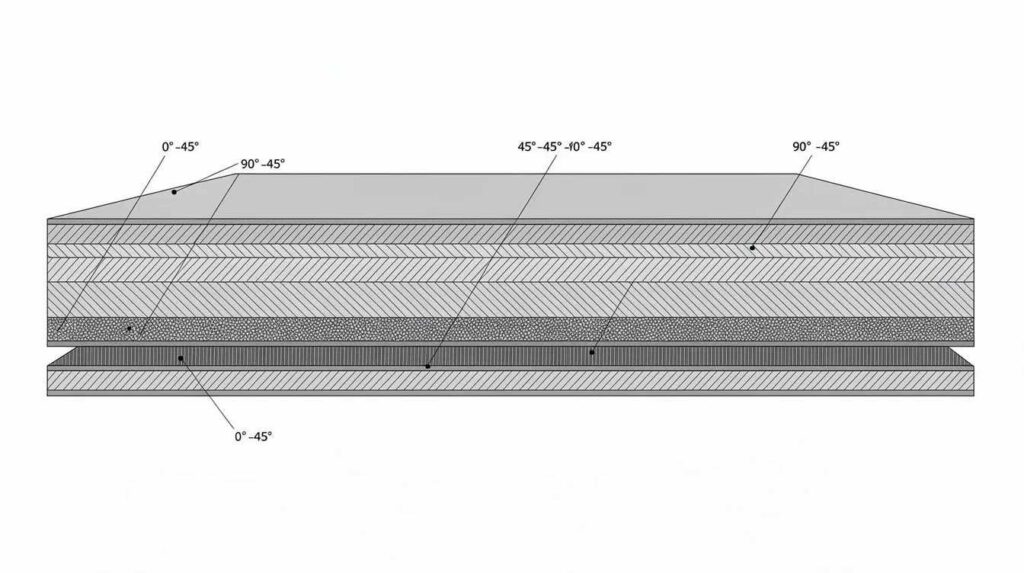
Bullet resistant fiberglass is a laminated composite created by saturating multiple layers of woven fiberglass cloth with thermoset polyester resin, then compressing the assembly in a hydraulic hot press under high heat and medium pressure. The result is dense, rigid ballistic panels fundamentally different from standard building fiberglass.
Key characteristics:
- Composition: Multiple plies of E-glass or ballistic-grade woven fiberglass fabric bonded with proprietary resin systems
- Nominal thickness: Ranges from 1/4 inch for Level 1 to approximately 1-3/8 inches for higher rifle-rated levels
- Appearance: Flat, opaque sheets with gray or tan cores that integrate seamlessly behind drywall or millwork
- Standard sizes: Available in 4’ x 8’, 4’ x 10’, and 4’ x 12’ sheets; custom cuts via water jet or CNC machining
- Customization: Bullet resistant fiberglass panels can be customized in terms of size and thickness, allowing for tailored solutions that meet specific security needs without compromising aesthetic appeal
Unlike loose-fill or batt insulation designed for thermal purposes, resistant fiberglass wall panels are structural, impact-resistant materials engineered for bullet resistance.
How Bullet Resistant Fiberglass Works
When a projectile strikes a bullet resistant panel, it doesn’t bounce off or punch through cleanly. Instead, the material absorbs and dissipates kinetic energy through a controlled destruction process.
The impact sequence:
- Surface deformation: The outer layers compress and crack upon initial contact
- Resin fracture: The thermoset resin matrix breaks down, allowing energy distribution
- Fiber engagement: Individual fibers stretch, tear, and separate in progressive ply delamination
- Projectile capture: The bullet is trapped within inner layers, prevented from full penetration
When a bullet strikes, the layers of fiberglass separate (delaminate) to absorb and dissipate the projectile’s kinetic energy. Fiberglass traps the projectile within its layers, reducing the risk of ricochets and secondary injuries. This behavior differs sharply from steel, which can deflect rounds or create dangerous metal fragments.
Underwriters Laboratories testing requires multiple shots within a 4-5 inch circle without breakthrough for each UL 752 level. Real-world testing with handgun calibers like 9mm, .45 ACP, and .44 Magnum consistently shows rounds stopped even in tight groupings—demonstrating the multi-hit capability critical for actual threat scenarios.
UL 752 Bullet Resistance Levels and Key Specifications
UL 752 is the standard for bullet resistant equipment, established as the North American benchmark since the 1970s. This standard specifies different levels of protection for bullet resistant fiberglass panels, giving architects and security consultants a reliable framework for design.
Bullet resistant fiberglass panels are available in UL 752 levels 1 through 8, which offer varying degrees of protection against different types of firearms and ammunition.
| UL Level | Ammunition Type | Velocity (fps) | Shots Required | Typical Thickness | Nominal Weight (lbs/sq ft) |
|---|---|---|---|---|---|
| 1 | 9mm FMJ | ~1240 | 3 | 1/4” – 5/16” | 2.6 |
| 2 | .357 Magnum | ~1250 | 3 | 5/16” | 3.6 |
| 3 | .44 Magnum | ~1175 | 3 | 7/16” | 4.8-5.0 |
| 4 | .30 Caliber Rifle | ~2540 | 1 | 1-3/8” | 13.9 |
| 5 | 7.62mm Rifle | ~2750 | 1 | 1-7/16” | 14.8 |
| 6 | 9mm SMG | ~1400 | 5 | 3/8” | 3.9-4.68 |
| 7 | 5.56mm Rifle | ~3080 | 5 | 1-1/8” | 11.7 |
| 8 | 7.62mm NATO | ~2750 | 5 | 1-7/16” | 15.2 |
Exact thickness and nominal weight vary by manufacturer but must meet ballistic performance criteria in UL-witnessed testing.
Example: UL 752 Level 3 Requirements
Level 3 bullet resistant fiberglass panels are designed to withstand up to three shots from a .44 Magnum and are commonly used in high risk areas such as banks and government buildings. The specific test parameters include:
- Caliber: .44 Magnum semi-jacketed hollow point (SJHP) or lead semi-wadcutter
- Muzzle energy: 971-1175 ft-lbs
- Firing distance: 15 feet (approximately 4.6 meters)
- Shot grouping: Within a defined circle pattern
Typical Level 3 panels measure approximately 7/16 inch thick with a weight of 4.8-5.0 pounds per square foot. This level is frequently specified for bank teller lines, pharmacy counters, cash rooms, and government transaction windows where handgun threats represent the primary concern.
Higher Threat Levels (Rifles and Special Applications)
Levels 4-8 address higher-powered rifle rounds with velocities exceeding 2500 fps. At these levels, fiberglass panels become significantly thicker and heavier—sometimes combined with steel or a ceramic tile section for enhanced protection.
Typical applications include:
- Military checkpoints
- Law enforcement facilities
- Critical infrastructure control rooms
- High-risk safe rooms
Engineering considerations escalate at these weights. Panels exceeding 11 lbs per square foot require reinforced framing at 16-inch centers, oversized washers for fasteners, and structural engineering review to ensure connections can handle impact forces.
Common Applications for Bullet Resistant Fiberglass Panels
Demand for “invisible security” has scaled dramatically since around 2010. Bullet resistant fiberglass panels are commonly used in high risk areas such as banks, government buildings, and correctional facilities to provide protection against forced entry and firearm threats. The appeal lies in hardening spaces without militarizing aesthetics.
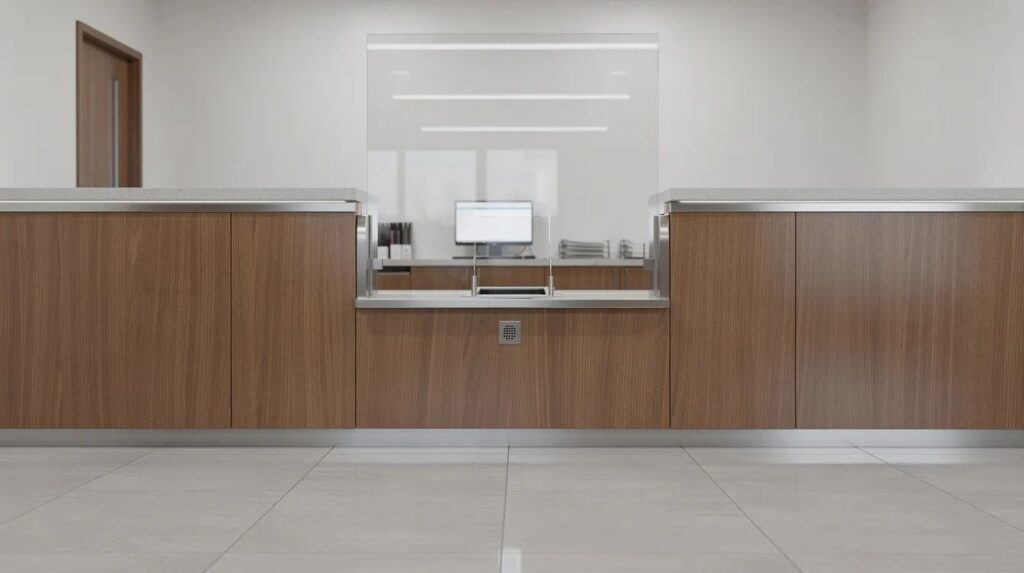
Fiberglass panels are used for reinforcing bank teller stations, school reception areas, courthouses, and more to enhance safety. Panels typically hide behind visible finishes—drywall, wood veneers, decorative laminates—creating a protective barrier that occupants never notice.
Commercial and Corporate Facilities
These panels can be installed in various commercial buildings, including healthcare facilities, restaurants, hotels, and retail shops, providing a secure barrier while maintaining aesthetic appeal. Common installations include:
- Reception desks and security lobbies
- Mail screening rooms
- Demising walls around data centers and IT spaces
- Executive office areas
A typical corporate lobby retrofit might use Level 1-3 ballistic wall panels behind new millwork, maintaining design intent while adding serious ballistic resistance.
Government and Justice Buildings
Government buildings integrate bullet resistant panels into:
- Judge’s benches and witness stands
- Public transaction counters
- Holding areas and interview rooms
- Security checkpoints
Many government facilities reference UL 752 levels alongside GSA or U.S. Marshals Service criteria. Panels coordinate with ballistic glazing at transaction windows and pass-through drawers to maintain envelope integrity.
Financial Institutions and Cash-Handling Environments
Financial institutions represent the traditional stronghold for this technology. Typical installations cover:
- Teller lines and drive-thru windows
- Vault corridors and safe deposit areas
- Back-of-house counting rooms
- Armored carrier loading dock areas
Levels 1-3 dominate these applications due to handgun-focused threat profiles, though high-risk locations may specify higher levels.
Education, Healthcare, and Public Spaces
Schools, hospitals, and public service buildings increasingly deploy ballistic panels to discreetly harden:
- Main entrance vestibules
- Administrative offices
- Reception desks
- Shelter-in-place areas
Architects often pair bullet resistant fiberglass with access controls and impact-resistant glazing. Code considerations—fire ratings, acoustic performance—become critical in 24/7 occupied facilities.
Residential Safe Rooms and High-Value Private Properties
Bullet resistant fiberglass panels are suitable for residential use, particularly in safe rooms designed to protect occupants during home invasions or break-ins. Typical residential layouts reinforce one interior room’s walls, door, and ceiling with Level 1-3 same level material, integrated with alarm and communication systems.
Important limitation: Standard bullet resisting equipment addresses ballistic threats, not tornado or storm performance. ICC-500 or FEMA 361 certification requires additional testing for storm shelter compliance.
Key Benefits of Bullet Resistant Fiberglass Panels
Benefits cluster into three categories: safety, constructability, and total cost of ownership.
Security and Life-Safety Advantages
Bullet resistant fiberglass panels are designed to absorb the energy of bullets, preventing them from penetrating the material and reducing the risk of ricochet injuries within a space. This buys critical response time—typically 10-30 seconds—during armed attacks.
Hidden barriers support CPTED (Crime Prevention Through Environmental Design) principles by hardening spaces without visual aggression. Multi-hit capacity and defined UL performance give building owners predictable, testable protection against potential threats.
Design, Construction, and Retrofit Advantages
These panels are significantly lighter than traditional steel alternatives, making them easier to handle and install while still providing effective ballistic protection—reducing structural demands by up to 70-80% for equivalent protection levels.
Additional advantages include:
- Field fabrication: Cut and drill on-site with carbide or diamond grit blade tools
- Standard framing compatibility: Works with 16” or 24” on-center stud wall systems
- Easy installation: Self tapping drywall screws with complete screw pattern at 6-12 inch spacing
- Finish flexibility: The panels can be finished with paint or hidden behind standard building materials to maintain aesthetic appearance while providing security
- Durability: Fiberglass is resistant to rust, corrosion, moisture, and UV exposure, making it suitable for harsh environments
- Additional ratings: Assemblies can achieve one hour fire rating when properly configured
Installation and Detailing Considerations
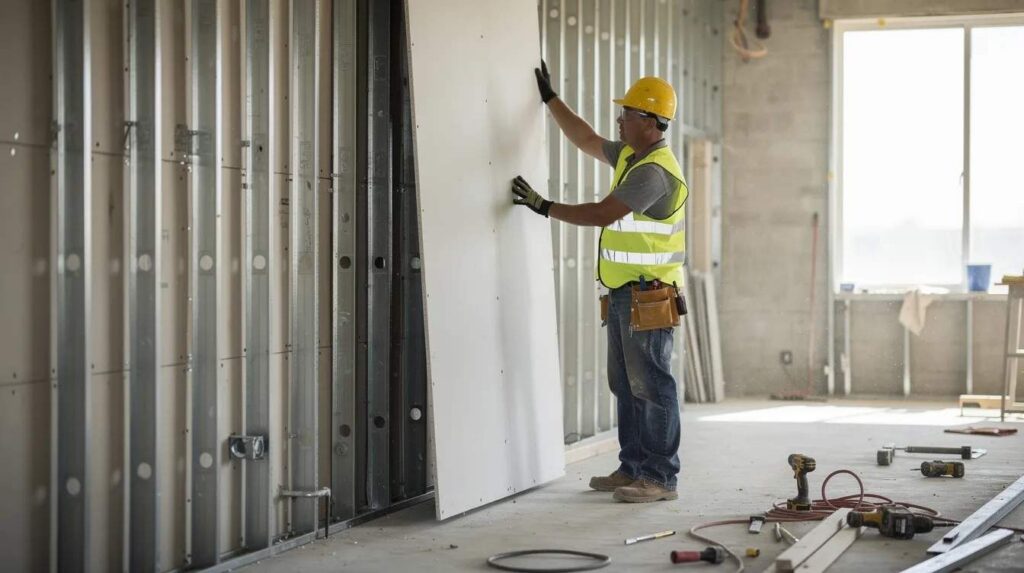
All installation must follow manufacturer instructions and applicable building codes. The installation of bullet resistant fiberglass panels typically requires professional installation crews to ensure proper fit and security against potential threats.
Typical sequence:
- Frame with steel or wood studs at appropriate spacing
- Fasten panels using enough screws with oversized washers (6-12 inch spacing)
- Simply overlap seams 2-4 inches using wide batten strip or batten strips at butt joints
- Apply gypsum board, millwork, or cladding over exterior surface
When cutting, use appropriate tools—a reciprocating saw or circular saw with diamond grit blade works well. Wearing protective clothing is essential, as cutting generates fiberglass particles requiring respirators and eye protection to prevent injuries.
New Construction vs. Retrofit
Bullet resistant fiberglass panels can be installed in new construction or retrofitted into existing spaces, allowing for flexibility in various building projects.
New construction integrates panels via construction documents from design phase, coordinating with electrical cut outs, electrical boxes, and HVAC penetrations.
Retrofits often employ “inside-out” approaches—adding panels on the secure side of existing walls, then re-skinning with new finishes. Overnight or weekend retrofits minimize downtime in operating facilities like banks or retail spaces, achieving substantial completion before normal business hours.
Coordinating with Doors, Glazing, and Other Systems
A ballistic wall is only as strong as its weakest opening. Resistant fiberglass wall panels must coordinate with:
- UL 752-rated doors and frames at same level
- Ballistic glazing systems (verify entry protection rating and forced entry testing compatibility)
- Transaction hardware and pass-throughs
- Small openings for conduit and HVAC
Detailing around switch boxes requires careful attention—one panel of unprotected drywall creates bypass vulnerability. Coordinate early with door, hardware, and glazing suppliers from waco composites or similar manufacturers to align UL levels.
Testing, Certification, and Compliance
Third-party testing and listing separate credible products from marketing claims. UL 752 testing involves specific setups: defined ammunition types, shot patterns, firing distances, and acceptance criteria (no complete penetration, acceptable spall on protected side).
Critical distinction: “Tested to UL 752” differs from “UL listed” or “UL certified.” Always request:
- Full UL listing cards
- Test reports with ballistic fragments analysis
- Manufacturer performance statements
Some projects reference additional standards like NIJ 0108.01 or ASTM ballistic standards. Plexus MA adhesive systems may require separate validation for non porous substrates or stronger adhesion applications with premium polyurethane construction adhesive.
Fire Ratings, Building Codes, and Other Regulatory Factors
Bullet resistant panels can achieve fire ratings, but only when tested as part of a complete wall assembly. Common standards include ASTM E119 and UL 263 for 1-hour or 2-hour walls.
Local codes impose additional requirements for hospitals, schools, and high-rise buildings. Work with code officials and fire marshals early when combining ballistic and fire performance requirements. Most builder’s supply documentation should include assembly-specific fire test data, not just panel-alone specifications from builder’s supply sources.
Why Choose Our Bullet Resistant Fiberglass Solutions
We specialize in supplying and supporting UL 752-rated bullet resistant fiberglass systems for architects, contractors, and end users. Our approach emphasizes partnership over transaction.
What sets us apart:
- Fast quote turnaround on takeoffs and material lists
- In-house engineering support for complex projects
- Water-jet and CNC cutting for custom sizes with low wicking edge treatment
- Consistent stocking of popular levels and sheet sizes at convenient delivery location options
- Consultative threat-matching to select appropriate UL level for your threat profile
Standard panels ship quickly; custom fabricated parts accommodate tight schedules with rush options when needed.
Support for Architects, Designers, and Security Consultants
We provide comprehensive design resources:
- CAD details and Revit families
- Specification language for Division 08 or 10
- Typical installation diagrams showing stud to stud coverage
- Phone or virtual design consultations
Our team assists with submittal packages including test documentation, cut sheets, and technical clarifications for AHJ review. We position ourselves as long-term partners for standardizing ballistic protection across portfolios—not one-off vendors.
Support for Contractors, Millwork Shops, and Installers
Services tailored for trades include:
- Pre-cut kits for specific counters or wall runs
- Labeled panels with peel ply for easier on-site organization
- Phone support during installation
- Coordinated deliveries matching project schedules
We help contractors interpret UL requirements, recommended fasteners, and best practices. Involve us early in bidding to validate quantities, panel sizes, and value-engineering options without sacrificing certified performance with same level material consistency.
Frequently Asked Questions About Bullet Resistant Fiberglass
Is bullet resistant fiberglass really “bulletproof”?
No material is 100% bulletproof. Panels are engineered and tested to stop specific calibers and shot patterns defined in UL 752. A Level 3 panel stops multiple .44 Magnum rounds under test conditions but isn’t designed for high-powered rifle rounds. Match panel level to your most likely threat scenario—security professionals can help with this assessment.
What thickness panel do I need for my project?
Thickness depends on desired UL level: roughly 1/4”-5/16” for Level 1, approximately 7/16” for Level 3, and up to 1-3/8” or more for rifle levels. Most commercial counters and transaction windows facing handgun threats start with Levels 1-3. Our team can review drawings to recommend appropriate thickness rather than guessing based on price. Remember: increased thickness means increased weight per square foot, affecting framing requirements.
Can I cut or drill bullet resistant fiberglass panels on site?
Yes, panels can be cut using carbide-tipped tools or diamond grit blade equipment. Follow manufacturer guidance to avoid delamination. Protective clothing including respirators, eye protection, and gloves are essential during fabrication. Complex shapes or tight tolerances benefit from factory water jet cutting. Order pre-cut panels when possible to minimize waste.
Are bullet resistant fiberglass panels fire-rated?
Fiberglass material offers good fire performance, but code compliance depends on complete wall assemblies tested as systems. Check whether specific products have been incorporated into UL- or ASTM-tested assemblies for 1-hour or 2-hour walls. Fire and ballistic performance are separate tests—both must be documented when required.
Can bullet resistant fiberglass be used outdoors or in wet locations?
Panels are typically interior installations but may work behind exterior cladding when protected from UV exposure and standing water. Long-term durability depends on edge sealing and avoiding direct weathering. Specify correct edge treatments and compatible coatings when exposure is anticipated.
How much do bullet resistant fiberglass panels cost?
Cost varies by UL level, thickness, and panel size. Level 1-3 panels are significantly more economical than heavy multi-material rifle-rated systems. Total project cost includes cutting, freight, installation labor, and coordination with glazing and doors. Contact us with dimensions or rough sketches for tailored line-item quotes rather than generic ranges.
Next Steps: Planning Your Bullet Resistant Fiberglass Project
The right ballistic panels deliver predictable protection without compromising your building’s aesthetic appeal. Understanding UL 752 levels, matching threat profiles to specifications, and coordinating with other security systems creates comprehensive protection.
Your planning checklist:
- Define threat level based on facility type and risk assessment
- Identify critical areas requiring ballistic protection
- Select appropriate UL level (most commercial applications: Levels 1-3)
- Coordinate with doors, glazing, and access control systems
- Plan installation sequencing—new construction or retrofit approach
Whether you’re an architect specifying multiple layers of protection for a courthouse, a facility manager hardening a healthcare reception area, or a homeowner planning safe rooms, we’re ready to help.
Contact our team with your drawings, takeoffs, or conceptual sketches. We’ll provide project-specific recommendations—not generic advice—tailored to your threat profile, budget, and timeline.