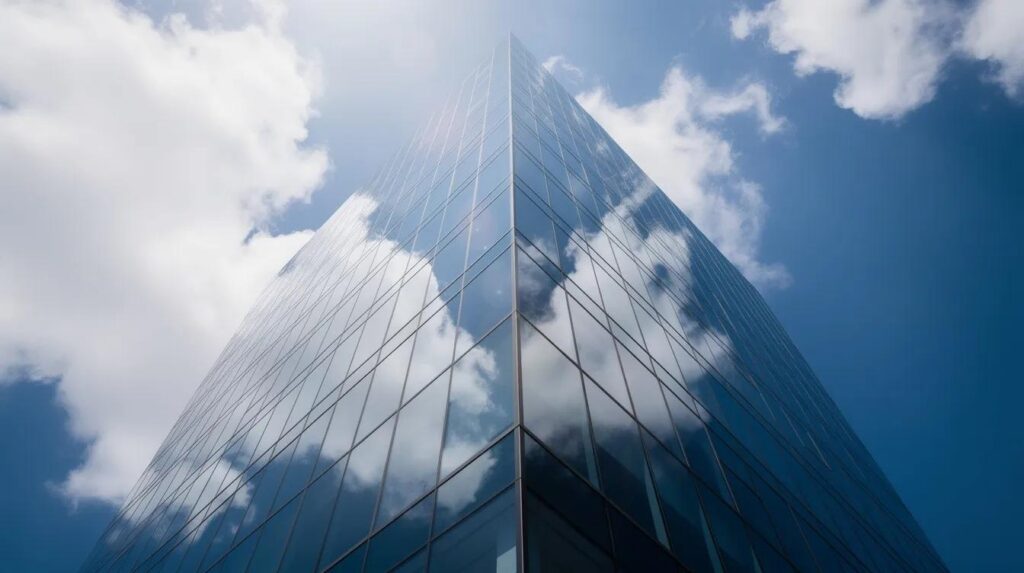
A glass curtain wall is a non load bearing exterior or interior façade system composed primarily of glass panels and lightweight aluminum framing. Unlike traditional walls, which are often load bearing and support the weight of the roof and floors above them while being integrated into the building structure, curtain walls hang from the primary structural frame—slabs, beams, or columns—and support only their own structural weight plus environmental forces like wind load, seismic movements, and thermal expansion.
Table of Contents
- 1 – What Is a Glass Curtain Wall – Defines the system and contrasts it with traditional construction
- 2 – Types of Glass Curtain Wall Systems – Covers stick systems, unitized systems, and interior applications
- 3 – Key Components – Details framing, glazing, seals, and anchors
- 4 – System Principles and Environmental Performance – Explains structural behavior, thermal control, and weather resistance
- 5 – Interior Glass Curtain Walls and Benefits – Explores partitions, acoustics, and flexibility
- 6 – Historical Milestones and Notable Examples – Traces evolution from early 1900s to today
- 7 – Maintenance, Repair, and Lifecycle Considerations – Outlines inspection cycles and long term value
- 8 – Why Choose Our Team – Highlights our expertise and project approach
- 9 – FAQs – Answers common questions on cost, timelines, and system selection
What Is a Glass Curtain Wall?
When architects and developers want to maximize daylight, create striking facades, and meet stringent energy codes, glass curtain walls consistently emerge as the solution. These engineered assemblies have shaped the skylines of major cities for over a century, and they continue to evolve with new materials and performance capabilities. This guide breaks down everything you need to know—from system types and components to maintenance strategies and why early coordination matters for your next project.
Curtain wall systems are designed to be non load bearing, meaning they support only their own weight and the environmental loads acting directly on them, transferring these forces back to the building’s main structural frame. This distinction allows architects to create extensive, uninterrupted glass facades that would be impossible with conventional construction methods.
Glass curtain walls became common from the mid‑20th century onward, defining the aesthetics of office towers and civic buildings. Today, they’re applied across mid‑rise institutional projects, healthcare facilities, educational buildings, and retail environments. The aesthetic appeal of glass curtain walls allows for bold design statements while meeting energy performance requirements.
These systems are engineered assemblies—not just sheets of glass. They integrate frames, glazing units, gaskets, anchors, and thermal insulation working together to meet structural performance, thermal, acoustic, and safety requirements.
Types of Glass Curtain Wall Systems
Curtain wall systems are categorized into two main types based on their fabrication and installation methods: stick systems and unitized systems. Each approach offers distinct advantages depending on project scale, schedule, and architectural complexity.
Stick Systems
Stick curtain wall systems are assembled piece-by-piece on-site. The process begins with installation of vertical mullions, followed by horizontal transoms, and finally the glass or opaque panels. This method offers significant flexibility for complex facades, curved geometries, or highly customized architectural expressions where prefabrication would be impractical.
However, stick systems typically require additional site labor, which can extend installation timelines compared to modular approaches.
Unitized (Modular) Systems
Unitized curtain wall systems are prefabricated in a factory and then transported to the site for installation. These pre assembled units—typically one story tall and 5 to 6 feet wide—arrive fully glazed and are craned into position by installer glaziers. Factory-controlled assembly provides superior quality control, consistency, and faster on-site erection, making unitized systems ideal for high-rise projects or aggressive schedules.
Hybrid and Interior Systems
Hybrid or ladder systems use split mullions that are partly assembled in shops and completed on-site, offering trade-offs between modularity and flexibility.
Interior glass curtain wall systems represent a specialized application for:
- High interior partitions and office fronts
- Atriums and lobbies requiring visual transparency
- Meeting rooms and educational spaces needing acoustic separation
These interior systems maintain the same non load bearing principles while optimizing for different performance requirements.
Key Components of a Glass Curtain Wall
Performance depends on how each component—frame, glass, seals, anchors, and insulation—works together as an integrated system. Understanding these elements helps you make informed specification decisions.
Framing Systems
The frame typically consists of aluminum mullions and transoms that form the structural grid. Aluminum has largely replaced steel because it’s easily extruded, lightweight, corrosion-resistant, and offers favorable thermal properties. The framing transfers loads to the building structure and establishes sightlines, module sizes, and the overall aesthetic character of the façade.
Glazing Options
The primary materials used in curtain wall construction include aluminum or steel for framing, and glass for infill, which can be tempered, laminated, or insulated with high performance coatings for thermal insulation. Float glass is the most common type of glazing used in curtain walls, typically available in thicknesses of 1/4 inch (6.4 mm) for spandrel areas and 1 inch (25 mm) for insulating glass.
Key glazing types include:
- Insulated glass units (IGUs) with air or argon gas fills
- Laminated glass for safety and blast resistance
- Spandrel panels for opaque zones at floor slabs
- Metal panels and stone veneer for accent areas
Thermal Breaks and Pressure Plates
Aluminum framing incorporates a thermal break—insulating materials within the mullion profile—that reduces heat transfer between interior and exterior portions of the frame. Pressure plates and caps control thermal bridging and protect glazing from direct contact with aluminum.
Seals and Gaskets
EPDM or silicone gaskets, perimeter sealants using fiberglass modified glazing compound, and glazing tape control air infiltration and water penetration following AAMA and ASTM test criteria.
Anchors and Brackets
These structural components connect mullions or pre assembled units to floor slabs or columns while allowing controlled building movement from thermal expansion, structural sway, and concrete creep.
System Principles and Environmental Performance
Curtain wall design balances structural behavior, weather resistance, and energy performance as core design drivers. A properly designed system addresses all three simultaneously.
Rainscreen and Pressure Equalization
The rainscreen principle in curtain wall technology helps prevent water penetration into the building by maintaining equilibrium of air pressure between the outside and inside of the wall. Chambers behind exterior gaskets balance air pressure, eliminating the differential that drives water inward during wind-driven rain events.
Load Paths and Structural Requirements
Curtain walls must be designed to handle various loads, including dead loads from the weight of the materials, wind loads from external forces, and seismic loads from building sway during earthquakes. Design limits such as L/175 deflection for mullions ensure glass remains properly seated and sightlines stay acceptable. Curtain walls are designed to be non load bearing, meaning they only support their own weight and the environmental loads acting directly on them, such as wind pressure.
Thermal Performance
Glass curtain walls can significantly enhance energy efficiency by utilizing high performance glazing with low e coatings, which provide thermal insulation and solar control, positively impacting the overall energy performance of the building envelope. Additional strategies include:
- IGUs with argon or krypton gas fills
- Warm-edge spacers reducing edge-of-glass heat loss
- Continuous insulation at spandrel zones preventing thermal bridges
These features help control solar heat gain and meet recent energy codes.
Acoustic and Fire Performance
For urban construction sites with high ambient noise, curtain walls employ laminated glass, variable thickness glass, and sealed cavities to meet STC/OITC targets and control glare. At floor lines, firestopping, non-combustible insulation, and fire-rated spandrel assemblies maintain compartmentation in multi-story façades.
Interior Glass Curtain Walls and Their Benefits
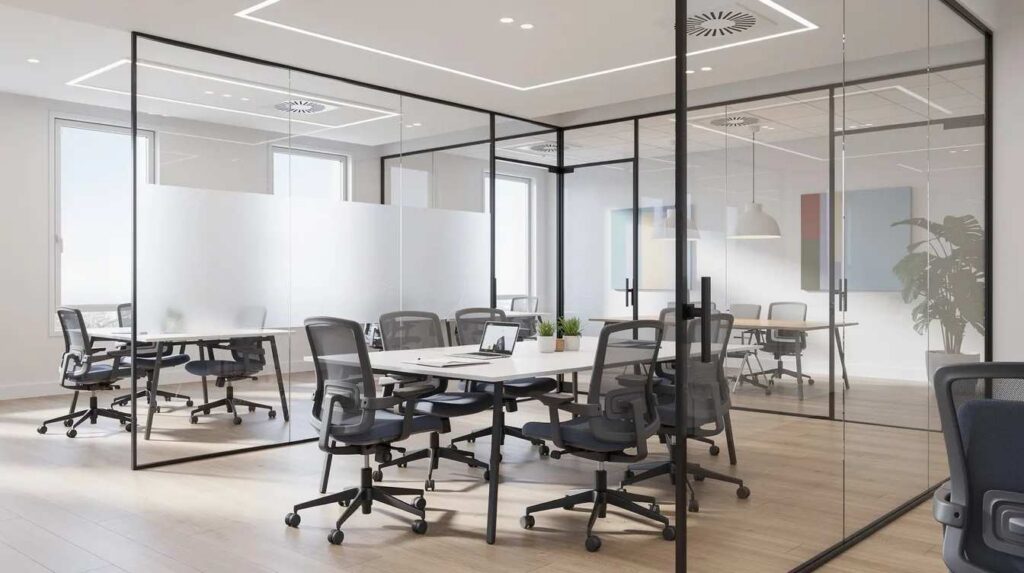
The same curtain wall principles applied to exterior facades are adapted for interior partitions in offices, schools, healthcare facilities, and retail environments. These glazing systems create purposeful separations while preserving transparency.
Interior glass walls separate meeting rooms, music practice spaces, or private offices from open areas while maintaining visual connection. Large and uninterrupted glazed areas allow ample natural light into buildings, fostering a sense of openness and connection with the surroundings, which can improve occupant comfort and productivity.
Customization Options
Interior systems offer remarkable flexibility:
- Variable heights including high walls over 13 feet to ceiling
- Integration of swing and sliding doors
- Blinds in the cavity between panes for privacy
- Compatibility with wood, metal, or stone trims
Acoustic Separation
Double-glazed frameless partition systems create enhanced acoustic barriers while maintaining daylight penetration. Laminated glass and careful perimeter detailing keep conversations private in meeting spaces and open offices, delivering visual comfort without sacrificing sound control.
Flexibility for Changing Needs
Non load bearing interior systems can be relocated or reconfigured during tenant fit-outs or workplace changes without structural intervention—a significant advantage over traditional construction methods.
Historical Milestones and Notable Glass Curtain Wall Examples
Glass curtain walls evolved from early steel-and-glass buildings in the early 20th century to today’s high performance facades. The development of glass curtain walls was made possible by advancements in steel construction, allowing for taller buildings and larger glass windows compared to traditional brick or stone structures.
Pioneering Examples
The Boley Building in Kansas City, completed in 1908, is recognized as the world’s first known example of steel with glass construction, marking a significant shift in architectural design. This building by architect Louis Curtiss contrasted sharply with the thick masonry facades that preceded it.
The Hallidie Building, opened in 1918 in San Francisco, is one of the earliest large-scale glass curtain-walled buildings, featuring a glass façade suspended in a steel mullion grid. The building’s 2010 restoration replaced original glass with laminated safety glass while preserving its historic character.
Mid-Century and Beyond
Mid-century modern glass towers emerging post-1945 in major U.S. cities solidified curtain wall construction as the defining urban aesthetic. Today’s curtain wall design integrates lessons learned over a century with advanced materials, coatings, and engineering analysis.
Maintenance, Repair, and Lifecycle Considerations
Glass curtain walls are long-life systems whose performance depends on planned inspection and maintenance cycles. Proper care extends service life by decades and prevents costly emergency repairs.
Sealant Maintenance
Sealant lifespan typically ranges from 10-15 years at perimeter joints. Restoration involves removal of failed sealant, cleaning of substrate surfaces, priming, and application of new sealant to restore weather tightness.
Finish Care
Aluminum finishes—anodized, powder-coated, or fluoropolymer—each have different durability characteristics and recommended cleaning frequencies. Regular maintenance preserves both aesthetics and protective properties.
Inspection Programs
| Component | Inspection Frequency | Key Concerns |
|---|---|---|
| Perimeter sealants | Every 5-7 years | Cracking, adhesion loss |
| Anchors and brackets | Every 10 years | Corrosion, movement |
| IGU seals | Annually (visual) | Fogging, moisture |
| Gaskets | Every 5 years | Compression set, tears |
Lifecycle Decisions
Strategic upgrades—recoating, reglazing with higher-performance glass, adding external or internal shading—can extend service life and improve overall energy efficiency without full replacement.
Why Choose Our Team for Glass Curtain Wall Projects
We specialize in engineered glass curtain wall solutions from early curtain wall design through installation and long-term service. Our approach emphasizes collaboration, technical rigor, and delivering long term value for every project.
Our Capabilities
- In-house façade design, structural and thermal analysis
- Deep familiarity with AAMA, ASTM, and local building code requirements
- Factory-controlled assembly for unitized systems with documented testing
- Certified installers for air, water, and structural performance verification
- Experience across offices, educational buildings, healthcare, and retail
Sustainability Integration
We help clients meet LEED and similar targets by specifying low-E glass, high performance framing with proper thermal breaks, and detailing for reduced thermal bridging.
Contact us early in your design process for consultation, pricing studies, and value-engineering of glass curtain wall concepts for your next project.
Glass Curtain Wall FAQs
What’s the difference between glass curtain walls and storefront systems?
Curtain wall systems span multiple floors and account for significant building sway and movement, while storefront systems typically span single stories at ground level. Curtain walls undergo more stringent structural performance and air infiltration testing and handle greater wind load requirements.
How do I choose between stick and unitized curtain walls?
Stick systems work well for low-rise projects, complex geometries, or smaller facades where site flexibility matters. Unitized systems excel on high-rise buildings with repetitive floor plates, fast-track schedules, or projects where superior quality control justifies higher fabrication costs.
What drives glass curtain wall costs?
Primary cost factors include glass type (float, laminated, triple-glazed), framing system complexity, building height, facade geometry, and site access requirements. Unitized systems cost more upfront but reduce installation time significantly.
How do curtain walls achieve energy efficiency?
Low e coatings, insulated glass units with gas fills, thermal breaks in aluminum frames, and continuous insulation at spandrel zones all contribute to improved U-values and solar control. These elements work together to minimize heat transfer and control solar heat gain.
What are typical design and installation timelines?
For a mid-size commercial façade (50,000 to 100,000 square feet), expect 12-18 months from initial concept through final installation. Early coordination with our team on curtain wall projects prevents delays, reduces redesigns, and ensures your building envelope meets all performance requirements on schedule.