If you’re looking to buy bullet proof glass in 2026, you need accurate pricing, clear threat-level guidance, and a straightforward path from quote to installation. This guide delivers exactly that—no filler, just the practical information you need to make a smart purchase decision.
Table of Contents
This guide covers everything from quick pricing answers to detailed installation requirements:
- Quick Answers If You Want to Buy Bullet Proof Glass Now
- What Is Bullet Proof Glass and How Does It Work?
- Understanding Bullet Resistance Levels (UL 752 Levels 1–8)
- Main Types of Bullet Proof Glass You Can Buy
- Common Applications in 2026
- Step-by-Step: How to Buy Bullet Proof Glass
- How Much Does Bullet Proof Glass Cost in 2026?
- Installation, Maintenance & Performance
- Why Choose Our Business
- Frequently Asked Questions
Disclaimer: The term ‘bulletproof glass’ is often misleading, as no glass or film combination can completely withstand every physical or ballistic attack. Instead, school and safety officials rely on high-grade bullet-resistant protective glazing and films designed to absorb severe impact, which can help slow, disrupt, or prevent forced entry during active shooter situations and buy vital time for first responders.
Quick Answers If You Want to Buy Bullet Proof Glass Now
Ready to purchase? Here’s the fast version.
Typical use cases in 2026: Retail storefronts, banks, convenience stores, reception counters in schools and hospitals, residential safe rooms, and armored vehicles. FBI data shows a 20-30% increase in smash-and-grab incidents from 2020-2025, driving demand for bulletproof glazing across commercial and residential sectors.
Most common protection levels: UL 752 Level 1-3 handles 80% of commercial needs, protecting against 9mm through .44 Magnum handguns. Levels 4-8 are reserved for rifle threats at government facilities and critical infrastructure.
2026 pricing ranges: Level 1 starts around $100-300 per square foot. Levels 3-5 run $400-800 per square foot. Levels 6-8 exceed $1,000 per square foot. Installation costs, framing, and custom fabrication add to totals.
Standard sizes available: Common panels include 36”x72” and 48”x96”, with custom panels available up to 60”x96” or larger depending on the product and manufacturing capabilities.
Your next steps: Measure your opening precisely, identify your required UL level based on realistic threats, decide between all-glass laminate versus glass-clad polycarbonate, then request a written quote with lead times.
Availability and installation options for bulletproof glass may vary by country, especially for vehicles and commercial applications. Consult local experts to ensure compliance with regional regulations and to explore the best options in your area.
What Is Bullet Proof Glass and How Does It Actually Work?
The industry prefers “bullet resistant glass” over “bulletproof” because no glazing stops every possible threat—only those it’s specifically tested against. Bulletproof glass is categorized into different threat levels, typically ranging from Level 1 to Level 8, with each level designed to withstand specific types of ballistic threats.
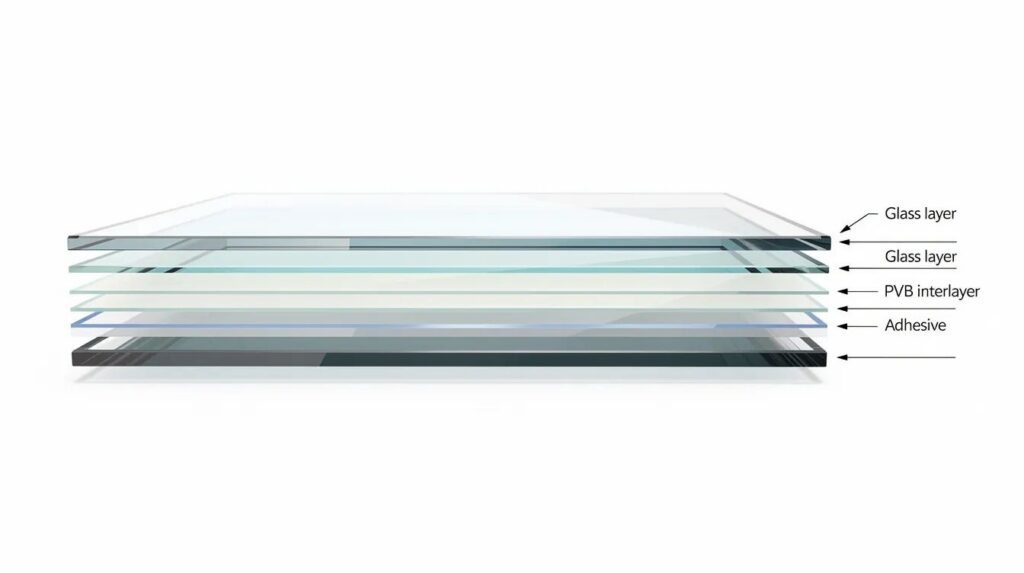
Basic construction: Laminated glass, which is commonly used for bulletproof applications, is produced by bonding multiple layers of glass under pressure and heat, with an interlayer (typically PVB, ionoplast, or polycarbonate) that absorbs energy impacts. The interlayer bonds the glass layers together, absorbing impacts and preventing the glass from breaking into dangerous shards, thus protecting both people and objects. This creates a single transparent barrier with excellent light transmission.
Impact physics simplified: The outer glass ply shatters on impact, deforming and slowing the bullet. Intermediate flexible layers stretch to absorb kinetic energy—up to 2,000-5,000 ft-lbs depending on caliber. Inner plies catch fragments. Bulletproof glass is specifically engineered to withstand impacts from bullets and other forms of ammunition, serving as a barrier against weaponry. Spall protection prevents glass fragments from flying inward toward protected individuals even if the bullet is stopped, and “no-spall” options ensure safety behind barriers.
The balance: Modern ballistic glass optimizes three factors—stopping power, clarity (85-92% visible light transmission), and weight. Advances in materials have made bulletproof glass lighter, improving handling and installation without compromising strength. Low-spall or no-spall ratings indicate that the glass minimizes the risk of shards flying toward occupants when struck, and choosing among different bullet-resistant materials should factor in both performance and constructability.
Critical note: Correct framing, anchoring, and installation matter as much as the glass itself. Ballistic-rated frames, typically made of reinforced aluminum or steel, must match the UL rating of the glass to prevent the entire unit from being pushed out upon impact.
Understanding Bullet Resistance Levels (UL 752 Levels 1–8)
The UL 752 Rating is the standard for building construction, categorizing ballistic protection levels from Level 1-3 against common handguns to Levels 9-10 for military-grade protection including .50 caliber and armor-piercing rounds.
Levels 1-3 (Handgun Protection): Levels 1–3 of ballistic protection are designed to stop three-shot clusters from common handguns such as 9mm and .44 Magnum, and are typically recommended for residences, small businesses, and banks. Level 1 bullet-resistant glass can withstand impacts from handguns, while typical thickness ranges from 0.75” to 1.5”. The thickness of bulletproof glass varies by threat level; for example, Level 3 typically has an interlayer thickness of 1.10 inches, while Level 1 may be around 1.25 inches thick.
Levels 4-5 (Light Rifle Protection): Level 4 defeats .30-06 Springfield AP at 2,880 fps; Level 5 handles 7.62mm NATO M80 ball at 2,750 fps. These require 1.75-2.5” builds with reinforced frames.
Levels 6-8 (High-Powered Rifle Protection): Levels 4–8 of ballistic protection protect against high-powered rifles and assault weapons such as 7.62mm and 5.56mm, often used in government facilities, military bases, and high-risk critical infrastructure. While higher levels, such as Level 8, are designed to resist high-powered rifles and more severe ballistic threats, these exceed 3” thickness with substantial weight. Levels 9–10 of ballistic protection are reserved for extreme military applications and can withstand multiple hits from heavy assault rifles.
Additionally: NIJ Level ratings are used for tactical or personal protection, where Type IIIA stops most handgun rounds and Types III and IV protect against high-powered and armor-piercing rifles; together with UL 752 and NIJ ballistic resistance standards, these ratings provide a common language for specifying protection.
Matching threats to levels: Higher isn’t always better. Typical retail needs Level 1-2. Banks and pharmacies suit Level 2-3. Police stations and courthouses require Level 3-5. Critical infrastructure demands Level 6-8. Over-specifying wastes budget and can overload structures.
Main Types of Bullet Proof Glass You Can Buy
Buyers choose between three primary constructions, each with distinct advantages for specific needs, and many also compare them to bulletproof glass alternatives like BulletShield overglazing when evaluating ballistic upgrades for existing windows and doors.
All-Glass Laminated: Uses multiple glass plies with PVB or ionoplast interlayers. Offers superior optical clarity, scratch resistance, and durability. However, weight increases significantly at higher levels. Best for high-visibility counters and storefronts where transparency is critical.
Glass-Clad Polycarbonate (GCP): Glass-clad polycarbonate is a hybrid of glass and polycarbonate that is extremely durable, used for exterior or high-threat areas requiring maximum protection up to Level 8. The polycarbonate backing requires careful cleaning to avoid scratching and hazing.
Monolithic/Multi-Layer Polycarbonate: Polycarbonate and laminated polycarbonate offer ballistic and forced-entry protection, are thinner and more flexible than acrylic, and may have a slight tint. Ideal for weight-sensitive retrofits and doors, and often used in integrated polycarbonate security glazing systems for schools and commercial buildings.
Bullet resistant acrylic: Acrylic glazing is lightweight, highly transparent, and suitable for interior uses such as transaction windows, but it is sensitive to UV rays and chemical cleaners; for broader impact protection needs, many facilities instead consider shatter-resistant security glass solutions using laminated glass or polycarbonate.
Specialty options: Low-iron glass achieves 90%+ clarity. Tinted versions reduce solar gain. Ballistic insulated glass combines security with thermal efficiency and noise reduction, and is designed for exterior storefronts, where retrofit bullet-resistant overglazing systems like BulletShield can add ballistic protection without full window replacement.
Weight consideration: A single square foot of Level 1 glass weighs roughly 8 lbs, whereas Level 8 glass-clad polycarbonate can weigh nearly 25 lbs, necessitating verification of the building’s capability to support the weight during retrofitting.
Where to Use Bullet Proof Glass: Common Applications in 2026
Bullet resistant products integrate into layered security strategies across sectors, often working alongside bulletproof windows, doors, and security window films to create a complete building envelope solution.
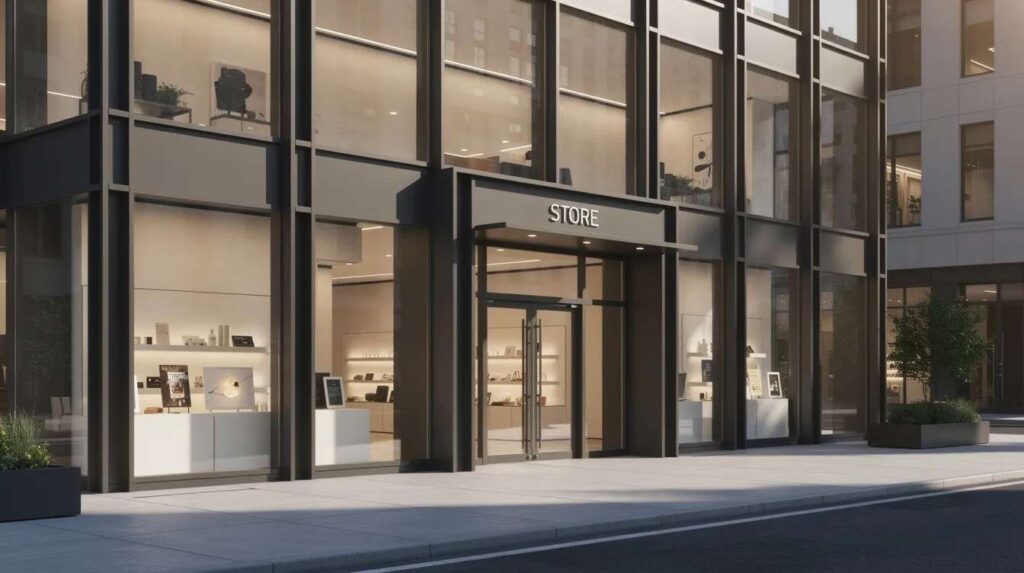
Commercial and retail: Convenience stores, jewelry shops, pawn shops, and pharmacies use Levels 1-3 to protect against robbery and smash-and-grab theft—the most common level for these applications, where dedicated storefront security solutions for glass doors and windows can significantly reduce losses.
Financial and government: Banks, credit unions, courthouses, and transit counters typically specify Level 2-3, matching the threat level of handguns commonly encountered in robberies.
Education and healthcare: School vestibules, reception areas, and nurse stations increasingly install bullet resistant glazing as part of active-shooter protocols, often combining ballistic and forced-entry protection.
Residential: Safe rooms, entry sidelites, and street-facing windows in urban areas can be secured with discrete designs maintaining residential aesthetics. Bulletproof glass can be purchased for various applications, including vehicles, banks, and storefronts, providing enhanced security against potential threats.
Vehicle applications: Bulletproof glass can be custom manufactured to specific sizes and thicknesses, allowing for tailored solutions based on the security needs of the buyer. SUVs, cash-in-transit vans, and law-enforcement vehicles require specialized curved sets from certified upfitters.
Industrial: Control rooms, data centers, power facilities, and guard booths built for 24/7 occupancy rely on higher protection levels and often incorporate bulletproof window and door retrofits with security films to harden vulnerable glazed openings.
Step-by-Step: How to Buy Bullet Proof Glass
Follow this checklist from initial assessment to final inspection.
Step 1 – Risk assessment: Evaluate realistic threats using local crime statistics. In 2024-2026, handguns account for roughly 85% of U.S. robberies—most commercial buyers don’t need rifle-rated glass, but many will benefit from pairing bullet-resistant glazing with UL 752-rated bullet-resistant wall panels to protect adjacent walls and critical rooms.
Step 2 – Measure openings: Record exact visible glass dimensions, frame type, depth, and wall construction. Photos help with accurate quoting.
Step 3 – Choose UL level and glass type: Align your desired level of protection with site limitations, weight capacity, and security goals. Bullet resistant glass is available in different threat levels, typically ranging from Level 1 to Level 8, which indicates the level of protection it offers against ballistic threats.
Step 4 – Get a written quote: Specifications should include UL level, construction type, thickness, panel size, price, lead times (typically 4-12 weeks for standards), and shipping costs.
Step 5 – Confirm compliance: Check local building codes, NFPA 101 egress rules, and any security standards for banks or cannabis dispensaries. Additional standards like ASTM F3561-22 should be checked for added protection against forced entry attempts with tools.
Step 6 – Installation planning: It is recommended that all bulletproof glass be installed in accordance with the guidelines in the current edition of the GANA Glazing and Sealant manuals. Bullet resistant glazing installation should follow the guidelines set forth in the latest edition of the Glazing Manual published by the Glass Association of North America (GANA). Select experienced, certified installers.
Step 7 – Final inspection: Verify glass markings, UL listings, correct orientation (attack side facing threat), and obtain test data sheets.
How Much Does Bullet Proof Glass Cost in 2026?
Bulletproof glass cost varies by level, construction, size, and order volume.
| UL Level | Typical Price/Sq Ft | Common Applications |
|---|---|---|
| Level 1-2 | $100-300 | Cashier windows, retail counters |
| Level 3-4 | $400-600 | Banks, pharmacies |
| Level 5-6 | $700-1,200 | Government, courthouses |
| Level 7-8 | $1,500-3,000+ | Embassies, critical infrastructure |
| Cost drivers beyond base glass: Custom shapes, cutouts for speak-throughs and deal trays, low-iron or tinted options, and rush production (adding 50%+ to costs). |
Complete project costs: Factor in ballistic frames, doors, transfer drawers, and counters. A small convenience store retrofit (10 sq ft, Level 2) might run $10,000 total including installation. A multi-window bank branch could exceed $25,000-50,000.
Recommendation: Always request a project-specific quote based on your exact specifications and access requirements.
Installation, Maintenance & Performance Over Time
Quality bullet resistant products underperform when installed incorrectly or neglected.
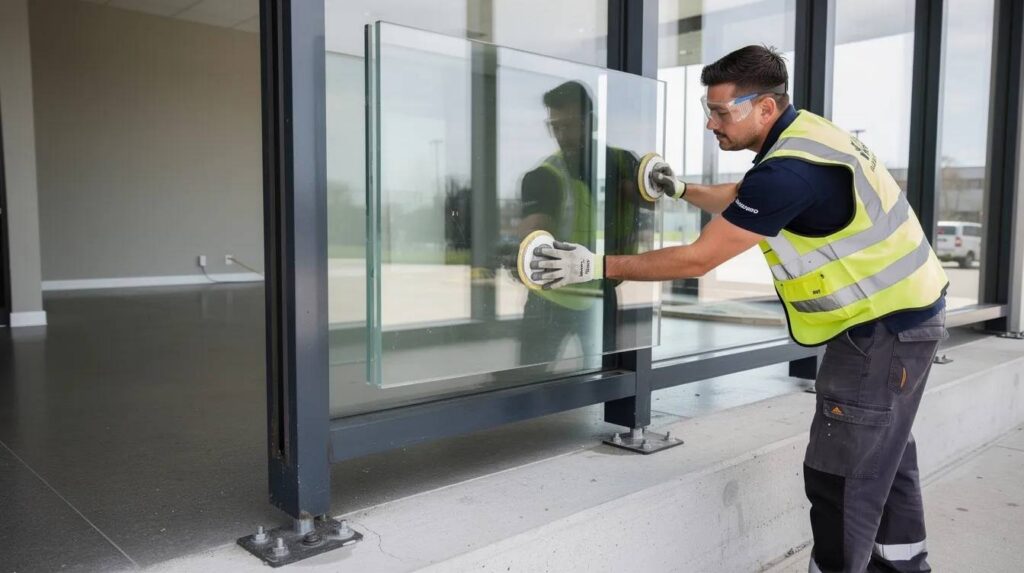
Installation requirements: Use rigid, properly anchored frames with minimum 1-2” edge bite. Ensure correct sealant compatibility and attack-side orientation. Poor framing causes approximately 40% of field failures.
Environmental factors: UV exposure can yellow polycarbonate 10-20% over 10 years without stabilizers. Temperature cycling affects exterior applications—specify accordingly.
Cleaning protocols: Use microfiber cloths and ammonia-free cleaners, particularly for polycarbonate surfaces. Abrasion resistance varies by material—avoid abrasive pads that damage protective layers.
Inspection schedule: Annual checks should identify delamination, edge defects, scratches, and hardware issues. Quality ballistic glass maintains performance for 20-30+ years when properly maintained.
Replacement triggers: Major impact events or visible deterioration require professional assessment and potential panel replacement to guarantee continued protection.
Why Choose Our Business When You’re Ready to Buy Bullet Proof Glass
We specialize in security glazing from concept through installation, offering complete project support.
In-house fabrication: We control interlayer selection, lamination cycles, and quality checks for consistent performance across all bullet resistant products.
Full UL range: We supply UL 752 Levels 1-8 in standard sizes (48”x96”) and custom panels fabricated to your specific needs and unique architectural openings.
Documentation support: We provide detailed test data, performance certificates, and product documentation to help architects, security consultants, and building owners justify specifications.
Project reliability: Expect accurate lead times, help with take-offs from drawings, value engineering, and coordination with glaziers and general contractors.
Ongoing support: We maintain clear communication, realistic delivery dates, and post-installation assistance for maintenance, replacements, and future upgrades. Contact us by phone or fill out a quote request to discuss your solution.
Frequently Asked Questions About Buying Bullet Proof Glass
Is any glass completely bulletproof? No. “Bulletproof” is marketing language—the correct term is “bullet resistant.” All safety glass products are rated to stop specific calibers, velocities, and shot counts per UL 752 or similar standards. Material composition for ballistic protection includes acrylic for lightweight interior uses, polycarbonate for higher protection levels, and glass-clad polycarbonate for durability in high-threat areas.
Can I retrofit bullet resistant glass into existing frames? Sometimes. If existing frames are sturdy and can accept thicker glazing with proper edge bite, retrofitting works. Often, frames must be upgraded to ballistic-rated aluminum or steel to secure the complete system against attack.
How long until I receive my order? Standard sizes typically ship in 4-6 weeks. Custom orders require 8-16 weeks depending on complexity, thickness, and number of panels ordered.
Does bullet proof glass protect against forced entry? Glass-clad polycarbonate often provides dual protection against ballistic and forced-entry threats. However, forced-entry testing (like EN 356 P6B-P8B) is separate from ballistic testing—specify both if needed.
Will it look different from regular glass? Quality ballistic glass achieves 85-92% light transmission with minimal tint. Edges appear slightly thicker, but modern products maintain transparency that’s visually discrete in most applications.
Can bullet proof glass be cut on site? No. Bulletproof glass can be custom manufactured to specific sizes and thicknesses, but must be fabricated to final dimensions at the factory. Field cutting compromises the laminated structure and voids ballistic ratings.
Conclusion: Making a Smart, Informed Bullet Proof Glass Purchase
Match your UL level, glass type, and framing to realistic threats—not worst-case scenarios that waste budget and overload structures.
- Assess actual risk using local crime data before selecting protection levels
- Work with experienced suppliers who provide test documentation and installation guidance
- Remember that proper framing and installation are as critical as the glass itself
Gather your measurements, clarify your primary security goals, and reach out for a tailored recommendation and written quote. The right combination of threat level, material, and professional installation delivers genuine, long-term protection.