Table of Contents
Jump to the section that matters most to you:
- Introducing Polycarbonate Windows
- What Is Polycarbonate & Why It Works So Well
- Advantages Over Glass
- Performance & Specialty Vehicles
- Heavy Equipment
- Buildings & Residential
- Measuring & Specification
- Care & Maintenance
- FAQs
- Why Choose Us
Introducing Polycarbonate Windows
From 2024 to 2026, storms, security concerns, and performance demands are driving people to replace traditional glass with poly windows. While float glass has dominated glazing for over a century, it shatters dangerously and adds significant weight.
Polycarbonate is a transparent engineering thermoplastic used in aircraft canopies, riot shields, and now automotive and architectural windows. Polycarbonate windows are known for their high impact resistance, making them a safer alternative to traditional glass in environments with safety concerns such as schools and medical facilities.
Why people search for polycarbonate windows:
- Superior impact strength for storm and security protection
- Lightweight construction for racing and heavy equipment
- Design flexibility for curved and custom shapes
- Advanced UV and hard-coat options for durability
What Is Polycarbonate & Why It Works So Well as Window Glazing
Polycarbonate is an engineering thermoplastic offering exceptional toughness with optical clarity up to 89% light transmission. It delivers roughly 250 times greater impact resistance than standard glass of equivalent thickness.
Manufacturing includes extruded polycarbonate sheets, multiwall profiles for insulation, and thermoformed 3D shapes. Polycarbonate is approximately 50-83% lighter than glass, depending on application. Additives like UV stabilizers and hard coats transform raw material into weather-resistant window systems.
Key characteristics:
- Cold-bend for gentle curves or thermoform for complex shapes
- Coatings for scratch resistance, anti-fog, and thermal performance
- Polycarbonate maintains its high impact resistance even at sub-zero temperatures
Advantages of Polycarbonate Windows Over Glass
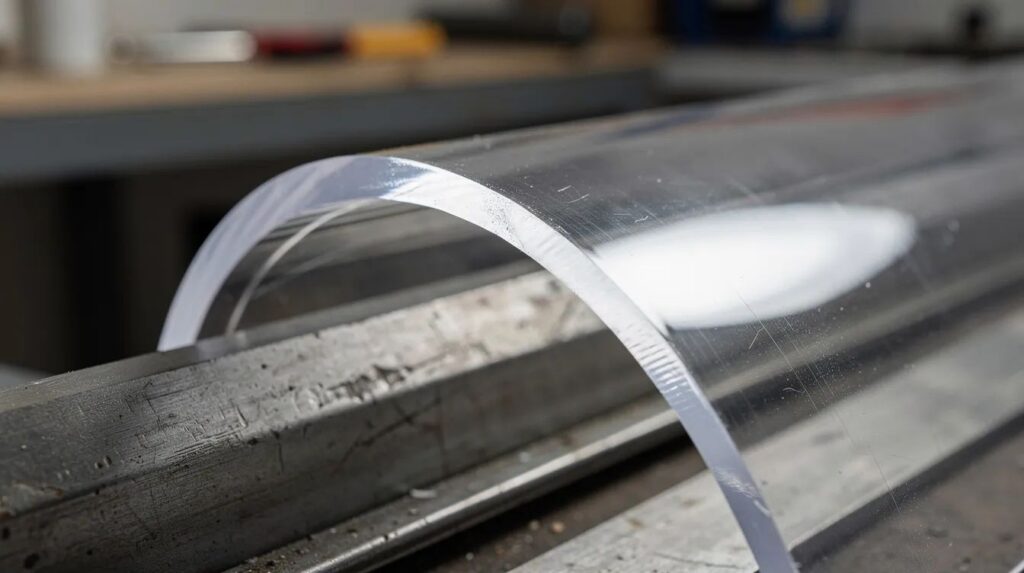
Single-pane glass is a poor insulator, leading to high energy transfer, while glass is brittle and shatters upon impact, posing a safety risk from sharp shards. Here’s how polycarbonate compares:
| Feature | Polycarbonate | Glass |
|---|---|---|
| Impact Resistance | ~250x stronger | Shatters easily |
| Weight | 50-83% lighter | Heavy |
| Thermal Efficiency | R-value ~1.54/inch | Poor insulation |
| Lifespan | 10-25 years | 40-50 years |
| Optical Clarity | 89% transmission | 88-90% (benchmark) |
Performance benefits:
- Polycarbonate survives large hail impacts (up to 35mm) at terminal velocity without cracking
- Polycarbonate can reduce heating and cooling costs by up to 30%
- The lightweight nature of polycarbonate windows can significantly reduce the overall weight of structures, leading to improved energy efficiency and lower transportation costs
- Glass is the benchmark for unparalleled optical clarity, transmitting about 88-90% of light without distortion over time, though glass can last 40-50 years or more without losing clarity
Polycarbonate Windows for Performance & Specialty Vehicles
Polycarbonate windows are increasingly popular in the racing industry due to their lightweight nature, which can significantly enhance vehicle performance by lowering lap times and improving handling. This section covers track cars, VW Beetles, and installation essentials.
Polycarbonate for Racing & Track Cars (e.g., BMW Builds)
Replacing glass with polycarbonate in a BMW E36 or E46 track build saves 15-25 kg across a full window set. This weight reduction lowers the center of gravity, improving transitions and delivering measurable lap time gains—real-world data shows 1.5-second improvements on circuits like the Nürburgring.
Racers prefer polycarbonate windows because they provide enhanced safety features, including high impact resistance, which is crucial for protecting drivers during races. Many club racing and time-attack organizations require or recommend polycarbonate side windows for shatter-resistance in high-speed incidents.

Rear Polycarbonate Windshields
Switching to a polycarbonate rear windshield cuts weight high in the vehicle, amplifying handling benefits. The use of polycarbonate windows in racing vehicles allows for customization options, such as NACA duct cutouts, which improve air circulation and cooling during high-intensity races.
Options include tinted versus clear finishes, various thickness choices for the ideal balance of stiffness versus weight, and pre-formed curves for specific model years like different VW Beetle generations.
Door & Rear Quarter Polycarbonate Windows
Door and rear quarter panels are smaller but contribute meaningfully to total weight savings. Polycarbonate windows can be easily customized with various additives to enhance properties such as UV resistance, thermal insulation, and aesthetic appeal.
These panels can be drilled for hardware and sliders without cracking risks associated with tempered glass—easy to add or remove for pit ventilation or trailer loading.
Basic Installation Tips for Polycarbonate Vehicle Window Kits
When you shop for polycarbonate window kits, follow these steps to ensure proper fitment:
- Use plastic-specific drill bits at 500 RPM
- Allow 3-5mm expansion gaps for thermal movement
- Avoid overtightening fasteners—torque under 5 Nm
- Use silicone seals compatible with polycarbonate
Pre-cut kits designed for specific models cut installation time by 70% versus cutting raw sheets. Learn your vehicle’s exact daylight measurements before ordering.
Polycarbonate Windows for Heavy Equipment & Industrial Machinery
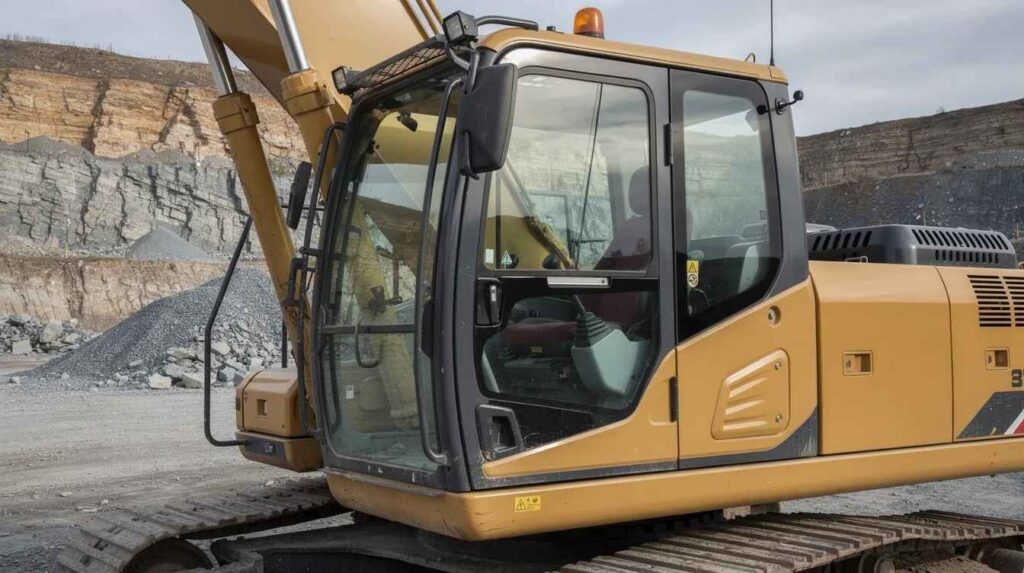
Excavators, loaders, and forestry machines operate where flying debris poses constant risks. Polycarbonate windows for heavy equipment can be customized to meet specific operational needs, ensuring they fit various types of machinery and applications.
Safety, Security & Operator Protection
Polycarbonate windshields protect operators from rocks, branches, and tool kickback far beyond what laminated glass tolerates. Polycarbonate windows can be engineered to provide a distortion-free field of vision, which is crucial for safety in heavy equipment operations. Customization options for polycarbonate windows include different thicknesses and coatings, which can enhance durability and performance in harsh environments.
Advanced Coatings & Material Technologies
Modern coatings provide great performance:
- Hard coats resist 5,000+ abrasion cycles
- Anti-fog layers maintain clarity inside humid cabs
- IR-reflective films reduce cab temperatures by 15°F
These technologies reduce maintenance frequency and keep equipment running longer between service cycles—expect 7-15 years of service before replacement.
Custom Shapes, Side Windows & Windshields
CNC machining replicates OEM contours precisely (±0.5mm). Side windows, roof panels, and windshields can all be upgraded with custom cut-outs, slider windows, and extra-thick panels for demolition or scrap-handling equipment. Precise forming ensures comfort through reduced rattles and consistent sealing.
Polycarbonate Windows for Buildings & Residential Projects
Homeowners in hurricane zones use 6-10mm storm panels for windborne debris resistance. Skylights and greenhouses benefit from diffused light and hail resistance. Building applications offer security and safety—no dangerous shards if windows break, making them ideal for family homes and schools.
How to Measure & Specify Polycarbonate Windows Correctly
Accurate measurements prevent 90% of returns. Measure the actual frame opening—not trim or seals—at multiple points. For modified vehicles like chopped-top VW Beetles, use laser levels to detect warped bodies.
Specification checklist:
- Size: Width and height at 5 points minimum
- Thickness: 3-4mm for weight-critical doors, 9-12mm for equipment cabs
- Coatings: Hard-coat both sides for bidirectional exposure
- Edge treatment: 2-3mm radius to prevent cracks
Choose products matching your exact application before adding to cart.
Care, Cleaning & Long-Term Maintenance
Proper maintenance extends lifespan significantly:
- Do: Use mild soap, water, and soft microfiber cloths
- Don’t: Use ammonia, acetone, or abrasive pads
Inspect annually for scratches using a 60° gloss meter. Severely scratched panels can sometimes be polished, but replace if haze exceeds 10% in safety roles. Prolonged UV exposure can cause polycarbonate to yellow, craze, or become cloudy over time (typically 10-20 years), though quality UV-coated products resist yellowing under 5% after 10 years of Florida exposure.
Frequently Asked Questions About Polycarbonate Windows
Are polycarbonate windows truly unbreakable? Not unbreakable, but 12mm thickness can stop rifle shots (UL 752 Level 1). They absorb impacts without shattering into dangerous fragments.
Will polycarbonate windows yellow over time? UV-coated polycarbonate resists yellowing under 5% after 10 years in harsh sun. Glass is made from abundant natural materials and is indefinitely recyclable, offering longer optical clarity.
Are polycarbonate windows street-legal? Legal for rear and side windows in 40+ states. Front windshield use requires DOT/FMVSS 205 certification—check local regulations.
What thickness for heavy equipment cabs? 9-12mm per SAE J394 standards provides adequate impact protection for quarry and demolition operations.
Can I install them myself? DIY works well for vehicle rear and side windows with pre-cut kits. Professional installation recommended for buildings and equipment cabs.
Why Choose Our Polycarbonate Window Solutions
We specialize in custom-cut and thermoformed kits for BMW E36/E46 builds, VW Beetles, Caterpillar loaders, and residential security applications. Our ISO 9001-certified production ensures consistent quality with 2-week lead times.
What sets us apart:
- Model-specific polycarbonate window kits with precise CNC machining
- Measurement consultation to ensure perfect fitment
- 15-year warranties outperforming generic sheets
- Coating expertise for your specific application
Discover how we can help you specify the right thickness, coatings, and edge treatments. Contact us with your vehicle model, equipment type, or window dimensions for a tailored quote.