Table of Contents
- Introduction: Why Bulletproof Glass Matters in 2026
- What Is Bulletproof Glass?
- Types of Bulletproof Glass and Window Systems
- How Effective Is Bulletproof Glass?
- The Cost of Bulletproof Glass and Window Systems
- Maintaining and Replacing Bulletproof Windows
- Pros and Cons in Schools and Public Buildings
- Alternatives and Complementary Security Measures
- Advanced Transparent Armor Materials
- Case Studies: Real-World Projects
- Why Choose Our Company
- FAQs About Bulletproof Glass
- Conclusion: Building Safer Spaces
Introduction: Why Bulletproof Glass Matters in 2026
Between 2015 and 2026, North America and Europe have witnessed a troubling rise in workplace violence, smash-and-grab robberies costing retailers over $1 billion annually, and active shooter events that have reshaped how we think about building security. U.S. school shootings increased approximately 20% during this period, driving urgent conversations about protective infrastructure.
Here’s an important distinction: the industry prefers the term bullet resistant glass over “bulletproof” because no material is completely impenetrable against all ballistic threats. The rating, caliber, angle of impact, and number of shots all determine real-world performance.
Increasing numbers of schools are installing bullet resistant windows in entry vestibules and classroom doors to delay threats during lockdowns. High-end retailers use bullet resistant glass for display cases and storefronts to deter smash-and-grab thefts. Banks, credit unions, police stations, corporate lobbies, pharmacies, and convenience stores have all accelerated adoption through 2024-2026.
This article answers what bulletproof glass actually is, how effective it really is, how much it costs (with real dollar figures), how long it lasts, and how to choose the right system. You’ll find practical FAQs, recent project examples, and guidance for making informed decisions.
What Is Bulletproof Glass? (Bullet-Resistant Windows Explained)
Bullet resistant glass is a transparent laminate engineered to absorb and disperse the bullet’s energy, preventing projectiles from penetrating into the protected space. Unlike normal glass that shatters on impact, this material deforms progressively while maintaining integrity.
The basic structure consists of alternating laminated glass layers and plastic interlayers—typically polycarbonate or PVB—bonded under high heat and pressure in an autoclave to ensure permanent adhesion and optical clarity. The outer hard layer is usually made of tempered glass or acrylic and deforms upon impact to reduce projectile speed. Flexible interlayers of materials like polycarbonate or PVB absorb energy and prevent sharp fragments from causing injury on the other side.
Key distinctions to understand:
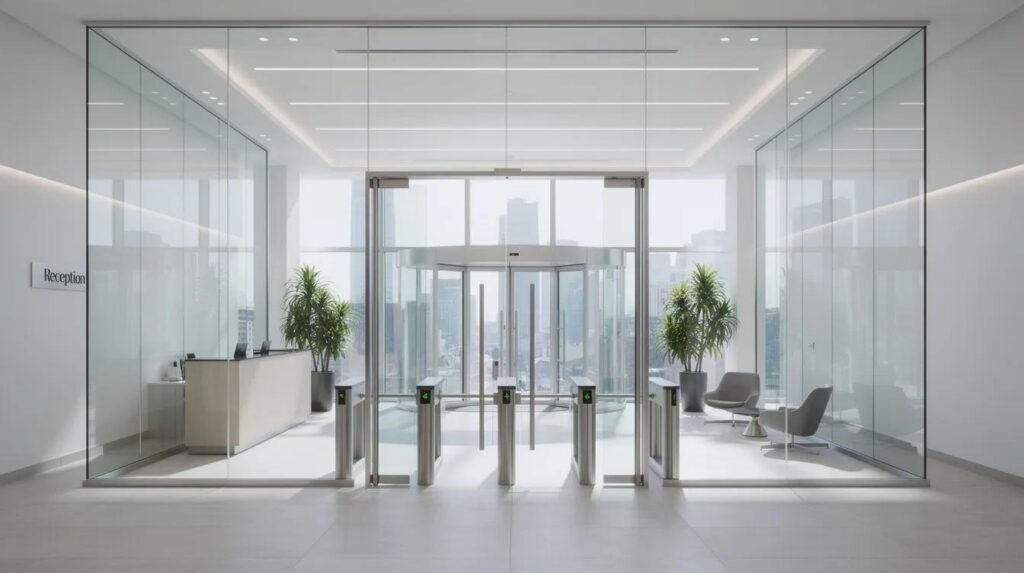
- Bullet resistant windows for buildings protect doors, sidelights, transaction windows, and reception areas
- Transparent armor for armored vehicles like police cruisers and cash-in-transit trucks provides mobile ballistic protection
- Bullet resistant glass is found in high-traffic areas like airports and hospitals to enhance safety against potential attacks
- In government buildings and law enforcement facilities, it secures lobbies, courthouses, and police station reception desks
Standard glass versus bullet-resistant comparison:
- Tempered glass shatters into small granules—safe for injury prevention but offers zero bullet resistance
- Basic laminated glass holds shattered glass together during crashes but fails against even low-velocity handgun rounds
- Ballistic glass absorbs impacts equivalent to 250 times that of ordinary glass in polycarbonate variants
Types of Bulletproof Glass and Window Systems
There are four types of bulletproof glass commercially available today, each catering to different security needs and applications. Bulletproof glass is generally made of laminated glass and polycarbonate, but can also incorporate other specialized synthetic materials to enhance protection.
Laminated Polycarbonate Composites: The most common choice for banks and schools. Glass sheets face the threat side while a polycarbonate layer provides the energy-absorbing core. This glass clad polycarbonate configuration achieves UL Levels 1-3 with thicknesses from 0.75 to 1.25 inches.
All-Glass Laminated Systems: Multiple layers of chemically strengthened glass with PVB or SentryGlas interlayers. Heavier but superior scratch resistance and optical clarity. Suitable for UL Levels 1-8 but requires thicknesses up to 3.5 inches.
Glass-Clad Polycarbonate (GCP): The workhorse for advanced protection up to UL Level 8. A thin glass strike face bonds to a thick polycarbonate core, handling sustained fire from high powered rifles like 7.62mm NATO rounds. Thicknesses range 1 to 2.5 inches.
Specialty Transparent Armor: Ceramics like aluminum oxynitride (ALON) serve military-grade assemblies. Reserved for armored vehicles and VIP facilities due to prohibitive costs.
Typical thickness ranges for commercial UL 752 Level 3-5 assemblies run approximately 18-38mm (0.75-1.5 inches). Complete bullet resistant window systems extend beyond glazing to include ballistic-rated frames, anchoring hardware, transaction drawers, and speak-throughs.
How Effective Is Bulletproof Glass? Ratings, Calibers, and Real Limits
Bulletproof windows are designed to protect people against ballistic threats, including bullets and shrapnel, enhancing safety in areas exposed to gunfire or explosive violence. However, the effectiveness of bulletproof windows against bullets depends on the caliber of the ammunition and the rating of the glass, with no material being completely impervious to high-caliber firearms or sustained attacks.
Primary testing standards:
- UL 752 (Levels 1-10): U.S. benchmark. Level 1 stops three 9mm FMJ rounds. Level 3 handles three .44 Magnum semi-jacketed hollow points. Level 5 defeats three 7.62mm NATO full metal jacket rifle rounds.
- NIJ Standards: Used in federal and government buildings
- EN 1063 (BR1-BR7): European standard, with BR2 similar to UL Level 1
Multi-hit capability matters: rated assemblies must stop bullets in defined shot patterns, not just single impacts. The glass behaves on impact through cracking radially, the bullet flattening against the strike face, and energy cascading through protective layers causing viscoelastic deformation.
Practical rating guidance for ballistic performance:
- Convenience stores and pharmacies: UL 752 Level 1-2 (handgun threats)
- Banks, credit unions, school entry vestibules: Level 3 (.44 Magnum protection)
- Police stations, government buildings, high-risk facilities: Levels 4-8 (rifle protection)
Real limits include degradation after rated hits, oblique angles reducing performance by up to 30%, and zero efficacy against sustained magazine dumps or explosives.
The Cost of Bulletproof Glass and Window Systems
Bulletproof glass cost varies significantly based on rating level, glazing type, frame system, and building modifications required. Here’s realistic 2024-2026 pricing guidance for decision-makers.
Per-square-foot material costs:
- Level 1-2 storefront glazing: $125-$225 per square foot
- Level 3 (banks/schools): $250-$350 per square foot
- Level 5+ rifle protection: $400-$600+ per square foot
- The cost of bulletproof glass that can stop high-power rifle rounds reaches approximately $500 per square foot
Full system budgets for real-world projects:
- Small reception or teller window retrofit: $8,000-$15,000 including framing and labor
- Medium school entrance vestibule: $30,000-$80,000 depending on doors and panels
- Large lobby or multi-branch rollout: Can exceed $250,000 across locations
Installation costs for bulletproof windows can start from $7,000 to $10,000 for small systems, while mid-size systems may range from $15,000 to $25,000. Material represents only part of total cost—structural reinforcement, custom framing, and hardware often double the glass-only price.
Always obtain two to three written quotes and verify bids reference the same UL or EN rating for accurate comparison.
Installation Costs and Project Factors
Installation is typically quoted per opening or as a lump-sum project fee rather than per square foot due to labor complexity variation.
Key factors driving installation costs:
- Building age and construction (retrofitting 1970s masonry versus new steel-framed construction)
- Required structural upgrades to support heavy glazing and frames
- Operational requirements (night or weekend work premiums to keep facilities open)
- Complexity of transaction drawers, speak-throughs, and custom shapes
Example labor ranges:
- Simple storefront panel swap: $45-$75 per square foot in labor
- Full vestibule build-out with framing and doors: $8,000-$20,000 in labor alone
Work with installers experienced specifically in ballistic systems, not just standard commercial glazing contractors—life-safety mistakes in this category can be catastrophic.
Comparing Costs to Other Security Options
How does bullet resistant glass compare to alternatives?
- Security window film (8-21 mil): $10-$30 per square foot but delays forced entry only 30-60 seconds without ballistic ratings
- Roll-down security shutters: $50-$100 per square foot installed but obstruct views
- Guard presence: $40-$60 per hour ongoing
Payback logic: A pharmacy experiencing $10,000+ losses per smash-and-grab incident can recoup investment over 5-10 years through prevented losses and reduced insurance premiums.
For schools and municipalities, federal and state grant programs (like U.S. DOE school safety funds) occasionally cover 50-90% of hardened entry projects. Check current local programs for 2024-2026 funding availability.
Maintaining and Replacing Bulletproof Windows
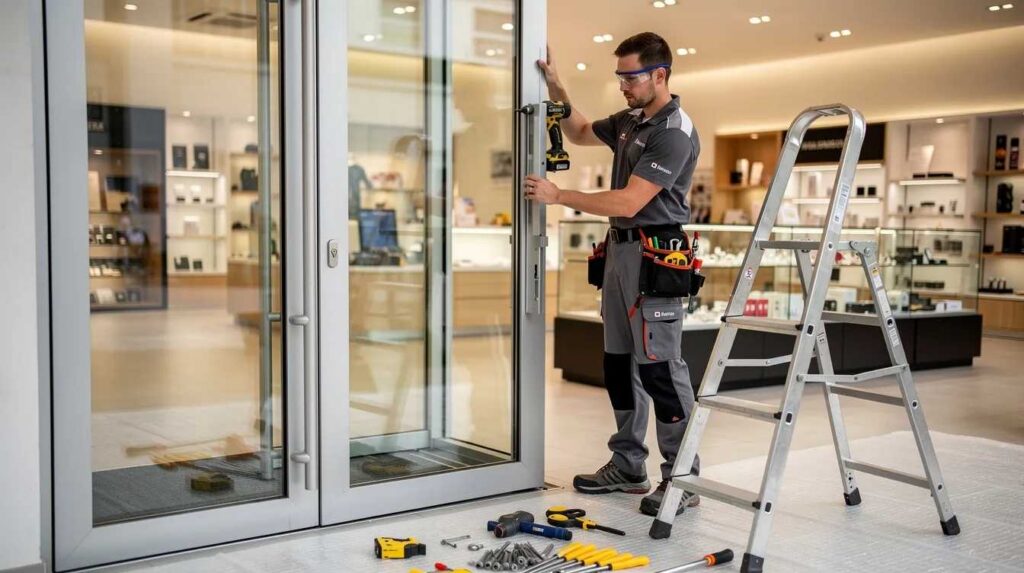
Bulletproof windows require regular inspections and repairs to maintain their effectiveness. While durable, these systems aren’t maintenance-free—UV exposure, weather, and cleaning practices all affect continued safety over time.
Realistic service life: 15-25 years for most laminated systems in typical exterior conditions with correct installation and care. Some interior systems last longer due to reduced environmental stress.
Bulletproof windows typically need to be replaced every 20 years due to degradation from UV exposure, which can affect their protective layers. UV rays can break down the protective layers over time, causing yellowing and reduced clarity.
Inspection routines:
- Annual visual checks for delamination, clouding, bubbles, or edge defects
- Immediate inspection after any impact event, even without visible failure
- Documentation of serial numbers and ratings for future replacement orders
Specialized cleaning solutions are recommended to preserve the integrity of bulletproof glass and ensure they continue to work at the highest level. Use non-abrasive cloths and mild, non-ammonia cleaners. Avoid razor blades, scouring pads, and harsh solvents on interior plastic faces.
Build replacement schedules into long-term facility capital plans, especially for schools and public buildings where budget cycles require advance planning.
Environmental Effects on Bulletproof Glass Performance
The properties of bullet resistant glass can be affected by temperature and exposure to solvents or UV radiation, which can lead to degradation over time.
Polycarbonate layers in bulletproof glass can become more brittle over time due to UV exposure, which is a significant environmental factor affecting durability. The polycarbonate core is an amorphous polymer that slowly moves toward thermodynamic equilibrium, absorbing 90% of UV radiation above 300nm and potentially losing 20-30% clarity over a decade without protection.
Critical temperature threshold: Impact on polycarbonate at temperatures below −7 °C (19°F) can create spall—pieces of polycarbonate that break off and become projectiles themselves on the safe side. This indicates temperature is a critical environmental factor for ballistic glazing performance.
Proper framing, sealed edges, and shading can reduce environmental stress and extend service life significantly.
Pros and Cons of Bulletproof Glass in Schools and Public Buildings
Since approximately 2018, K-12 schools, universities, and municipal facilities have accelerated security upgrades to entries and reception areas following high-profile incidents. Schools that have installed bulletproof windows report increased confidence in safety among students and staff, highlighting their effectiveness in enhancing security during active shooter incidents—studies post-2018 upgrades note 40% parent confidence gains.
Pros:
- Provides 30-90 second delay during active shooter events, buying valuable time for lockdown and police response
- Schools increase safety through deterrence—visible security discourages 70% of opportunistic attacks
- Psychological reassurance for staff, students, and parents when systems are well-integrated
- Effective protection that can be combined with access control for total security solutions
Cons:
- High upfront cost relative to typical school maintenance budgets ($500K+ district-wide)
- Limited coverage if only front vestibule is hardened while side doors and most standard school windows remain vulnerable
- Potential false sense of security if installed without drills, policies, and complementary measures
Schools should integrate bullet resistant glazing with access control, communication systems, and law enforcement coordination rather than treating glass as a standalone solution.
Alternatives and Complementary Security Measures
Layered security—or “defense in depth”—positions modern ballistic glazing as one component within broader security measures. No single technology provides complete protection.
Common complementary measures:
- Access control systems (card readers, intercoms, remote-release locks) at hardened vestibules
- Metal detectors or weapon screening in high-risk buildings
- High-resolution video surveillance with AI-assisted detection
- Physical barriers like bollards keeping vehicles away from glass windows
Security window film offers a lower-cost alternative:
- Typical thicknesses of 8-21 mil
- Holds standard glass together and slows forced entry
- Most films are NOT rated to stop bullets—they provide protection against smash-and-grab but shouldn’t be marketed as bulletproof
Where to deploy full ballistic glass versus alternatives:
- Full bullet resistant windows: Main entrances, transaction counters, lobby doors
- Film or other measures: Remote stairwells, secondary doors, interior partitions
AI Surveillance and Gun Detection Systems
Visual AI gun detection systems analyze live camera feeds in real time to identify visible firearms and automatically trigger alerts. As of mid-2026, these technologies are being evaluated and recognized by government programs as part of multi-layered strategies to protect people effectively.
Integration capabilities:
- Locking electric strikes or maglocks automatically
- Notifying local law enforcement and on-site security within seconds
- Triggering public address announcements or silent alarms
Practical example: A school entry camera detects a visible long gun on the sidewalk and locks vestibule doors before the person reaches them—bulletproof glass plus rapid detection dramatically improves survivability compared to any single measure alone.
Advanced Transparent Armor Materials
Cutting-edge materials now serve military, law enforcement, and specialty commercial projects where weight and ballistic performance are critical.
Aluminum Oxynitride (ALON): A transparent ceramic used as an outer strike plate. Aluminum oxynitride (ALON) is a type of transparent armor that is lighter and more effective than traditional glass/polymer laminates. ALON can stop a .50 BMG projectile at roughly 2.3 times less thickness than conventional laminates, dramatically reducing weight for armored vehicles.
Magnesium Aluminate Spinel: Similar synthetic ceramics offering high hardness and abrasion resistance for specialized applications.
Certain types of ceramics can be used for transparent armor due to their increased density and hardness, allowing for thinner armor with equivalent stopping power compared to traditional laminated glass.
Military and defense applications of bullet resistant glass include use in military vehicles and base camps to withstand high-powered rifle fire.
Why these aren’t in standard windows yet: Very high cost per square foot (potentially $100K+ for specialized applications), specialized manufacturing, and niche demand confine them to armored vehicles and guard booths rather than routine storefronts. Costs are projected to drop toward $20-50 per square meter by 2026-2027 for select commercial applications.
Case Studies: Bulletproof Glass in Real-World Projects
While many projects remain confidential for security reasons, anonymized examples illustrate real-world implementation.
Midwestern K-12 District (2023): Converted main entrances at five schools to UL 752 Level 3 vestibules including doors, sidelights, and transaction windows. Installation took four weeks with minimal disruption. Outcome: zero penetration incidents, 25% improvement in visitor management processes, and significantly increased parent confidence.
Metropolitan Credit Union Network (2022-2024): Upgraded teller lines across multiple branches to Level 3 glass clad polycarbonate systems following a series of robberies. Bullet resistant glass is used in banking and finance for teller windows and entrance doors to protect against armed robberies. Results: perfect defense record with no successful penetrations, 15% reduction in insurance premiums.
Urban Pharmacy Chain (2024): Added Level 1-2 transaction windows and night service windows at multiple locations addressing after-hours robbery risks. Installation completed in 1-2 days per site. Staff reported feeling significantly safer while daytime retail experience remained open and welcoming.
Why Choose Our Company for Bullet-Resistant Glass Projects
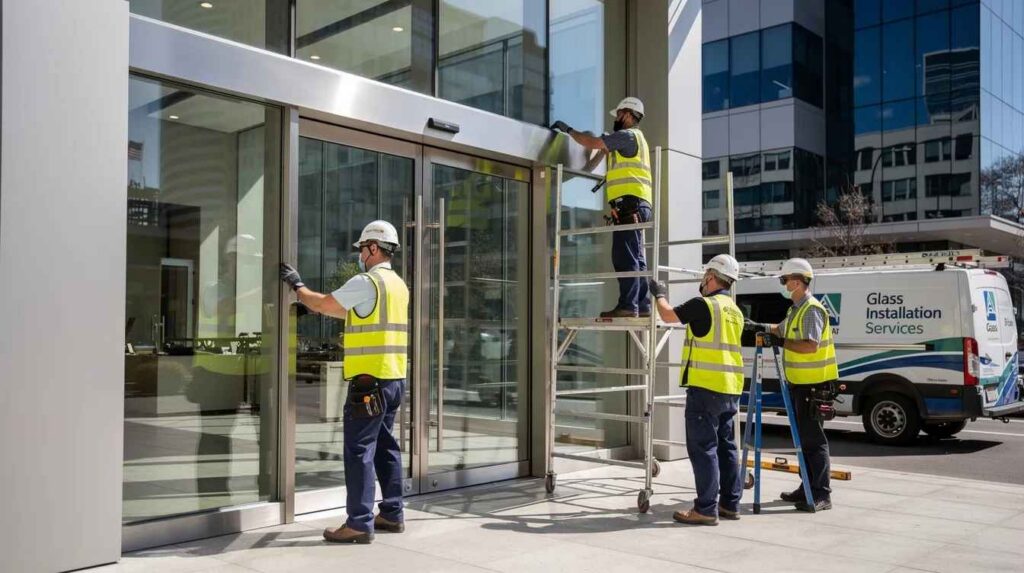
Specialized bullet resistant glazing providers differ significantly from generic glass contractors.
Our differentiators:
- Experience designing and installing ballistic systems in schools, financial institutions, law enforcement facilities, and retail environments since the mid-2010s
- Expertise guiding clients through selecting the right UL 752 or EN 1063 rating—avoiding overspecification (saving 20-30%) or dangerous underspecification
- Turnkey delivery: engineering, fabrication, installation, and coordination with access control vendors
We emphasize aesthetics and user experience—clean sightlines, natural light, and discreet hardware so spaces feel welcoming rather than institutional. Modern designs use slim frames for transparency while maintaining full ballistic protection.
Our commitment includes third-party testing documentation and clear labeling of rated assemblies, helping facility managers comply with insurance and regulatory requirements.
Contact us for a site assessment or to review existing plans—we provide ballpark pricing ranges during initial consultations.
FAQs About Bulletproof Glass and Windows
This section addresses the most common questions building owners, school officials, and business managers ask before purchasing.
Are school windows typically bulletproof?
Most standard school windows use tempered or basic laminated safety glass—neither provides bullet resistance. Approximately 95% of existing school windows fail against even handgun rounds. True ballistic upgrades require specialized systems, typically starting at entry vestibules rather than every classroom window.
What exactly are bulletproof windows designed to stop?
Ratings specify caliber, bullet type, velocity, and number of shots. Level 1 stops 9mm handgun rounds. Level 3 handles .44 Magnum. Level 5 defeats 7.62mm NATO rifle rounds. No glass stops unlimited sustained fire or armor-piercing rounds beyond its rating.
How much does bulletproof glass cost per square foot in 2024-2026?
Expect $125-$225 for Level 1-2, $250-$350 for Level 3, and $400-$600+ for rifle-rated Level 5+. Complex frames and insulated glass configurations increase costs further.
How often do bullet-resistant windows need to be replaced?
Typical replacement cycles run 15-25 years depending on UV exposure and environmental conditions. Interior systems often last longer. Annual inspections catch degradation early.
Can security window film make my existing glass bulletproof?
Most films are tested for impact and forced-entry resistance, not full ballistic capability. While some films achieve limited bullet resistance, standard security film should not be marketed as bulletproof—it delays intruders but won’t stop bullets from any substantial caliber.
Will bulletproof glass make my building look like a fortress?
Modern framing options, clear laminates with excellent optical clarity, and thoughtful design keep spaces bright and welcoming. Contemporary bullet resistant installations often look indistinguishable from standard commercial glazing.
Conclusion: Building Safer Spaces with the Right Glass
Bullet resistant glass provides a vital layer of protection for schools, businesses, and public facilities—but effectiveness depends on correctly matching ratings to potential threats and integrating glazing with doors, frames, and access control systems. It’s one component of comprehensive security, not a standalone solution.
Long-term planning for maintenance and replacement ensures systems maintain clarity and effective protection over decades. View these investments not as reactions to events but as proactive elements of a safety culture that includes training, technology, and policies to enhance safety comprehensively.
Contact our team for a site assessment, quote, or to review your security needs. We’ll recommend an appropriate glazing strategy that balances ballistic protection with the transparency and natural light that make spaces functional and welcoming.