- Manufacturing Laminated Glass and Polycarbonate Composites
- The Drawbacks of Full Glazing Replacement
- A Superior Alternative: The Engineering of Retrofit Ballistic Systems
- Preserving Design Integrity with Retrofit Solutions
- Real-World Applications of Ballistic Retrofit Systems
- Frequently Asked Questions
Evaluating ballistic ratings is a critical first step, but understanding how those ratings are physically achieved in glazing products is equally important. The conventional method involves installing thick, heavy, multi-layered glass, an approach that is effective at stopping projectiles but introduces significant architectural and logistical compromises that conflict with modern design principles.
Manufacturing Laminated Glass and Polycarbonate Composites
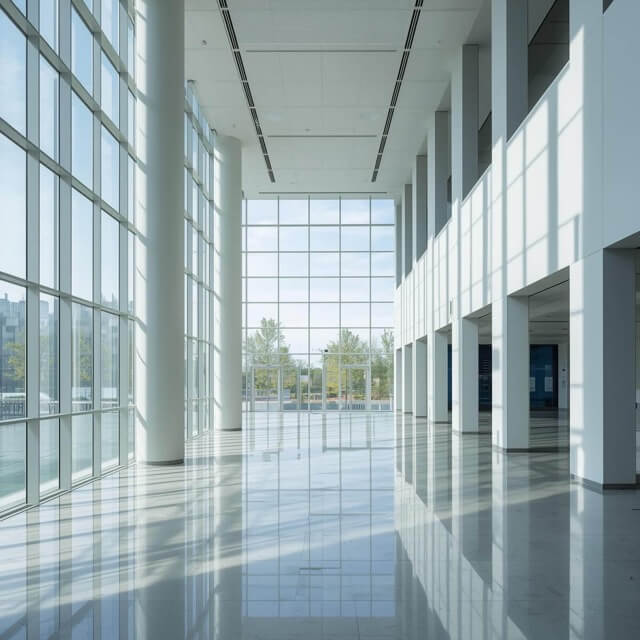
Traditional bullet-resistant glazing is an engineered composite, not a single material. It is constructed by laminating multiple layers of glass and polycarbonate. The process involves alternating sheets of glass, a thermoplastic interlayer like polyvinyl butyral (PVB), and often a thicker core or spall-side layer of polycarbonate.
This assembly is fused within an autoclave under immense heat and pressure, bonding the layers into a single, monolithic unit. The resulting composite material combines the hardness of glass with the impact-absorbing flexibility of polycarbonate. This allows the glazing panel to delaminate and deform to absorb a bullet’s energy without shattering into dangerous shards.
The Trade-Off: Aesthetics, Thickness, and Weight
The physics of this mitigation method dictates its physical form. To achieve higher UL 752 ratings, particularly against rifle rounds, manufacturers must add more and thicker layers. A UL Level 1 panel might be nearly an inch thick, but a UL Level 8 panel can exceed three inches and weigh over 30 pounds per square foot.
This substantial thickness and weight create the primary trade-off for architects. They are forced to work with a material that is inherently bulky and structurally demanding. The immense weight requires not just a complete replacement of the existing window but often significant reinforcement of the surrounding frame and building structure. This level of complexity turns a security upgrade into a major, cost-intensive construction project.
The Impact on Architectural Vision and Natural Light
For a principal architect, the aesthetic implications are often the most significant barrier. The design vision for a building, which may rely on clean lines, transparency, and openness, is directly challenged by the visual and physical intrusiveness of these systems.
- Bulky Framing: The sheer thickness and weight of the glass necessitate heavy-duty, oversized framing systems that disrupt the building’s intended aesthetic and create a fortress-like appearance.
- Reduced Optical Clarity: Adding multiple layers of glass, adhesive interlayers, and polycarbonate can reduce light transmission and introduce a perceptible color cast, often a greenish or yellowish tint. This alters the quality of natural light and can distort the view from within.
- Visual Distortion: The extreme thickness can create parallax distortion, particularly when viewing through the glass at an angle. This results in an unnatural “fishbowl” effect for building occupants.
This traditional approach to ballistic security forces a false choice between robust protection and architectural integrity. It demands that architects and building owners compromise on the design elements that define their building’s character. The heavy, thick, and optically imperfect nature of conventional bulletproof window glass often fails the standards of high-end architectural projects, forcing designers to seek superior alternatives.
The Drawbacks of Full Glazing Replacement
While well-intentioned, replacing existing windows with monolithic ballistic glass is an approach fraught with complications. For architects and building owners, the path of full glazing replacement forces a series of compromises that impact cost, operations, and structural integrity, often rendering it an unworkable solution.
Prohibitive Costs of Demolition and Installation
The initial price of thick, laminated ballistic glass is only the beginning of a costly process. A full replacement project requires a cascade of expenditures, including the labor-intensive demolition of existing glass and frames, the fabrication of custom ballistic units, and specialized shipping logistics. The use of heavy installation equipment like cranes adds to the budget. These ancillary costs can easily double or triple the total project investment compared to the material cost alone, making it a financially prohibitive option for many organizations.
Significant Operational Disruption
For any occupied structure, the process of full window replacement is profoundly disruptive. Demolition and installation generate considerable noise, dust, and debris, rendering large sections of a building unusable for extended periods. Perimeter offices must be vacated, public lobbies closed, and normal business operations halted or relocated. This operational shutdown translates directly into lost productivity and revenue, presenting a major barrier for functioning hospitals, government buildings, corporate headquarters, and schools where continuous operation is non-negotiable.
Structural and Framing Limitations
Traditional ballistic glass is exceptionally heavy. A standard window frame or curtain wall system, engineered for conventional insulated glass, is often incapable of bearing the immense static load of multi-layered security glazing. This mismatch presents a critical structural challenge that can lead to frame failure and water intrusion. The only remedies are an invasive and expensive reinforcement of the building’s existing framing or a complete replacement of the entire window and mullion system, an overhaul many structures cannot accommodate.
A Superior Alternative: The Engineering of Retrofit Ballistic Systems
The limitations of full replacement have driven the development of a more intelligent and architecturally sensitive solution. Advanced retrofit ballistic protection decouples the security layer from the primary weather envelope, providing robust threat mitigation without the prohibitive costs and compromises of traditional methods.
Introducing BulletShield: Patented, Vented Retrofit Security
BulletShield from Impact Security LLC represents a paradigm shift in security glazing. It is a patented retrofit system that installs on the interior of existing windows and doors. This engineered solution consists of a ballistic-grade polycarbonate composite shield held within a custom-fabricated aluminum framing system. A purposeful air gap is maintained between the original exterior glass and the interior shield. This vented design is key to its high performance, allowing the system to absorb and dissipate extreme levels of kinetic energy in a controlled manner.
Integration with Existing Window and Curtain Wall Frames
Integration is achieved through precision engineering, not demolition. The process begins with a detailed survey of the existing window or curtain wall. A custom aluminum frame is then designed to anchor directly onto the interior side of the existing structural mullions. The BulletShield panel is set into this new interior frame, leaving the original exterior glass and framing completely untouched. This preserves the building’s weather seal and exterior appearance while leveraging the strength of the original construction.
The Science of Sequential Energy Dispersion
The effectiveness of a vented retrofit system lies in its multi-stage energy management. When a projectile strikes, the system works in sequence:
- Impact on Outer Glass: The existing exterior glass acts as a sacrificial first layer. It shatters upon impact, absorbing a significant amount of the projectile’s initial energy and causing it to deform.
- Energy Loss in the Air Gap: As the slowed and destabilized projectile crosses the engineered air space, it continues to lose velocity.
- Absorption by the Shield: The projectile then impacts the BulletShield polycarbonate panel. The material is designed to flex and absorb the remaining kinetic energy, dispersing it across the entire surface of the panel without shattering.
- Load Transfer to Structure: The patented framing system manages the panel’s flex and safely transfers the impact load into the robust structural mullions of the building itself.
This intelligent process allows the system to defeat ballistic threats more effectively and with less overall weight and bulk than traditional ballistic glass. It proves that achieving certified ballistic protection does not require removing the original glass. The existing glazing becomes a functional component of a more sophisticated security assembly, creating a bullet resistant window system that can meet rigorous UL 752 ballistic ratings.
Preserving Design Integrity with Retrofit Solutions
For architects grappling with balancing security requirements and design aesthetics, retrofit systems offer a solution that honors the original architectural intent. By working with the existing structure, this approach proves that robust security can be seamlessly integrated into a building’s design.
Maintaining a Building’s Original Aesthetic
Because a retrofit system is installed exclusively on the interior, the building’s exterior appearance remains unchanged. The original glass, mullion profiles, and facade materials are preserved. From the street, there is no indication that a high-level security upgrade has been performed. This allows buildings to maintain their intended character, whether it’s the transparent face of a modern office tower or the delicate detail of a historic structure.
The ‘Virtually Invisible’ Nature of Modern Systems
Addressing the concerns of architects and occupants, the interior presence of the BulletShield system is designed to be minimal. This is achieved through two key elements:
- Optical Clarity: The system utilizes high-grade, optically clear polycarbonate that avoids the green tint and visual distortion common to thick laminated glass. It allows for maximum natural light transmission and a clear, unaltered view.
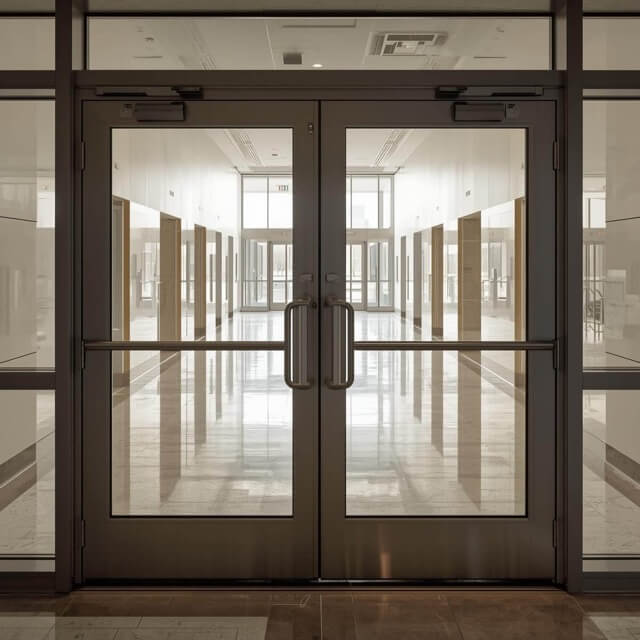
- Seamless Framing: The custom aluminum frames have a slim profile that can align with existing mullions. The frames can be finished with a powder coat or anodization to perfectly match the color and texture of the existing interior window trim, allowing the system to blend in discreetly.
The result is a protective layer that is, for all practical purposes, virtually invisible to everyday users, directly resolving the conflict between architectural security and aesthetic integrity.
Overcoming Historic Preservation Challenges
Retrofit systems are an ideal solution for securing historically significant buildings where regulations prohibit any alteration to the original windows and facade. A retrofit installation provides a modern security upgrade without any destructive impact on the historic fabric. This non-destructive and reversible approach makes it possible to protect priceless architectural assets while meeting the stringent requirements of preservation authorities.
Integration with Modern Curtain Wall Designs
The advantages are equally compelling for contemporary architecture. Modern designs often feature vast expanses of glass in curtain wall and storefront systems that rely on lightweight framing. The immense weight of traditional bulletproof window glass is often incompatible with these systems. Retrofit systems are engineered to integrate directly with the structural mullions of modern curtain walls, providing a powerful layer of ballistic and forced entry protection without overloading the system or compromising its sleek, minimalist aesthetic.
Real-World Applications of Ballistic Retrofit Systems
Technical data provides a foundation, but its true value is realized when applied to real-world architectural challenges. The following scenarios illustrate how a retrofit approach addresses distinct security needs without the compromises of traditional replacement solutions.
Corporate Headquarters
A modern corporate headquarters, defined by its expansive glass curtain walls, must preserve its clean, transparent aesthetic. Traditional bullet-resistant glass would fundamentally alter its character with thick, tinted panels and bulky framing. A retrofit system offers a superior alternative. A “virtually invisible” polycarbonate shield is installed on the interior side of the existing glazing, secured with a patented, vented anchoring system. The building’s exterior appearance remains unchanged, while internally, the low-profile framing preserves the open, light-filled environment. This demonstrates that robust ballistic mitigation is not mutually exclusive with modern architectural expression.
Historic Courthouse
Historic structures, such as a landmark courthouse, have facades protected by preservation ordinances, making window replacement impossible. A security glazing retrofit is often the only viable solution. The system is installed exclusively on the interior, leaving the historic exterior fenestration untouched and in full compliance with preservation standards. The anchorage is engineered to integrate with existing structural elements without causing damage. This careful, non-destructive approach allows for a significant security upgrade while honoring the building’s historical value.
School or University Campus
Upgrading security across a campus involves a different calculus, where budget, scalability, and minimizing disruption are paramount. The goal is to protect students and staff without creating a fortified atmosphere. Replacing every window is logistically complex and prohibitively expensive. A retrofit strategy provides a practical and scalable path forward with several advantages:
- Phased Implementation: Installation can be scheduled building by building or floor by floor, aligning with academic calendars and budgetary cycles.
- Cost Efficiency: Retaining existing glass and frames significantly reduces material and labor costs compared to full replacement.
- Speed of Installation: Retrofitting is substantially faster than removal and replacement, meaning facilities are returned to service more quickly.
- Preserving Ambiance: The unobtrusive nature of the solution helps maintain a campus’s open and collaborative feel.

Frequently Asked Questions
What is the main difference between traditional bulletproof glass and a retrofit system?
Traditional bulletproof window glass is a thick, heavy, multi-layered product that completely replaces the existing window and frame. A retrofit system, like BulletShield, is a separate, ballistic-grade shield installed on the interior of the existing window, preserving the original glass and enhancing its protective capability without costly demolition.
Is retrofit security glazing as strong as full replacement glass?
Yes. Patented retrofit systems are engineered to meet the same rigorous UL 752 ballistic ratings as traditional replacement glass. They achieve this through a sophisticated, multi-stage process of energy dispersion involving the original glass, an air gap, and the polycarbonate shield, which is often more effective at managing impact energy than a single monolithic pane.
Can retrofit ballistic protection be installed without disrupting business operations?
Retrofit installation is significantly less disruptive than full replacement. Because there is no demolition of exterior windows, the process is cleaner, quieter, and much faster. Installations can often be phased and scheduled during off-hours to minimize impact on building occupants and daily operations.
Will a retrofit system change the way my building looks from the outside?
No. A key architectural advantage of retrofit ballistic protection is that it is installed entirely on the interior. The exterior appearance of your building, including the original glass and framing, remains completely unchanged, preserving the original design intent.
Are retrofit systems suitable for historic buildings?
Retrofit systems are an ideal security solution for historic buildings. Because the installation is non-destructive and does not alter the original, often irreplaceable, windows and facade, it allows for a modern UL 752 rated glazing upgrade while complying with the strict guidelines of historic preservation authorities.