- The Limitations of Tempered and Laminated Glass
- Invisible Security: Preserving Architectural Integrity
- Fortifying the Building Envelope: A Strategic Approach
- An Evolved Approach to Corporate Security
- Frequently Asked Questions
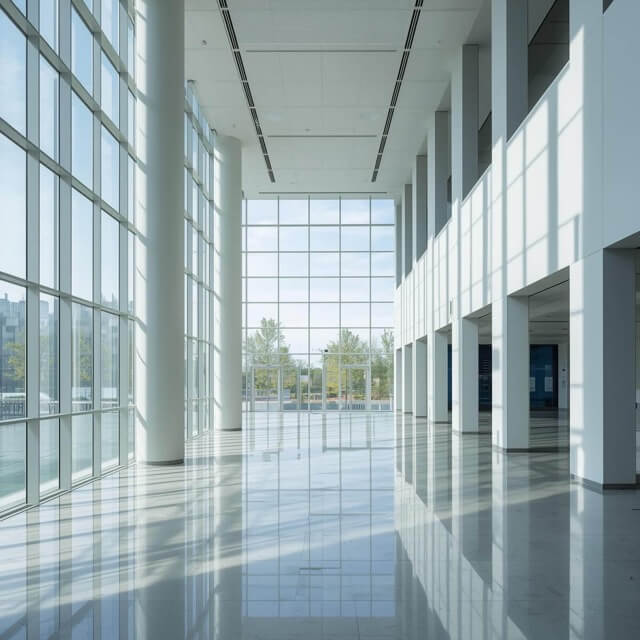
The aesthetic appeal of glass in modern architecture is undeniable, creating spaces filled with natural light and a sense of openness. From a security perspective, however, these expansive glazed surfaces often represent the path of least resistance. Understanding the inherent limitations of standard glazing is the first step toward rectifying a critical vulnerability in your corporate security posture.
The Limitations of Tempered and Laminated Glass
Many decision-makers operate under the false assumption that specifying “safety glass,” such as tempered or laminated glass, is sufficient for security. This is a dangerous misconception. While these products are superior to basic annealed glass, their primary design intent is safety from accidental injury, not defense against a deliberate attack.
Tempered glass is manufactured through a process of extreme heating and rapid cooling. This creates high surface compression, making it four to five times stronger than annealed glass. Its key feature is its failure mode. Upon impact, it shatters completely into thousands of small, relatively harmless pebbles. While this mitigates the risk of serious injury from sharp shards, it offers virtually no forced entry protection. A single, focused strike will cause the entire pane to disintegrate, creating an immediate and unobstructed opening.
Laminated glass represents a step up. It consists of a tough, clear polymer interlayer, typically polyvinyl butyral (PVB), bonded between two or more layers of glass. When the glass breaks, the fragments adhere to the interlayer, maintaining a barrier. While this can deter a casual smash-and-grab attempt, standard laminated glass can be defeated with sustained attacks using common tools. The interlayer can be stretched, torn, and ultimately breached, allowing an intruder to gain access. It provides a delay, but it does not provide denial.
How Unsecured Glazing Undermines Your Entire Security System
A corporate security strategy is an integrated system of systems. You invest heavily in access control, surveillance, sophisticated alarm monitoring, and trained personnel. Unsecured glazing renders much of this investment moot by creating a fundamental bypass.
An attacker can ignore hardened doors and access control checkpoints by simply breaking through a window. This method is often faster and quieter than attempting to force a locked entryway. The breach can occur in seconds, long before an alarm signal is processed and a guard can respond. Your high-definition cameras may capture a perfect recording of the event, but they do nothing to stop it. The alarm will sound, but only after the intruder is already inside.
Standard glazing invalidates the most critical variable in your response plan, which is time. It reduces the time needed for an intruder to gain entry to nearly zero, while the time required for your security systems and personnel to react remains constant. This imbalance creates a window of opportunity for theft, data exfiltration, or worse, leaving your corporate assets and people exposed.
The Modern Threat Spectrum
A comprehensive security plan must account for a spectrum of risks, and the glazing specified for a building must be engineered to withstand the most credible threats it faces. Standard glass fails across this entire spectrum.
- Forced Entry and Burglary: This is the most common threat, often involving brute-force attacks with simple tools. Standard tempered and laminated glass provide minimal resistance, making ground-floor offices and lobbies prime targets for forced entry prevention failure.
- Vandalism and Civil Unrest: In these scenarios, large panes of glass are often targeted for property destruction. The failure of a building’s glazing can lead to significant reputational and financial damage, even if no entry is gained.
- Active Assailants: In an active assailant event, the failure of glazing can have catastrophic consequences. It provides a point of entry for an attacker and offers no ballistic resistance, allowing projectiles to pass through unimpeded. The primary goal of security glazing here is to deny entry for a critical period, allowing law enforcement time to arrive and giving occupants minutes to escape or secure themselves.
- Blast Mitigation: For high-profile corporate headquarters or government facilities, the threat of an explosive event is a serious consideration. A blast wave can turn unprotected glass into deadly high-velocity projectiles. Standard glazing offers no protection and exacerbates the danger.
Invisible Security: Preserving Architectural Integrity
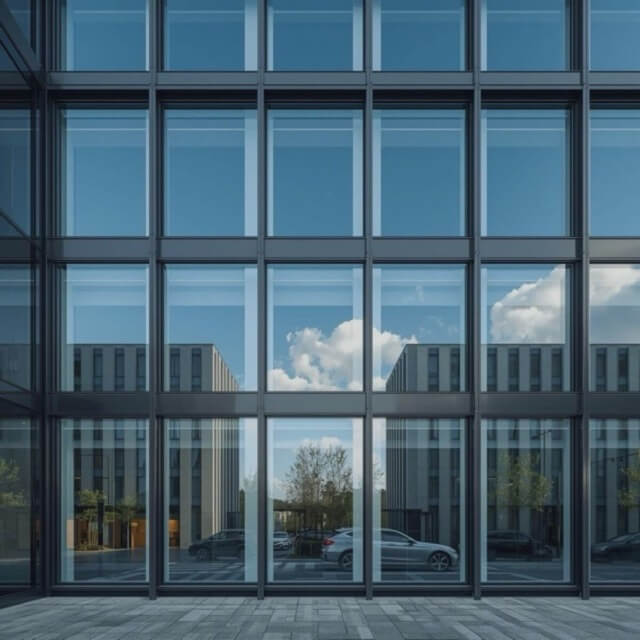
The technical performance of a security system is only one part of its value. For architects and stakeholders, a solution’s viability is equally dependent on its ability to integrate into the building’s design. The common perception of physical security involves visually disruptive elements like bars or shutters. Advanced security glazing, however, fundamentally challenges this compromise, offering a method of hardening a structure that is virtually invisible.
Achieving Seamless Architectural Integration
A core principle of advanced security glazing is its ability to be installed without altering the original design intent. Unlike surface-applied films that can bubble or peel, or obtrusive barriers that change a building’s character, these engineered systems are designed for seamless integration.
The process begins with precise digital measurements of each existing window or curtain wall frame. The security glazing panel, typically a composite of polycarbonate and glass laminates, is then custom fabricated to these specifications. The system is mounted discreetly within the interior of the existing window frame, creating a flush, uniform appearance. This meticulous approach ensures that from both the interior and exterior, the building’s architectural lines remain clean and unchanged.
The Invisible Defense: Preserving Aesthetics and Natural Light
For any architect, controlling the quality and quantity of natural light is a critical design function. Security measures that obstruct light or distort views are often non-starters. Advanced glazing systems are engineered to overcome this challenge, acting as an invisible shield that preserves the aesthetic and functional qualities of the original glass.
The materials used are selected for exceptional optical clarity and light transmission. High-quality polycarbonates and interlayers are designed to be non-yellowing and distortion-free, ensuring views remain clear and colors are rendered accurately. This allows for the continued use of expansive glass facades without creating a corresponding vulnerability.
Key benefits include:
- Maintained Light Transmission: The systems allow a high percentage of visible light to pass through, keeping interiors bright.
- Unaltered Views: The optical quality of the glazing ensures views are not compromised by haze or distortion.
- Preservation of Original Design: The building’s exterior appearance is unchanged, protecting its architectural integrity.
- Avoidance of a “Fortress” Aesthetic: The building feels secure from the inside without looking intimidating from the outside.
Fortifying the Building Envelope: A Strategic Approach
An effective physical security strategy is not a collection of disparate systems but a unified ecosystem. Integrating advanced glazing protection requires a strategic shift from a reactive posture to a proactive one. This involves a holistic analysis of the building’s physical vulnerabilities and how architectural hardening multiplies the effectiveness of every other security measure.
Conducting a Threat Assessment for Your Building’s Envelope
Before implementation, a rigorous threat assessment focused on the building envelope is paramount. This analysis goes beyond a standard audit of cameras and access control systems, evaluating the physical structure itself as a potential point of failure.
This specialized assessment treats windows, glass doors, and curtain walls as access points to be evaluated for their resistance to forced entry, ballistics, or blast events. Key factors to analyze include:
- Location and Exposure: Is the building in a high-traffic urban area or an isolated campus? Are ground-floor windows easily accessible?
- Occupancy and Asset Profile: Does the facility house high-value physical assets, sensitive data, or high-profile personnel?
- Adversary Capability: What are the most likely threat vectors, from smash-and-grab attempts to coordinated attacks?
- Existing Security Layers: How much time do current systems provide for a response?
A thorough threat assessment provides an objective, data-driven foundation for developing a security posture that addresses credible risks.
Integrating Architectural Hardening with Electronic and Procedural Security
Architectural hardening is not a replacement for electronic surveillance or security personnel. It is the critical foundational layer that makes those other systems exponentially more effective. Without a hardened building envelope, other building security systems are merely detecting a breach that has already occurred.
Consider the synergy. An alarm system signals an intrusion attempt, but hardened glazing prevents immediate entry, turning seconds of warning into minutes. This delay is the crucial window that allows personnel or law enforcement to intervene and neutralize the threat before a catastrophic breach. This integration creates a cohesive, layered defense where the physically hardened glazing contains the threat at the perimeter, transforming the building envelope into an active component of your delay and denial strategy.
Articulating the ROI: Protecting People, Assets, and Reputation
The investment in architectural hardening extends far beyond materials and installation. The return on investment is measured in the proactive mitigation of catastrophic financial and reputational losses. The value can be articulated through three primary pillars.
First is the protection of people. A company’s foremost responsibility is its duty of care to employees and clients. A physically secure environment is foundational to workplace safety and morale.
Second is the protection of assets and business continuity. This includes safeguarding equipment, inventory, and intellectual property from theft or destruction. More importantly, it prevents the significant operational downtime and financial losses that follow a major security incident.
Finally, and perhaps most critically for the C-suite, is the protection of brand reputation. A high-profile security failure can inflict irreparable damage to a company’s image, eroding customer trust and shareholder confidence. Investing in a robust physical security posture is a direct investment in brand resilience.
An Evolved Approach to Corporate Security
An evolved security posture recognizes that a building’s perimeter is the first and most critical layer of defense. The strategies that protect the data and personnel within a corporate headquarters must extend to the physical structure that houses them.
The central thesis is clear. The integrity of your glazing is not a secondary concern but a primary component of your physical security. By treating glass as an engineered point of failure rather than an unchangeable weakness, we shift from a reactive to a proactive security doctrine.
Modern retrofit security glazing systems are engineered for invisibility. These advanced solutions are applied to existing glass, becoming a seamless and virtually undetectable component of the window assembly. They do not alter sightlines, distort views, or reduce natural light, thereby preserving the building’s original design integrity. The result is a powerful synthesis of form and function where immense strength is added without any visual penalty.
Next Steps in Building a Resilient Corporate Security Strategy
Integrating architectural hardening into your physical security strategy is a systematic process. Moving from conceptual understanding to practical implementation involves a few focused actions.
- Conduct a Glazing Vulnerability Assessment: Begin by commissioning a professional threat assessment that specifically analyzes your building’s windows and glass doors. This audit should identify the highest-risk areas based on accessibility and proximity to critical assets.
- Consult with Architectural Security Specialists: Engage with experts who specialize in retrofit security glazing. They can translate the findings of your vulnerability assessment into a precise, engineered solution, specifying the correct system performance levels required to mitigate identified risks.
- Develop an Integrated Mitigation Plan: The final step is to integrate the glazing solution into your holistic security strategy. Ensure your electronic systems, such as glass-break sensors, are calibrated to work with the hardened glazing, which introduces significant delay. This layered approach creates a formidable barrier that maximizes response time for security personnel.
Frequently Asked Questions
What is retrofit security glazing?
Retrofit security glazing is an engineered system, typically composed of polycarbonate and glass laminates, that is custom-fabricated and installed over existing window glass. It is designed to strengthen the building envelope against threats like forced entry, ballistic attacks, or blast pressure without requiring the replacement of the original windows.
Will security glazing change the appearance of my building?
No. A primary design principle of advanced security glazing is its architectural invisibility. The systems are engineered for exceptional optical clarity and are mounted discreetly inside the existing window frame. This preserves the original design intent, sightlines, and natural light transmission, making the protection virtually unnoticeable from both inside and out.
Is security glazing better than security film?
While both improve security, they operate at different performance levels. Security film is a thin, adhesive polyester layer applied to glass that primarily holds broken shards together. Engineered security glazing is a much thicker, more robust system that is mechanically anchored to the window frame. It provides a significantly higher level of protection, engineered to withstand sustained attacks and deny entry, a key component of forced entry prevention.
How does hardened glazing integrate with existing building security systems?
Hardened glazing acts as a force multiplier for your existing building security systems. While alarms and cameras provide detection and surveillance, security glazing provides critical delay. It physically prevents or slows an intruder’s entry, turning a breach that would take seconds into one that takes many minutes. This provides the necessary time for on-site personnel or law enforcement to respond effectively, transforming a detection event into a successful intervention.