Bulletproof material forms the foundation of modern ballistic protection systems, from body armor worn by law enforcement to architectural barriers protecting commercial buildings. Understanding these materials—their properties, limitations, and applications—is essential for anyone responsible for security decisions in 2026, as well as appreciating the idea and chemistry behind the invention of advanced bullet proof materials.
Table of Contents
- Introduction — 3 min read
- Understanding Bulletproof Materials — 5 min read
- Types of Bulletproof Materials — 8 min read
- Testing Standards and Performance Evaluation — 6 min read
- Common Challenges and Solutions — 4 min read
- Conclusion and Next Steps — 2 min read
- Frequently Asked Questions — 4 min read
- Additional Resources — 1 min read
Introduction
This guide covers the major types of bullet-resistant materials, testing standards from the National Institute of Justice (NIJ) and Underwriters Laboratories (UL 752), and practical applications across personal protection and architectural security. We focus on selection criteria and performance characteristics rather than manufacturing processes, providing actionable guidance for security professionals, architects, facility managers, and property owners seeking protection solutions. Modern bullet proof materials offer significant benefits, including reduced weight, increased flexibility, and enhanced overall performance. This guide will also compare bullet proof materials to other materials used for protection.
No material is truly “bulletproof.” All products marketed as bulletproof are actually bullet-resistant, meaning they can withstand certain levels of ballistic impact but are not impervious to all bullets. Bullet-resistant materials are ranked based on ballistic standards, which test their durability against specific calibers and types of weapons, providing a measurable way to assess their effectiveness.
By the end of this guide, you will:
- Understand the key differences between aramid fibers, UHMWPE, polycarbonate, ceramic composites, and steel armor
- Know how NIJ and UL 752 testing standards determine protection levels
- Be able to match material types to specific threat levels and applications
- Recognize common implementation challenges and proven solutions
- Have clear criteria for selecting the right bulletproof materials for your needs
Understanding Bulletproof Materials
The term “bulletproof” is widely used but technically inaccurate. Industry professionals and standards bodies use “bullet-resistant” because every protective material generally has defined limits—specific ammunition types, velocities, and shot counts it can reliably stop. Understanding this distinction is fundamental to making informed protection decisions.
Ballistic protection works through energy absorption, following the principles of dissipating and redirecting kinetic energy. When a bullet strikes a resistant material, its kinetic energy must be dissipated through material deformation, fiber pull-out, fracture, compression, and heat generation. Many bulletproof materials are made from advanced polymers, which provide the necessary strength and flexibility. These strong materials resist penetration by absorbing and dispersing impact forces. The stability of these materials’ properties ensures reliable performance under repeated use or stress.
Ballistic Standards and Testing
Ballistic standards provide a measurable way for customers to understand the bullet resistance of a product, allowing them to select materials that fit their specific protection needs. Two primary standards govern most applications:
NIJ Standard 0101.06 applies to personal body armor, including bulletproof vests and plates. It defines five protection levels: IIA, II, and IIIA for soft armor against handgun threats, and III and IV for hard armor against rifle rounds. Each level specifies exact ammunition types, bullet weights, and velocities that the armor must stop.
The Underwriter’s Laboratory (UL) has established a set of ballistic standards, known as UL 752, which ranks materials on eight levels of bullet resistance. This standard applies to architectural barriers—windows, doors, and panels. Level 1 covers 9mm handgun threats, while Level 8 addresses multiple rifle rounds.
Protection Mechanisms
Different materials employ distinct protection mechanisms. Soft armor using flexible fiber layers absorbs energy by stretching and deforming fibers across a wide area; the flex of these fiber layers allows them to bend and adapt, further enhancing energy absorption. Hard armor systems typically use a ceramic strike face to shatter and deform the projectile, backed by fiber composites that catch fragments and absorb residual energy.
Multi-hit capability varies significantly between materials. Steel plate armor excels at absorbing multiple impacts in the same area, while ceramic plates may be compromised after a single major strike. This characteristic directly influences material selection based on anticipated threat scenarios.
In multi-layered ballistic systems, different materials connect within the armor to maximize protection, with each layer serving a specific function and enhancing the overall performance. Understanding these mechanisms connects directly to choosing specific materials—each offers distinct advantages in weight, protection level, durability, and cost that we examine in the following sections.
Types of Bulletproof Materials
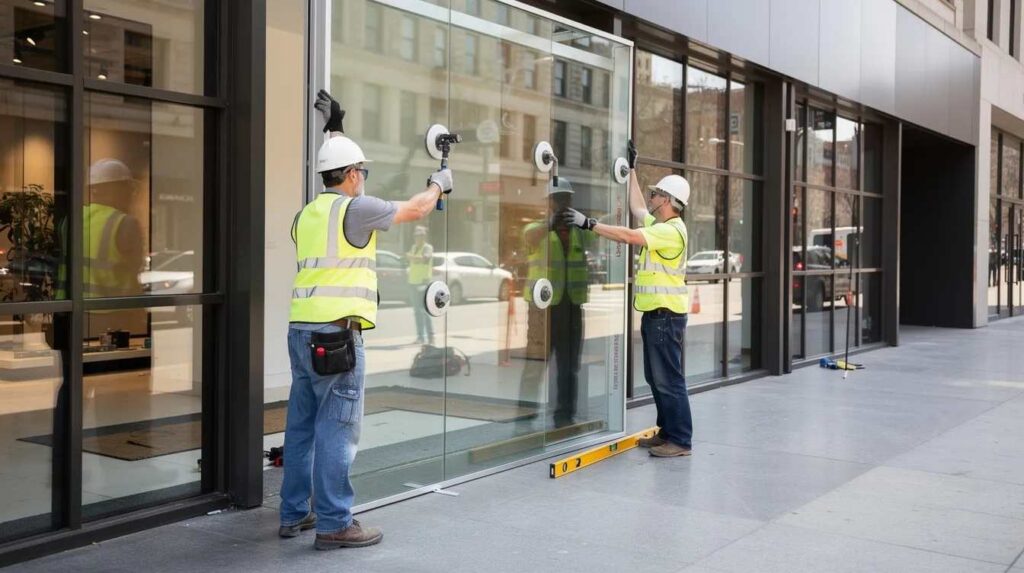
Modern bulletproof products fall into four main categories: synthetic ballistic fibers (aramids and UHMWPE), transparent polycarbonate systems, ceramic composites, and steel armor, and property owners increasingly rely on ranked comparisons of these bullet-resistant materials to select the right option for their facilities. Bulletproof fabrics, such as those made from Kevlar, are commonly used in protective clothing and gear due to their lightweight and high-strength properties. Aramid fibers can be produced in different courses, including unidirectional (UD) and woven forms, which influence their structure and application in bulletproof vests. Transparent and steel armor often utilize thick panels, with the thickness directly affecting the level of protection provided. Each category serves specific applications based on its unique properties.
Aramid Fibers (Kevlar and Twaron)
Kevlar, a synthetic fiber invented by Stephanie Kwolek in 1964, is known for its high tensile strength and is widely used in bullet-resistant applications such as vests and helmets. Dupont played a crucial role in developing and manufacturing Kevlar, establishing itself as a leader in high-performance aramid fibers. Aramid fibers are developed by spinning liquid chemicals into solid fibers, creating tight hydrogen cross-links that enhance strength.
Kevlar is a synthetic fiber that is five times stronger than steel on a weight-for-weight basis. The tensile strength of Kevlar is approximately 3,000 MPa (440,000 psi), making it significantly stronger than steel by weight. With a density of approximately 1.44 g/cm³, aramid fibers offer incredible strength while remaining relatively light weight. Kevlar is synthesized from monomers such as 1,4-phenylene-diamine and terephthaloyl chloride, and its unique properties are a result of advanced polymer chemistry.
Kevlar is commonly used in personal armor, including combat helmets and ballistic vests, due to its ability to absorb and disperse the energy of bullets. Bullet proof vests are a primary application, providing critical protection for military and law enforcement personnel. The fabric’s flexibility allows it to be woven into multiple layers that work together to catch and slow projectiles. Soft concealable armor is commonly worn by police officers for handgun protection, typically using aramid-based construction for NIJ Level IIA through IIIA protection. In addition to armor, Kevlar is used in high-performance brakes and tires, where it enhances durability, reduces weight, and improves safety compared to traditional materials.
Additionally, stab-proof vests are made with highly compressed and tightly woven aramid weaves to prevent penetration from sharp objects. This dual capability makes aramid fibers valuable for law enforcement applications where both ballistic and edged weapon threats exist. Scientists continue to innovate and improve Kevlar and related materials, expanding their applications. In advanced composites, resin is often used as a matrix to bond Kevlar fibers, further increasing strength and customization. In practice, Kevlar demonstrates exceptional performance in real-world scenarios, not just in laboratory tests. User comments and feedback in online forums frequently highlight the reliability and effectiveness of Kevlar-based products.
UHMWPE Materials (Dyneema and Spectra)
Ultra-high-molecular-weight polyethylene (UHMWPE) is a lightweight material known for its high strength-to-weight ratio and is commonly used in bulletproof vests and other protective gear. Unlike aramid fibers, UHMWPE has a density of just 0.97 g/cm³—making it approximately 33% lighter than Kevlar for comparable protection levels.
Dyneema, a type of UHMWPE, is reported to be up to 15 times stronger than steel and is often blended with aramid fibers to create flexible and lightweight bulletproof vests. These materials are produced through gel-spinning processes that align polymer chains to maximize tensile strength, typically ranging from 2,300 to 3,500 MPa.
UHMWPE offers superior moisture resistance (less than 1% absorption) compared to aramid fibers, making it particularly valuable for maritime operations and humid environments. The material maintains its properties across a wide temperature range, from approximately -150°C to +80°C.
Military forces use plate carriers with ceramic or steel plates that commonly incorporate UHMWPE backing layers. This combination leverages the ceramic’s ability to shatter projectiles with the UHMWPE’s energy absorption, creating protection systems that are both effective and relatively lightweight.
Ballistic Polycarbonate
Transparent ballistic protection requires materials that stop bullets while maintaining optical clarity. Bullet-resistant glass is developed by sandwiching a compliant polymer like polycarbonate between standard glass sheets for transparency and protection, and different bulletproof glass options for ultimate ballistic resistance are chosen based on threat level and installation requirements. This laminated construction creates multi-layered barriers that can achieve UL 752 ratings from Level 1 through Level 8.
Polycarbonate is lighter and more impact-resistant than traditional laminated glass, but less scratch-resistant. Compared to other materials such as standard glass and plastics, polycarbonate’s composition and properties make it stand out for its superior strength and energy absorption, while traditional options may lack the same level of impact resistance or flexibility. The material’s high ductility allows it to deform and absorb energy without shattering, while the glass layers provide hardness and scratch resistance. Glass-clad polycarbonate systems represent the current standard for high-level transparent protection.
Acrylic panels, while visually similar to glass, offer limited bullet resistance, typically rated only for UL Level 1 or Level 2 ballistic protection, making them suitable for properties with lower-level ballistic needs. Acrylic panels are a lightweight option for bullet resistance, making them cost-effective for applications where higher-level protection isn’t required.
These transparent systems integrate with building security architectures in teller windows, guard booths, and transaction counters where visibility remains important alongside protection, and can be retrofitted using BulletShield bullet-resistant overglazing panels on existing windows and doors.
Ceramic Composites
Ceramic materials like silicon carbide and boron carbide are processed under intense heat and pressure to be harder than a bullet’s metal core. When a projectile strikes the ceramic surface, the material’s extreme hardness causes the bullet to deform and fragment, dramatically reducing its penetrating capability.
Hard armor plates made of ceramic are roughly 37% lighter than steel and absorb energy by fracturing upon impact. This weight advantage makes ceramic plates the preferred choice for military and tactical applications where protection against rifle-caliber threats (NIJ Level III and IV) is required without excessive burden on the wearer.
The primary trade-off with ceramic plates is durability. Unlike steel, ceramics may crack or lose protective capability after a significant impact or even a severe drop. This fragility requires careful handling and regular inspection protocols. Despite this limitation, ceramic composites remain the standard for rifle-level personal protection where weight constraints are paramount.
Steel Armor
Ballistic steel is valued for its durability and multi-hit capability but can cause user fatigue due to its weight. Steel armor, with a density of approximately 7.8 g/cm³, provides excellent protection but adds significant load. A typical rifle-rated steel plate may weigh 8-10 pounds, compared to 5-6 pounds for equivalent ceramic protection.
Military tactical vehicles and armored cars often utilize heavy steel armor or lightweight ceramic panels to protect against gunfire. For vehicular and architectural applications where weight is less critical than durability and cost, steel remains highly competitive.
High-hardness steel grades (500-600 Brinell hardness) can stop rifle rounds at reasonable thickness. The material’s toughness allows it to absorb multiple impacts without catastrophic failure, making it suitable for fixed installations and budget-conscious tactical users who can manage the weight penalty.
Steel plates require anti-spall coatings to prevent metal fragments from injuring the wearer upon impact. These coatings add modest weight and cost but are essential for safe personal use.
Testing Standards and Performance Evaluation
Selecting appropriate bulletproof materials requires understanding standardized testing procedures. These test protocols ensure that protection claims are verifiable and that materials perform consistently against defined threats.
NIJ Testing Procedures
NIJ testing follows rigorous procedures designed to simulate real-world ballistic impacts:
- Sample conditioning — Armor samples undergo temperature and humidity conditioning to test performance after environmental exposure, ensuring the material maintains protection throughout its service life.
- Ammunition specification — Each NIJ level requires specific ammunition at defined velocities. Level IIIA, for example, tests against .44 Magnum at approximately 1,430 fps and .357 SIG at approximately 1,470 fps. Level III requires stopping 7.62×51mm NATO at approximately 2,780 fps.
- Shot placement protocols — Multiple rounds are fired at specified locations and spacing to test both single-hit and multi-hit performance across the protective area.
- Back-face deformation measurement — Clay backing behind the armor records the depth of deformation from each impact. Excessive deformation indicates energy transfer that could cause injury even without penetration.
UL 752 Architectural Standards
UL 752 provides the framework for architectural bullet resistance testing, and detailed ballistic standards for UL 752 and NIJ levels explain the specific ammunition types, shot counts, and performance benchmarks used:
| UL 752 Level | Ammunition | Number of Shots | Typical Applications |
|---|---|---|---|
| Level 1 | 9mm FMJ | 3 shots | Basic teller windows |
| Level 2 | .357 Magnum | 3 shots | Retail security |
| Level 3 | .44 Magnum | 3 shots | High-risk retail |
| Level 4 | .30-06 Rifle | 1 shot | Government buildings |
| Level 5 | 7.62mm Rifle | 1 shot | Embassy protection |
| Level 8 | 7.62mm Rifle | 5 shots | Maximum security |
| Architectural installations must be tested as complete assemblies—glazing, frames, and hardware together—to ensure the entire system provides rated protection without weak points, which is why integrated bullet-resistant UL 752 wall panels are often specified alongside ballistic glazing in secure facilities. |
Material Performance Comparison
| Material Type | Weight (per sq ft) | Protection Level | Cost Range | Typical Applications |
|---|---|---|---|---|
| Kevlar/Aramid | 1-3 lbs (soft) | NIJ IIA-IIIA | Moderate-High | Bulletproof vests, helmets, stab proof vests |
| Dyneema/UHMWPE | 15-30% lighter than aramid | NIJ IIA-IV (with ceramic) | High | Lightweight body armor, plate backing |
| Polycarbonate | Varies by thickness | UL 752 Levels 1-8 | Moderate-Very High | Windows, barriers, transaction counters |
| Ceramic Composite | 3-5 lbs (plate) | NIJ III-IV | Very High | Tactical plates, vehicle armor |
| Steel Plate | 6-10 lbs (plate) | NIJ III | Low-Moderate | Fixed barriers, budget tactical use |
| Selecting materials requires balancing protection level against weight, cost, and application requirements. UHMWPE-backed ceramic plates offer the best protection-to-weight ratio for rifle threats, while aramid soft armor remains the standard for concealable handgun protection. Polycarbonate systems dominate architectural applications where transparency is required. |
Nanotechnology materials like carbon nanotubes and graphene offer higher strength-to-weight ratios but are currently expensive and rare in commercial products. These emerging materials may reshape the industry in coming years as manufacturing costs decrease.
Common Challenges and Solutions
Implementing bulletproof materials involves practical challenges beyond material selection. Understanding these issues and their solutions ensures successful protection projects, whether you are hardening retail storefronts or deploying bullet-resistant glass security solutions for churches and other places of worship.
Weight and Structural Support Requirements
High-level protection adds significant weight to buildings and personal equipment. UL 752 Level 8 glazing systems may exceed 100 pounds per square meter, requiring structural reinforcement, especially when using advanced polycarbonate glass security systems designed for high-risk environments.
Solution: Engage structural engineers early in project planning to calculate load-bearing requirements. For personal protection, distribute weight across the body using properly designed carriers, and select UHMWPE or ceramic composites when mobility is critical. Many manufacturers offer consultation services to optimize protection while minimizing structural modifications.
UV Degradation and Environmental Exposure
Aramid fibers degrade under UV exposure, while polycarbonate can yellow and become brittle over time; similar concerns apply to blast-resistant glass and bomb-protection panels, where long-term exposure can affect both ballistic and blast performance. These degradation processes reduce protection levels and optical clarity.
Solution: Apply UV-resistant coatings or protective films to exposed surfaces. For outdoor glazing, specify UV-stabilized formulations and install under protective overhangs where possible. Establish regular inspection schedules—typically annually for architectural installations—and replace components showing degradation before protection is compromised.
Cost Optimization and Budget Constraints
High-level ballistic materials represent significant investments, particularly for large-scale architectural projects that may also require blast-resistant window systems designed to GSA/ISC standards. Ceramic plates and glass-clad polycarbonate systems can exceed several hundred dollars per square foot at upper protection levels.
Solution: Conduct thorough threat assessments to identify zones requiring maximum protection versus areas where lower levels suffice. Implement protection in phases, prioritizing entry points and transaction areas. Use standardized panel sizes to reduce fabrication costs. Our team specializes in helping clients optimize protection budgets through strategic zone mapping and phased implementation planning.
Durability and Maintenance
Ceramics crack, steel spalls, and transparent glazings scratch. Without proper maintenance protocols, protection systems may fail when needed.
Solution: Establish inspection schedules for all protective installations. Replace ceramic plates after significant impacts or drops. Apply and maintain anti-spall coatings on steel armor. Clean transparent barriers with appropriate non-abrasive materials. Document all inspections and impacts for warranty and replacement planning.
Conclusion and Next Steps
Selecting bulletproof materials requires matching specific threat levels to material capabilities while balancing weight, cost, durability, and application requirements. Aramid fibers and UHMWPE dominate personal protection, with ceramic composites providing rifle-level defense. Polycarbonate systems enable transparent architectural barriers, while steel offers durability for fixed installations where weight is acceptable.
Immediate next steps:
- Conduct a threat assessment — Identify likely weapons, calibers, and threat scenarios specific to your location or application
- Map protection zones — Determine which areas require maximum protection versus standard or minimal levels
- Establish budget parameters — Balance protection requirements against available resources
- Consult with specialists — Engage professionals who can specify exact materials and configurations for your needs
Our team brings extensive experience in bulletproof material selection and installation across personal protection, architectural barriers, and vehicular applications. We provide comprehensive threat assessments, material specification, and installation services—ensuring your protection systems meet certified standards while optimizing cost and performance.
Related topics worth exploring include installation procedures for architectural barriers, maintenance protocols for body armor systems, and regulatory compliance requirements for specific industries and jurisdictions.
Frequently Asked Questions
Is any material completely bulletproof?
No material is truly “bulletproof.” All protective materials are rated to stop specific threats under defined conditions. Higher-velocity ammunition, armor-piercing rounds, or multiple hits beyond tested parameters can defeat any material. Always select protection based on realistic threat assessments rather than assuming complete invulnerability.
What’s the difference between bulletproof and bullet-resistant?
“Bulletproof” is a colloquial term that implies complete protection—which no material provides. “Bullet-resistant” is the technically accurate industry term, indicating materials tested to stop specific threats. Standards like NIJ and UL 752 define exactly what each material can resist under controlled conditions.
How long do bulletproof materials last?
Service life varies by material type. Steel armor may last 10-20+ years with proper maintenance. Ceramic plates have shorter operational lives, particularly if subjected to impacts or rough handling. Soft armor (aramid/UHMWPE) typically has a 5-7 year warranty period but degrades with moisture, heat, and UV exposure. Transparent glazings may yellow or warp over time. Regular inspection is essential regardless of material type.
Can bulletproof materials stop knife attacks?
Not necessarily. Ballistic protection and stab/slash resistance require different material properties and testing. Stab-proof vests use highly compressed, tightly woven aramid fabrics specifically designed to prevent penetration from pointed or edged weapons. Slash-proof safety gear is designed using fibers that possess intense cut resistance, suitable for work gloves and protective clothing. If you face both ballistic and edged weapon threats, specify dual-rated protection tested to standards like NIJ 0115.00 for stab resistance.
What’s the most cost-effective bulletproof material for buildings?
For handgun threats (UL 752 Levels 1-3), glass-clad polycarbonate or aramid panels typically offer the best cost-to-protection ratio. For rifle threats, the answer depends on whether transparency is required—opaque steel or hybrid panels may cost less than transparent systems. Strategic zone mapping that applies higher protection only where needed significantly reduces overall project costs.
Do bulletproof materials require special installation?
Yes. Frames, mounting hardware, and seals must be rated to match the glazing or panel protection level. The entire assembly—not just the ballistic material—must be tested and certified. Walls and floors may require structural reinforcement for heavy systems. Improper installation can create gaps in protection coverage. Professional installation ensures that protection meets rated specifications.
How do I determine the right protection level for my facility?
Start with a threat assessment: identify likely weapons, shooter distances, and number of potential shots. Consider local crime patterns and any specific threats to your organization. Map functional zones—public areas, transaction points, and safe rooms may require different levels. Match your assessment to NIJ or UL 752 levels that address identified threats. Our team offers professional threat assessment services to ensure accurate protection specification.
Are there maintenance requirements for bulletproof installations?
Yes. All protective systems require regular inspection—typically annually for architectural installations and after any impact event. Check for cracks in ceramic plates, corrosion on steel components, yellowing or delamination in transparent systems, and moisture damage in soft armor. Document all inspections and replace components that show degradation before protection is compromised.
Additional Resources
- NIJ Standard 0101.06 — Complete body armor certification guidelines from the National Institute of Justice
- UL 752 Standard — Bullet-resistant equipment specifications from Underwriters Laboratories
- NIJ Standard 0115.00 — Stab resistance testing for personal body armor
- EN 1063 / EN 1522-1523 — European standards for glazing and barrier systems
For professional consultation on bulletproof material selection, threat assessment, or installation services, contact our team. We provide comprehensive support from initial specification through certified installation, ensuring your protection systems meet both safety requirements and budget parameters.