Table of Contents
Understanding Forced Entry Protection for Commercial Entry Doors
How to Assess Forced Entry Risk and Select the Right Protection Level
Door, Hardware, and Glazing Options for Forced Entry Resistant Systems
Retrofit Forced Entry Protection with DefenseLite: How It Works and When to Use It
FAQs: Forced Entry Protection for Commercial Entry Doors
Why Choose Impact Security for Forced Entry Protection on Commercial Doors
Understanding Forced Entry Protection for Commercial Entry Doors
If you manage a commercial facility in 2026, forced entry protection for commercial doors is no longer a niche concern reserved for jewelry stores or government buildings. Between ongoing smash-and-grab crime waves targeting retail chains, a 722% increase in gun-related incidents at K-12 schools from 2015 to 2024, and rising insurance scrutiny around glazing vulnerabilities, the conversation has shifted from “should we harden our entry doors?” to “how fast can we do it?”
Forced entry, in practical terms, refers to an attacker using hand tools like crowbars, sledgehammers, pry bars, or battering objects to breach a door, window, or storefront opening. It is important to distinguish this from simple vandalism (cosmetic damage), opportunistic burglary (quick theft through an unlocked or poorly secured opening), riot-driven group attack, and targeted violent events like active shooter scenarios. Each of these threats demands a different level of response, and many commercial buildings face more than one.
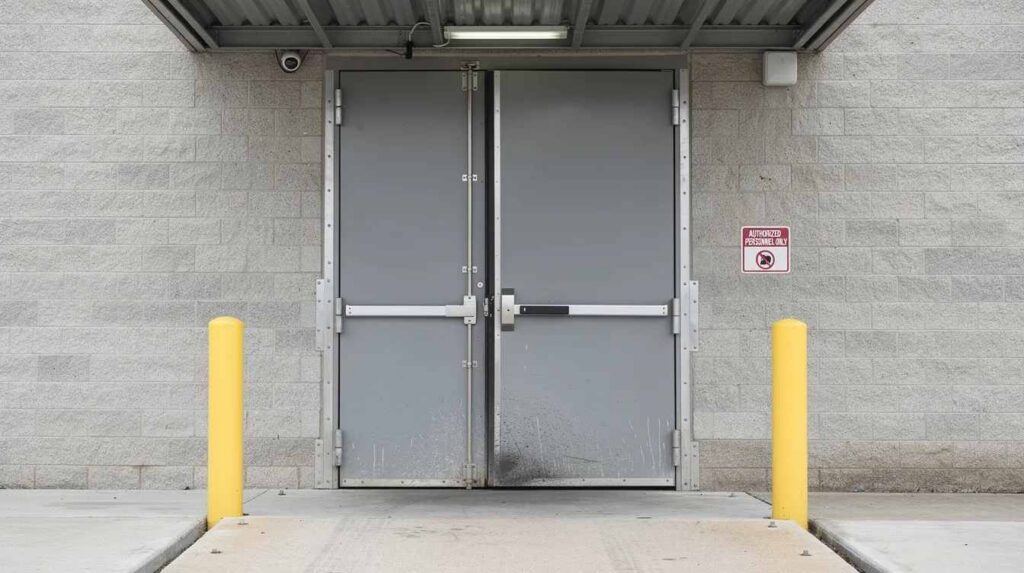
So what exactly are entry resistant doors and forced entry resistant doors? Unlike a standard aluminum storefront door or basic hollow metal door-which typically fails in under a minute under sustained manual attack-a forced entry resistant door is tested as a complete system. That means the door leaf, frame, hardware, and security glazing are all designed and evaluated together to withstand tool attacks for a defined period: 5, 15, 30, or even 60 minutes. A heavy door slab alone does not create protection. The weakest component in the assembly determines how fast an attacker gets through.
A layered approach improves commercial door security effectiveness because it treats every element as part of a unified defense. The frame, the lock, the hinges, the glazing stops, and the glass itself all need to hold together under repeated blows. When any one of these fails, the entire system is compromised.
At Impact Security, our focus is on retrofit forced entry resistant glazing for existing entry doors-integrating with storefront doors, curtain walls, and other building systems so you don’t have to demolish and rebuild to get meaningful protection. In this guide, you’ll learn how to assess your facility’s risk, what standards and specifications matter, the options available for new doors versus retrofit security glazing, and how our DefenseLite and BulletShield systems create entry-resistant protection for commercial properties across the United States.
How to Assess Forced Entry Risk and Select the Right Protection Level
Forced entry protection is not one-size-fits-all. The right solution for a suburban pharmacy is very different from what a federal courthouse or urban high school needs. Your protection level should be based on your building use, location, hours of operation, and the most likely attack methods you face.
Threat Profiles by Facility Type
Different businesses and institutions face different risks. Here’s a practical breakdown:
| Facility Type | Primary Threat | Typical Attack Method | Key Vulnerabilities |
|---|---|---|---|
| Retail chains and jewelers | Smash-and-grab | Bricks, hammers through glass entry doors and sidelights | Large glass openings, overnight hours |
| Schools and universities | Active assailant, vandalism | Forced entry after ballistic weakening, group vandalism | Vestibule doors, main entrance glazing with reinforced window and door glass standards like ASTM F3561 |
| Hospitals (ED, behavioral health) | Violent patients, institutional threats | Weaponized objects, forced exit/entry attempts | ED entry doors, behavioral health wings |
| Banks and financial institutions | Burglary, ballistic threats | Tool attacks on doors, firearm-based threats | After-hours forced entry, teller line glazing |
| Government buildings | Multi-hazard (forced entry, ballistic, blast, protest) | Group assault with tools, coordinated attacks | Public-facing entry doors, ground-floor windows |
Testing criteria vary based on building use and risk level, so your specifications should reflect your actual exposure rather than a generic “security upgrade.”
A 30-to-60-Minute Risk Walk-Through
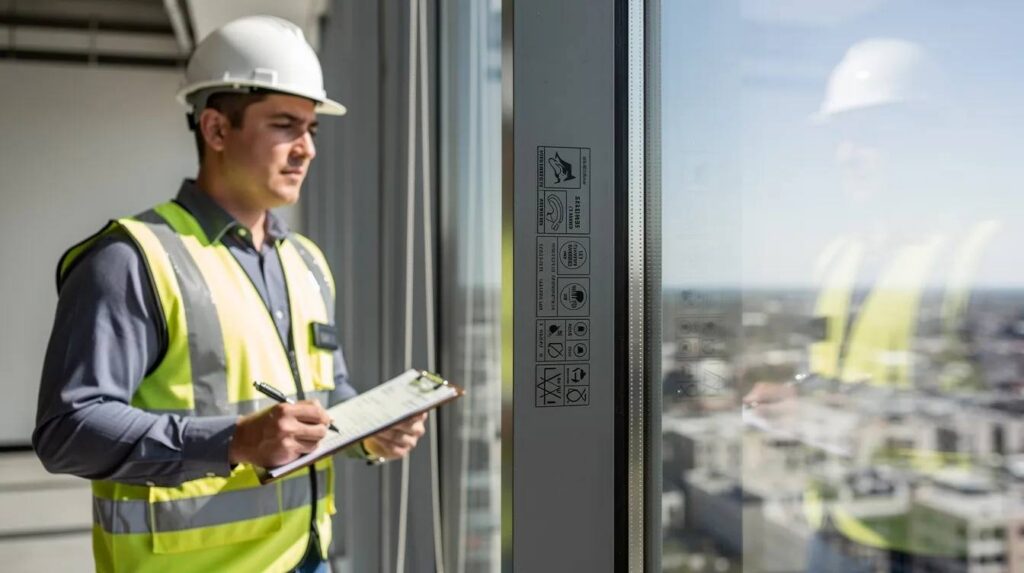
Any facility manager can run a practical risk assessment in under an hour. Here’s how:
- Walk the full building perimeter and note every entry door, storefront opening, and ground-floor window.
- For each opening, record the door material (aluminum, hollow metal, glass), number and type of locks, hinge condition, and glazing type.
- Note visibility: Is the opening exposed to the street or hidden from view? Are cameras or guards present?
- Map proximity risks-major highways, high-crime corridors, transit hubs, or known protest venues-that increase the likelihood of sustained group attacks rather than simple opportunistic break-ins.
- Evaluate response infrastructure. Access control integrates alarms and video analytics for enhanced security, so note whether your current system includes these elements or relies on passive measures alone.
The weighting is straightforward: more public exposure combined with slower emergency response means you need stronger and longer-lasting protection at each opening.
Matching Risk to Protection Tiers
Once you understand your exposure, you can determine which tier of protection each opening requires:
- Deterrent level: Upgraded hardware (reinforced strike plates, high-security cylinder locks), improved lighting, visible cameras. Delays entry for seconds to roughly one minute. Cost is typically under a few thousand dollars per door.
- Delay level: Forced entry resistant systems tested under ASTM F3038 for 5 to 15 minutes or more. This includes retrofit security glazing that absorbs repeated tool impacts. Suitable for retail locations with frequent break-ins, schools, and hospitals.
- High-security level: Systems that meet both forced entry resistance (ASTM F3038 or ASTM F3561) and ballistic resistance (UL 752). Required for critical infrastructure, government facilities, and any site where firearm threats are realistic.
ASTM F3038 is a standard for forced entry resistance testing-the key standard test method to reference when specifying protection. It evaluates how long a complete system (door, frame, glazing, hardware) withstands attack by six people using hand tools. Standard test methods evaluate forced-entry resistance in commercial projects by assigning time ratings of 5, 15, 30, or 60 minutes. ASTM F3038 tests forced entry resistant systems for up to 60 minutes under these conditions.
For newer threats-especially in schools-ASTM F3561 evaluates fenestration systems after a simulated active shooter attack, testing whether glazing and doors remain resistant after ballistic weakening. Certification standards exist for both forced entry and ballistic resistance, and facility managers should request documentation proving compliance before signing any purchase order.
Replace or Retrofit?
Full replacement of entry doors makes sense when existing frames are structurally compromised, corroded, or can’t accept reinforced glazing. It’s also warranted when egress hardware is non-compliant with current fire and life safety codes.
In most other cases, retrofit security glazing is more cost-effective and far less disruptive. It preserves the existing storefront aesthetic, avoids lengthy construction timelines, and can be installed during off-hours. We’ll cover the retrofit option in detail below.
Door, Hardware, and Glazing Options for Forced Entry Resistant Systems
The vulnerability in most commercial entry doors is not the door leaf itself-it’s the glass, the hardware, and the connection between components. True forced entry protection must address every element in the assembly, because an attacker will always find and exploit the weakest link.
Door and Frame Choices
The market offers three primary categories for commercial applications:
- Aluminum storefront entry doors: Lightweight, visually appealing, and affordable. However, aluminum frames deform under prying, and the glass panels are typically the first point of failure. These doors are designed for convenience and weather resistance, not sustained assault.
- Steel hollow metal doors: Heavy-duty steel doors resist flexing and prying far better than aluminum. With continuous hinges, heavy-gauge steel frames (12-gauge or thicker), and reinforced lock areas, they can withstand battering and tool attacks significantly longer. They’re the baseline choice for serious commercial security.
- Specialty forced entry resistant door assemblies: These are factory-built systems where the door, frame, hardware, glazing, and anchorage are all engineered and tested together. Forced entry resistant doors can be single or double doors, and they can be up to 4 feet wide and 9 feet tall, making them suitable for a wide variety of commercial openings. Many of these assemblies also integrate a polyamide thermal strut, which improves energy performance while maintaining structural integrity, and can be further enhanced with retrofit forced entry resistant doors using Access Shield.
The EntryShield™ Model FE6000, for example, meets ASTM F3038 standards and represents the kind of purpose-built forced entry resistant door that specifiers should look for when the threat level demands a complete system solution.
Hardware That Holds Under Attack
Even the strongest door leaf fails if the hardware gives way. Here’s what matters:
- Multi-point locking systems enhance security in forced entry doors by distributing force across three or more locking points (top, bottom, and mid-height) instead of relying on a single deadbolt.
- Heavy-gauge strike plates prevent frame failure during forced entry. Extended-length plates that are through-bolted into the surrounding structure-not just screwed into a wooden jamb-are critical.
- Reinforcement techniques include use of strike plates and hinge reinforcements together; continuous (piano-style) hinges or gear hinges resist repeated impacts and prevent hinge-side separation.
- Grade 1 mortise locks provide high commercial security against blunt force, representing the highest tier under ANSI/BHMA grading. Testing and standards for commercial locks include ANSI/BHMA grading to help you choose hardware that won’t become the weak link when paired with forced entry security glazing and resistant doors.
Security Glazing: Beyond “Stronger Glass”
Simply specifying thicker glass is not enough if the glazing holds but the beading or frame pops out under impact. A forced entry resistant system requires reinforced stops, through-bolted glazing stops, and anchored framing to keep everything in place.
Security glazing includes laminated and polycarbonate options for impact resistance:
| Glazing Type | Performance Under Attack | Best Use Case |
|---|---|---|
| Tempered glass | Shatters into fragments quickly under sustained blows | Not recommended as sole defense |
| Laminated glass | Holds together after cracking; interlayer resists penetration but can tear under sustained assault | Mid-tier retail, offices |
| Polycarbonate laminates | High impact resistance, minimal splintering | Schools, hospitals, government |
| Advanced composite glazing | Multi-layer construction; longest resistance under tool and ballistic attack | Critical infrastructure, banks |
Impact Security’s DefenseLite retrofit shields are engineered to install over existing entry doors and storefront glass, creating a clear, stand-off layer that flexes, absorbs, and distributes impact energy from sledgehammers, bricks, crowbars, and similar tools. This approach transforms vulnerable display glass into a forced entry resistant surface without replacing the underlying door or window.
BulletShield doors meet UL752 ballistic standards for security, providing combined forced entry and ballistic performance for banks, police stations, and government buildings where both threats must be addressed at the entry doors.
As a secondary benefit, forced entry resistant glazing retrofits often improve thermal performance and noise reduction. This supports overall building system efficiency and occupant comfort-an advantage that helps justify the investment to stakeholders who care about energy costs and tenant satisfaction alongside safety.

Retrofit Forced Entry Protection with DefenseLite: How It Works and When to Use It
Many commercial properties simply don’t have the budget or the operational downtime to replace all entry doors and windows with purpose-built forced entry resistant assemblies. That’s where retrofit protection changes the equation. DefenseLite protects existing windows and doors from forced entry by adding a tested, engineered polycarbonate glass security shield over the existing glazing-without tearing out frames or disrupting daily operations.
The Process: Assessment to Installation
Here’s how a typical retrofit project works with Impact Security:
- Initial security assessment: An on-site walk-through with Impact Security or an authorized dealer evaluates every opening, documents existing conditions, and identifies the highest-priority vulnerabilities.
- Engineering and custom fabrication: Based on site measurements and threat requirements, shields are custom-fabricated at our facilities in Marietta, GA and Glendale, AZ. Each product is engineered to fit the specific frame, door, or curtain wall configuration on your building.
- Professional installation: Certified installers mount the DefenseLite shield in front of the existing glass using proprietary framing and stand-off brackets. The gap between the shield and the original glass creates a system that makes it extremely difficult for an attacker to reach or shatter the door glass-even after repeated hits from crowbars or sledgehammers. DefenseLite product FAQs cover installation, performance, and maintenance details. Retrofitting can enhance security against crowbars and sledgehammers without requiring a full door replacement.
- Periodic inspection and service: Impact Security provides warranty support and ongoing maintenance. Retrofit shields are replaceable if damaged, often without touching the original entry door.
Real-World Scenarios
Consider these practical examples of how retrofit forced entry protection addresses real threats:
- Pharmacy chain: After a string of overnight burglaries targeting glass entry doors, a regional pharmacy chain retrofitted all storefront openings with DefenseLite shields. The result was multiple confirmed failed breach attempts-merchandise stayed secure, glass replacement costs dropped to nearly zero, and staff felt safer opening the store each morning.
- School district: A district hardened main vestibule doors and sidelites at six elementary schools, creating a forced entry resistant barrier at the first line of defense. The shields preserved clear visibility for front-office staff to see who approaches, while meeting the district’s security specifications for entry protection.
- Municipal building: During a period of civil unrest, a city hall retrofitted all public-facing entry doors and ground-floor windows. The installation happened over two weekends with no interruption to government services. The building’s appearance was unchanged-no bars, no roll-down gates, no fortress aesthetic.
Operations, Code, and Maintenance
A common concern is whether retrofit glazing will interfere with daily use or egress compliance. The answer is straightforward:
- Doors remain fully functional for daily traffic. Egress hardware is not compromised.
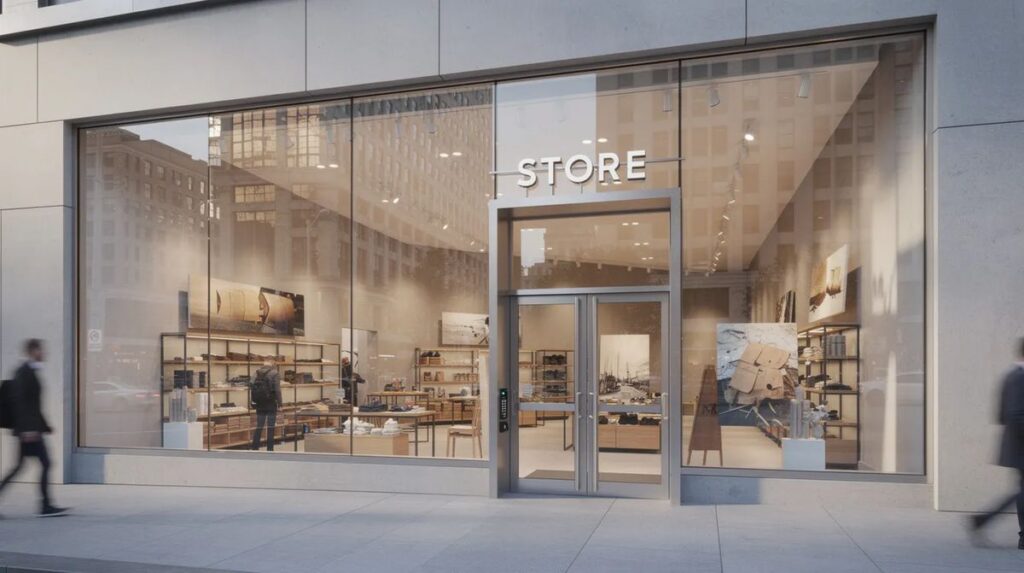
- Visibility into and out of the building is preserved-these shields are clear and low-profile, designed to maintain the look of a normal storefront or public entrance.
- Systems integrate with existing storefronts and curtain walls without structural modification in most cases.
- If a shield sustains damage from an attempted break, it can be replaced independently. You don’t need to order a new door or rebuild the frame.
Where both forced entry and ballistic threats exist, Impact Security can integrate BulletShield overlays into the same project. BulletShield meets UL752 ballistic standards for retrofit applications, creating a layered forced entry resistant door and window package without wholesale demolition, and offers a significantly harder-to-breach solution than basic security glass film. This option is particularly relevant for banks, courthouses, and sensitive government or healthcare facilities.
The ROI Argument
The investment in retrofit forced entry protection pays for itself through several channels:
- Fewer break ins mean less merchandise loss and lower glass replacement costs
- Improved staff safety and morale-people work better when they feel protected
- Potential insurance benefits, as stronger glazing systems can improve insurability and reduce premiums
- Preserved curb appeal compared to roll-down grilles or security bars, which can deter customers and depress property value, especially when using nearly invisible DefenseLite Pro impact security glazing
FAQs: Forced Entry Protection for Commercial Entry Doors
Here are the questions we hear most often from facility managers, architects, and procurement teams evaluating forced entry protection for their buildings.
How is a forced entry resistant door different from a regular commercial entry door?
A forced entry resistant door is tested as a complete system-door, frame, glazing, and hardware-against standardized timed attacks using tools like crowbars and sledgehammers. A typical aluminum storefront door, by contrast, is designed primarily for convenience and weather resistance and often fails in under a minute under sustained assault. Forced entry resistant doors use reinforced materials, multi-point locks, and advanced glazing that stay in place even after heavy, repeated blows, buying critical time for law enforcement or security to respond.
Which standard test methods should I look for when specifying forced entry protection?
ASTM F3038 is the primary standard test method for timed evaluation of forced entry resistant systems. It rates assemblies at 5, 15, 30, or 60-minute intervals-higher ratings mean longer resistance under tool attack. Timed evaluation tests measure forced-entry resistance for up to 60 minutes under this protocol. You may also encounter ASTM F3561, which tests fenestration after simulated active shooter attack, and UL 752 for ballistic resistance. For lock hardware, look for ANSI/BHMA Grade 1 certification as a minimum for high-security commercial applications.
Do I have to replace my existing entry doors to improve forced entry protection?
In many cases, no. Retrofit systems like DefenseLite can be installed over the existing glass in doors and sidelites, dramatically increasing forced entry resistance without changing frames or hardware. Full replacement is typically recommended only when doors or frames are structurally compromised, non-compliant with current egress codes, or physically unable to support the added loads of a forced entry resistant system.
Will forced entry resistant glazing make my storefront look like a bunker?
Not at all. Modern security glazing from Impact Security is clear and low-profile, designed to maintain visibility, merchandising display potential, and brand presentation for retail and public-facing buildings. Contrast this with roll-down gates or bars, which can send the wrong message to customers and actually degrade property value. From the street, most people can’t tell the difference between a protected storefront and an unprotected one.
How long does installation of a retrofit forced entry resistant system usually take?
For many standard retail entry doors and adjacent windows, installation can be completed in a single night or over a weekend, minimizing disruption to business operations. Larger projects involving curtain walls, multi-story façades, or complex government site configurations require more detailed scheduling and staging, typically coordinated well in advance with Impact Security’s project team.
Can forced entry resistant doors and glazing also protect against gunfire?
Not all forced entry resistant systems offer ballistic protection. Ballistic resistance requires products tested to standards like UL 752. Impact Security’s BulletShield retrofit shields are specifically designed for this purpose, providing combined forced entry and ballistic performance. If your facility faces elevated risk from firearm threats-banks, police stations, government offices, sensitive clinics-ask specifically for combined forced entry and ballistic-resistant solutions rather than assuming one product covers both.
Why Choose Impact Security for Forced Entry Protection on Commercial Doors
Impact Security is a U.S.-based specialist in retrofit forced entry resistant systems for glass doors, windows, and storefronts. Since 2016, we’ve served B2B and B2G clients across the country with a singular focus: hardening existing glass openings to deliver uncompromising security without requiring full demolition or reconstruction, as detailed in our company overview at Impact Security, LLC.
Our turnkey model covers every step:
- Security assessment at your site to identify vulnerabilities and priorities
- Engineered design tailored to your specific openings, threat level, and operational requirements
- American fabrication at our facilities in Marietta, GA and Glendale, AZ
- Professional installation by certified dealers and installers nationwide
- Ongoing support including warranty service and periodic inspection
We don’t push unnecessary full-replacement projects. Our approach is to protect what you already have-reducing downtime, cost, and disruption for schools, hospitals, retail chains, and government agencies. Whether you need to protect a single-entry door at a residential community center or harden an entire campus, we offer solutions that scale.
Our product families include DefenseLite for forced-entry-resistant glazing, BulletShield for ballistic and forced-entry overlays, and custom safe-room solutions for critical spaces inside commercial and public buildings. Each product line is engineered to meet or support relevant forced entry and ballistic test methods, and we bring broad experience with national retail chains, school districts, and municipal clients across the market.
Our systems have proven their performance through real-world incidents-periods of civil unrest, organized smash-and-grab crime waves, and attempted break-ins at facilities ranging from pharmacies to courthouses. We don’t just sell a product. We create a security partnership that lasts.
Ready to discover what forced entry protection looks like for your facility? Request a free site assessmentor estimate, connect with a local certified installer, or send your architectural plans to our team. We’ll help you determine the right way to integrate forced entry protection into your upcoming projects-whether you need to harden one door or an entire building. Visit our website or contact us today to get started.