- The Role of Threat Assessment in Determining System Requirements
- Deconstructing Material Science: Polycarbonate, Acrylic, and Laminated Glass
- Understanding UL 752 Ballistic Ratings and Their Impact on Price
- Beyond the Glazing: How Framing and Hardware Influence the Final Cost
- Architectural Integration and Customization as a Cost Variable
- Retrofit vs. Replacement: A Major Cost and Disruption Variable
- The True ROI of Engineered Security Glazing
- How to Get an Accurate Project Quote
- Why Vague Estimates for “UL 752 Rated Glass Cost” Are a Red Flag
- The Importance of On-Site Evaluation
- Frequently Asked Questions
Disclaimer: The term ‘bulletproof glass’ is often misleading, as no glass or film combination can completely withstand every physical or ballistic attack. Instead, school and safety officials rely on high-grade bullet-resistant protective glazing and films designed to absorb severe impact, which can help slow, disrupt, or prevent forced entry during active shooter situations and buy vital time for first responders.
The final cost of a ballistic-resistant window system is not an arbitrary figure. It is the direct result of a series of engineering decisions, material science calculations, and fabrication requirements, each tied to a specific performance outcome. To understand the investment, one must first deconstruct the components that constitute the whole.
The Role of Threat Assessment in Determining System Requirements
The single most influential factor in the cost of a ballistic system is the specific threat it is engineered to mitigate. A comprehensive threat assessment is not an optional preliminary step. It is the foundational analysis that dictates every subsequent design and material choice. This assessment identifies the likely types of attack, from forced entry and vandalism to specific ballistic threats from handguns or high-powered rifles.
A system designed to defeat a 9mm handgun projectile, a common UL Level 1 or 2 threat, requires a fundamentally different and less costly material composition than one engineered to stop multiple rounds from a 7.62mm rifle, a UL Level 8 threat. Specifying a system without a formal threat assessment often leads to one of two critical errors: over-engineering, which results in unnecessary expense, or under-engineering, which creates a false sense of security and fails to provide adequate protection. The cost is directly proportional to the required level of protection defined by this initial analysis.
Deconstructing Material Science: Polycarbonate, Acrylic, and Laminated Glass
The term “bulletproof glass” is a simplification of a complex material science field. The glazing itself is a sophisticated composite, and its composition is a primary cost driver. The core materials each offer a unique balance of performance, weight, and cost.
- Laminated Glass: This material consists of multiple layers of glass bonded together with a polymer interlayer, such as polyvinyl butyral (PVB). As more layers are added to defeat higher-energy projectiles, the glazing becomes thicker, heavier, and more expensive to manufacture and handle.
- Polycarbonate: A lightweight, high-impact-resistant polymer, polycarbonate is significantly stronger than glass of the same thickness. While it offers superior ballistic stopping power for its weight, it is a more expensive raw material and is susceptible to abrasion. High-performance systems often use a hard-coated polycarbonate to improve durability.
- Acrylic: More rigid and optically clearer than polycarbonate, acrylic provides a high level of light transmission and scratch resistance. It is often used for lower-level ballistic ratings or as a component in a laminated assembly.
Ultimately, most high-level ballistic glazing is not a single material but a precisely engineered laminated composite. These assemblies may combine the rigidity and hardness of glass on the exterior “threat side” with the impact-absorbing capabilities of polycarbonate on the interior “safe side.” This multi-material approach leverages the best properties of each, but the complexity of laminating dissimilar materials contributes to the overall cost.
Understanding UL 752 Ballistic Ratings and Their Impact on Price
The Underwriters Laboratories (UL) 752 standard provides the definitive benchmark for ballistic resistance in North America. It is a rigorous, repeatable testing protocol that classifies systems into different levels based on their ability to stop specific projectiles fired from specific weapons.
This rating is a direct and transparent driver of cost. A glazing assembly and its corresponding frame must be tested and certified to achieve a specific UL 752 rating.
- Lower Levels (UL 1-3): Generally designed to stop rounds from common handguns. These systems are thinner, lighter, and represent the lower end of the ballistic cost spectrum.
- Higher Levels (UL 4-8): Engineered to defeat more powerful projectiles, from high-velocity handguns to military-grade rifle rounds. These systems require significantly thicker and more complex glazing makeups and more robust framing, placing them at the upper end of the cost spectrum.
Achieving a higher UL rating requires more material, more sophisticated lamination processes, and more substantial framing. The price difference between a UL Level 3 window and a UL Level 8 window is not incremental, it is exponential, reflecting the immense difference in engineering and materials required to defeat the higher-energy threat.
Beyond the Glazing: How Framing and Hardware Influence the Final Cost
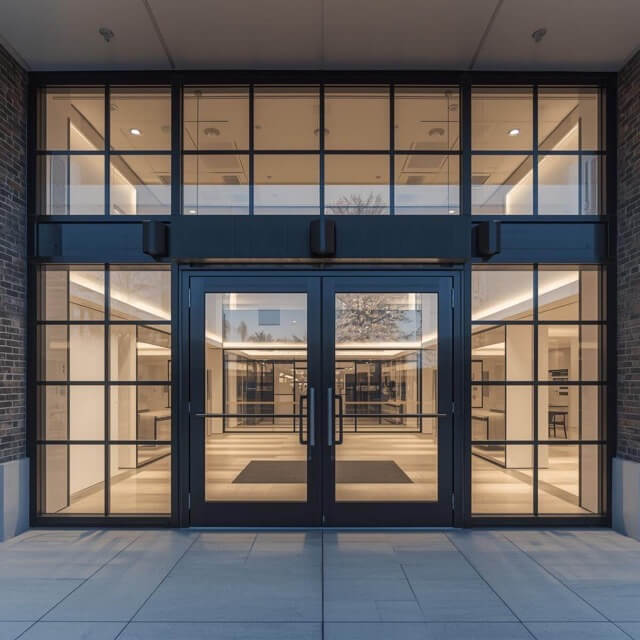
A common and dangerous oversight is focusing exclusively on the glazing while neglecting the system that holds it in place. A ballistic-rated pane of glass installed in a standard commercial frame is an uncertified system with a critical weak point. The entire assembly, including glazing, frame, and hardware, must be tested and rated as a single, integrated unit.
The frame must not only hold the significant weight of the glazing but also be engineered to absorb and dissipate the immense kinetic energy transferred during a ballistic impact without failing. Steel framing is often specified for high-level threats due to its strength and durability, while thermally broken aluminum offers a lighter-weight solution for lower-to-mid-level ratings. The material, wall thickness, and internal reinforcement of the frame are significant cost factors.
Any operable component, such as a transaction window or door, must include rated hardware. Ballistic-rated locks, hinges, and passers are specialized, low-volume products that undergo extensive testing, adding to the total system cost. A chain is only as strong as its weakest link, and in a ballistic system, ensuring there are no weak links requires investing in a complete, certified assembly.
Architectural Integration and Customization as a Cost Variable
While standard-sized, rectangular window systems offer the most economical solution, security should not have to dictate a building’s aesthetic. The cost of a ballistic window system is also influenced by the degree of customization required to integrate it seamlessly into the architectural design.
Factors that increase cost include:
- Complex Geometry: Arched tops, circular windows, or non-rectangular shapes require custom fabrication, specialized cutting of glazing, and unique frame construction.
- Oversized Units: Large, uninterrupted spans of ballistic glazing are challenging and expensive to manufacture, transport, and install due to their extreme weight and the specialized equipment needed.
- Finishes and Sightlines: Custom paint or anodized finishes, slim-profile frames for minimal sightlines, or the need to replicate historical details all add to the engineering and manufacturing complexity.
These customizations are not frivolous expenses. They represent the additional investment needed to achieve a specific architectural vision without compromising on safety. It is the cost of transforming a standard security product into a fully integrated, high-performance building envelope component.
Retrofit vs. Replacement: A Major Cost and Disruption Variable
The decision between retrofitting existing windows and undertaking a full replacement is one of the most significant variables in a project’s budget and timeline. This choice extends far beyond the material cost of the security glazing itself, influencing labor, business operations, and the architectural integrity of the building. Understanding the true scope of each approach is critical for accurate budgeting and specifying a solution that aligns with both security and operational goals.
The Full Scope and Cost of Traditional Replacement
A full replacement of existing windows with new ballistic-rated units is a complex and often disruptive process. The initial quote for the window assembly is merely the starting point. A true cost analysis must account for the extensive ancillary tasks required for a complete tear-out and reinstallation.
This process typically involves the demolition and removal of the existing window and frame, which can damage surrounding wall materials. Consequently, the project scope expands to include repairs to drywall or masonry, new interior and exterior trim work, painting, and sealing. In many cases, the new, heavier ballistic system may require structural modifications to the building envelope to support the increased weight, adding another layer of engineering, labor, and material costs. Each of these steps introduces a different trade to the project site, complicating scheduling and increasing management overhead.
The Modern Alternative: Patented Retrofit Security Systems
Advanced retrofit security glazing systems offer a modern, engineered alternative that bypasses the high costs and complexities of full replacement. Instead of removing the existing window, these patented systems are designed to be installed on the interior of the current glazing. They integrate seamlessly with the existing framing, creating a protective barrier without altering the building’s exterior envelope.
This retrofit security approach is inherently more cost-effective because it preserves the majority of the existing infrastructure. The primary investment is focused on the high-performance security glazing and its specialized anchoring system. By eliminating the need for demolition, structural alterations, and extensive finish work, a retrofit solution dramatically reduces the project’s material and labor footprint. It allows stakeholders to allocate budget toward higher-performance protection rather than ancillary construction costs.
Factoring in Labor, Timelines, and Business Disruption
The indirect costs associated with business disruption are a critical, yet often overlooked, component of a security upgrade. A full replacement project is inherently invasive, generating significant noise, dust, and debris over an extended period. This can render entire sections of a building unusable, impacting productivity in an office, discouraging customers in a retail environment, or disrupting operations in a critical facility.
Retrofit solutions are engineered for minimal disruption. Installation is typically faster, quieter, and cleaner. A specialized team can often secure multiple windows in the time it takes to complete a single full replacement, drastically shortening the project timeline. For a commercial entity, this translates directly into quantifiable savings like reduced downtime for revenue-generating spaces and minimized impact on employee productivity. The ability to secure a facility with minimal operational interruption is a powerful financial benefit that significantly strengthens the ROI case for retrofitting.
Preserving Architectural Integrity and Reducing Ancillary Expenses
For projects involving historically significant buildings or those with unique, custom facades, a full replacement can be architecturally and financially prohibitive. Matching original aesthetics with modern ballistic-rated assemblies is a design challenge that can lead to compromises, lengthy approval processes, and a substantial increase in custom fabrication costs.
Retrofit systems like DefenseLite and BulletShield are designed to be visually unobtrusive. Installed on the interior, they leave the building’s exterior character and sightlines untouched. This approach completely avoids the need for exterior aesthetic matching and preserves the original design intent of the architect. It eliminates the expenses and delays associated with architectural reviews and material sourcing for historical replication.
The True ROI of Engineered Security Glazing
Focusing on the line-item cost of a security window system invites a critical error: equating price with value. The true cost of a solution is not determined on the day of installation but revealed over its entire service life, especially during a crisis. An engineered security glazing system is not a commodity purchase but an investment in resilience, and its return is measured in mitigated risk, business continuity, and long-term liability management.
The High Price of Inadequate Solutions
Specifying a security solution based primarily on low upfront cost is a high-risk gamble. Inadequate systems, whether they are non-certified products, misapplied materials, or simply “thick glass,” create a dangerous illusion of security. When subjected to a real-world threat, these solutions are prone to catastrophic failure.
This failure results in a complete loss of the initial capital investment. More significantly, it necessitates a second, far more urgent expenditure to install the correct solution that should have been chosen from the outset. This “buy it twice” scenario validates the principle that the most expensive solution is often the one that does not work.
Calculating Long-Term Value: Liability, Insurance, and Continuity
An engineered and certified security glazing system delivers a return on investment that extends far beyond physical protection. These systems are a critical component of an organization’s overall risk management strategy.
Properly implemented, they can tangibly reduce liability by demonstrating a high standard of care in protecting occupants. This proactive stance is often viewed favorably by insurance carriers, potentially leading to more favorable premiums. The most significant value lies in ensuring business continuity. An engineered system that defeats an attack not only protects assets and personnel but also keeps the building envelope secure and operational, preventing the costly shutdowns that follow a major security breach or act of forced entry.
How Engineered Systems Mitigate Failures During Forced Entry Events
The performance of a security glazing system is determined by its weakest link. A common point of failure for lesser solutions is not the glazing itself but the framing or its anchoring to the building structure. An attacker can often bypass the “bulletproof” glass by simply prying the entire unit out of the wall.
This is where the holistic approach of an engineered system proves its worth. These systems are designed, tested, and certified as a complete assembly, where the glazing, frame, and anchoring mechanism all work in concert. The frame is designed to manage and distribute impact forces across the structure, preventing it from being compromised. This integrated design philosophy is what separates a true security solution from a simple collection of strong-looking parts.
Comparing Lifecycle and Maintenance Costs
The total cost of ownership for a security glazing system must include an analysis of its lifecycle and maintenance requirements. Some glazing materials, particularly certain types of polycarbonates and acrylics, can be susceptible to degradation from UV exposure over time, leading to yellowing or hazing. They may also require specialized cleaning protocols to avoid scratching.
Premier engineered systems, however, often utilize advanced material compositions with durable cap sheets and coatings that resist abrasion and UV degradation. These high-quality systems are designed for a long service life with minimal maintenance beyond standard window cleaning. While the initial investment may be higher, their longevity and stable performance ensure a lower total cost of ownership and a more reliable, lasting security posture.
How to Get an Accurate Project Quote
Obtaining a meaningful quote for a ballistic-resistant window system is a process of technical discovery, not a simple price inquiry. The goal is to move from a general cost estimate to a precise, engineered project budget. This requires a collaborative exchange of detailed information between your team and the security glazing partner. A thorough partner uses this process to ensure the final solution meets your threat mitigation goals, architectural requirements, and long-term performance expectations.
Essential Information for a Precise Quote
A professional security solutions provider cannot generate an accurate quote in a vacuum. To move beyond broad estimates and develop a precise proposal, they require specific project data. Preparing this information beforehand streamlines the process.
Key information includes:
- Architectural Drawings: Complete, current plans are essential, including elevations, floor plans, and section details.
- Defined Threat Level: The specific protection rating is the foundation of the system’s design, such as a UL 752 ballistic level or a UL 972 forced entry rating.
- Structural Details: For retrofit projects, information about the existing wall construction, substrate material, and structural support is critical for engineering the system’s anchorage.
- Project Scope: A clear count of all apertures, including windows and doors, with approximate dimensions.
- Functional Requirements: Specify needs such as operable versus fixed windows, desired frame materials and finishes, and any special requirements for glass clarity.
Deconstructing a Proposal: Looking Beyond the Bottom-Line Price
A credible proposal from a high-security provider is a detailed technical document, not a single-page invoice. When comparing bids, it is crucial to analyze how each one addresses the core components of the system and its installation. A lower price often signals omissions that can lead to performance failure or cost overruns. A comprehensive proposal should clearly itemize the following.
Materials Specification
This section should detail the exact composition of the security glazing, including the thickness and type of each layer. It must also specify the frame material, such as ballistic steel or aluminum, and confirm that the proposed system as a whole is certified to the required protection level.
Labor and Installation
The proposal must clarify installation costs and confirm that the installation will be performed by factory-certified technicians. Improper installation is a primary cause of system failure, and expert installation is a non-negotiable component of a reliable security solution.
Engineering and Project Management
Look for line items covering structural engineering, project management, and the generation of shop drawings. These services ensure the system is properly integrated into your building’s structure and that the project is executed correctly. The absence of these items is a significant red flag.
Certifications and Warranties
The proposal must include documentation of the system’s independent testing and certification. It should also provide clear details on the warranties covering the glazing, framing, and installation. A robust warranty indicates the manufacturer’s confidence in their product.
Why Vague Estimates for “UL 752 Rated Glass Cost” Are a Red Flag
Inquiries about the per-square-foot cost of UL 752 rated glass are common, but they are fundamentally flawed. Any manufacturer who provides a simple unit price without a deep discovery process is signaling a lack of expertise. This approach treats security glazing as a commodity, which it is not.
The glass is only one component of an engineered system. Its price is meaningless without the context of the frame that will hold it, the hardware that will secure it, and the anchoring method that will transfer impact loads to the structure. A partner who gives a quick price is either planning to use a generic, non-certified system or is not accounting for the critical engineering required for true protection. A professional’s first response should be a series of questions, not a price.
The Importance of On-Site Evaluation
While drawings provide the foundation for a preliminary quote, an on-site evaluation is an indispensable step for finalizing the project budget. This is not a sales visit, it is a critical engineering and logistical assessment.
During an on-site evaluation, engineers verify every critical detail that drawings cannot fully convey. They confirm measurements, assess the condition of existing substrates, identify potential structural challenges, and plan the logistics of installation. This hands-on analysis allows the team to refine the system design for seamless architectural integration and to mitigate potential issues. This diligence prevents unexpected change orders and project delays, ultimately protecting the budget and guaranteeing the performance of the final installed system.
Frequently Asked Questions
How much do bullet proof windows cost?
The cost of a ballistic-resistant window system varies significantly based on the required UL 752 threat level, material composition, size, and frame design. A UL Level 1 system for handgun protection is substantially less expensive than a UL Level 8 system for rifle rounds. A true security window cost can only be determined after a thorough threat assessment and project evaluation.
Is it cheaper to retrofit or replace my windows for security?
Retrofitting with a patented security glazing system like DefenseLite or BulletShield is typically more cost-effective than a full replacement. This approach avoids costs associated with demolition, structural modifications, and extensive finish work. It also drastically reduces business disruption, offering significant indirect savings.
What does the UL 752 rating mean for ballistic glass price?
The UL 752 rating is a direct driver of the ballistic glass price. Higher ratings, like UL Level 8, require more advanced materials, complex lamination, and more robust framing systems to defeat higher-energy threats. This exponential increase in engineering and materials is reflected in the final cost.
Is any “bulletproof glass” truly bulletproof?
The correct industry term is “ballistic-resistant,” not “bulletproof.” No glazing is completely invulnerable. A certified system is engineered and tested to defeat a specific type and number of projectiles as defined by its UL 752 rating. Specifying the correct level of resistance for the anticipated threat is critical for ensuring safety.