- The Science of How Ballistic-Resistant Glazing Works
- The Critical Concept of Spall and Its Prevention
- Moving Beyond “Bulletproof”: Why “Ballistic-Resistant” Is the Correct Term
- Decoding UL 752: An Architect’s Guide to Ballistic Protection Levels
- The “One-Way” Challenge: Physics and the Limits of Mirrored Glazing
- The Superior Alternative: Engineered Retrofit Ballistic-Resistant Systems
- Conclusion: Achieving Invisible Security Without Fictional Compromises
- Frequently Asked Questions
The concept of a transparent barrier that stops a bullet from one direction but allows it to pass through from the other is a compelling idea, frequently depicted in fiction. This has led to a common but misguided query from clients seeking the ultimate in discreet security. For architects and security specifiers, it is critical to separate the technical reality from this cinematic myth.
In the world of architectural security glazing, “one way bullet proof glass” does not exist. No commercially viable, transparent material can provide certified ballistic resistance in a single direction while remaining permeable from the opposite side. The physical properties that allow a material to defeat a ballistic threat are fundamentally at odds with the concept of directional passage. While technologies like one-way mirrored film exist for visual privacy, they operate on principles of light differential, not kinetic energy absorption.
True security for modern architecture is achieved not with a single, flawed product, but with engineered, layered retrofit systems. These advanced solutions provide superior ballistic protection while remaining virtually invisible, preserving a building’s design integrity.
The Science of How Ballistic-Resistant Glazing Works
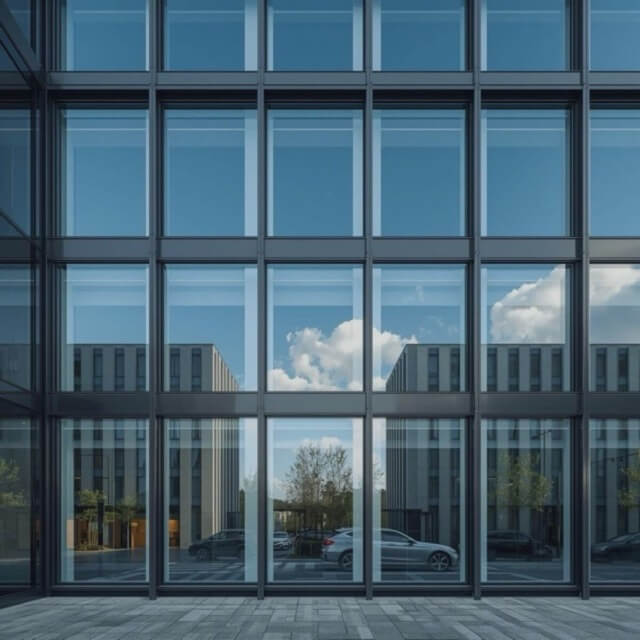
To specify effective security solutions, one must understand the material science behind ballistic resistance. The process is not about brute force but about the controlled management of extreme energy. When a bullet strikes a ballistic-resistant glazing assembly, it initiates a rapid sequence of energy transfer. The system is designed not to be unbreakable, but to fail in a specific, predictable way that prevents penetration.
The outermost layer, typically hardened glass, shatters on impact. This action blunts the projectile and absorbs a significant portion of its initial kinetic energy. The subsequent layers, which consist of alternating sheets of polycarbonate and flexible polymer interlayers, then work to “catch” the slowed projectile. The pliable polycarbonate deforms and stretches, dissipating the remaining energy over a wider surface area until the bullet is stopped.
Standard annealed or tempered glass is fundamentally unsuitable for ballistic applications. Annealed glass fractures into large, hazardous shards. Tempered glass crumbles completely upon impact, offering no barrier to a projectile. In contrast, ballistic-resistant glazing leverages the distinct properties of multiple materials. The glass provides surface hardness, but it is the ductile, high-tensile strength of the laminated polycarbonate core that provides the actual stopping power.
The Critical Concept of Spall and Its Prevention
A crucial consideration in ballistic glazing design is the prevention of spall. Spall refers to the ejection of fragments from the non-impact, or “safe,” side of the glazing. When a bullet strikes the exterior face, the shockwave can cause the interior layer to break away, launching high-velocity shards into the protected space. These fragments can be as lethal as the bullet itself.
Properly engineered ballistic systems are specifically designed as “no spall” solutions. This is achieved by using a final interior layer of polycarbonate or a specialized anti-spall film. This layer is strong and flexible enough to contain any fragments generated by the impact, ensuring the safety of occupants within the protected area.
Moving Beyond “Bulletproof”: Why “Ballistic-Resistant” Is the Correct Term
Precision in language is paramount for security professionals. The term “bulletproof” is a misnomer that implies absolute protection against any threat, which is a physical impossibility. The correct and professionally accepted term is “ballistic-resistant.” This terminology reflects the reality that security glazing is engineered and tested to defeat specific threats. These systems are rated according to established standards, such as UL 752, which defines performance levels based on the caliber and velocity of rounds a material can withstand.
Decoding UL 752: An Architect’s Guide to Ballistic Protection Levels
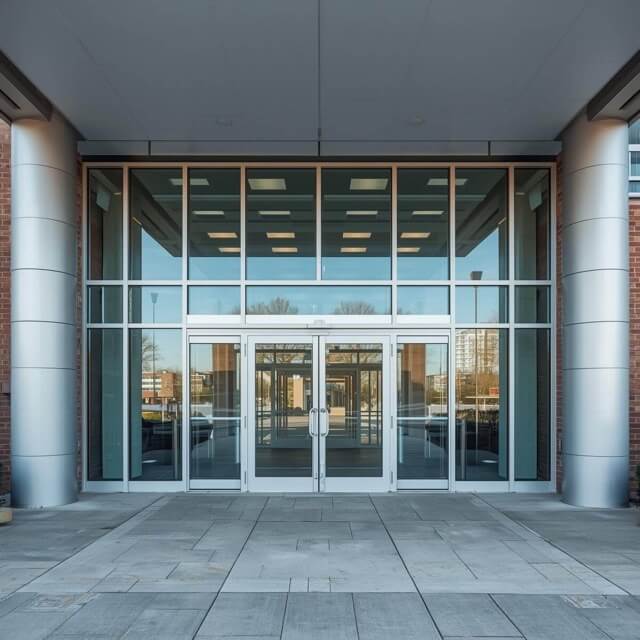
To move beyond fictional concepts and into engineered safety, specifiers must ground their decisions in established standards. For security glazing, the definitive benchmark is UL 752, the Standard for Bullet-Resisting Equipment. This rigorous testing protocol certifies the ballistic resistance of materials and assemblies. To achieve a UL 752 rating, the material must prevent projectile penetration and all spall from the protected side. Its stringent, pass-fail requirements are why UL 752 is the universally accepted standard for defining a product’s capabilities.
A Practical Breakdown of UL 752 Ratings
The UL 752 standard is divided into levels, each corresponding to a specific ballistic threat. Aligning the correct level with a facility’s risk assessment is critical for both safety and budget.
- Levels 1-3: Rated for common handguns (9mm, .357 Magnum, .44 Magnum). These levels are frequently specified for retail, corporate offices, banks, and government facilities.
- Levels 4-5: Rated for single shots from high-powered rifles (.30-06, 7.62mm NATO). This marks the transition to protecting against more significant threats.
- Levels 6-8: Rated for multiple shots from handguns or rifles (multi-shot 9mm, 5.56mm NATO, multi-shot 7.62mm NATO). These levels, particularly 7 and 8, are specified for military, critical infrastructure, and other high-threat environments.
Specifying the correct UL 752 level begins with a comprehensive threat assessment. This formal process evaluates the specific risks a building faces to identify the most likely and most dangerous threats. A professional assessment provides the objective data needed to select a ballistic rating that precisely matches the defined risk, ensuring the solution is both effective and appropriate.
The “One-Way” Challenge: Physics and the Limits of Mirrored Glazing
The idea of a bulletproof mirror is compelling, but it is a combination of two distinct technologies with significant architectural compromises. The “one-way” mirror effect is an optical illusion created by a semi-transparent reflective film and a significant difference in ambient lighting. The “public” side must be brightly lit, while the “secure” side must be kept dark.
For architects, the trade-offs are substantial. These films have high visible light reflectance, creating a mirror-like exterior that can alter a building’s facade. They also have low visible light transmission, appearing as a dark tint from inside that reduces natural daylight. Attempting to create a bulletproof mirror by applying this film to a ballistic glazing panel creates a flawed product. The visual effect remains unreliable in variable lighting, it degrades the view from within, and it forces an aesthetic compromise with no added ballistic benefit.
The Superior Alternative: Engineered Retrofit Ballistic-Resistant Systems
The limitations of traditional ballistic glass and the fictional nature of a “one way” material demand a more advanced approach. Modern retrofit solutions provide this by augmenting existing structures, offering superior ballistic resistance without the compromises of conventional methods.
This engineered approach shifts the paradigm from disruptive replacement to discreet reinforcement. Instead of removing the existing window, a separate, ballistic-rated shield is installed over the interior of the existing glass. This “over-glazing” strategy preserves the building’s exterior envelope and architectural character.
Preserving Architectural Intent Without Compromise
For architects, the primary concern is the visual impact of security. Traditional ballistic glass is thick, heavy, and can have a greenish tint. The bulky frames required to support it compromise clean lines and obstruct views.
Advanced retrofit systems are engineered to be virtually invisible. The protective shield is made from materials with superior optical clarity, ensuring a distortion-free view. The patented framing systems used to mount the shield are custom-fabricated to match existing window mullions, blending seamlessly into the architectural design. This allows for the fortification of glass-fronted lobbies, historic buildings, and curtain walls without sacrificing the open, transparent aesthetic of the original intent.
The Engineering Advantage: Fortifying the Entire Opening
A critical failure point in many security glazing applications is the window frame. An impact, even if stopped by the glazing, can transfer enough force to dislodge the entire window from the wall. Premier retrofit systems solve this by utilizing patented anchoring mechanisms that securely connect the protective shield directly into the structural window frame. This mechanical connection distributes impact energy across the robust frame and surrounding wall, transforming a simple window into a fully integrated, resilient security assembly.
Conclusion: Achieving Invisible Security Without Fictional Compromises
The search for one way bullet proof glass ends with the realities of physics and material science. True ballistic resistance is not a one-way trick, but the result of engineered systems designed to absorb and dissipate kinetic energy. This scientific approach provides consistent, testable, and dependable protection.
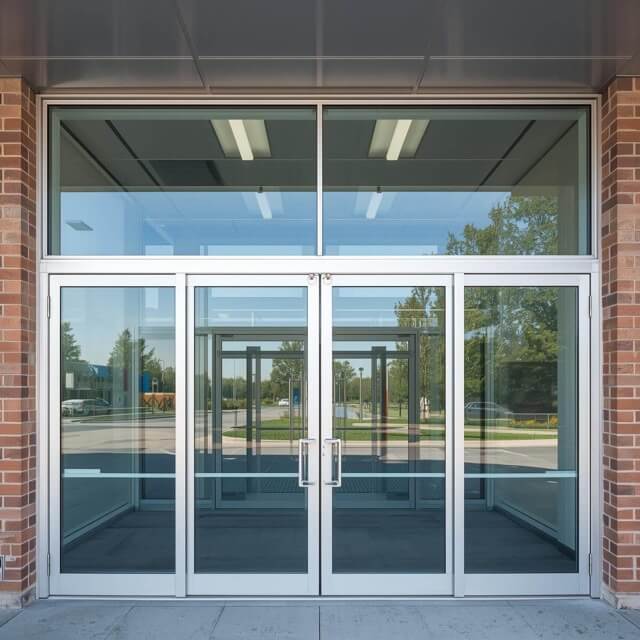
For architects and specifiers, this engineering-first approach offers a significant advantage. It decouples security from aesthetic compromise. Modern ballistic resistant glass alternatives, like retrofit systems, are engineered to be virtually invisible. They preserve a building’s original architectural intent, daylighting, and views. Security becomes an integrated, unseen layer of defense, not a visual detriment.
Moving from theory to application requires specialized expertise. The first step is to engage with a security glazing engineer for a professional consultation. This expert-led review begins with a threat assessment to identify the correct UL 752 rating and concludes with a tailored solution that meets all performance requirements without compromising the architectural vision.
Frequently Asked Questions
Does one way bullet proof glass actually exist?
No. In the context of commercially available architectural security glazing, a material that stops a bullet from one direction but allows it to pass through from the other is a myth. True ballistic resistance is based on material science that works regardless of impact direction.
Will ballistic-resistant glazing ruin my building’s design?
Not with modern solutions. While traditional, thick laminated glass can be intrusive, advanced retrofit systems are engineered to be virtually invisible. They are installed on the interior of existing windows with framing that is custom-matched to the original design, preserving the building’s aesthetic, views, and access to natural light.
What UL 752 level do I need for my building?
The correct UL 752 level depends on your specific risk profile. A professional threat assessment is the first step. It will identify the most likely ballistic threats you face, from handguns (Levels 1-3) to high-powered rifles (Levels 4-8), allowing you to specify a protection level that is both effective and appropriate.
What is the difference between retrofit security glazing and replacing windows?
Window replacement involves a disruptive and costly process of removing the original window and frame to install a heavy ballistic glass unit. A retrofit system is a far less invasive method where a separate, ballistic-rated shield is mounted to the interior of the existing window. This reinforces the entire opening, preserves the building’s exterior, and is often a more cost-effective and architecturally sensitive solution.