- The High Cost of Full Door Removal and Replacement
- Aesthetic Compromise: The Challenge of Pre-Fabricated Ballistic Doors
- The Retrofit Advantage: Enhancing Structures with Minimal Impact
- Beyond the Standard Bulletproof Glass Door: A Systems Approach
- The Engineering Behind Patented Threat Mitigation
- Material Science of Security Glazing
- Integrated Forced Entry and Blast Resistance
- Seamless Security: Preserving Architectural Integrity
- Protecting Historic Buildings and Modern Curtain Walls
- Decoding the Standards: What UL 752 Ratings Mean for Your Project
- The Importance of System-Wide Testing
- From Concept to Construction: Integrating Ballistic Glazing into Plans
- Conclusion: The Future of Architectural Security is Integrated, Not Replaced
- Frequently Asked Questions
Understanding that true ballistic protection involves the entire door assembly, including glass, frame, and hardware, leads architects and building owners to a critical decision. When securing an entryway, two primary paths emerge: a complete tear-out and replacement with a pre-fabricated ballistic resistant door, or the integration of an advanced retrofit security glazing system into the existing structure. The choice has profound implications for a project’s budget, timeline, and architectural integrity.
A full replacement involves the complete removal of the existing door and frame, followed by the installation of a new, factory-built ballistic door assembly. This all-in-one solution treats the entryway as a disposable component. A retrofit solution, however, is an additive and reinforcing approach. It involves applying a custom-engineered security glazing system over the existing glass and anchoring it to the door and frame. This method enhances the performance of the current installation, transforming it into a robust security barrier without requiring demolition. The philosophy is one of targeted enhancement rather than wholesale replacement.

The High Cost of Full Door Removal and Replacement
The decision to pursue a full door replacement extends far beyond the material cost of the new door. The process itself is a significant construction project that introduces substantial disruption and hidden expenses. Removing a commercial door system is an invasive procedure that often damages adjacent walls, flooring, and finishes.
This phase requires significant labor and generates considerable noise, dust, and debris, rendering the entryway unusable for an extended period. For a commercial building, school, or government facility, this translates directly into operational downtime. Following the installation of a new, heavy frame, additional trades are often required for patching, plastering, and painting to repair surrounding surfaces, further extending the project timeline and budget.
Aesthetic Compromise: The Challenge of Pre-Fabricated Ballistic Doors
For an architect, one of the most significant drawbacks of the full replacement path is the inherent aesthetic compromise. Standard pre-fabricated ballistic doors are engineered with security as their sole priority, often at the expense of design. They typically feature thick, oversized steel or aluminum frames necessary to support the immense weight of traditional laminated ballistic glass.
The result is an imposing, fortress-like appearance that can feel institutional and unwelcoming. These bulky systems often clash with contemporary architectural styles that emphasize transparency, natural light, and clean lines. For historic preservation projects or buildings with a carefully curated design aesthetic, a standard ballistic door can fundamentally disrupt the character and visual harmony of the facade, directly contradicting the architect’s original design intent.
The Retrofit Advantage: Enhancing Structures with Minimal Impact
An advanced retrofit security system presents a technically elegant solution, offering robust protection without demanding aesthetic or operational sacrifice. By custom-fabricating a ballistic glazing shield to fit precisely over the existing door’s glass and anchoring it with a patented system, the original appearance of the entryway is preserved. The security components are virtually invisible, integrating seamlessly with the existing fenestration. This approach provides a multi-faceted advantage that directly addresses the shortcomings of a full replacement.
- Preservation of Architectural Integrity: The original door, frame, and hardware remain in place, ensuring the building’s design aesthetic is completely unaltered. The retrofit is visually undetectable.
- Minimal On-Site Disruption: Installation is clean, quiet, and efficient, often completed in a matter of hours instead of days. This drastically reduces or eliminates operational downtime.
- Strengthened System Integrity: The retrofit system not only protects the glass but also mechanically anchors the glazing to the door stile, reinforcing the entire assembly against brute-force and ballistic attacks.
- Cost and Schedule Efficiency: By avoiding demolition, structural rework, and multi-trade finishing, the total project cost and timeline are significantly reduced compared to a full replacement.
Beyond the Standard Bulletproof Glass Door: A Systems Approach
The assumption that achieving ballistic protection for entryways necessitates a complete and disruptive replacement is a misunderstanding of modern security engineering. This approach is not only costly and architecturally compromising but often fails to address the vulnerabilities of the entire entryway assembly. A more advanced, effective, and architecturally sensitive solution exists in patented retrofit security glazing systems.
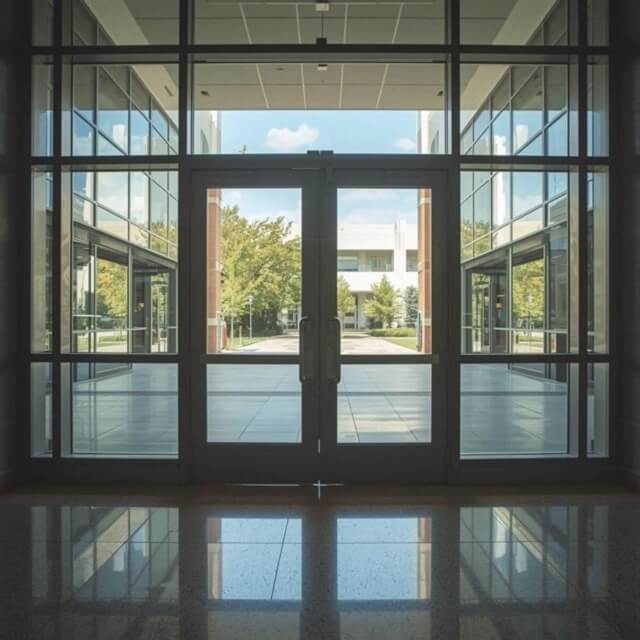
A common misconception is that a secure door is simply a door with a thick piece of ballistic glass. True security, however, is a function of the entire system. A retrofit glazing solution is not merely a pane of material but an engineered assembly designed to integrate with and reinforce the existing door and frame. By anchoring a security shield to the existing structure, the system transforms the entire entryway into a cohesive, load-bearing unit. When an impact occurs, the force is not concentrated on the glazing alone. Instead, the energy is absorbed by the shield and distributed through the patented anchoring system into the robust structural frame of the building, mitigating the risk of catastrophic failure.
The Engineering Behind Patented Threat Mitigation
The efficacy of a system like BulletShield is rooted in its patented engineering, which addresses the most common failure points of lesser security measures. The system consists of two primary components working in concert: the ballistic-rated glazing shield and a proprietary anchoring frame.
The system utilizes a vented, extruded aluminum frame to mechanically fasten the security shield to the existing door or window sash. This mechanical connection is critical. It ensures the shield remains securely in place even under extreme duress, effectively containing the threat and preventing the shield from becoming a projectile itself. This patented approach transforms a vulnerable window or door into a formidable, integrated security barrier.
Material Science of Security Glazing
The primary shield component is not glass but a highly advanced laminated polycarbonate. This material is engineered specifically for energy absorption and is in the same class of materials used in applications like fighter jet canopies and riot shields. Its composition involves multiple layers of polycarbonate fused together, creating a monolithic sheet with remarkable properties.
When struck by a projectile, traditional monolithic glass or acrylic can shatter or spall, creating hazardous shards. Laminated polycarbonate behaves differently. It deforms and flexes upon impact, absorbing and dissipating the kinetic energy of the bullet across its surface. This ductility allows it to “catch” the projectile, preventing penetration without creating secondary hazards from spall. This performance is standardized and verified through rigorous testing to meet specific UL 752 ballistic-resistance levels.
Integrated Forced Entry and Blast Resistance
The engineering that defeats ballistic threats also provides a formidable defense against other common risks. The same high tensile strength, ductility, and secure anchoring that stop a bullet make the system exceptionally effective at preventing forced entry. Attacks with sledgehammers, crowbars, or other tools that would shatter standard tempered glass are rendered ineffective. The shield will dent and deform, but it will not fail, denying entry and protecting occupants. The system also provides significant blast hazard mitigation. In a blast event, the most widespread injuries are often caused by flying glass. By holding the glazing envelope intact, the retrofit shield prevents the glass from disintegrating into deadly projectiles.
Seamless Security: Preserving Architectural Integrity
For architects, the greatest challenge in security specification is the perceived trade-off between safety and design. Traditional security solutions often demand unacceptable aesthetic compromises. This dilemma is now obsolete.
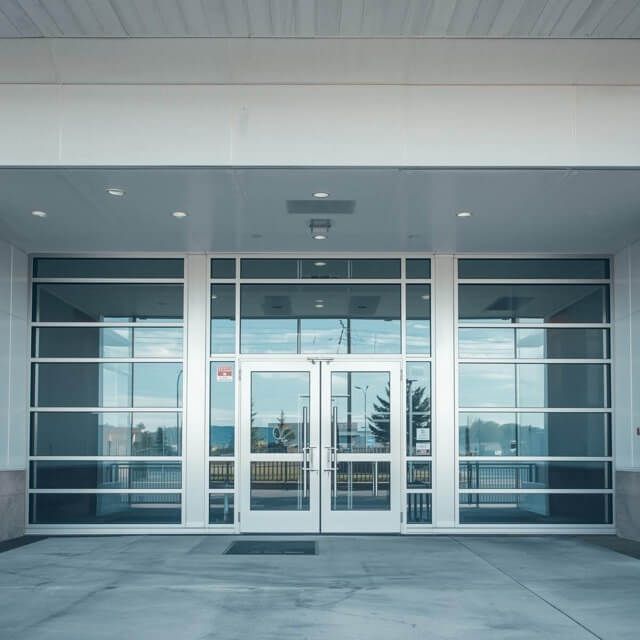
Historically, specifying robust security meant accepting bulky steel frames and visibly thick glazing with a distinct green tint. These solutions communicate a fortress-like appearance, undermining a building’s welcoming presence. Retrofit security glazing directly resolves this conflict. It introduces a new paradigm where advanced threat mitigation is achieved as a seamless, almost imperceptible layer over the original design. It empowers architects to meet stringent security requirements for their clients without altering the building’s character or sacrificing design intent.
The design-neutral nature of the system is achieved through meticulous attention to optical clarity and component integration. The core polycarbonate shield is manufactured to be optically clear, transmitting light without the color distortion or haziness associated with thick, multi-laminate glass products. The low-profile framing that secures the shield is custom-fabricated and finished to perfectly match the color, texture, and profile of the existing door or window mullions. From any normal viewing distance, the protection is completely invisible, preserving the original sightlines and architectural vision.
Protecting Historic Buildings and Modern Curtain Walls
The versatility of the retrofit approach makes it uniquely suitable for the most demanding architectural contexts. For historic preservation projects, where original building fabric must be retained, retrofit systems are often the only viable solution. They allow for a significant security upgrade without any destructive alteration. For modern glass curtain walls and minimalist designs, the challenge is maintaining sleek, uninterrupted lines. Retrofit systems solve this by integrating directly into existing glazing pockets. The ultra-clear shield and color-matched framing do not interrupt expansive views or clean geometry, ensuring security does not come at the cost of the building’s defining architectural feature.
Decoding the Standards: What UL 752 Ratings Mean for Your Project
Specifying security glazing requires a clear understanding of the standards that govern its performance. The definitive benchmark in the United States is UL 752, a standard for ballistic resistance developed by Underwriters Laboratories. This rating system is a precise, scientific classification that quantifies a glazing assembly’s ability to withstand a specific ballistic attack.
The UL 752 standard defines multiple levels of protection, each corresponding to a specific type of firearm and ammunition. The testing protocol details the caliber, bullet weight, velocity, and number of shots a material must withstand to earn a certification.
- UL 752 Level 1: Resists three shots from a 9mm handgun. Often specified for corporate offices and retail.
- UL 752 Level 3: Stops three shots from a .44 Magnum. Suitable for higher-risk environments like government buildings.
- UL 752 Level 8: Protects against five shots from a 7.62mm rifle. Specified for critical infrastructure and high-threat locations.
A critical aspect of the standard is its evaluation of spall, the fragments of glazing ejected from the safe side upon impact. The UL 752 test is a pass/fail assessment where any spall is grounds for failure. A certified assembly is a “no-spall” product, ensuring it protects occupants from the bullet and from secondary impact effects.
Selecting the appropriate UL 752 level must be a direct response to a building’s specific risk profile. The process should begin with a professional threat assessment to identify the most likely ballistic threats. By aligning the glazing specification with credible threats, architects ensure the investment in security is both effective and appropriate.
The Importance of System-Wide Testing
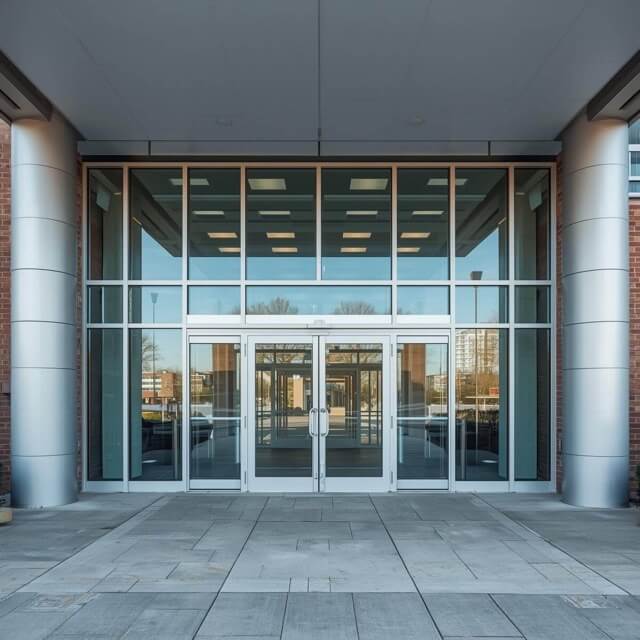
The most critical concept for architects to grasp is the difference between a rated component and a rated system. Simply installing a piece of UL 752 certified glazing into an existing door frame does not create a UL 752 rated entryway. An attack transfers immense energy, and if the frame or anchoring mechanism is not engineered to manage these forces, the system will fail. Engineered retrofit solutions are tested as a complete assembly. The glazing, perimeter framing, and anchoring method are all subjected to ballistic testing together. This system-wide certification guarantees that every element works in concert to defeat the specified threat.
From Concept to Construction: Integrating Ballistic Glazing into Plans
Integrating a retrofit ballistic glazing system into your project documents can be a straightforward process when approached methodically.
- Define Performance Requirements: Specify the required UL 752 level based on a threat assessment.
- Assess Existing Conditions: Document the current door and frame system, including material, dimensions, and hardware.
- Engage a Specialist Early: Collaborate with a technical security glazing expert for feasibility analysis and preliminary engineering.
- Develop Integrated Specifications: Create detailed specifications for the security glazing system, including reinforcements, anchoring details, and installation procedures.
- Coordinate with Project Documents: Incorporate these specifications into architectural drawings to ensure clarity.
An engineered retrofit system is designed to account for the added weight and impact forces of a ballistic attack. The design may involve reinforcing the door’s vertical stiles, upgrading hinges, and using specialized anchoring mechanisms. Because these reinforcements are integrated within the door’s existing structure, they remain invisible. Compatibility with common systems like aluminum storefronts and hollow metal doors is a core feature of advanced retrofit solutions.
Engaging a security glazing manufacturer or consultant early in the design phase is essential. This partnership transforms the process from guesswork into a precise engineering exercise. The expert validates the threat assessment, engineers the system to match existing conditions, provides accurate specifications, and oversees the installation to guarantee it meets the certified performance standard. Effective security design considers the building envelope as a whole. Hardening a single entrance while leaving adjacent glazing unprotected creates a glaring vulnerability. The same patented technology used to protect a door can be custom-fabricated to fit sidelites, transoms, and large curtain wall expanses, creating a comprehensive and effective security shield.
Conclusion: The Future of Architectural Security is Integrated, Not Replaced
The challenge of securing entryways without compromising architectural vision has been solved. Achieving high-level ballistic protection is no longer a matter of accepting bulky and disruptive door replacements. The solution lies in leveraging advanced retrofit security glazing systems that work with your existing design.
An analysis of aesthetics, performance, and practicality consistently demonstrates the superiority of a retrofit approach. This method resolves the core conflicts inherent in traditional methods, offering a solution that is both more effective and less intrusive.
- Architectural Preservation: Retrofit systems are virtually invisible, preserving the original design intent, sightlines, and aesthetic.
- Superior Threat Mitigation: A retrofit system reinforces the entire entryway, protecting the glass while maintaining the operational integrity of the existing door.
- Reduced Disruption: Retrofitting is faster, cleaner, and less disruptive than a full replacement, minimizing impact on building operations.
- Cost-Effectiveness: Enhancing the structure you already own eliminates the significant costs associated with removal and replacement.
This evolution marks a paradigm shift in how the architectural and security industries approach threat mitigation. Advanced retrofit glazing technology moves security from a conspicuous feature to an intrinsic, invisible layer of strength. This allows architects to maintain complete design freedom, confident that protection can be seamlessly engineered into the structure.
To begin the evaluation process for your project, we recommend the following steps:
- Assess Existing Conditions: Document the current entryway’s construction, materials, and dimensions.
- Define the Threat Level: Determine the specific UL 752 level of ballistic protection required for your facility.
- Consider Operational Requirements: Analyze daily door use, including traffic flow and access control integration.
- Consult with a Security Glazing Specialist: Engage an expert to confirm feasibility and recommend an optimal system.
Frequently Asked Questions
Will retrofit security glazing change the look of my building’s doors?
No, a professionally engineered retrofit system is designed to be virtually invisible. The polycarbonate shield is optically clear, and the custom-fabricated framing is finished to perfectly match the color and profile of the existing door and window frames. The original architectural aesthetic is preserved.
Is retrofitting a glass door for ballistic protection disruptive?
The installation process for a retrofit security glazing system is clean, quiet, and efficient. It minimizes operational disruption and can often be completed in a matter of hours, compared to the days or weeks of heavy construction, noise, and dust associated with a full door replacement.
Is a retrofitted door as strong as a factory-made ballistic resistant door?
Yes, and in many ways, it is a superior system. A high-quality retrofit is not just a piece of glass, it’s an engineered assembly that reinforces the entire existing door and frame. By anchoring the glazing shield to the structure, it distributes impact forces across the entire unit, preventing the types of catastrophic failure that can occur when a single component, like a frame, is not rated to handle the impact.
Can any glass door be retrofitted for ballistic resistance?
Most standard commercial entryways, including aluminum storefronts, curtain walls, and hollow metal doors, are excellent candidates for retrofitting. The key is to have a professional assessment conducted by a security glazing specialist. They will evaluate the existing conditions and engineer a solution, including any necessary door or hardware reinforcements, to ensure the final assembly meets the specified UL 752 rating.