Table of Contents
- Introduction – What ballistic film actually is and isn’t
- Understanding Ballistic Film Technology – Science behind security films
- Ballistic Film Applications and Installation – Where and how to use these films
- Ballistic Film vs True Ballistic Protection Solutions – Making the right security choice
- Common Challenges and Solutions – Addressing typical concerns
- Why Choose Our Ballistic Film Services – Our professional approach
- Conclusion and Next Steps – Taking action on your security
- Frequently Asked Questions – Quick answers to common questions
Estimated reading time: 12-15 minutes
Introduction
Ballistic film for windows is a polyester-based security film applied to existing glass that holds broken glass fragments together after impact—but it does not stop bullets. This distinction matters enormously for anyone researching window protection options, as ballistic film is often mischaracterized as bulletproof when it lacks the capability to prevent bullet penetration through regular glass.
This guide addresses property managers, security professionals, business owners, and facility directors who need clear, technically accurate information about glass security options. Understanding what ballistic film can and cannot do prevents costly mistakes and potential liability issues when actual threats materialize. The difference between safety film that delays forced entry and true bullet resistant glass that stops projectiles could determine outcomes in critical situations.
Direct answer: Ballistic film is a safety film that holds shattered glass together and delays intruder entry, but it cannot stop bullets—for actual ballistic protection, bullet resistant glass manufactured to UL 752 standards is required.
By the end of this guide, you will understand:
- The technical composition and thickness options of security window film products
- Proper installation processes and anchoring requirements for effective protection
- The critical limitations that separate security film from true ballistic glazing
- Cost considerations and ROI calculations for different protection levels
- When to choose film versus when bullet resistant products are necessary
Understanding Ballistic Film Technology
Security window films work through material science principles that distribute impact energy across the glass surface while maintaining adhesion between film layers and the glazing substrate. Understanding these mechanisms helps you evaluate whether film-based solutions match your actual security requirements.
What is Ballistic Film
Ballistic film—more accurately called security film—consists of high-tensile polyester (PET) laminate applied to the interior surface of existing glass windows and doors. The film uses pressure-sensitive or chemically bonding adhesives that create a strong connection between the polyester layers and the glass surface.
Typical thickness ranges span from approximately 4 mils (about 100 micrometers) for basic safety applications up to 15+ mils (approximately 375+ micrometers) for heavy-duty forced entry resistance. Standard security films in the 4-8 mil range provide fragment retention and light protection, while films in the 12-15 mil range offer substantially greater energy absorption for commercial applications.
The material composition includes multiple cross-ply PET layers, specialized adhesive interlayers, and sometimes protective top coatings for UV resistance and scratch prevention. Most high-grade films block up to 99% of harmful UV rays, preventing skin damage and protecting interior furnishings from fading.
How Ballistic Film Works
When glass experiences impact—whether from forced entry attempts, storm debris, or projectiles—standard glazing shatters into dangerous fragments that scatter freely. Security film changes this outcome by holding glass shards together even after the glass structure fails.
The primary protection mechanism operates through adhesive bonding: film adheres so strongly to glass that broken fragments remain attached to the film membrane rather than dispersing. By keeping the glass intact even after it is broken, the film forces intruders to work harder and longer to gain entry, buying critical time for occupants to respond or evacuate.
Film thickness directly correlates with protection capability. Thicker films absorb more impact energy and resist larger breach attempts before failing. However, the critical factor many overlook is edge attachment—the film’s edges must be mechanically anchored to the window frame using specialized caulk or tape for it to be effective. Without proper anchoring, even high-quality film can allow the entire glass panel to pop out of the frame under sufficient force.
Common Misconceptions About Ballistic Film
The most dangerous misconception involves the term “ballistic” itself. Ballistic film, often referred to as security window film, does not have the capability to stop bullets when applied to regular glass, as it is primarily designed to hold glass fragments together after a breakage. While the film may hold shattered glass together after a bullet impact, it does not prevent bullets from penetrating the glass.
There is no such thing as bulletproof window film that transforms standard glazing into bullet resistant barriers. True ballistic protection requires bullet resistant glass specifically engineered to stop bullets, manufactured using materials like acrylic, laminated polycarbonate, or glass-clad polycarbonate, designed to meet rigorous safety standards such as UL 752.
The distinction between “delay forced entry” and “stop bullets” represents fundamentally different protection categories. Ballistic window films such as RiotLite excel at delaying forced entry while providing zero capability to fully stop bullets. Failing to understand this difference creates dangerous false confidence and potential legal liability for property owners who misrepresent their protection levels.
These limitations lead directly to questions about where ballistic film applications make practical sense—and where stronger solutions are necessary.
Ballistic Film Applications and Installation
Security window film serves specific protective functions well when applied appropriately. Understanding ideal use cases and proper installation requirements ensures you deploy these products where they deliver actual value.
Ideal Use Cases for Ballistic Film
Forced Entry Delay in Commercial Buildings
Retail storefronts, office buildings, and commercial facilities face smash-and-grab theft and vandalism threats. Security film protects against blunt-force impacts from tools like hammers or crowbars, maintaining glass integrity long enough to trigger alarms and allow security response. The film converts what would be a quick breach into a prolonged, noisy, and visible break-in attempt.
Storm and Debris Protection
Hurricane regions and areas prone to severe weather benefit from security film applications and other advanced glass security systems. The film holds glass together when struck by wind-driven debris, preventing interior damage and maintaining building envelope integrity. This protection applies to both residential glass windows and commercial installations.
High-Traffic Safety Applications
Interior glass partitions, door glass panels, and glazing in school environments benefit from fragment retention properties. If glass breaks accidentally—from impact, thermal stress, or structural failure—film prevents shattering that could injure occupants. This application focuses on safety rather than security, but uses similar film technology.
Active shooter mitigation involves techniques, materials, and security measures used to prevent and slow individuals attempting to harm people in populated areas with firearms. Film-based solutions contribute to comprehensive active shooter planning when combined with other security layers.
Professional Installation Process
Proper installation determines whether security film performs as specified or fails under stress. The process requires more than simple application.
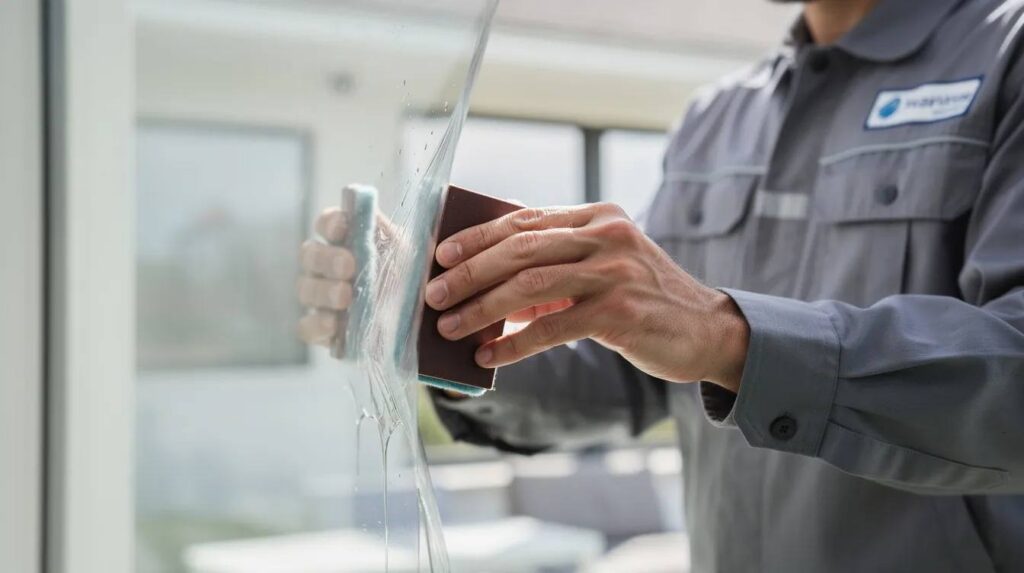
- Surface Preparation – Glass surfaces must be meticulously cleaned, removing all dust, oils, and contaminants that compromise adhesion. Existing glazing condition assessment identifies cracks, chips, or seal failures that could affect installation.
- Film Application – Installers cut film precisely to window dimensions, apply it to the interior surface using wet application techniques, and remove all air bubbles and trapped moisture. Optical clarity depends on contamination-free application.
- Edge Anchoring – The critical step most DIY installations miss: film edges must be secured to window frames using wet-glaze silicone systems or mechanical batten attachments. Without frame anchoring, glass and film can dislodge together under impact.
- Curing and Quality Control – Adhesive systems require curing time (typically 30-45 days) before achieving full bond strength. Quality inspections verify adhesion, clarity, and edge seal integrity.
Professional installation ensures the film-to-glass and film-to-frame bonds perform under actual stress conditions rather than failing at the moment protection is needed.
Types of Ballistic Films Available
Standard Security Films (4-8 mil thickness)
Entry-level protection for fragment retention and basic safety applications. Suitable for interior glass, residential windows in moderate-risk areas, and accident prevention. Cost-effective for large-area coverage where forced entry delay is a secondary concern.
Heavy-Duty Security Films (12-15+ mil thickness)
Enhanced protection for commercial storefronts, building perimeters, and higher-risk applications. Greater thickness provides longer delay against sustained break-in attempts. Often independently tested for forced entry resistance though standalone film generally does not meet certified ballistic standards like UL 752.
Specialty Films with Additional Features
Some products combine security properties with solar heat reflection—these films can reduce cooling costs in the summer and provide insulation in the winter, potentially lowering annual energy bills. UV-blocking versions protect interior furnishings. Tinted options provide privacy while maintaining protective properties.
Understanding film categories leads to the essential question: when does security film suffice, and when is true ballistic protection necessary?
Ballistic Film vs True Ballistic Protection Solutions
Choosing between security film and bullet resistant glass requires an honest assessment of actual threats, not marketing claims. This section provides the comparison framework for informed decisions.
Security Film vs Bullet-Resistant Glass Comparison
| Criterion | Security Window Film | Bullet Resistant Glass |
|---|---|---|
| Bullet Stopping Capability | None—film holds broken glass but bullets penetrate | Yes—engineered to stop specific calibers per rating |
| UL 752 Certification | Not achievable for film on standard glass | Manufactured and tested to specific UL 752 levels |
| Cost per Square Foot | $8-$18 installed (ballistic film is significantly cheaper than full glass replacement, typically costing 85-90% less) | $70+ installed, increasing significantly with protection level |
| Installation Complexity | Retrofit to existing glass; minimal structural modification | Complete glazing replacement; may require frame reinforcement |
| Weight Impact | Minimal added weight; existing frames typically sufficient | Significantly heavier; often requires structural upgrades |
| Aesthetic Impact | Mostly invisible; possible slight tint or reflectivity | Thicker panels; visible seals; potential optical distortion |
| Primary Protection Function | Delay forced entry; hold glass fragments; safety | Stop bullets; prevent projectile penetration |
| Lifespan | 10-15 years with proper installation and maintenance | Longer lifespan with greater durability |
| While ballistic film can provide some level of protection by delaying entry and holding glass together, it is not a substitute for bullet resistant glass, which is designed to prevent bullets from penetrating and causing harm. |
Bullet resistant glass is manufactured using materials such as acrylic, laminated polycarbonate, glass-clad polycarbonate, or all-glass laminate, specifically designed to stop bullets. Integrated glass security systems that combine bulletproof windows, doors, and security window film are typically designed and tested to meet standards such as UL 752, ensuring that ballistic products meet rigorous safety criteria.
For effective ballistic protection, bullet resistant glass is necessary, as ballistic film alone cannot provide adequate safety against firearms.
Hybrid Security Approaches
Many facilities benefit from layered approaches that apply different protection levels based on zone vulnerability:
Perimeter Hardening with Film
Apply security film across all exterior glass windows to delay forced entry attempts building-wide. This cost-effective baseline protection covers large glazing areas without prohibitive expense.
Critical Point Upgrades
Install true bullet resistant glass at high-risk positions: reception desks, teller windows, security checkpoints, and executive areas. Concentrate ballistic protection where occupants face direct threat exposure.
Retrofit Solutions
BulletShield is a clear polycarbonate security shield that can be retrofitted over existing windows and doors, providing a bullet-resistant layer of protection against various firearms. This approach maintains existing glazing while adding true ballistic capability at specific locations.
Conducting a site assessment to identify weaknesses, such as unlocked doors and vulnerable glass, is a critical first step in preparing for an active shooter situation. Professional security assessments determine which zones require film, which require ballistic glazing, and which need complete replacement.
Industry Standards and Testing
Understanding testing standards prevents confusion between marketing claims and verified performance:
Safety Standards (What Films Can Meet)
- ANSI Z97.1: U.S. standard for safety glazing impact resistance
- CPSC 16 CFR 1201: Consumer Product Safety Commission impact requirements
- BS 6206: UK standard for safety glazing with applied film
Ballistic Standards (What Films Cannot Meet Alone)
- UL 752: Defines ten levels of bullet resistance for complete glazing systems
- EN 1063: European ballistic resistance ratings
Standalone film generally does not meet certified ballistic standards like UL 752. Products claiming “ballistic film” protection should be verified against specific standards and testing protocols. Independently tested products from reputable manufacturers provide documentation of actual performance rather than implied capabilities.
This standards framework helps navigate common challenges in selecting and implementing window protection solutions.
Common Challenges and Solutions
Security film projects encounter predictable obstacles. Addressing these proactively prevents performance failures and wasted investment.
Film Adhesion and Longevity Issues
Challenge: Film delamination, bubbling, or peeling reduces protection and aesthetic quality over time.
Solution: Adhesion failures typically result from inadequate surface preparation, improper installation conditions (temperature, humidity), or using films with insufficient adhesive quality. Require professional installation with documented quality control procedures. Specify films with chemically bonding adhesives rather than basic pressure-sensitive options for high-stress applications. Plan for 10-15 year replacement cycles based on UV exposure and environmental conditions.
Maintenance matters: regular inspection of edge seals and adhesive integrity catches degradation before protection fails. Some yellowing or haze may develop in films with poor UV resistance—specify high-quality products with protective coatings.
Balancing Cost vs Protection Level
Challenge: Budget constraints create pressure to underspecify protection or over-rely on film when ballistic solutions are necessary.
Solution: Conduct honest threat assessments first. Security film makes sense for:
- General perimeter hardening against vandalism and forced entry
- Facilities where firearms threats are low but break-in attempts are realistic
- Budget-constrained projects where some protection exceeds no protection
Reinforcing door and window glass with bullet-resistant glass options can significantly improve security and slow down intruders, allowing time for law enforcement to respond. Where actual ballistic threats exist, budget allocation should prioritize bullet resistant glass at critical points rather than covering everything with inadequate film.
ROI calculations should include: delayed loss from theft, reduced injury liability, insurance premium impacts, and regulatory compliance value.
Integration with Existing Security Systems
Challenge: Film installations disconnected from comprehensive security create gaps that undermine overall protection.
Solution: Coordinate security film projects with:
- Glass-break sensors calibrated to detect impacts on filmed surfaces
- Surveillance camera coverage of all protected glazing
- Access control systems for doors with filmed glass
- Lockdown protocols that utilize the delay time film provides
Film buys seconds to minutes—those seconds must trigger response actions. Without coordinated alarm notification, evacuation procedures, and communication with law enforcement, the delay time film provided goes unused.
Addressing these challenges requires professional expertise and systematic implementation.
Why Choose Our Ballistic Film Services
Our team brings focused experience to every security film project, delivering results that match actual protection requirements rather than marketing promises.
Certified Installation Excellence
Our installers maintain current certifications and follow manufacturer-specified procedures for surface preparation, application, and edge anchoring. Quality guarantees back every installation with documented inspection protocols.
Comprehensive Security Assessments
We begin every project with an honest threat assessment. Our evaluations identify which openings need film, which require ballistic glazing, and which fall outside the practical protection scope. This approach prevents over-spending on unnecessary solutions and under-protecting critical vulnerabilities.
Commercial and Institutional Experience
School districts, commercial buildings, healthcare facilities, and government installations represent our core project portfolio. We understand the regulatory requirements, budget constraints, and operational realities of school and institutional security glazing projects.
Rapid Deployment Capabilities
When security situations require immediate response, our team mobilizes quickly. Emergency installations address urgent threat conditions while maintaining installation quality standards.
Ongoing Support and Maintenance
Protection degrades without maintenance. Our programs include scheduled inspections, edge seal verification, and replacement planning that maintain protection levels throughout the film’s lifespan.
Conclusion and Next Steps
Ballistic film for windows provides genuine safety benefits: fragment retention, forced entry delay, and UV protection. It does not provide ballistic protection or the capability to stop bullets. Understanding this distinction enables informed decisions about where film applications make sense and where bullet resistant glass is necessary.
Immediate actions to take:
- Assess your actual threat profile – Determine whether your primary concerns involve forced entry, vandalism, accidents, or actual firearms threats
- Request professional consultation – Have qualified security professionals evaluate your glazing vulnerabilities and match protection levels to realistic scenarios
- Obtain detailed quotes – Compare film-based solutions against ballistic alternatives for critical positions, including installation, anchoring, and maintenance costs
- Verify product certifications – Require documentation of testing standards met by any products under consideration
Related topics to explore: Complete facility security audits, building hardening strategies for active shooter scenarios, emergency response planning that leverages delay time from security measures.
Frequently Asked Questions
Is ballistic film actually bulletproof?
No. Ballistic film is often mischaracterized as bulletproof, but it does not have the capability to stop bullets when applied to regular glass. While the film may hold shattered glass together after a bullet impact, bullets penetrate the glass regardless of the film’s presence. True bullet resistance requires bullet resistant glass manufactured to UL 752 standards using materials like acrylic or laminated polycarbonate.
How long does ballistic film last?
Typical lifespan ranges from 10-15 years under normal conditions. Factors affecting durability include UV exposure intensity, temperature cycling, moisture intrusion at edge seals, and adhesive quality. Heavy exterior exposure accelerates degradation. Plan for inspection schedules and budget for replacement within this timeframe.
Can I install ballistic film myself?
DIY installation is possible for basic safety films, but professional installation is strongly recommended for security applications. The critical factor most DIY installations miss is proper edge anchoring—the film’s edges must be mechanically anchored to the window frame for effective protection. Improper installation nullifies expected protection benefits and may create liability if the film fails during an actual incident.
What’s the cost difference between film and bullet-resistant glass?
Security window film typically costs $8-$18 per square foot installed. Ballistic film is significantly cheaper than full glass replacement, typically costing 85-90% less than bullet resistant glass. Bullet resistant glazing starts around $70 per square foot and increases substantially with protection level, panel size, and framing requirements. Total project costs depend on glazing area, frame conditions, and required standards compliance.
Will ballistic film affect window appearance?
High-quality security films maintain substantial optical clarity with minimal visual impact. Some films add a slight tint, reflectivity, or color shift depending on product type (solar control, decorative, or heavy-duty versions). Edge anchoring systems may be visible at frame margins. Over time, some yellowing may develop in films with poor UV resistance—specify quality products with protective coatings to minimize aesthetic changes.
How do I know if I need ballistic film or stronger protection?
Conduct an honest threat assessment. If your primary concerns involve vandalism, forced entry attempts, or accidental glass breakage, security film provides appropriate protection at a reasonable cost. If firearms threats represent realistic scenarios—based on location, facility type, or threat intelligence—bulletproof windows and doors with integrated glass security are necessary at vulnerable positions. Film cannot substitute for ballistic protection when actual bullet resistance is required.
Can ballistic film be removed if needed?
Yes, security film can be removed, though the process may damage glass surfaces or leave adhesive residue requiring professional remediation. Films using chemically bonding adhesives may be more difficult to remove cleanly than pressure-sensitive options. Factor potential removal needs into product specification, particularly for leased spaces or windows with limited remaining lifespan.
Does ballistic film void window warranties?
Possibly. Many window manufacturers specify that applied films void warranties for thermal performance, insulated glass unit seals, or structural integrity. Heavy films that alter thermal characteristics can stress double-pane units and cause seal failures. Always verify warranty implications with window manufacturers before installation, particularly for new or warrantied glazing systems.
Additional Resources
- UL 752 Standard Information – Understanding bullet resistance rating levels
- ANSI Z97.1 Safety Glazing Requirements – Impact safety standards for architectural glass
- Maintenance Inspection Checklist – Periodic assessment points for installed security films
- Contact Our Team – Professional consultation for security assessment and installation quotes