- Introduction
- Understanding Window Security Film Technology
- Top-Rated Security Window Film Products
- LLumar Magnum Safety and Security Films
- Common Challenges and Solutions
- Conclusion and Next Steps
- Frequently Asked Questions
Introduction
Finding the best window security film in 2026 requires understanding which products actually deliver on break-in resistance, durability, and optical clarity. This guide covers the top-performing security films available today, comparing specifications, installation methods, and real-world protection capabilities.
This content focuses on residential and commercial security window film applications with thickness ranges from 4-15 mil (approximately 100-380 µm). Decorative films and purely aesthetic window treatments fall outside this scope. Whether you’re a homeowner seeking added protection against break ins, a business owner protecting storefronts, or a security-conscious individual evaluating glass protection options, this guide addresses your core concerns about protecting property and ensuring peace of mind.
Direct answer: BDF S8MC 8-mil and 3M Ultra S800 consistently rank as top performers for forced entry resistance and long-term durability, with 3M Ultra S800 offering superior certified performance for professional installation and the BDF S8MC providing strong value for residential applications.
After reading this guide, you will understand:
- How security film construction affects protection levels and performance
- Which products deliver the best solution for various security needs
- Proper installation techniques that maximize film effectiveness
- Cost-benefit analysis for different thickness options
- How to choose the right security window film for your specific situation
Understanding Window Security Film Technology
Window security film is a multi-layer polyester protection system that adheres to existing glass windows, holding shattered glass together when the pane breaks. Rather than preventing glass breakage entirely, security films create an extra layer that keeps broken glass fragments bonded to the film surface, significantly delaying entry attempts and reducing the risk of personal injury from flying glass shards.
This technology serves three primary purposes: deterring break ins by extending the time required for forced entry, providing safety during accidents by preventing glass fragmentation injuries, and offering protection during natural disasters like earthquakes and severe weather events.
Film Materials and Construction
Modern security window film consists of multiple layers of polyethylene terephthalate (PET) polyester, engineered for maximum tear resistance while maintaining optical clarity. Premium products like the 3M Ultra S800 use co-extruded micro-layers that increase tensile strength without adding visible thickness—achieving tensile strengths exceeding 33,000 psi while maintaining approximately 87% visible light transmission.
The polyester layer composition directly determines impact resistance. Multi-layer construction allows each layer to absorb and distribute impact energy, preventing catastrophic failure when glass shatters. Thicker films with more layers generally provide better protection, though advanced micro-layered designs achieve similar performance with thinner profiles.
Adhesive Systems and Bonding Strength
Security films use pressure-sensitive acrylic adhesive systems that create a permanent bond with glass surfaces. This strong adhesive is engineered to maintain adhesive strength across temperature variations and humidity changes while resisting UV degradation over several years.
The relationship between adhesive strength and film thickness is critical for optimal performance. Thicker films require more robust adhesive systems and often benefit from edge sealing with special adhesives or mechanical attachment systems. For blast mitigation applications, perimeter anchoring with products like 3M Impact Protection Attachment (IPA) becomes essential—the film holds the glass, but the edge attachment keeps the entire assembly within the frame during extreme conditions.
Understanding these material fundamentals helps explain why specific products outperform others and why installation quality matters as much as film selection.
Top-Rated Security Window Film Products
With the technology fundamentals established, examining specific products reveals how manufacturers translate these principles into real-world performance. The following options represent the market’s best security window film solutions, each with distinct strengths for various types of applications.
BDF S8MC 8-Mil Clear Security Film
The BDF S8MC 8-Mil Clear Security Film has earned strong user recommendations in the residential security market. At 8-mil thickness (approximately 200 µm), this product provides substantial forced entry resistance while remaining virtually invisible on installed glass windows.
This film delivers solid performance for homeowners seeking enhanced home security without significant aesthetic changes. The clear construction allows natural light transmission while the security properties hold glass together effectively during break-in attempts or seismic activity. For budget-conscious applications where maximum protection isn’t the primary requirement, the BDF S8MC offers an accessible entry point into window security.
Potential buyers should verify certification documentation and warranty terms, as detailed manufacturer technical specifications are less publicly available compared to premium brands.
3M Ultra S800 Series
The 3M Ultra S800 represents professional-grade security film with comprehensive certification and testing documentation. This 8-mil film (approximately 9 mil with adhesive and coating) achieves ANSI Z97.1 Class A certification at 400 ft-lb impact—the highest safety glazing classification available.

Key performance specifications include:
- Tensile strength: 33,000 psi (machine direction) / 30,000 psi (transverse direction)
- Break strength: approximately 265 lb/in
- Elongation at break: approximately 140%
- Graves Tear Resistance: approximately 1,100 lbs% (machine direction)
- Puncture strength: approximately 183 lb force
- Visible light transmission: 87-88%
- UV transmission: less than 1% (blocking harmful uv rays effectively)
For blast mitigation applications, the Ultra S800 has been tested under GSA TS01-2003 and ASTM F1642 standards, achieving GSA Level 2 “Minimal Hazard” ratings when properly installed with IPA sealant systems. This makes it suitable for government facilities, schools, and commercial applications where certified performance is mandatory.
The residential warranty offers lifetime coverage, while commercial installations typically receive 10-12 year protection.
LLumar Magnum Safety and Security Films
LLumar Magnum Safety and Security Films offer a spectrum of options across various thickness ranges, with scratch-resistant (SR) coatings that enhance durability in high-traffic commercial environments. Their multi-layer construction delivers tear resistance ratings comparable to 3M products while incorporating enhanced uv protection features.
The LLumar line excels in applications requiring both security and solar performance. Many models combine fragment retention with significant heat rejection, potentially reducing energy costs in warm climates while providing added security. UV rejection typically reaches 99%, preventing sun damage to interior furnishings.
Warranty coverage for LLumar security films extends 10-15 years depending on product grade, with scratch-resistant coatings adding longevity for storefront applications where glass surfaces face frequent contact.
Performance comparison summary: 3M Ultra S800 leads in certified performance and documented testing, making it the best solution for high-security commercial applications. BDF S8MC offers strong residential value at lower cost points. LLumar provides the broadest product range with integrated solar performance for applications requiring multi-function film solutions.
Installation Methods and Performance Analysis
With product knowledge established, proper installation determines whether security window film delivers its rated performance. Professional installation is recommended for applications where warranty validation, blast mitigation certification, or maximum protection is required.
Professional Installation Process
Professional installation is recommended for security films thicker than 8-mil, large window areas, or any application requiring certified performance. The process follows these essential steps:
- Surface preparation and cleaning protocols — Glass must be thoroughly cleaned using glass cleaners and isopropyl alcohol to remove all dust, grease, and residues. Edges are inspected for chips or cracks that could compromise adhesion. Proper preparation directly affects whether the film holds glass effectively over time.
- Film cutting and sizing techniques — Installers cut film slightly larger than the glass opening, using custom templates for curved or irregular panes. Precision matters—oversized film bunches and creates bubbles, while undersized film leaves gaps that undermine edge bonding.
- Application with squeegee and heat gun methods — A slip solution (mild soapy water or proprietary fluid) allows repositioning before final placement. Installers use the right tools, including professional squeegees, to remove solution and trapped air, followed by heat guns to help film conform to glass surfaces and improve adhesion.
- Edge sealing and final inspection procedures — Edge sealants (silicone caulk or mechanical anchors) prevent lift-off when force is applied. Final inspection verifies optical clarity, edge adhesion, absence of bubbles or wrinkles, and documents warranty compliance.
Performance Comparison by Thickness
Selecting appropriate thickness requires balancing protection levels against cost and optical quality:
| Thickness | Break-in Resistance | Cost per Sq Ft | Best Applications |
|---|---|---|---|
| 4-mil (≈100-150 µm) | Basic deterrent; holds shattered glass but minimal entry delay | $3-5 | Residential safety, secondary windows, bathroom glass |
| 8-mil (≈200 µm) | Strong resistance; tested per ANSI standards; significant entry delay | $6-9 | Home security, sliding doors, schools, offices |
| 12-15 mil (≈300-380 µm) | Maximum protection; potential blast/storm code compliance | $12-18 | Commercial storefronts, high-risk areas, hurricane zones |
Interpretation guidance: For most homeowners, 8-mil security window film provides optimal balance of protection, cost, and installation ease. Thinner films suit areas prone to accidental glass breakage rather than intentional intrusion. Thicker films become necessary in commercial applications, areas requiring blast mitigation, or regions with severe weather and hurricane exposure.
The cost per square foot increases non-linearly with thickness, and adding perimeter anchoring systems can add $2-5 per square foot beyond base installation costs.
Common Challenges and Solutions
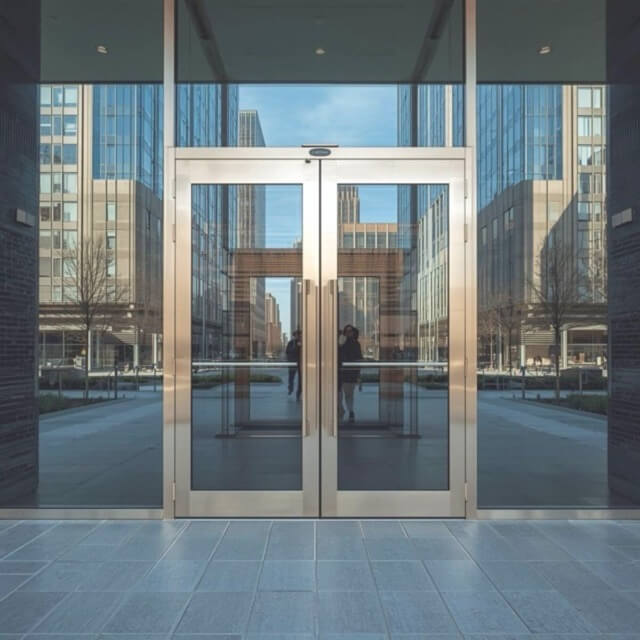
Understanding typical issues during selection and installation helps ensure security film performs as expected across several years of service.
Bubble Formation During Application
Bubbles result from improper slip solution concentration, inadequate squeegee technique, or rushing the installation process. The solution requires using proper slip solution at manufacturer-recommended concentrations, working methodically with overlapping squeegee strokes from center to edges, and allowing adequate cure time before final inspection. Heat gun application helps work out remaining moisture and air pockets.
Film Peeling at Edges
Edge peeling indicates inadequate surface preparation, chips or damage in glass edges, or insufficient edge sealing. For high-stress areas like sliding glass doors and lower window edges where moisture accumulates, silicone attachment systems or mechanical anchoring provides the added layer of security against lift-off. Always ensure glass edges are smooth and clean before installation.
Choosing Between Clear and Tinted Options
Clear security films maintain maximum natural light transmission while providing privacy benefits only when glass is shattered. Tinted options reduce glare and provide some daytime privacy while potentially enhancing security by obscuring interior views. Selection should balance privacy needs, local building codes regarding visible light transmission, and whether solar heat rejection is valuable for reducing energy costs.
Some regions restrict tinted films on certain window locations, so verify local requirements before installation.
Conclusion and Next Steps
For most residential applications, 8-mil security films like BDF S8MC or 3M Ultra S800 provide the best value—delivering strong forced entry resistance, quality optical clarity, and reasonable installation costs around $10-14 per square foot installed. These products offer better protection than thinner alternatives without the cost premium and potential optical distortion of thicker films.
Immediate next steps:
- Measure all windows and doors requiring protection to calculate total square footage
- Request quotes from certified professional installation companies
- Verify local building codes for any restrictions on film types or installation requirements
- Ask installers about edge attachment systems for sliding doors and ground-floor windows
For comprehensive property protection, consider exploring smart home security integration (alarms, cameras) and window frame reinforcement options that complement security film installation.
Frequently Asked Questions
What thickness of security film provides the best protection for homes?
8-mil thickness offers the optimal balance of security performance, cost-effectiveness, and installation ease for residential applications. This thickness delivers strong impact resistance with tensile strengths around 30,000+ psi in quality products, effectively delaying forced entry while maintaining high visible light transmission.
For basic safety applications—preventing injury from accidental glass breakage—4-mil films provide adequate fragment retention. Commercial applications, areas prone to severe weather, or properties requiring blast mitigation should consider 12-15 mil options with professional installation and perimeter anchoring.
Can security window film completely prevent break-ins?
Security window film significantly delays entry attempts but does not make windows unbreakable or secure against all intrusion methods. When glass breaks, the film holds shattered glass together, forcing intruders to spend considerably more time and effort creating an opening large enough to enter.
Typical 8-mil films can add 1-2 minutes or more to entry time, providing crucial additional time for alarm response and neighbor awareness. This delay often causes intruders to abandon attempts entirely. However, determined attackers with proper tools can eventually breach filmed glass—security film works best as part of a comprehensive home security strategy including alarms, cameras, and strong doors.
How long does professionally installed security film last?
Quality security films maintain effectiveness for 10-15 years with proper professional installation. Premium products from 3M, LLumar, and similar manufacturers include warranties covering 10-12 years for commercial applications and lifetime coverage for residential installations.
Longevity depends on installation quality, UV exposure, and maintenance practices. Avoid cleaning with abrasive materials that scratch film surfaces, and ensure edge sealing remains intact. Films in extreme conditions (high UV exposure, coastal environments) may require earlier replacement.
Does security film work during natural disasters like earthquakes?
Security window film helps protect against seismic activity by holding shattered glass together during window breakage, significantly reducing injury risk from flying glass shards. During earthquakes, windows frequently fail from building movement and pressure changes—filmed glass fragments remain adhered to the film rather than scattering throughout interior spaces.
This protection extends to severe weather events, tornadoes, and explosion scenarios. For hurricane-prone regions, proper installation with frame attachment systems is typically required to meet building codes for wind-borne debris protection.
What’s the cost difference between DIY and professional installation?
DIY security film materials cost approximately $3-8 per square foot, while professional installation adds $4-6 per square foot for standard applications. A typical home with 200-250 square feet of glass might cost $600-$2,000 for DIY materials versus $2,000-$4,500 for professional installation.
However, DIY installation risks include bubble formation, inadequate adhesion, missed edge anchoring, and warranty invalidation. Most manufacturers require certified professional installation to validate performance warranties, particularly for blast mitigation applications. Professional installation is strongly recommended for films thicker than 8-mil, large window areas, or any application requiring documented performance.
Can security film be applied to existing windows without replacement?
Security film adheres directly to existing glass surfaces without requiring window replacement. Installation is compatible with single-pane, double-pane, and tempered glass windows in most residential and commercial buildings.
Limitations include heavily textured glass surfaces (where adhesive cannot form uniform contact), damaged or cracked glass (which should be replaced before filming), and certain Low-E or specialty coatings that may affect adhesion or warranty coverage. Professional installers assess glass condition during consultation and identify any compatibility concerns before installation begins.