- The Historical Legacy of Obtrusive, Fortress-Like Security
- The Retrofit Advantage: Preserving Architectural Integrity
- Retrofit vs. Full Replacement: A Comparative Analysis for Architects
- Putting Theory into Practice: An Architectural Integration Scenario
- Conclusion: The New Standard in Seamless Security and Design
- Frequently Asked Questions
For decades, the term “bullet resistant door” has connoted an unappealing compromise, an image where security was achieved only by sacrificing architectural grace. Today, that perception is a relic. Advanced engineering and material science have rendered the old trade-offs obsolete, ushering in a new paradigm where robust protection and sophisticated design are not mutually exclusive but are instead fully integrated.
The Historical Legacy of Obtrusive, Fortress-Like Security
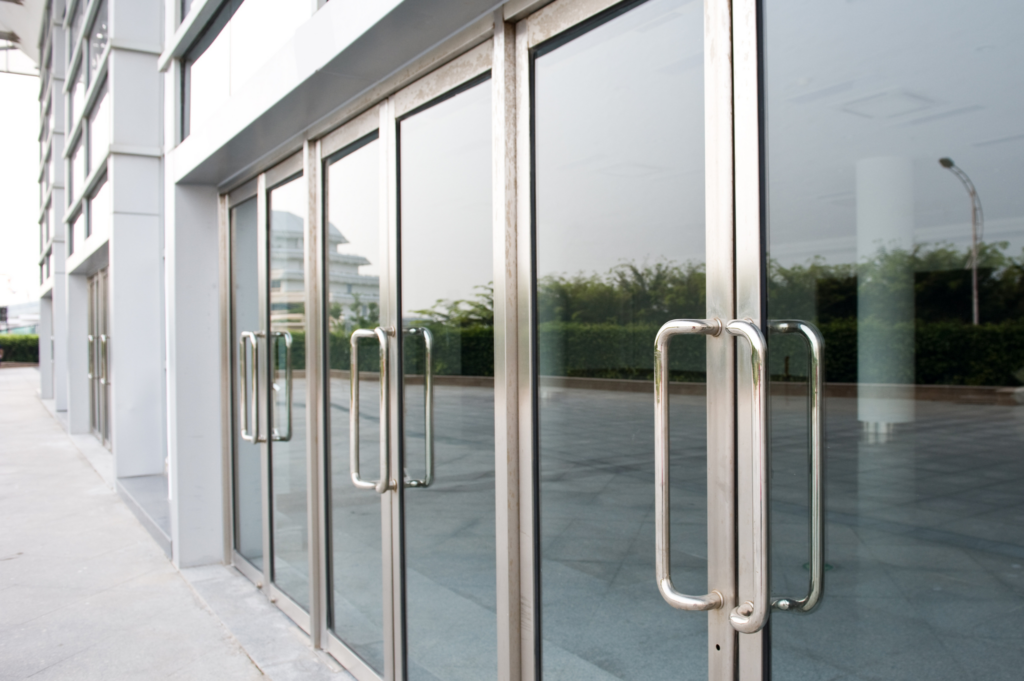
Historically, the engineering of ballistic doors was a straightforward, brute-force affair. The primary solution involved thick, heavy plates of steel, leading to massive, cumbersome doors that required industrial-grade frames and hardware. Any glazing was treated as a security vulnerability to be minimized. If vision lites were included at all, they were typically small, thick, and reinforced with bars or heavy grilles.
For architects, specifying these systems was a painful necessity. These fortress-like installations fundamentally contradicted core design principles. They blocked natural light, obstructed sightlines, and projected a message of fear and inaccessibility. The result was an entryway that felt more like a military checkpoint than the welcoming facade of a school, corporate office, or public building. This approach forced a clear choice between aesthetic integrity and occupant safety.
How Material Science Revolutionized Ballistic Door Solutions
The departure from this outdated model is rooted in significant breakthroughs in materials science, particularly in the development of security glazing and advanced composites. Rather than relying on sheer mass, modern systems defeat ballistic threats through sophisticated engineering.
The core innovation lies in layered, transparent composites. Unlike monolithic glass, which shatters on impact, modern security glazing is engineered to absorb and dissipate a projectile’s kinetic energy. A key material is polycarbonate, a polymer with exceptional impact resistance that forms the core of most modern ballistic glazing systems. It is capable of deforming and absorbing energy without fracturing. Multiple layers of polycarbonate and other materials are laminated together. This process allows the layers to separate upon impact, spreading the force over a wider area and trapping the projectile. Glass-clad polycarbonate composites combine the scratch-resistant hardness of an exterior glass surface with the impact-absorbing strength of inner polycarbonate layers, offering both durability and ballistic protection.
This evolution has enabled the creation of fully glazed ballistic door solutions that offer the same protection levels as their opaque steel predecessors. Framing systems have also advanced, utilizing engineered aluminum and steel alloys to provide the necessary structural integrity with significantly slimmer profiles, preserving the clean lines essential to modern architecture.
Why Yesterday’s Compromises Are Unacceptable
Given these technological advancements, clinging to the old “bunker” mentality is no longer a justifiable compromise. It is an outdated approach that ignores the solutions available today. Modern architectural practice prioritizes transparency, wellness, and a connection to the outdoors. These principles are fundamentally incompatible with obtrusive security measures.
Specifying a heavy, visually disruptive door system when a certified, virtually invisible alternative exists is a disservice to the project’s design intent and the well-being of its occupants. It signals a reliance on outdated specifications rather than an embrace of modern engineering. Architects and their clients can and should demand security solutions that protect people without punishing the architectural vision.
The Retrofit Advantage: Preserving Architectural Integrity
Understanding ballistic materials and their ratings is foundational, but the true challenge for specifiers lies in their application. Advanced retrofit systems, such as BulletShield by DefenseLite, are engineered specifically to integrate high-level ballistic protection into existing structures without altering their architectural character. This approach offers a superior alternative to full replacement, preserving the building’s intended aesthetic while delivering uncompromising security.
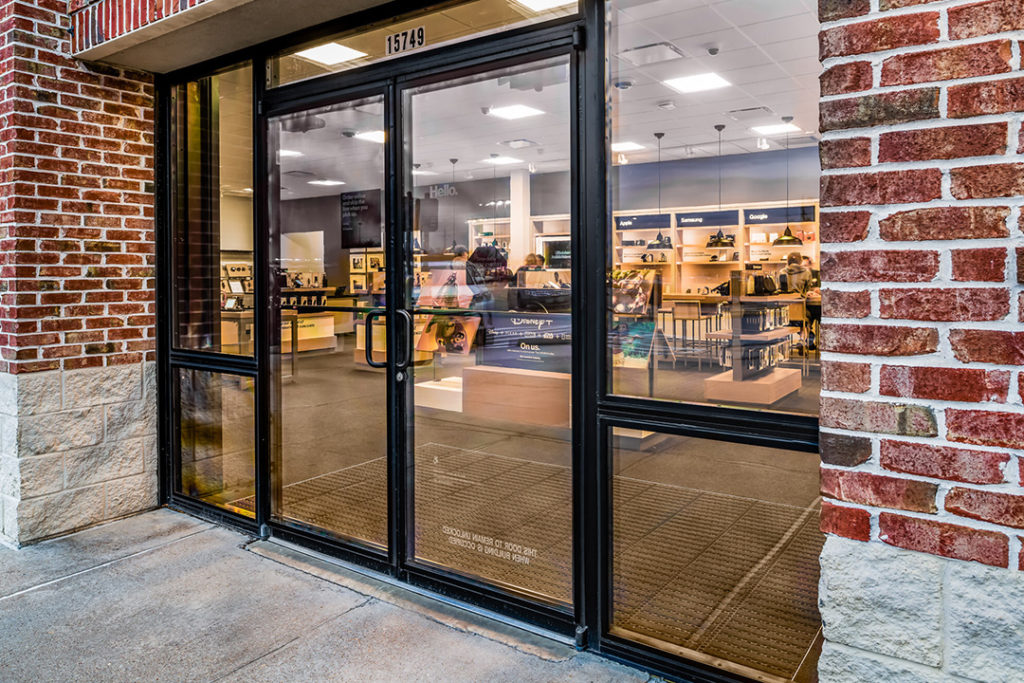
A retrofit ballistic door system is a security glazing solution engineered to be installed over a building’s existing doors and their glazing. Unlike a full replacement, this method does not require the removal of the original door, frame, or surrounding wall structure. Instead, a custom-fabricated sheet of ballistic-rated polycarbonate is mounted over the existing glass using a patented, vented framing system. This system is anchored securely to the original door’s stile and rail components. The result is a secondary, protective barrier that absorbs and dissipates energy from ballistic and forced entry attacks, shielding the primary glass and the occupants behind it. This approach effectively transforms a standard entryway into a hardened, resilient access point.
The “Virtually Invisible” Engineering of a Retrofit Solution
The ability of a retrofit system to appear “virtually invisible” is the result of meticulous engineering. The primary goal is to add a formidable layer of protection that does not call attention to itself. This is achieved through several key technical features.
First, the ballistic shield itself is made from an optical-grade polycarbonate with exceptional clarity, ensuring that light transmission and visibility are nearly identical to the original glass. Second, the proprietary framing that holds the shield is designed to be low-profile. It is custom-machined to follow the precise lines of the existing door frame, often tucking neatly into the existing mullions and sightlines. When color-matched to the original frame, it becomes an unobtrusive, integrated component.
Finally, a patented venting system is crucial for long-term performance and invisibility. This allows the air gap between the polycarbonate shield and the original glass to breathe, preventing moisture buildup, condensation, or fogging that could otherwise compromise visibility and reveal the presence of the system.
Retrofit vs. Full Replacement: A Comparative Analysis for Architects
When specifying ballistic door solutions, architects must weigh the implications of retrofitting versus a full replacement. While both can achieve certified protection, their impact on the project’s timeline, budget, and design integrity differs significantly.
Installation and Disruption
- Retrofit: Installation is clean, quiet, and rapid. It is often completed outside of business hours with no demolition required. This minimizes disruption to building operations and avoids the dust and noise associated with construction.
- Full Replacement: This is a far more invasive process. It involves the complete demolition of the existing door and frame, which can damage adjacent walls, flooring, and finishes. The installation of a new, heavy ballistic door assembly is a complex construction task.
Design and Aesthetics
- Retrofit: The primary advantage is the preservation of the original design. Historic doors, custom architectural entrances, and all-glass facades retain their intended appearance. The retrofit system is engineered to be discreet and to seamlessly integrate with the existing structure.
- Full Replacement: A replacement door is a new architectural element. These doors are often bulky, with thick frames and a utilitarian appearance that can clash with the building’s design language. It is difficult to find a pre-manufactured ballistic door that matches the precise aesthetic of a custom entryway.
Cost and Timeline
- Retrofit: These systems are typically more cost-effective when evaluating the total project cost. The expense is focused on the security components, avoiding the added costs of demolition, structural modification, patching, painting, and extended labor.
- Full Replacement: The initial cost of the door is only part of the expense. The total project budget must account for demolition, disposal, installation labor, and potential structural modifications to accommodate the weight of the new assembly.
Putting Theory into Practice: An Architectural Integration Scenario
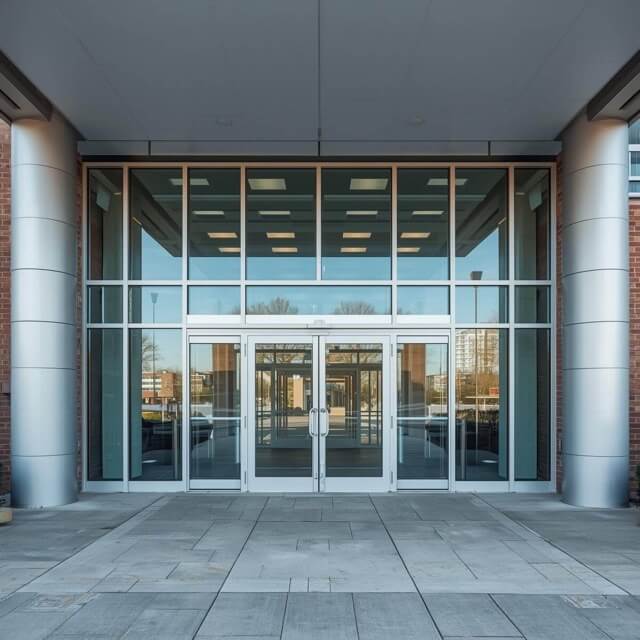
Abstract principles are best understood through practical application. Consider securing the all-glass entrance of a modern corporate headquarters, where the design prioritizes transparency and natural light. The project goal is to achieve UL 752 Level 3 ballistic protection without altering the building’s clean, minimalist facade.
A traditional approach would require replacing the existing doors with heavy, thick-framed assemblies, compromising the intended aesthetic of openness. A superior strategy involves a retrofit solution. This system is engineered to be mounted on the interior side of the existing entrance. The core component is a sheet of multi-layer polycarbonate security glazing, custom-fabricated to the exact dimensions of the current door’s glass panels. This glazing is secured by a patented, low-profile framing system designed to anchor directly onto the existing door stiles and rails. The framing itself can be finished to precisely match the color and material of the original door, rendering it nearly imperceptible.
The installation process is meticulous. A technical team conducts a detailed survey using precision digital measuring tools. Based on this data, the security glazing and framing are custom-engineered and fabricated. The system is then carefully attached to the interior of the existing door, anchoring it securely into the structural members of the door frame.
Upon completion, the building’s entrance appears unchanged. The sightlines are preserved, the hardware is untouched, and the building’s architectural character remains fully intact. The result is a transparent, welcoming entrance that now provides certified protection against ballistic threats. The original design vision is not only preserved but enhanced with a layer of invisible strength.
Specifying Retrofit Bullet Resistant Doors for Your Project
Integrating advanced security requires a clear understanding of the available systems. For architects, the goal is to define performance and aesthetic requirements with sufficient clarity to ensure the final installation meets both security and design objectives.
Key Questions for Evaluating Retrofit Ballistic Protection
When vetting a potential retrofit solution, your evaluation should include the following inquiries:
- What specific UL 752 ballistic protection level does the system provide, and is it backed by independent, third-party certification?
- How does the system anchor to the existing door and frame? Request details on anchoring mechanisms to ensure loads are transferred to the host frame’s structural members.
- What are the material specifications of the security glazing, including composition, thickness, weight, and light transmission values?
- Can the framing system be customized with a range of finishes, colors, and profiles to ensure a seamless match with the existing architecture?
- What is the system’s tested performance against forced entry, and does it offer other benefits like blast mitigation or UV reduction?
Integrating Retrofit Security into Your Construction Documents
To ensure your design intent is carried out, retrofit ballistic systems must be clearly defined in your construction documents, typically within CSI MasterFormat Division 08 – Openings. Your specifications should detail performance requirements, such as the required UL 752 level, the mounting methodology, and the material and finish requirements for all visible components. It is crucial to specify that the system must be installed without modification to the exterior appearance of the existing door and frame assembly.
Conclusion: The New Standard in Seamless Security and Design
The evidence leads to an undeniable conclusion. For architects and specifiers, the era of compromising design integrity for ballistic security is over. The challenge of protecting occupants without resorting to obtrusive, fortress-like entryways has been solved through advanced engineering and material science. Modern security glazing systems demonstrate that robust physical security and architectural aesthetics are not in opposition.
When the goal is to integrate ballistic protection, a retrofit security glazing system is the superior technical and aesthetic choice. Unlike full-replacement ballistic doors, which disrupt the original design, a retrofit solution is engineered for seamless integration. This approach works by augmenting the existing glass doors and frames, not by replacing them. The protective shield is mounted discreetly over the vulnerable glazing, preserving the original door, its hardware, and its precise architectural detailing. The result is a fortified entryway that meets stringent UL 752 ballistic standards while remaining visually indistinguishable from the architect’s original vision.
To ensure a successful integration, consult a security glazing expert early in the design phase. Define the specific ballistic threat level your project needs to mitigate by specifying the required UL 752 rating. Always demand proof of third-party testing and certification for any specified ballistic system. This documentation is the only reliable verification that the product will perform as engineered.
Frequently Asked Questions
What is the difference between a retrofit ballistic door system and a full replacement?
A full replacement involves the complete demolition of an existing door and frame and installing a new, pre-manufactured ballistic door assembly. A retrofit system is a security glazing solution engineered to be mounted over an existing door’s glass, preserving the origina
Will a retrofit ballistic system make my glass doors look dark or cloudy?
No. High-quality retrofit systems use optical-grade polycarbonate with exceptional clarity and light transmission values nearly identical to glass. The system is engineered to be “virtually invisible,” meaning it will not distort views or significantly reduce the amount of natural light entering the space.
How do I know a retrofit system meets certified ballistic standards?
Always demand third-party testing and certification documents. A reputable manufacturer will provide reports verifying that their system has been tested and meets a specific UL 752 rating for ballistic resistance. This is the only way to ensure the product will perform as specified against a ballistic threat.
Can retrofit ballistic protection be installed on any type of door?
Retrofit systems are highly customizable and can be engineered to fit most commercial door types, including all-glass, aluminum-framed, steel, and wood doors. A detailed site assessment by a technical specialist is the first step to confirm compatibility and design a system that anchors correctly to the existing door’s structural components.