Introduction: Why Blast Resistant Windows Matter in 2026
Blast protection windows provide enhanced life safety during explosive events-yet most commercial and institutional buildings in the United States still rely on conventional glazing that was never engineered for blast loads. Since the 1995 Oklahoma City bombing and more recent terrorist attacks, the data has been consistent: glass is the primary source of injury in nearly every explosion involving an occupied building.
Blast resistant windows are not “indestructible.” They are engineered to manage blast pressure and contain flying glass shards under specific threat scenarios, protecting occupants and preserving building function. The terms blast proof and bombproof are marketing shorthand-realistic blast resistance is always scenario-specific.
Impact Security is a U.S.-based manufacturer and installer of retrofit blast protection glazing systems, focused on strengthening existing glass in windows, doors, and storefronts rather than costly full replacement. In this article, you’ll learn how blast resistant windows work, where they are needed, how they are rated, common mistakes to avoid, and how retrofit solutions compare to traditional blast resistant glass.
Table of Contents
How Blast Resistant Windows Work
Where Blast Protection Windows Are Essential
Standards, Ratings, and How to Choose
Retrofit vs. Replacement Blast Solutions
Blast Protection Windows FAQs
Why Choose Impact Security for Blast Resistant Window Solutions
How Blast Resistant Windows Work (and Why Glass Fragmentation is the Real Threat)
In most explosions, roughly 90% of blast injuries are caused by flying glass shards-not the blast fireball. At the 1996 Khobar Towers bombing, over 500 personnel were casualties, and the vast majority suffered lacerations from dangerous shards of conventional glazing. Standard windows shatter into hazardous slivers during explosions because annealed glass fractures into large, jagged pieces that become high-velocity projectiles.
Here is how a blast wave interacts with a building envelope: rapid overpressure hits the glass and frame, followed by a negative-phase suction that pulls debris inward. Conventional glass fails in both directions, creating fragment clouds that travel meters into occupied spaces.
Blast-resistant windows counter this through three core components:
- Laminated glass or polycarbonate glazing that can flex and absorb energy rather than shattering. Laminated glass contains a layer of plastic (typically PVB or ionoplast) to prevent shattering, while polycarbonate is 250 times stronger than conventional glass.
- High-strength frames made from reinforced steel, thick-gauge aluminum, or composites designed to transfer blast loads without detaching.
- Anchoring systems that keep the frame secured to the structure during an event, preventing the entire assembly from becoming debris.
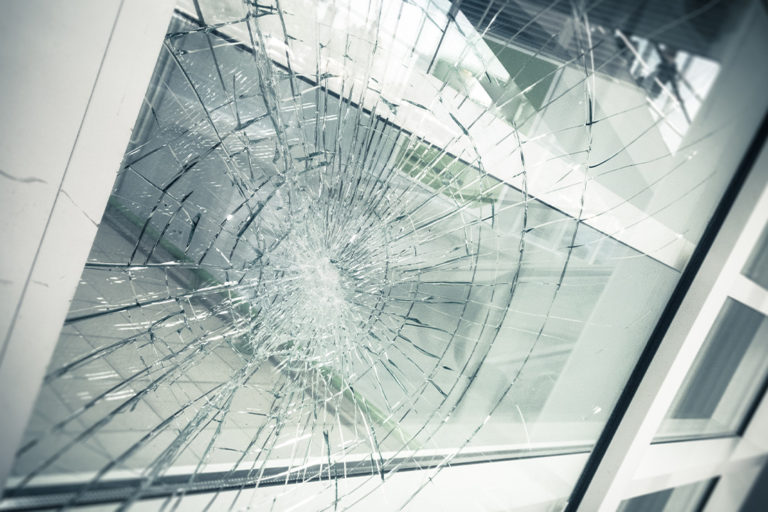
Thermally tempered glass is four times stronger than annealed glass and fractures into small cubes rather than jagged shards, but it still fails under blast loads. High-performance laminated glass enhances the structural integrity of blast windows by keeping broken pieces bonded to the interlayer. Interior-mounted retrofit systems-like Impact Security’s polycarbonate shields-create a secondary barrier behind existing glass, capturing fragments and preventing dangerous spall inside the room.
One crucial distinction: blast protection does not equal bullet-resistance or hurricane-rated performance. Blast resistant windows manage pressure and flex across the entire glazing surface. Ballistic resistant windows like BulletShield retrofit panels stop concentrated projectile impacts. Some configurations, including certain Impact Security systems, can be engineered to combine both under one glazing design-but the engineering is different for each threat.
Where Blast Protection Windows Are Essential: Government, Energy, Education, and Other Types of Facilities
Blast resistant windows are no longer limited to embassies and military bases. Risk assessments conducted in 2024–2026 increasingly recommend blast resistant buildings for a wider range of sectors prone to security threats.
Government buildings-federal courthouses, law enforcement facilities, state agency headquarters-commonly use blast resistant windows for security. Many government leases and RFPs now reference specific GSA blast performance conditions for exterior glazing, and Unified Facilities Criteria mandate compliance for Department of Defense construction.
Critical infrastructure such as power plants, data centers, and water treatment facilities need blast mitigation because maintaining operations after an explosion is crucial. In petrochemical environments like oil refineries and chemical plants, blast windows are essential because accidental explosions and accidental blasts represent a credible, ongoing risk-not a hypothetical one.
Education and healthcare facilities in urban cores are layering blast protection onto existing active-shooter mitigation and forced-entry strategies, especially when located near high-profile government buildings. Commercial and retail properties-banks, corporate headquarters, high-end storefronts in dense downtowns-increasingly upgrade glazing where the location creates adjacency to higher-risk targets.
The starting point is always a formal threat and risk assessment: standoff distance, vehicle access, prior threats, and local law enforcement guidance determine whether blast resistant windows are warranted. Blast protection can be integrated into new construction or delivered via retrofit systems for existing building stock.
Standards, Ratings, and How to Choose the Right Blast Resistant Windows
Blast resistant windows are tested to meet strict safety standards-not just marketing claims. Understanding basic rating language helps facility owners compare solutions fairly.
The primary frameworks include (for a deeper breakdown of GSA/ISC performance conditions, see blast resistant standards for window systems):
- UFC 3-340-02 and related Department of Defense criteria for antiterrorism building design. Unified Field Criteria are mandated by the Department of Defense for all new military construction.
- GSA-TS01 and ISC guidelines, which define Performance Conditions 1 through 5-from “glass does not break” (Condition 1) to catastrophic failure (Condition 5). Most government projects require Condition 2 or better.
- ASTM F1642, the standard test method for glazing subjected to airblast loading.
- ISO 16933:2007 and EXV 10 classifications for international equivalency. Blast resistant windows pass EXV 10 and ISO 16933:2007 tests when subjected to defined pressure and impulse profiles.
Blast resistance is measured in psi ratings for windows, combining peak incident pressure with impulse (psi-milliseconds) at a given standoff distance. The U.S. Department of State has its own criteria for blast resistant glass at embassies and diplomatic facilities. Blast resistant glass is rated based on its explosion absorption capacity and allowable damage level-from “no hazard to occupants” down to “minimal hazard with retained fragments.”
Blast protection windows are tested as complete systems including glass and frame, not glazing alone. Installation quality is vital for ensuring performance of blast protection windows, because even excellent glass fails if the frame pulls out of the wall. Purpose-designed blast-resistant glass panels and bomb protection systems are engineered and tested as integrated assemblies to manage these loads.
Common mistakes to avoid:
- Focusing only on glass type without verifying frame and anchorage capacity
- Assuming any thick laminated glass is automatically blast resistant
- Ignoring occupant zones directly behind glass (waiting rooms, daycare areas)
- Neglecting integration with forced entry and ballistic resistance in the same project
On budget: retrofit blast shields mounted interior to existing frames commonly cost less and cause far less disruption than full window replacement, while preserving exterior aesthetics.
Retrofit vs. Replacement: How Impact Security Delivers Blast Protection for Existing Windows
Most occupied U.S. buildings were never designed for modern blast criteria. Full window replacement can cost $25–$60+ per square foot and require weeks of façade demolition. Retrofit blast protection offers a faster, less disruptive path.
Impact Security’s approach uses interior-mounted polycarbonate or hybrid glazing panels installed over existing glass in windows, doors, storefronts, and curtain walls. These safety and security glass solutions for windows and doors rely on polycarbonate blast windows that are 250 times stronger than regular glass and can flex under explosive force rather than shattering.
Custom-fabricated frames-using reinforced steel or thick-gauge aluminum-are engineered to absorb blast loads and capture shattered glass. Anchor systems in blast protection windows transfer explosive loads to the building structure, and blast windows can be made from steel, aluminum, and composites depending on the project.
Properly engineered blast protection windows can lessen damage to the building envelope while improved occupant protection reduces risk during explosive events. Key advantages of retrofit over replacement:
- Minimal change to exterior appearance-preserves historic or branded façades
- Faster installation with less downtime for 24/7 facilities like hospitals and data centers
- Ability to combine blast resistance with forced-entry and ballistic protection in the same retrofit frame through integrated SafeSuite interior protection systems
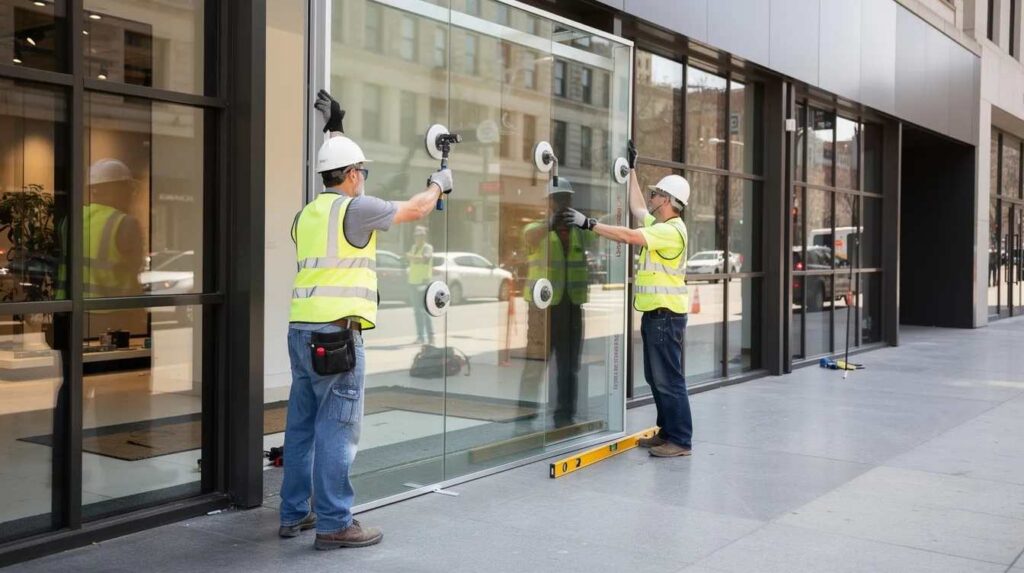
Impact Security’s process moves from site assessment and threat review, through field measurements and engineering, to fabrication at facilities in Marietta, GA and Glendale, AZ, and professional installation by certified dealers nationwide. The company supports B2B and B2G clients-from retail chains and school districts to municipal and federal agencies that must align with UFC and GSA blast guidance.
Blast Protection Windows FAQs
Are blast resistant windows the same as “bombproof” windows? No. No window can withstand every possible explosive event. Blast resistant windows are engineered for specific threat scenarios-defined by charge weight, standoff distance, and acceptable damage level. The term blast proof is colloquial and lacks a formal performance definition.
Can I retrofit blast protection on my existing glass, or do I need all-new windows? In most cases, retrofit systems can be installed over existing glazing without removing the current windows. Impact Security’s interior-mounted polycarbonate shields are designed for exactly this. Full replacement may be required only when existing frames or surrounding structure cannot support anchoring loads.
How do blast resistant windows differ from ballistic or bulletproof glass? Blast resistant glazing is engineered to absorb and flex under distributed pressure from a blast wave. Ballistic glass stops concentrated projectile impacts. Forced-entry glazing resists sustained physical attack. Some systems can deliver all three, but each requires distinct engineering, and none are truly “unbreakable”-they are shatter-resistant security glass options designed for specific threat levels.
Will blast protection windows make my building look like a bunker? Modern retrofit blast resistant windows are nearly invisible from the street. Interior-mounted panels use slim frames and optically clear polycarbonate or laminated glass, maintaining the building’s original sightlines.
What kind of maintenance do blast resistant windows require? Routine inspections after nearby construction, severe weather, or security incidents are recommended. Polycarbonate panels require UV-stable coatings and specific cleaning solutions to avoid scratching; laminated glass should be checked for seal integrity. Typical service life is 10–15+ years depending on exposure and environments.
How long does installation take in an occupied building? Most retrofit installs can be completed in days per elevation, often after hours. Impact Security coordinates with facility operations to minimize disruption to personnel and daily functions across industries including defense, healthcare, education, and financial sectors.
How do blast resistant windows fit into a broader security strategy? Glazing is one layer in a complete approach. Blast resistant windows work alongside access control, perimeter barriers, security film, and interior safe rooms to create layered protection. The damage caused by an explosion extends beyond glass-so blast mitigation should be part of a comprehensive security plan.
Why Choose Impact Security for Blast Resistant Window Solutions
Impact Security specializes in retrofit security glazing-delivering turnkey blast protection for existing buildings without the cost and disruption of full window replacement. As outlined in the company’s About Impact Security, LLC overview, it was founded in 2016 and operates fabrication centers in Marietta, GA and Glendale, AZ, with a nationwide network of certified installers experienced in high-risk environments.
What sets Impact Security apart:
- In-house engineering and fabrication for project-specific blast-resistant solutions
- A product family that includes DefenseLite Pro forced-entry glazing, ballistic glazing, riot and vandalism protection, and safe-room build-outs-allowing blast protection to integrate into a layered security strategy
- Adherence to UFC, GSA, and ASTM guidance, with collaboration alongside independent blast consultants when required
- Proven track record across government buildings, schools, hospitals, utilities, financial institutions, and commercial properties
Blast protection is a system problem-not just a glass problem. The right retrofit partner ensures that every component, from glazing to frame to anchorage, performs as a unit when lives depend on it.
Ready to protect your building? Request a free blast protection assessment from Impact Security or submit a window security and safety glazing project request. Whether you manage a single facility or a multi-site portfolio, contact Impact Security for project-specific guidance on blast resistant windows and related retrofit solutions.