- Understanding Ballistic Panels for Walls
- The Practical Limitations of Ballistic Wall Systems
- A Threat Vector Analysis: Identifying a Building’s True Vulnerabilities
- Ballistic Drywall vs. Security Glazing: A Comparative Analysis
- Conclusion: A New Paradigm for Architectural Security
- Frequently Asked Questions
When a project requires a ballistic-rated perimeter, the initial impulse is often to harden the largest surface areas, the walls. The concept of bullet proof drywall or ballistic panels for walls seems the most direct path to creating a secure envelope. This approach is rooted in a logical desire for comprehensive protection. It suggests a total solution that addresses the threat by fortifying the structure itself, leaving no obvious weak points. This thinking prioritizes complete, opaque security, but a deeper technical analysis reveals significant trade-offs that can compromise project budgets and core design integrity.
Understanding Ballistic Panels for Walls
The term ‘bullet proof drywall’ is a misnomer. It refers to a system of rigid ballistic panels installed behind standard gypsum board. These UL 752 rated panels are engineered composites designed to absorb and dissipate the kinetic energy of a projectile, preventing penetration. The primary materials used include aramid fibers, fiberglass, and in some cases, a hardened steel core to defeat higher-level threats. When a bullet strikes the panel, its layers delaminate and separate, absorbing the impact energy and preventing perforation through the wall assembly.
Decoding UL 752 Ratings for Opaque Armor
Ballistic panels are rated according to the UL 752 standard, which defines eight levels of protection corresponding to specific firearms and ammunition. These ratings for opaque materials specify resistance to both penetration and spall, the dangerous fragments ejected from the back of the armor upon impact. An architect specifying these systems must match the UL 752 level to the anticipated threat.
- UL Levels 1-3 stop common handgun rounds and are often specified for interior commercial applications.
- UL Levels 4-5 defeat high-power rifle rounds and are common in government and high-risk corporate facilities.
- UL Levels 6-8 offer protection against multiple shots from military-grade assault rifles using high-velocity ammunition.
The goal of specifying such a system is the creation of a seamless, hardened shell. This perceived benefit of total envelopment is what makes ballistic walls the default consideration for many initial security designs.
The Practical Limitations of Ballistic Wall Systems
While the theory of an impenetrable shell is attractive, its practical application in modern architecture presents significant challenges. The realities of cost, construction, and aesthetic integration often conflict with contemporary design goals that prioritize openness, light, and seamless functionality.
Structural Reinforcement and Installation Costs
Ballistic panels are dense and heavy. A single 4’x8′ panel rated for UL Level 8 can weigh several hundred pounds, requiring a structural engineer’s assessment to confirm the building’s frame can support the additional dead load. In many retrofits, significant and costly structural reinforcement is necessary. Installation is a specialized trade, requiring skilled labor to cut panels for MEP penetrations and properly overlap seams to avoid ballistic gaps, adding considerable expense beyond material costs.
Aesthetic Compromise and Design Integrity
Ballistic panels are typically an inch or more thick, fundamentally altering wall profiles. This added thickness complicates the detailing of every intersection and opening. Door jambs, window frames, and electrical outlets must be built out, creating bulky transitions that disrupt the clean lines valued in modern design. The result is a visible security apparatus, running counter to the goal of integrating protection invisibly.
The Opaque Fortress Problem
The most significant architectural trade-off is the sacrifice of transparency. A fully armored opaque wall is only as strong as its weakest point. This logic leads to minimizing or eliminating windows and other glazed openings, which are correctly identified as ballistic vulnerabilities. The result is an ‘opaque fortress’, a space that may be physically secure but is psychologically isolating and disconnected from its environment. This approach directly conflicts with architectural progress toward daylighting and creating healthy, transparent interiors.
A Threat Vector Analysis: Identifying a Building’s True Vulnerabilities
A comprehensive security plan begins with a precise diagnosis of a building’s inherent weaknesses. In modern architecture, this analysis invariably leads to a single conclusion: the most significant vulnerabilities are not the opaque structures, but the elements designed for transparency and access.
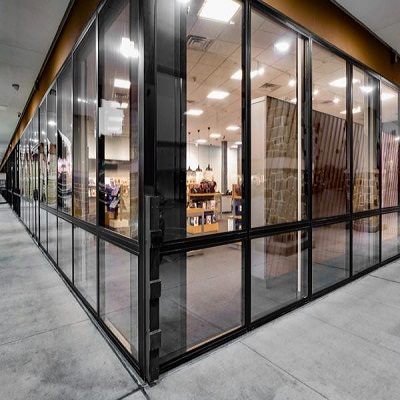
In any threat scenario, an aggressor follows the path of least resistance. The most fragile component of a typical building envelope is its glass. Standard annealed or tempered glass offers negligible resistance to a determined attacker or a ballistic threat. Vision glass, glass doors, and ground-floor entryways become the primary vectors for unauthorized entry and targeted attacks.
An attack on modern curtain wall and storefront systems is not limited to shattering a glass pane. The integrity of the entire assembly, including the aluminum framing and gaskets, is at risk. A ballistic impact or forced entry attempt can dislodge the glass from its frame, creating an immediate and catastrophic breach.
A responsible threat assessment must consider a wider range of probable events beyond ballistics.
- Forced Entry: The most frequent threat, involving hand tools like hammers and crowbars to quickly break through a barrier.
- Ballistic Attack: A high-impact threat requiring specialized protection to stop projectiles and prevent spall.
- Blast Mitigation: An event where the greatest danger is often flying glass fragments, which must be contained by an engineered system.
Glass is the common denominator of vulnerability across all three threat categories. Investing in ballistic-rated walls while leaving adjacent glazing unprotected is analogous to fortifying a castle wall but leaving the main gate open. This misdirects capital and creates a false sense of security without delivering a functional security envelope.
Ballistic Drywall vs. Security Glazing: A Comparative Analysis
When evaluating architectural ballistic protection, architects must look beyond initial material specifications. A direct comparison between ballistic drywall and retrofit security glazing reveals two fundamentally different approaches to building hardening.
Installation Time and Disruption
The installation of ballistic wall panels is a significant construction undertaking. It requires demolition, framing modifications, multi-trade installation, and finishing work that generates considerable dust, noise, and disruption. In occupied buildings, this can shut down operations for an extended period.
In contrast, the installation of retrofit security glazing is a streamlined and less invasive process. Patented systems, such as BulletShield, are engineered to bond directly to the existing window glass and framing. Installation is managed by a specialized team with minimal disruption, often allowing work to proceed after business hours to eliminate operational downtime.
Preserving Design Intent
Ballistic drywall creates an opaque, fortified barrier. It fundamentally compromises design intent when transparency and openness are desired, leading to interiors that feel confined.
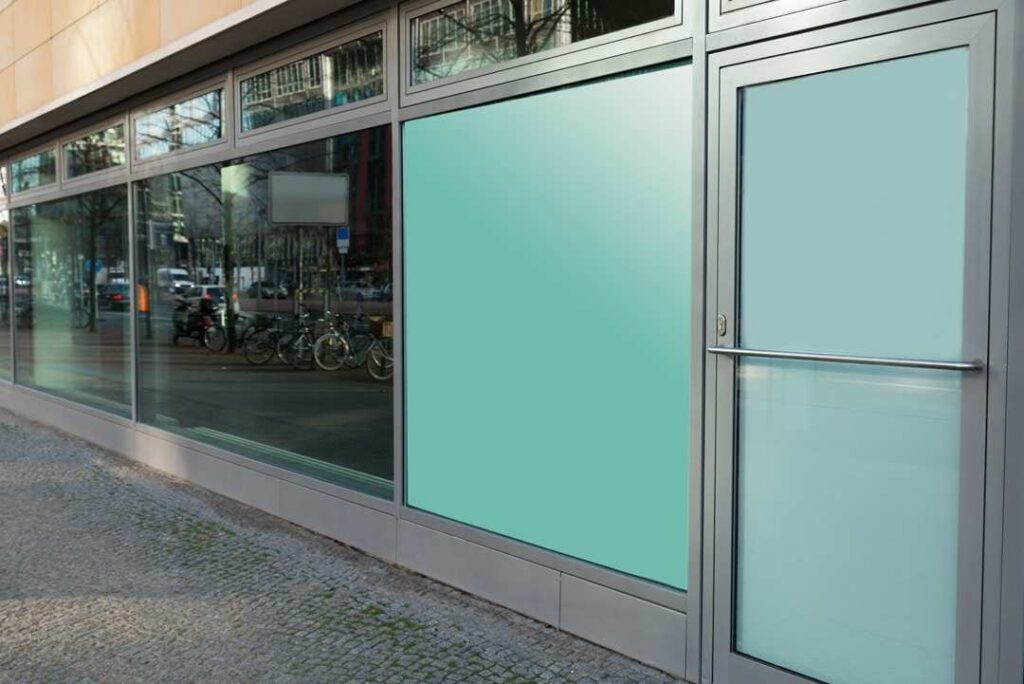
Retrofit security glazing offers a solution that is practically invisible. Its optical clarity is indistinguishable from standard glass, ensuring the building’s aesthetic is preserved. Sightlines remain unobstructed and natural light fills the space, maintaining the architect’s original vision. Security is achieved without creating a fortress-like atmosphere.
Total Cost of Ownership
A superficial cost analysis may favor ballistic drywall, but a total cost of ownership (TCO) calculation reveals a more complex financial picture. The TCO for a ballistic wall must include demolition, framing reinforcement, multi-trade labor, waste disposal, and the significant indirect costs of business disruption.
Retrofit security glazing, with its faster and cleaner installation, dramatically reduces these indirect costs. High-performance glazing systems also provide additional lifecycle benefits, such as blocking 99.9% of UV radiation, which protects interior furnishings and can improve thermal performance.
Performance at the Point of Entry
The ultimate measure of a security system is its performance during an active threat. Ballistic drywall hardens a wall, but does nothing to protect the most consistently targeted point of entry: the glass.
Retrofit security glazing directly addresses this primary threat vector. By reinforcing the glass itself, it hardens the most probable point of attack. An engineered glazing system absorbs and dissipates energy from ballistic impacts or sustained physical attacks, keeping the glass contained and maintaining a secure barrier. This function denies or delays entry, frustrates the attacker, and provides occupants with vital time to escape or shelter.
Conclusion: A New Paradigm for Architectural Security
The initial query regarding bullet proof drywall stems from a valid concern for occupant safety. A comprehensive analysis, however, reveals that true architectural security is achieved not by creating opaque fortresses, but by strategically hardening the most vulnerable and transparent surfaces. This refined approach protects people without sacrificing the design integrity that defines a building.
The debate highlights a fundamental difference in security philosophy. Brute-force fortification, exemplified by installing ballistic panels, is an approach that treats all surfaces as equally vulnerable. Strategic hardening is an intelligence-led approach. It begins with the understanding that assailants almost universally target points of visibility and access. By focusing protective measures on these specific vulnerabilities, a more efficient, cost-effective, and architecturally sensitive solution is achieved.
For architects, the core challenge is to resolve the tension between security and aesthetics. Engineered security glazing provides a virtually invisible layer of protection, offering formidable resistance to ballistic and forced entry threats without altering the building’s appearance. Security becomes an inherent property of the building’s most transparent elements, not a conflicting layer.
To develop a cohesive security plan:
- Initiate a Professional Threat Assessment: Objectively identify the most likely risks for your specific building typology, location, and use case.
- Prioritize Threat Vectors: Use the assessment findings to map vulnerabilities. Unprotected glazing will almost certainly emerge as the primary concern.
- Specify Performance-Based Solutions: Evaluate solutions based on performance criteria, such as systems tested to meet UL 752 standards that align with identified threats.
- Consult with Glazing Security Specialists: Early consultation with experts in security glazing ensures proper specification and integration, respecting the project’s architectural, structural, and budgetary parameters.
Frequently Asked Questions
What is bullet proof drywall?
The term “bullet proof drywall” is an industry shorthand for a system of rigid, UL 752 rated panels installed behind a standard wall finish like gypsum board. These ballistic panels for walls, made from materials like aramid fibers or fiberglass, are engineered to stop projectiles. The drywall itself offers no ballistic resistance.
Is retrofitting ballistic panels into an existing building disruptive?
Yes, installing ballistic panels in an existing space is a highly disruptive process. It typically requires demolition of the current walls, potential structural modifications to support the panels’ weight, multi-trade installation, and extensive finishing work. This results in significant downtime, noise, and debris.
Why is security glazing a better option for architectural design?
Security glazing offers robust ballistic and forced-entry protection while remaining virtually invisible. Unlike opaque ballistic panels that compromise a building’s aesthetic by eliminating transparency, high-quality security glazing maintains the original design intent. It allows for open sightlines and natural light, preserving the architectural vision without sacrificing safety.
What level of UL 752 ballistic protection do I need?
The required UL 752 level depends entirely on the specific threats your building faces. Lower levels (1-3) are rated for handguns, while higher levels (4-8) are rated for high-powered and military-style rifles. Determining the appropriate level requires a professional threat and vulnerability assessment conducted by security experts.