- Introduction
- Understanding Security Window Film
- Film Capabilities and Limitations
- Installation Requirements and Effectiveness
- Common Misconceptions and Realistic Expectations
- Conclusion and Next Steps
- Additional Resources
Introduction
Security window film marketed as “bullet proof film” does not stop bullets. This distinction matters because building owners, school administrators, and security professionals frequently invest in these products expecting ballistic protection they cannot deliver. What security film actually provides is glass containment and forced entry delay—valuable capabilities, but fundamentally different from stopping projectiles.
This article covers what bullet proof film actually does, its real limitations, proper applications, and when true ballistic protection through bulletproof glass or ballistically rated glass becomes necessary. The target audience includes facility managers evaluating window protection options, security professionals designing comprehensive safety plans, and building owners weighing cost against protection levels.
Direct answer: Security window film holds broken glass together and delays forced entry by 30 seconds to several minutes depending on thickness and installation quality. It cannot stop bullets from penetrating window glass or door glass regardless of film thickness. For protection against ballistic attack or active shooter situations, independently tested ballistic-rated glazing is required.
By the end of this article, you will understand:
- The actual protective capabilities of security film products versus marketing claims
- How film thickness, installation quality, and anchoring affect performance
- When security film offers protection adequate for your threat level
- Scenarios requiring bullet resistant window film or bulletproof glass replacement
- How to evaluate vendor claims and specify appropriate solutions
Understanding Security Window Film Technology
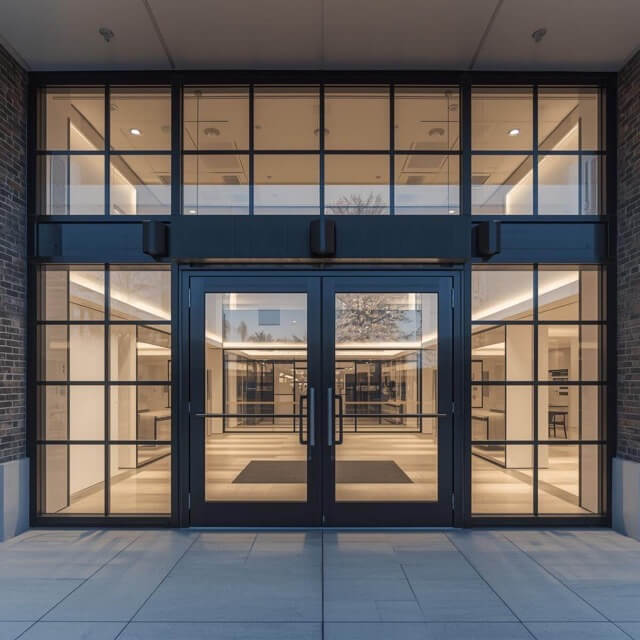
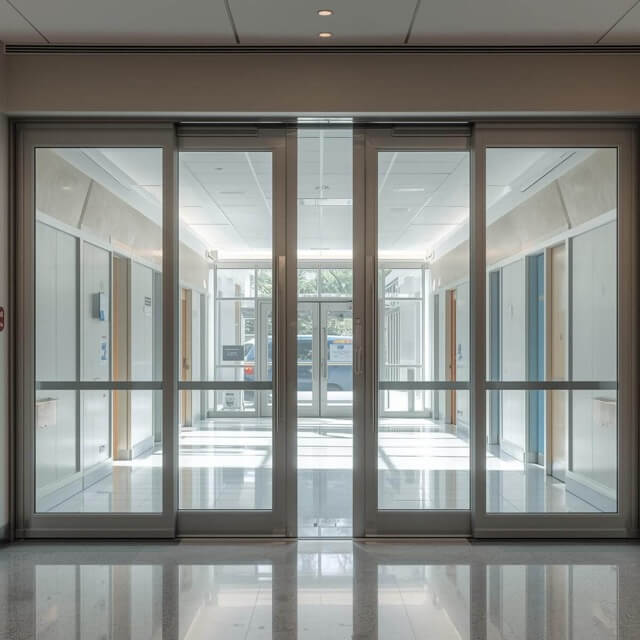
Security window film consists of transparent polyester layers applied to existing glass surfaces with pressure-sensitive adhesives. The film bonds to the glass window interior, creating a composite that holds glass fragments together when broken. This technology is commonly referred to as safety or security film, though some vendors misleadingly label it “bullet proof film” or “ballistic window film.”
The terminology confusion stems from aggressive marketing. True bullet resistant or bullet proof glass requires specific materials tested to ballistic standards like UL 752. Standard security film, regardless of thickness, has never been certified to stop bullets under any recognized ballistic testing protocol. Understanding this distinction prevents costly mistakes when protection against firearms is the actual requirement.
Glass Containment and Fragment Control
When glass breaks from impact, explosions, or attack, it shatters into dangerous projectiles. Security window film addresses this by maintaining adhesion to broken glass fragments, preventing them from scattering into building interiors where they cause injuries.
The mechanism works through the film’s adhesive bond. When force breaks the glass, the film stretches but maintains contact with glass pieces, creating a flexible membrane that holds the broken material in place. This offers protection against flying shards during severe weather, accidental breaking, or deliberate attack—though not against bullet penetration.
Film thickness directly correlates with containment effectiveness. Basic safety films at 4-6 mil provide minimal fragment retention suitable for accidental breakage. Security-grade films at 8-12 mil hold glass more effectively under sustained impact. Heavy security films at 14 mil and above offer maximum fragment control but still cannot resist firearm projectiles.
Forced Entry Delay Properties
Security film’s practical value lies in delay entry capabilities. When potential intruders attempt to gain entry through glass doors or windows, the film forces them to spend additional time breaking through rather than simply shattering the glass and stepping inside.
The delay difference between properly anchored and unsecured installations is substantial. Film applied only to the glass surface without frame attachment may slow entry by 15-30 seconds. When structural anchoring connects the film to the existing glazing frame using impact protection adhesive like Dow Corning 995, delay extends to 1-3 minutes or more.
This time differential matters for security response. Every additional minute allows alarms to activate, occupants to escape or shelter, and security professionals to respond. However, this protection is fundamentally about delay—not prevention. Understanding this limitation is critical for proper application in schools, commercial buildings, and facilities facing various threat levels.
Film Capabilities and Limitations
Building on the basic technology, examining real-world performance reveals both the genuine value and hard boundaries of security window film. Facility managers must understand both to make appropriate decisions.
What Security Films Can Do
Properly installed security film with structural anchoring provides entry delay of 30-60 seconds for mid-range thicknesses (8-12 mil), extending to 1-2 minutes or more for heavier films (14+ mil). In tested scenarios at facilities like Great Hearts Academy, simulated intrusion attempts were delayed over 3 minutes with 8-mil film and proper installation.
Glass fragment containment during explosions, severe storms, or deliberate attack reduces interior injuries significantly. The film holds broken glass in the frame rather than allowing shards to become secondary projectiles. This protection applies during natural disasters, industrial accidents, and various attack scenarios.
Cost-effective retrofitting of existing windows represents another practical advantage. Rather than replacing entire window systems, security film applies over existing glass at a fraction of replacement cost—typically $8-$15 per square foot for quality security-grade film with professional installation, compared to hundreds of dollars per square foot for ballistic glazing systems.
What Films Cannot Do
No security window film will stop bullets from penetrating the glass substrate beneath it. The film holds broken glass together after bullet impact, potentially reducing secondary fragmentation, but the projectile passes through. This limitation applies regardless of film thickness—even 20-mil security film fails against handgun rounds that penetrate standard glass instantly.
Bullet resistant protection requires bullet resistant window film applied to ballistically rated glass, or complete replacement with bulletproof glass systems tested to UL 752 standards. The film alone, on standard glass, provides zero ballistic resistance.
Determined intruders with adequate tools will eventually breach any film system. Security film buys time; it does not prevent entry indefinitely. The film can tear, the glass can be removed from frames, or adjacent materials can be attacked. Security film works best as one component in layered protection, not as a standalone barrier.
Performance Factors
Glass type and thickness significantly impact overall system performance. Tempered glass shatters into small cubes that the film must contain. Annealed glass produces large dangerous shards. Laminated glass already includes an interlayer, and adding film creates additional redundancy. The existing window construction determines how the film performs during attack.
Installation quality and anchoring system implementation often matter more than film thickness. A 14-mil film with poor edge adhesion and no frame anchoring may fail faster than an 8-mil film with proper structural attachment. Professional installation includes surface preparation, bubble elimination, edge sealing, and anchor application.
Environmental conditions affect film durability over time. UV exposure degrades adhesives, temperature extremes stress bonds, and moisture during installation causes failure. Quality films from reputable manufacturers include UV stabilizers and carry 10-15 year warranties when professionally installed.
Installation Requirements and Effectiveness
The gap between advertised film performance and actual protection often comes down to installation quality. A security film only performs to specification when properly applied and anchored.
Professional Installation Process
Proper installation begins when surface preparation is completed correctly. Glass must be thoroughly cleaned of oils, silicone residue, and contaminants. Any existing film must be completely removed. Older windows require inspection for stress cracks or defects that could cause failure under load.
- Surface preparation: Clean glass with appropriate solutions, remove all contaminants, verify glass integrity
- Film application: Apply wetting solution, position film precisely, squeegee from center outward to eliminate bubbles
- Edge trimming: Cut film to appropriate gap (typically 1/16” to 1/8” from frame edges) for anchoring space
- Structural anchoring: Apply impact protection adhesive connecting film edge to existing glazing frame
- Curing period: Allow 60-200 days depending on film thickness before system reaches full strength
Curing time requirements are frequently overlooked. Thicker films require longer cure periods—8-12 mil security films need 90-110 days before the adhesive bond reaches full strength. Testing or relying on protection before curing is completed risks system failure.
System Comparison
| Protection Level | Threat Mitigated | Cost (per sq ft) | Installation Time | Maintenance |
|---|---|---|---|---|
| Security Film (4-6 mil) | Minor impact, accidental breakage, limited fragment control | $5-$10 | Hours to days | 10-year replacement cycle |
| Security Film (8-12 mil) + Anchoring | Forced entry delay 30-60 sec, significant fragment control | $8-$15 | Days + 90-day cure | Annual inspection, 10-15 year life |
| Security Film (14+ mil) + Full Anchoring | Extended forced entry delay 1-3+ min, maximum fragment control | $12-$20+ | Days-weeks + 120-200 day cure | Annual inspection, frame reinforcement may be needed |
| Ballistic-Rated Glazing (UL 752 Level 1-3) | Handgun rounds (9mm, .357, .44 Magnum) | $100-$300+ | Weeks (custom fabrication) | Periodic certification, replacement if damaged |
| Ballistic-Rated Glazing (UL 752 Level 4-8) | Rifle rounds (.30 caliber, 5.56mm) | $300-$600+ | Weeks-months | Extensive structural requirements |
For most cases involving general security concerns, theft deterrence, or weather protection, quality security film with proper installation provides adequate protection at reasonable cost. When the threat model includes firearms—active shooter situations, high-value targets, or facilities with specific ballistic requirements—only UL 752-rated ballistically rated glass systems provide genuine protection.
Common Misconceptions and Realistic Expectations
Accurate expectations enable appropriate security planning. Misunderstanding what security film can deliver leads to underprotection against real threats or overspending on capabilities unnecessary for actual risk profiles.
“Bulletproof” Marketing Claims
Vendors use misleading terminology because it sells. Terms like “bullet proof,” “armored,” or “ballistic window film” applied to standard security products attract customers seeking maximum protection. However, no standard security film meets any recognized ballistic standard.
When evaluating security film products, ask suppliers these questions:
- Has this specific product been independently tested to UL 752 or NIJ ballistic standards?
- What is the tested breach delay time with structural anchoring on my glass type?
- Can you provide written documentation of test results from accredited laboratories?
- What does the warranty specifically exclude regarding forced entry or ballistic events?
Demonstrations deserve skepticism. Video presentations often show optimal conditions—thick glass, perfect installation, limited attack tools—that may not represent your existing window systems. Request testing data specific to your glass type, frame construction, and realistic threat scenarios.
School Security Applications
School administrators face particular pressure to address active shooter situations while working within limited budgets. Security film plays a legitimate role in comprehensive school safety plans—but that role has boundaries.
Appropriate applications include: delaying forced entry through glass doors and exterior windows, containing glass fragments during emergencies, and buying time for lockdown procedures and evacuation. Security film on classroom doors and ground-level windows can slow an intruder attempting to gain entry, allowing students and staff to respond.
However, security film cannot prevent active shooter situations involving firearms. If protection against ballistic attack is the specific requirement, schools must invest in bullet proof glass or ballistic-rated window systems for critical entry points—or accept that film provides entry delay only, not projectile resistance.
Integration matters more than any single measure. Film works best alongside reinforced doors, electronic access control, communication systems, and trained response procedures. Relying on film alone for school security reflects incomplete threat assessment.
Cost vs Protection Value
Security film provides adequate protection when the primary threats involve forced entry, vandalism, accidental breakage, or weather events. Commercial storefronts, residential windows, and most office buildings fall into this category. The cost differential between film ($8-$20/sq ft installed) and ballistic glazing ($100-$600+/sq ft) makes film the practical choice when bullet resistance isn’t required.
Scenarios requiring upgraded solutions include: government facilities, courthouses, financial institutions with high-value targets, schools in areas with specific threat intelligence, and any building where protection against specific firearm threats has been identified through professional security assessment.
The negligence consideration matters. Installing security film while representing it as bullet proof protection—or assuming it provides such protection without verification—creates liability exposure. If a facility suffers a ballistic attack after installing film marketed as “bulletproof,” the gap between marketing and reality becomes a legal issue.
Conclusion and Next Steps
Security window film provides genuine value: glass containment, forced entry delay, and cost-effective enhancement of existing windows. It does not stop bullets. This distinction separates appropriate security investment from dangerous misconception.
For building owners and security professionals, the path forward includes:
- Conduct security assessment: Identify actual threats—forced entry, vandalism, weather, or ballistic attack—before selecting solutions
- Specify appropriately: Request independently tested products with documented performance data for your specific glass types and frames
- Require professional installation: Insist on structural anchoring, proper curing time, and post-installation inspection
- Plan comprehensively: Integrate film with door reinforcement, access control, and response procedures rather than relying on any single measure
- Upgrade when necessary: Where ballistic protection is required, invest in UL 752-rated glazing systems rather than expecting film to perform beyond its capabilities
Related topics worth exploring include comprehensive facility hardening strategies, ballistic glazing options for high-threat environments, and integration of physical security measures with detection and response systems. Each represents a logical extension of the foundational understanding developed here.
Additional Resources
UL 752 Ballistic Standards Reference:
- Level 1: Three shots of 9mm FMJ at 1,175-1,293 fps
- Level 2: Three shots of .357 Magnum at 1,250-1,375 fps
- Level 3: Three shots of .44 Magnum at 1,350-1,485 fps
- Levels 4-8: Various rifle calibers including 5.56mm and .308
Professional Installation Verification:
- Request installer certification documentation
- Verify adhesive specifications match manufacturer requirements
- Confirm structural anchoring method appropriate for frame type
- Document cure time requirements and inspection schedule
Security Assessment Considerations:
- Threat identification: What specific attacks must the system resist?
- Window inventory: Glass type, size, frame construction, accessibility
- Integration requirements: How does film work with other security measures?
- Budget allocation: Where does film make sense versus glazing replacement?