Table of Contents
- Introduction
- Understanding Bullet Resistant Window Films
- Types of Ballistic Protection for Windows
- Testing Standards and Performance Ratings
- Common Challenges and Solutions
- Why Choose Our Ballistic Protection Services
- Conclusion and Next Steps
- Frequently Asked Questions
Introduction
There is no such thing as bullet proof window tint in the way most people imagine it. The term “bulletproof window tint” is commonly referred to in marketing materials, but the reality is that traditional window film cannot stop bullets from penetrating glass windows. This distinction matters significantly for property owners, school administrators, and security professionals who need genuine protection against ballistic threats.
Security window film and true ballistic protection serve fundamentally different purposes. While security film products are designed to hold glass together and delay forced entry, they do not provide bullet-stopping power unless installed on ballistically rated glass. Understanding this difference is critical for anyone investing in building security, particularly for schools where between January 2020 and May 2020, Google searches for “bulletproof window film” increased by 150%, indicating growing interest in protection solutions that many administrators may not fully understand.
Direct answer: True bulletproof window tint doesn’t exist as a standalone product. However, security films can delay entry and reduce injury from broken glass, while ballistic panels and bullet resistant glass systems provide actual protection against specific firearm threats when properly tested and installed.
By reading this guide, you will gain:
- Clear understanding of what security window films can and cannot do
- Knowledge of the three main types of ballistic protection available for windows
- Familiarity with UL 752 testing standards and how to interpret protection ratings
- Practical guidance on cost considerations and installation requirements
- Actionable steps for selecting appropriate protection for your specific threat profile
Understanding Bullet Resistant Window Films
Security window films are thin laminations of high-grade polyester (PET) bonded with advanced pressure-sensitive adhesives. These films reinforce existing glass and improve human safety by holding broken glass in place, thereby reducing the risk of injury during incidents such as forced entry or vandalism. However, they are fundamentally different from ballistic window film systems designed to delay active shooters that focus on anti-breach performance rather than true bullet-stopping capability.
Security Window Film vs Ballistic Protection
Security film works by creating a membrane that holds glass shards together when the window breaks. The film’s strong adhesive holds broken glass shards together, preventing dangerous glass fragments from flying into the room during an impact. This mechanism is valuable for safety but operates on entirely different principles than ballistic resistance.
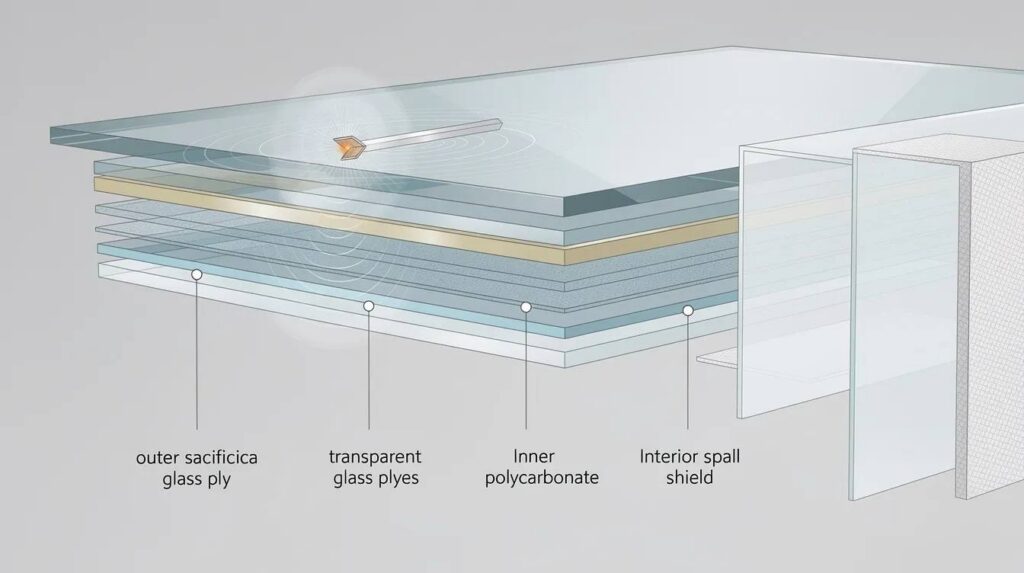
True ballistic protection requires materials and construction capable of absorbing and dissipating the kinetic energy of a bullet. Bulletproof glass options using multi-layered composites are designed to withstand specific types of bullets from firearms, with varying levels of protection based on the materials and thickness used. When a projectile hits properly rated ballistic glass, the multi-layered structure stretches and flexes to absorb kinetic energy—a capability that standard security film applied to regular glass simply cannot replicate.
Security window films are often referred to as “ballistic window films,” but they are not ballistically rated unless applied to glass that is already rated for ballistic resistance. This distinction is crucial: the substrate matters as much as what you apply to it.
Common Misconceptions About Bulletproof Tint
The market confusion around bulletproof window film stems from aggressive marketing that conflates “security” with “ballistic resistance.” Many building owners purchase security film expecting it to prevent active shooter situations, only to discover later that the product was never designed or tested for that purpose.
Security window films can help delay entry during an attack, but they do not provide bullet-stopping power unless installed on ballistically rated glass. The effectiveness of security films depends on the quality of the glass they are bonded to; older or brittle glass may compromise the system entirely. A film rated for ballistic performance requires a compatible glass substrate—you cannot transform standard window glass into bulletproof glass simply by applying a film.
There is no such thing as 100% bulletproof glass. Instead, various types of bullet-resistant glass can stop certain types of bullets from specific firearms, tested under controlled conditions. Products should be tested to established standards like UL 752 and NIJ ballistic resistance benchmarks or ASTM F1233 for forced entry to verify their actual capabilities.
Understanding what category of protection you’re purchasing—and what threats it addresses—prevents the false sense of security that has affected many schools and commercial buildings.
Types of Ballistic Protection for Windows
With the foundational concepts established, we can examine the three primary categories of window protection available. Each serves different threat levels, budgets, and installation scenarios. Selecting the right option requires matching your specific security needs to the verified capabilities of each system and understanding the limits of so-called shatterproof or unbreakable glass solutions.
Security Window Films
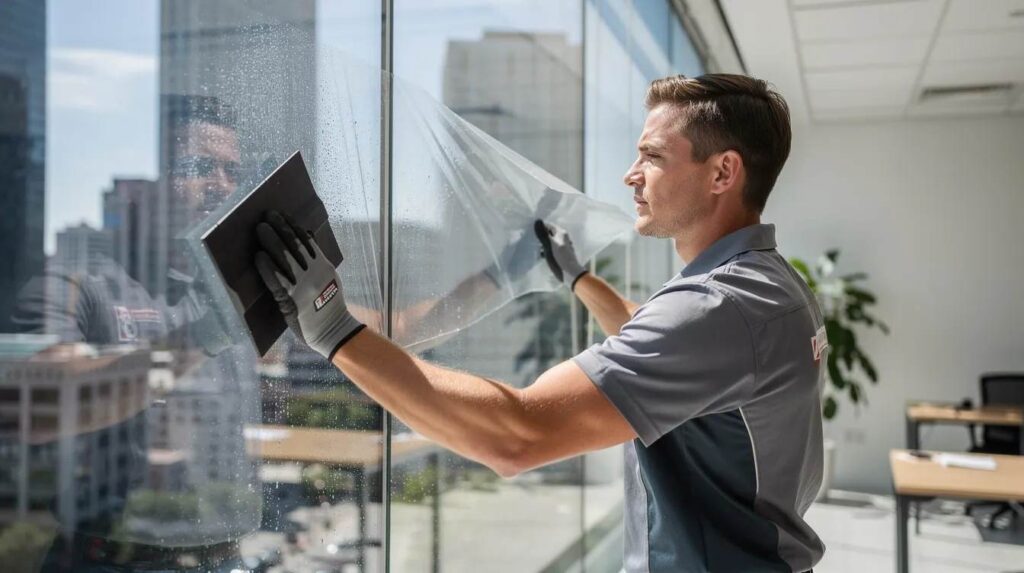
Thicker security films range from 4 mil to 14 mil, making them much thicker than decorative tints. These products are designed for forced entry delay, weather protection, and safety from shattering glass—not stopping bullets.
When installed correctly on appropriate glass, thick security films can delay an intruder by several minutes, providing critical time for occupants to hide or for authorities to arrive. This delay-entry capability makes security film a cost effective solution for many lower-risk commercial and educational environments.
Security films reinforce glass against high winds and flying debris during severe weather events, maintaining the building’s structural integrity. High-quality films block up to 99% of harmful UV rays, protecting occupants’ skin and preventing fading of interior materials. Energy efficiency films can reduce cooling costs by up to 30% in summer and heat loss by up to 20% in winter for homes.
For high-risk areas, security films should be paired with anchoring systems to bond the film to the window frame to prevent the filmed glass pane from being knocked out. Without proper edge attachment, even quality film on solid glass may fail during a sustained attack.
Polycarbonate Ballistic Panels
Polycarbonate ballistic panels offer a middle ground between security film and complete glass replacement. These retrofit systems install over existing glass to provide genuine bullet resistance without the cost and disruption of full glazing replacement, similar in concept to BulletShield retrofit ballistic glazing panels.
Bullet-resistant glass can be retrofitted over existing glass surfaces to enhance security without the need for complete replacement, providing a cost-effective solution for improving safety. Products like glass-clad polycarbonate combine the optical clarity of glass with the ballistic performance of polycarbonate, achieving UL 752 ratings at various levels.
These systems work well for transaction windows, entry points, reception areas, and other high-risk zones where complete window replacement isn’t practical. They allow security upgrades to be phased across a building based on threat assessment and can be integrated with broader polycarbonate glass security systems for high-risk environments.
Bullet-Resistant Glass Systems
Complete bullet-resistant glass systems provide the highest level of window protection. There are four primary types of bullet-resistant glass commercially available: acrylic, laminated polycarbonate, glass-clad polycarbonate, and insulated glass, each offering different levels of protection against ballistic threats and forming the core of many bulletproof window and door security packages.
Bulletproof glass is generally thicker and stronger than security window films, making it a more effective solution for stopping bullets. Multi-layer laminated glass with interlayers like PVB or ionoplast can achieve ratings from UL 752 Level 1 (handgun protection) through Level 8 (high-velocity rifle protection), comparable to UL 752-rated bullet resistant wall panel systems used to harden adjacent wall assemblies.
These systems require robust framing and structural support. Weight per square foot increases significantly at higher protection levels—Level 4 and above glazing may be 1.5 inches or thicker, requiring frame reinforcement and sometimes structural modifications.
Properly installed bullet-resistant glass or security films can help slow, disrupt, or prevent active shooter situations, making them a critical consideration for school safety measures. However, the “properly installed” qualifier is essential: the entire system—glass, frame, anchoring—must match tested specifications.
Testing Standards and Performance Ratings
Verified performance matters more than marketing claims. Without standardized testing, there’s no reliable way to know whether a window protection system will perform under real-world conditions. Third-party testing provides the documentation needed to make informed purchasing decisions.
UL 752 Ballistic Resistance Standards
UL 752 is the primary U.S. standard for ballistic resistance in architectural glazing. It categorizes protection levels based on specific ammunition types, bullet weights, velocities, and shot counts. Understanding these levels allows security professionals to match protection to realistic threat profiles.
The standard tests the complete assembly—glazing, frame, and anchoring—not just the glass or film alone. A product rated UL 752 Level 3 was tested as a system; applying that same film to different glass doesn’t automatically transfer the rating.
Key UL 752 levels include:
- Level 1: 3 shots of 9mm full-metal copper jacketed lead core at approximately 1,175-1,293 fps
- Level 2: 3 shots of .357 Magnum JSP at approximately 1,250-1,375 fps
- Level 3: 3 shots of .44 Magnum at approximately 1,350-1,485 fps
- Level 4: 1 shot of .30-06 soft point rifle round at approximately 2,540-2,794 fps
Levels 5-8 address progressively more powerful rifle ammunition with multiple-shot requirements. Most school and commercial applications focus on Levels 1-3 (handgun threats), while critical infrastructure may require Level 4 or higher.
Protection Level Comparison
| UL 752 Level | Ammunition Tested | Typical Applications | Material Type | Approximate Cost Range |
|---|---|---|---|---|
| Level 1 | 9mm FMJ (3 shots) | Schools, retail fronts, and low-risk reception | Film + rated glass or thin laminate | Lower tier |
| Level 2 | .357 Magnum JSP (3 shots) | Banks, pharmacies, higher-threat reception | Thicker laminate or hybrid | Moderate |
| Level 3 | .44 Magnum (3 shots) | School entries, public safety buildings | Multi-ply laminated or polycarbonate hybrid | Higher |
| Level 4 | .30-06 rifle (1 shot) | Utility substations, government sites | Thick layered composites | Much higher |
| Levels 5-8 | High-velocity rifle (multiple shots) | Embassies, detention, military | Monolithic or thick laminated systems | Very high |
| When selecting a protection level, consider the realistic threat profile for your location. Most active shooter situations involve handguns (Levels 1-3), while rifle threats (Levels 4+) are more common at critical infrastructure sites. Over-specifying wastes budget; under-specifying creates false security. |
Common Challenges and Solutions
Implementing effective ballistic protection involves navigating practical constraints around cost, installation complexity, and ongoing maintenance. These challenges are manageable with proper planning and by leveraging vetted bulletproof window and door security solutions that are already tested as complete systems.
Cost vs Protection Level
Ballistic protection costs increase dramatically at higher UL levels—not just for materials, but for structural support, frames, and installation labor. Film retrofits for Levels 1-3 cost a fraction of complete glazing replacement at Levels 4-8.
Solution: Prioritize protection based on threat assessment. Install higher-rated systems at main entries, reception areas, and high-traffic zones. Use quality security film elsewhere to delay entry and reduce injury risk. This phased approach maximizes protection within budget constraints while ensuring the most vulnerable access points receive appropriate protection first.
Installation Complexity
Correct installation determines whether a system performs to its rated specification. Edge anchoring is essential for security films—without proper frame attachment, filmed glass can be dislodged even if the film itself holds. The effectiveness of security films depends on the quality of the glass they are bonded to.
Solution: Work with certified installers who understand the complete system requirements. Verify that installation matches the tested assembly specifications. Keep documentation of test reports and installation procedures. Cutting corners on installation undermines the entire investment.
Maintenance Requirements
Security films degrade over time due to UV exposure and adhesive breakdown. Most manufacturers recommend reassessment or replacement every 12-15 years. Ballistic glass systems require periodic inspection of seals, lamination integrity, and frame hardware.
Solution: Establish a maintenance schedule from installation. Document baseline conditions and inspect annually. Budget for eventual replacement or refurbishment. Maintained systems perform to specification; neglected systems may fail when needed most.
Why Choose Our Ballistic Protection Services
Selecting ballistic protection requires expertise that goes beyond product selection. Our team brings certified knowledge of UL 752, NIJ, and ASTM standards, enabling accurate threat assessment and appropriate system specification for each application.
We provide complete protection assemblies—not just film products—including matched glass, anchoring systems, and frame reinforcements that have been tested and certified together. This systems approach ensures that installed protection performs to its rated specification.
Our consultation process begins with threat assessment to map realistic risks, identify priority zones, and develop phased implementation plans that balance security needs with budget constraints. We work extensively with schools, commercial buildings, government facilities, and churches and other places of worship needing bullet-resistant glass security, understanding the unique requirements and procurement processes for each sector.
Experience matters when protecting people. Our installations are completed by certified professionals who understand that proper installation directly affects performance under real-world conditions.
Conclusion and Next Steps
True bulletproof window tint does not exist as a standalone product, but effective protection alternatives are available. Security window films delay forced entry and reduce injury from broken glass. Polycarbonate ballistic panels retrofit over existing glass for genuine bullet resistance. Bullet-resistant glass systems provide verified protection against specific firearm threats when independently tested to UL 752 standards.
Take these immediate steps:
- Conduct a threat assessment to identify realistic risks for your building
- Map priority zones where higher-level protection is most critical
- Schedule a consultation to review options matching your threat profile and budget
- Request test documentation for any products under consideration
- Plan for professional installation with proper edge attachment and frame integration
Related topics worth exploring include forced entry protection for door glass and entries, blast mitigation for facilities facing explosive threats, and privacy films that can be combined with security applications.
Frequently Asked Questions
Is bulletproof window tint real?
No. There is no such thing as bulletproof window tint in the traditional sense. Security films are designed to hold glass fragments in place upon impact, but they do not have bullet-stopping power when applied to regular glass. Only ballistic panels or bullet-resistant glass systems tested to standards like UL 752 provide verified protection against firearms.
What’s the difference between security film and ballistic protection?
Security window film holds broken glass together, delays entry, and reduces injury from shattering glass. It does not stop bullets. Ballistic protection—whether retrofitted panels or replacement glass—is designed and tested to stop specific bullets from specific firearms under controlled conditions. The mechanisms and capabilities are fundamentally different.
How much does bullet resistant window protection cost?
Costs vary significantly by protection level and installation type. Security film retrofits for UL 752 Levels 1-3 cost substantially less than complete ballistic glass replacement at Levels 4-8. Higher levels require thicker, heavier materials plus frame reinforcement and structural modifications. Contact us for a site-specific assessment.
Can you install ballistic protection on existing windows?
Yes, with limitations. Security films can reinforce existing glazing for entry delay. Polycarbonate ballistic panels can be retrofitted over existing glass for genuine bullet resistance at lower UL levels. However, for higher rifle-level threats, complete glass replacement is typically required. The existing glazing frame must support the added weight and loads of any retrofit system.
What UL 752 level do I need for my building?
This depends on your threat profile. Most schools and commercial buildings face handgun threats covered by Levels 1-3. Banks and higher-risk reception areas often specify Level 2-3. Critical infrastructure, government buildings, and facilities facing rifle threats may require Levels 4-8. A professional threat assessment matches realistic risks to appropriate protection.
How long does ballistic window protection last?
Security films typically require reassessment or replacement every 12-15 years due to UV degradation and adhesive breakdown. Ballistic glass systems last longer but require periodic maintenance of seals, lamination integrity, and hardware. Proper maintenance ensures systems perform to specification throughout their service life.
Do schools qualify for special pricing on ballistic protection?
Many schools access funding through safety grants, state security programs, or federal initiatives. We work with school administrators to navigate procurement processes and identify applicable funding sources. Contact us to discuss options specific to your district.
Can bullet resistant films be combined with other window treatments?
Yes. Security films can be installed alongside solar control films, privacy films, or decorative treatments. However, the security film typically goes on the interior surface closest to the glass. For ballistic panels or glass replacement, additional treatments apply as they would to any window. Discuss your complete requirements during consultation to ensure compatibility.