Overview of Bullet Resistant Glass
Bullet resistant glass represents one of the most effective transparent security solutions available today. Unlike standard glass that shatters upon impact, bullet resistant glass is constructed using multiple layers of materials, typically combining glass and polycarbonate, to absorb and disperse the energy of a bullet. This laminated construction prevents penetration while maintaining the visibility and natural light that buildings require.
The term “bulletproof glass” is actually a misnomer. No transparent system is invulnerable to every conceivable threat—ratings are specific to tested ammunition types, velocities, and impact conditions. That’s why security professionals prefer “bullet resistant” as the more accurate descriptor.
In 2026, demand for ballistic glass extends far beyond traditional applications. Schools are upgrading main office vestibules after security audits. Banks continue to protect teller lines and transaction windows. Government buildings, police stations, courthouses, pharmacies, and even high-end residential properties now specify ballistic protection as standard.
Key takeaways for readers in a hurry:
- Bullet resistant glass stops projectiles through layered construction that absorbs and disperses energy
- The UL rating system establishes eight protection levels, from basic handgun to military-grade rifle
- Three main material families exist: all-glass laminates, glass clad polycarbonate, and all-polycarbonate systems
- Thickness ranges from approximately ¾ inch for handgun protection to over 3 inches for military-grade threats
- Proper installation in tested frames is mandatory for reliable protection
Disclaimer: The term ‘bulletproof glass’ is often misleading, as no glass or film combination can completely withstand every physical or ballistic attack. Instead, school and safety officials rely on high-grade bullet-resistant protective glazing and films designed to absorb severe impact, which can help slow, disrupt, or prevent forced entry during active shooter situations and buy vital time for first responders.
Table of Contents
Navigate directly to the section most relevant to your project:
- Overview of Bullet Resistant Glass
- How Bullet Resistant Glass Works
- Bullet Resistant Glass Rating Systems (UL 752 & NIJ)
- Types of Bullet Resistant Glazing
- Typical Thicknesses and Performance by Threat Level
- Common Applications of Bullet Resistant Glass
- Selecting the Right Bullet Resistant Glass for Your Project
- Why Choose Our Bullet Resistant Glass Solutions
- FAQs About Bullet Resistant Glass
How Bullet Resistant Glass Works
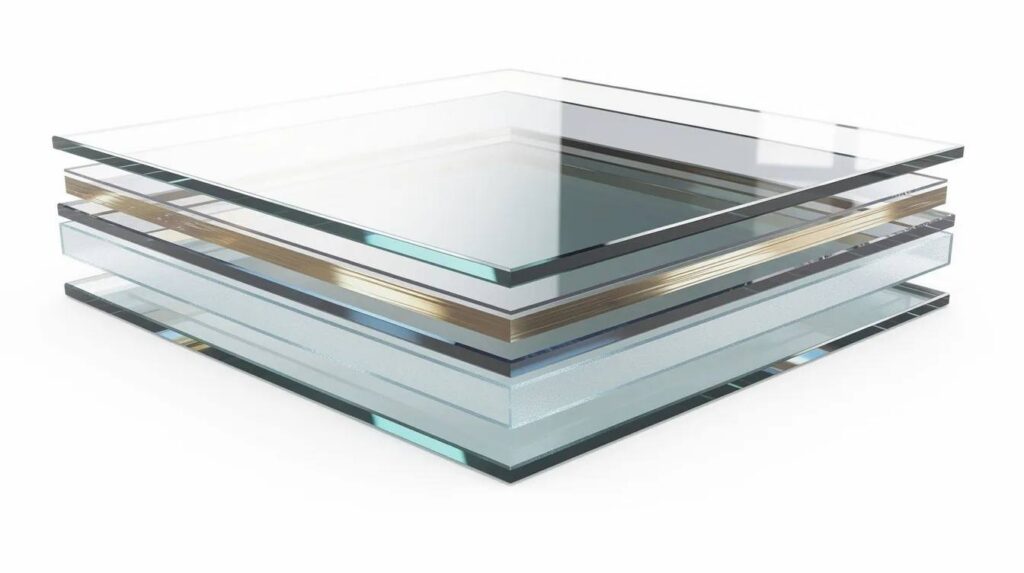
Bullet resistant glass is designed to stop projectiles without shattering, relying on its material composition and architecture to retain the bullet and absorb its energy. The fundamental mechanism involves laminated glass layers working synergistically with polymer interlayers and plastic backing materials.
When a bullet strikes, the sequence unfolds rapidly: the outer glass layer fractures and flattens the projectile due to glass’s inherent hardness. The bullet’s energy then disperses across interlayers—typically polyvinyl butyral (PVB) or ionoplast materials—which act as adhesives while remaining flexible enough to absorb shock. Finally, the polycarbonate layer on the protected side deforms to capture remaining energy, preventing penetration entirely.
This construction also addresses spall—the dangerous flying glass fragments that injure occupants even when bullets don’t penetrate. Modern systems contain these fragments within the laminate structure, significantly improving safety during ballistic events.
Critical to understand: ballistic glazing functions as a complete system. The framing, anchorage, surrounding walls, and door integration all influence real-world ballistic performance. Rated glass installed in inadequate framing provides a false sense of security.
Bullet Resistant Glass Rating Systems (UL 752 & NIJ)
The UL rating system is a series of tests established by Underwriter’s Laboratory (UL) to enhance public safety by setting standards for bullet resistant glass. Eight different levels of ballistics resistant glass have been established by the UL, each capable of withstanding security threats of different magnitudes. The UL rating system is one of the most widely-accepted sets of quality standards for bullet resistant glass, recognized by the Occupational Safety and Health Administration (OSHA), and aligns with broader ballistic resistance standards such as UL 752 and NIJ.
UL 752 Levels by Application:
- Retail and Small Business (UL Levels 1–2): Designed to stop small-caliber handguns like 9mm or .357 Magnums. Commonly used in convenience stores, jewelry shops, and gas stations as a deterrent against armed robberies. Level 1 bullet resistant glass is designed to stop bullets from common small arms, such as 9mm and .38 Special handguns, and typically measures around 1.25 inches in thickness.
- Financial and Corporate (UL Levels 2–3): Engineered for threats such as .44 Magnum handguns and is ideal for banks, credit unions, and secure corporate offices where higher employee safety is required. Level 3 bullet resistant glass is engineered to withstand bullets from .44 Magnum handguns, with a multilayer composition that can reach up to 1.75 inches in thickness.
- Government and Law Enforcement (UL Levels 3–5): Facilities typically start at Level 3 but may use higher ratings like Level 4 for rifle protection (.30 caliber). Glass-Clad Polycarbonate is preferred for Government and Law Enforcement facilities because it withstands multiple shots and offers superior durability against the elements.
- High-Risk and Military (UL Levels 6–8): Provides protection against high-speed, multi-shot 9mm (Uzi) and high-power rifle fire (AK-47, 7.62mm). Levels 5 and 6 bullet resistant glass provide protection against military-grade weaponry, such as AK-47s, and utilize composites measuring from 2.5 to 3 inches thick. These materials are exclusively used for strategic command centers, embassies, and VIP protection where the threat of automatic weapons or armor piercing rounds is present.
NIJ ratings (I, IIA, II, IIIA, III, IV) are more commonly associated with body armor but often referenced for vehicle transparent armor applications, including NIJ Level IIIA specifications for law enforcement vehicles, and are part of the broader landscape of bullet-resistant materials ranked by performance.
Types of Bullet Resistant Glazing
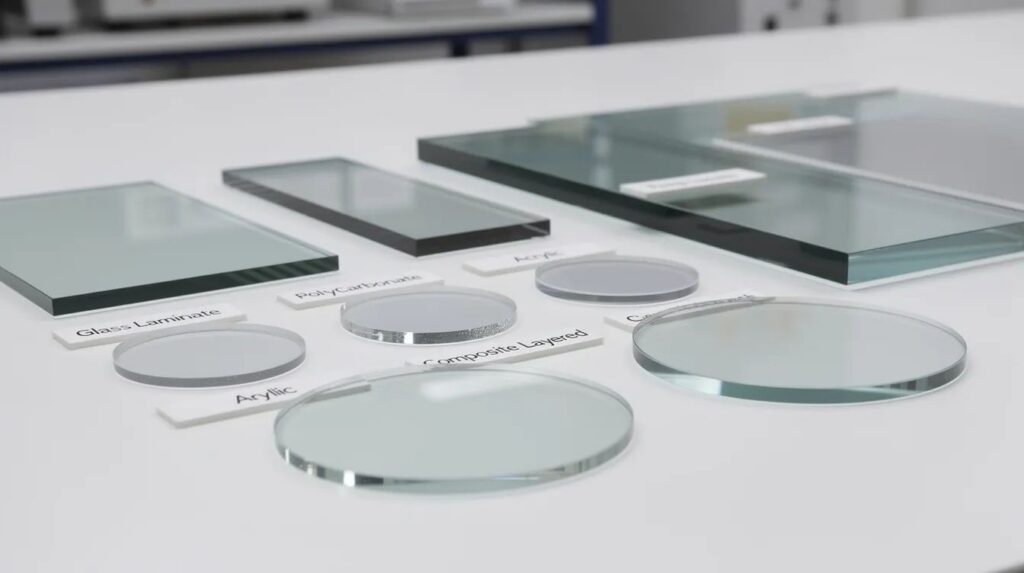
Bullet resistant products encompass several material families, each with trade-offs in weight, thickness, optical clarity, and cost. Modern projects often combine ballistic protection with other requirements such as fire ratings, blast resistance, hurricane impact protection, or thermal insulation through insulated ballistic glass configurations, often turning to advanced polycarbonate glass security systems to meet multiple performance criteria.
All-Glass Bullet Resistant Laminates
All-glass systems use multiple plies of glass bonded with PVB or ionoplast interlayers. These laminated glass constructions offer excellent optical clarity, superior scratch resistance, and long-term durability without yellowing concerns. Traditional all-glass bullet resistant glazing provides effective protection across various UL levels.
Ideal applications include banks, teller lines, interior transaction windows, and historic buildings where optical quality is paramount. All-glass laminates can integrate into standard commercial frames when properly engineered, though higher threat levels may require reinforced framing due to increased weight.
Glass-Clad Polycarbonate Systems
Glass-clad polycarbonate features glass layers on the attack side combined with polycarbonate or other plastic layers on the protected side. This construction enables UL Levels 1 through 8 coverage, providing the broadest threat protection with reduced weight compared to all-glass rifle-rated systems.
Benefits include improved multi-hit capability—the ability to withstand multiple shots in the same area—lighter and thinner profiles, and better spall reduction on the witness side. Trade-offs include higher material cost, UV sensitivity requiring proper edge protection, and occasional minor optical distortion at extreme thicknesses.
Applications span law enforcement facilities, control rooms, cash-handling centers, high-threat entrances, and vehicle transparent armor where weight constraints are critical, where retrofit BulletShield ballistic security panels can provide added protection over existing glass without full replacement.
All-Polycarbonate and Acrylic Systems
Monolithic acrylic and laminated polycarbonate systems offer very light, impact-resistant glazing for specific applications. While polycarbonate alone can resist certain handgun threats, it’s more susceptible to scratching and chemical attack than glass-clad alternatives. Laminated polycarbonate products tested to UL Levels 1, 2, and 3 represent practical, affordable solutions for common handgun ballistic threats.
Common uses include interior security partitions, temporary barriers, vehicle applications, and situations where basic handgun protection suffices at lower cost. Hard-coat technologies improve abrasion resistance but may not match glass for long-term clarity in high-traffic areas, so understanding the best options for bulletproof glass and alternative systems is essential when comparing solutions.
Typical Thicknesses and Performance by Threat Level
The thickness of bullet resistant glass varies depending on the level of protection required, with typical thicknesses ranging from ¾ inch for handgun protection to over 3 inches for military-grade threats.
Approximate thickness ranges by threat category:
- Handgun-rated (UL Levels 1–3): Approximately ¾ inch to 1¾ inches. Level 1 systems measure around 1.25 inches; Level 3 reaches up to 1.75 inches through more layers.
- Rifle-rated (UL Levels 4–8): Traditional systems span 1½ to 3+ inches. Level 7 and Level 8 constructions for the highest level of protection often exceed 3 inches.
- Advanced glass-clad polycarbonate: Newer designs achieve significant rifle resistance at sub-one-inch configurations, enabling lighter vehicle doors and retrofit applications.
Published thicknesses are guidelines only; actual specifications depend on the test standard, manufacturer engineering, and specific project requirements, and many projects also reference blast resistant performance standards such as GSA/ISC when combined ballistic and blast threats are a concern.
Common Applications of Bullet Resistant Glass
Bullet resistant glass is commonly used in banks, credit unions, gas stations, convenience stores, storefronts, municipal buildings, and schools to enhance security against potential threats. The market has expanded significantly beyond traditional security applications following high-profile incidents.
Building types deploying ballistic glazing: Churches and other places of worship increasingly adopt bullet-resistant glass security solutions to harden entry points while maintaining a welcoming environment.
- Financial institutions (teller lines, vault areas, transaction counters)
- K–12 schools and universities (main office vestibules, administrative areas)
- Police stations, courthouses, and embassies
- Utility control centers and critical infrastructure
- Pharmacies and high-value retail establishments
- High-end residential safe rooms
Vehicular applications:
- Law enforcement patrol cars and prisoner transport vehicles
- Cash-in-transit trucks and security convoys
- Diplomatic and executive protection vehicles
Higher levels of bullet resistant glass, such as UL Level 4 and above, are typically utilized in military bases and government buildings due to their ability to withstand fire from assault rifles and automatic weapons.
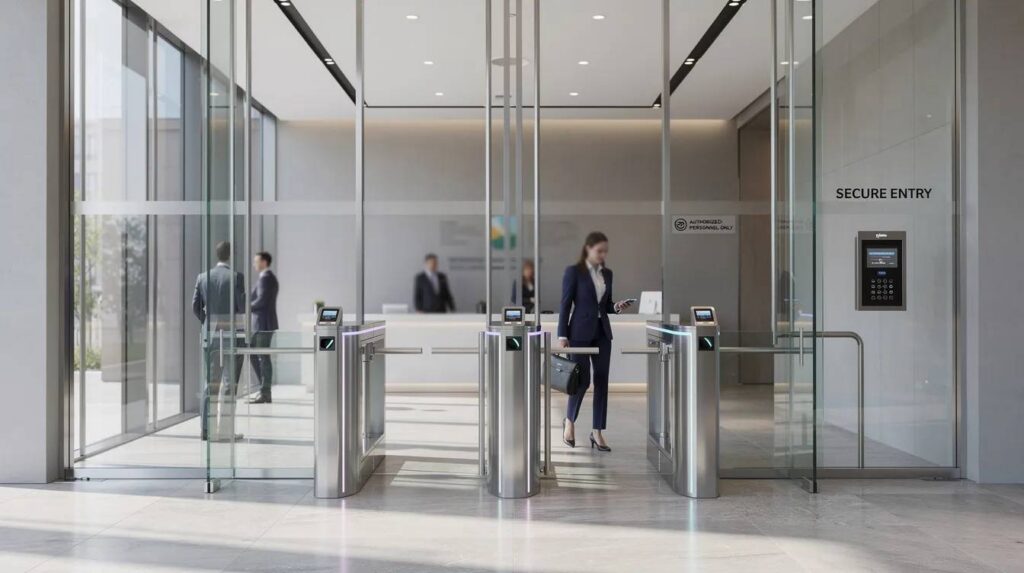
Bullet resistant glass is increasingly being adopted in school security measures to protect students and staff from potential violent incidents, often in tandem with school security updates reinforcing window and door glass to withstand both ballistic and forced-entry attacks. A typical scenario: a school district upgrades its main office vestibule to UL Level 3 after a comprehensive 2024 security audit, creating a secure entry point while maintaining a welcoming atmosphere.
Selecting the Right Bullet Resistant Glass for Your Project
Correct selection depends on threat assessment, building function, local regulations, and budget—not simply choosing the highest rating possible. Overspecification wastes capital; underspecification creates unacceptable risk, and in some cases ballistic window film solutions for active shooter delay may be appropriate as part of a layered security strategy rather than a full ballistic glazing upgrade.
Decision framework:
- Identify likely threats based on location, building function, and professional security consultation
- Determine required UL level matching documented threat profiles
- Consider weight and framing constraints particularly for retrofits or vehicle applications
- Select material family (all-glass for clarity, glass-clad for versatility, polycarbonate for weight savings)
- Verify integration requirements including rated frames, compatible hardware, secure anchorage, and access control coordination
Early involvement of security consultants, architects, and glazing specialists prevents costly redesigns. A school faces different threats than a police headquarters; designing equivalent systems represents poor resource allocation.
Why Choose Our Bullet Resistant Glass Solutions
Our bullet resistant products span the complete UL 752 range, from basic handgun protection through high-level rifle resistance. We engineer both all-glass and glass clad polycarbonate systems to meet specific security requirements across diverse applications.
Key advantages:
- Lighter rifle-rated options specifically engineered for doors and vehicles
- Clarity-optimized laminates for storefronts requiring enhanced security without compromising aesthetics
- Combination systems addressing ballistic threats alongside hurricane impact, forced-entry, and thermal insulation requirements
- In-house engineering support for custom geometries and retrofit challenges
Our total security solutions approach means we provide specification language assistance, coordinate with local installers, and support projects from initial concept through installation. We’re positioned as your long-term security partner rather than a one-time supplier.
Contact our team for project reviews, technical drawings, or competitive pricing on your next ballistic glazing project, or use tools that help you find authorized DefenseLite and BulletShield dealers near you to move from design to implementation.
FAQs About Bullet Resistant Glass
How thick is bullet resistant glass? Thickness depends on protection level. UL Level 1 systems typically measure around 1.25 inches. Level 3 reaches approximately 1.75 inches. Rifle-rated systems (UL Levels 4–8) range from 1.5 to over 3 inches, though advanced glass-clad polycarbonate can achieve rifle resistance at reduced thicknesses.
Is bulletproof glass really bulletproof? No transparent material stops every threat. Each UL level addresses specific ammunition types under controlled test conditions. The right choice matches your documented threat profile—Level 1 stops 9mm rounds but offers no rifle protection.
What UL level do I need for a school or bank? Schools typically specify UL Level 3 following security audits. Banks employ UL Level 2 in customer areas, with higher levels in secure zones. Local regulations vary—verify requirements with first responders and code officials.
Can bullet resistant glass be tinted or insulated? Yes. Modern systems incorporate Low-E coatings for thermal efficiency and various tint options. Communicate requirements early to ensure feasibility without compromising ballistic performance.
How long does bullet resistant glass last? All-glass systems often exceed 20 years with proper edge protection. Glass-clad polycarbonate systems typically last 15+ years when edges remain protected from UV and chemical exposure.
Can existing windows be retrofitted? Retrofit feasibility depends on existing frame condition and structural capacity. Many projects succeed using acrylic or glass-clad polycarbonate systems fitting within existing frames. Early consultation determines feasibility before design commitments.
What’s the difference between ballistic and forced-entry ratings? Ballistic ratings address bullet resistance. Forced-entry ratings target blunt object attacks (hammers, pry bars). Many security projects now combine both requirements in a single system for guard against multiple threat types.
Have project-specific questions? Additionally, our engineering team provides detailed guidance beyond these general answers—contact us for consultation.