Table of Contents
The New Reality: Why Jewelry Stores Are Prime Targets
The Real Cost of Smash-and-Grab Theft to Jewelry Stores
Core Strategy: How to Prevent Smash-and-Grab Attacks Before They Succeed
Jewelry Store Glass Protection Options: From Films to Polycarbonate
Polycarbonate Security Glazing: The Gold Standard Against Smash-and-Grab
Beyond Glass: Building a Layered Jewelry Store Security Plan
FAQs About Jewelry Store Smash-and-Grab Protection
Choosing the Right Protection for Your Jewelry Store
Smash and grab robberies against jewelry retailers have surged dramatically since 2021, and the attacks are getting bolder. If you own or manage a jewelry store, your glass, your layout, and your response plan are either working for you or against you. Here is exactly what you need to know to protect your business, your team, and your valuable inventory.
The New Reality: Why Jewelry Stores Are Prime Targets
Smash-and-grab robberies against jewelry stores surged across Los Angeles, Chicago, the Bay Area, and other major U.S. cities between 2021 and 2024. In 2024 alone, the Jewelers’ Security Alliance documented at least 104 identified smash-and-grab incidents at retail jewelry locations. The trend is accelerating, not slowing.
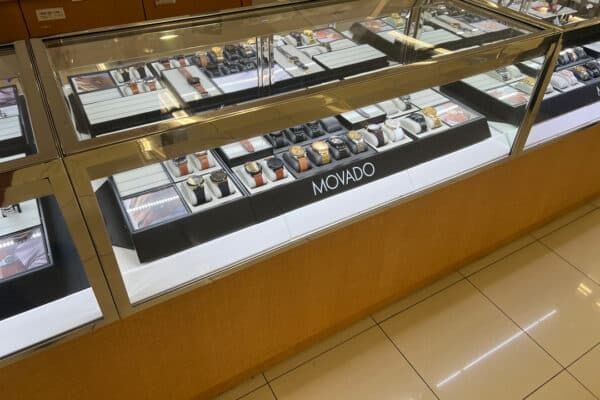
Jewelry stores are prime targets because they concentrate extremely high value – diamonds, gold, luxury watches – into small, portable items displayed in glass display cases just feet from the sidewalk. Criminals know that jewelry stores are targeted for their high-value, portable merchandise, and that a successful hit can yield six figures in seconds.
- Flash robberies now involve large groups of 10 to 30 offenders – and flash mob robberies can involve up to 80 criminals at once – rushing in, smashing multiple display cases, and departing in waiting vehicles.
- Smash-and-grab thefts can occur in under 90 seconds, often before police even receive the alarm notification.
- Criminals often use hammers and crowbars in smash-and-grab thefts, along with bats, sledgehammers, and occasionally weapons to intimidate employees.
- Thieves study weak points: unprotected storefront windows, older tempered glass, doors without security glazing, and entry points with quick vehicle access.
Traditional deterrents alone – surveillance cameras, basic alarms, and standard laminated security glass – no longer provide the right protection. Modern jewelry store glass protection must focus on slowing or stopping forced entry long enough for an immediate response from police or a security service.
The Real Cost of Smash-and-Grab Theft to Jewelry Stores
Smash and grab theft is not just about what disappears from the showcase. The financial damage compounds across months and years. Jewelry stores lose over $100 million annually to thefts in the United States, and individual incidents regularly devastate small and mid-size businesses, especially when organized smash-and-grab retail crimes target high-value merchandise.
- Direct losses: A single smash and grab can remove $100,000 to $500,000 in expensive merchandise in under a minute. In one 2022 Beverly Hills robbery, thieves cleared nearly $2.674 million in valuable merchandise during a daylight attack. In Seattle, another crew stole approximately $2 million in roughly 90 seconds. High-end stores can lose six figures in under 90 seconds.
- Indirect costs: Emergency board-ups, glass and case replacement, temporary closures, overtime labor, and rising insurance premiums add up fast. Smash-and-grab thefts can result in thousands of dollars in damages beyond the stolen goods, and repairing damage from theft can be financially burdensome for stores.
- Reputational harm: Negative media coverage, nervous customers avoiding the store, and traumatized employees erode business for months. Incidents involving weapons or large flash mobs amplify the damage.
Robust jewelry store security – particularly advanced glass protection – reduces both the probability and severity of these incidents. Insurers increasingly view forced-entry-resistant glazing as the gold standard, and stores with certified protection often receive better policy terms, lower deductibles, and continued coverage after a claim.
Core Strategy: How to Prevent Smash-and-Grab Attacks Before They Succeed
The overarching strategy to prevent smash and grab attacks combines strong physical barriers, intelligent detection systems, and trained staff procedures. Smash-and-grab thefts require multi-layered security approaches, and layered security combining physical and operational measures is most effective.
- Prioritize physical delay at every glass point. Reinforced physical barriers delay thieves during smash-and-grab thefts. Upgrade doors, sidelites, storefront windows, and display cases with forced-entry-resistant materials instead of standard tempered glass.
- Redesign your layout. Dispersing high-value items decreases vulnerability to smash-and-grab tactics. Position the most valuable inventory away from entrances and out of direct street visibility after hours. Reducing display quantities can lower losses during theft – keep only what you need on the floor.
- Build a layered security envelope. Every exterior opening should combine security glazing, reinforced frames, monitored alarm systems, and high-resolution cameras with strong lighting. A comprehensive security system integrates all of these into a single, fast-response network.
- Integrate intrusion detection. Glass-break sensors, motion detectors, and door contacts tied to 24/7 monitoring ensure that even a failed entry attempt triggers an immediate police call.
- Train your team. Staff training in robbery response prioritizes safety over merchandise. Move key pieces to TL-rated safes nightly, keep showcases locked during business hours, and never confront armed potential robbers. Practice drills so every employee knows the protocol.
Jewelry Store Glass Protection Options: From Films to Polycarbonate
Not all “safety glass” is equal. True jewelry store glass protection is measured by how long it can withstand deliberate, repeated attacks with heavy tools – the delay time that separates a failed attempt from a successful robbery.
- Standard tempered glass shatters into small pieces after just a few hammer strikes. It offers minimal resistance against forced entry and is the weakest link in most store security plans, especially compared to smash-proof anti-theft glass panels that are engineered to withstand sustained attack.
- Anti-intrusion window films are an entry-level upgrade that can be applied to existing glass. Anti-intrusion window films hold shattered glass together during break-ins by bonding to the surface and resisting shattering. They buy roughly 15 to 30 extra seconds – useful for leased spaces or moderate-risk locations, but insufficient against determined crews.
- Laminated security glass uses multiple layers of glass bonded with interlayers like PVB or ionoplast. Laminated glass absorbs impact and holds together when struck, spider-webbing rather than collapsing. Depending on thickness, it provides 30 seconds to several minutes of delay – a meaningful upgrade for exterior storefronts and display cases.
- Polycarbonate security glazing is the current gold standard. This virtually unbreakable material is approximately 250 times more impact-resistant than standard annealed glass. It flexes under blows rather than fracturing, maintaining the barrier through dozens of heavy strikes. If you understand what polycarbonate is made of and how it performs, it’s clear why high-security storefront glazing systems include reinforced frames and sensors, creating a full range of protection that integrates detection with resistance.
- Retrofit over-glaze panels allow advanced polycarbonate glass security systems to be installed over existing glass, minimizing business disruption and preserving the store’s visual appeal.
Polycarbonate Security Glazing: The Gold Standard Against Smash and Grab
Containment-grade and ballistic-grade polycarbonate systems are now the security solution of choice for high-end jewelry stores, luxury watch boutiques, and mall flagships looking to prevent smash and grab attacks.
Polycarbonate security glazing can withstand repeated high-force impacts. Unlike laminated glass, which cracks and spider-webs visibly under sustained assault, polycarbonate can withstand repeated high-force impacts without shattering. The material flexes and absorbs energy from hammers, axes, bricks, and bats, never creating a pass-through hole. Attackers face a barrier that simply refuses to give way, and most abandon entry attempts within seconds.
Key advantages for high value retail environments:
- Doors and sidelites: The most common entry points for smash attacks. Polycarbonate upgrades and bullet-resistant door systems turn these from weak points into the strongest links in the security envelope.
- Full-height storefront windows: Storefront security solutions for glass doors and windows, including riot glass and similar systems, protect the entire facade without metal bars or roll-down grilles, maintaining the bright, open aesthetic that draws customers into window shopping.
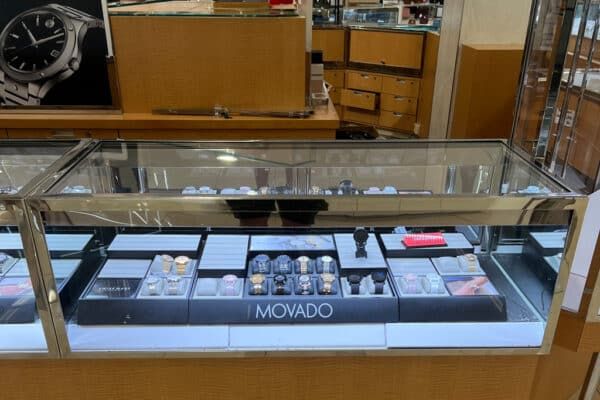
- Interior showcases: High-value display cases upgraded with polycarbonate covers secure valuable merchandise even if attackers breach the exterior.
- Weight and aesthetics: Polycarbonate is 30 to 50 percent lighter than equivalent laminated or ballistic glass, easing retrofits. Modern glass-clad polycarbonate systems mimic the optical clarity of standard glass, so customers see a welcoming store – not a fortress.
Certified to standards like ASTM F1233, these systems deliver delay times of 5 to 15 minutes under sustained tool attack – far beyond what any smash-and-grab crew is willing to risk.
Beyond Glass: Building a Layered Jewelry Store Security Plan
Even the strongest glass works best as part of a multi-layered jewelry store security plan combining physical, electronic, and procedural defenses.
- High-definition surveillance: High-definition surveillance systems aid in identifying thieves and, when paired with impact security glazing systems like DefenseLite Pro, create powerful deterrence. Position surveillance cameras over all entries, display cases, and cash areas, with off-site recording so criminals cannot destroy valuable evidence by smashing equipment.
- Intrusion detection: Intrusion detection alarms improve response time during thefts. Glass-break sensors, motion detectors, and door contacts tied to a 24/7 monitoring center ensure real time monitoring and rapid law enforcement notification. Alarm systems are essential, especially for overnight protection.
- Access control: Access control systems reduce the chance of spontaneous robberies. Electronic locks, badge readers, or biometric systems for back-of-house areas limit who can reach safes, repair benches, and receiving zones. Controlled access vestibules limit the entry of multiple criminals, making flash robs far harder to execute.
- Security fog: Using security fog systems can obstruct visibility during a robbery, disorienting thieves and rendering stolen seconds useless.
- Security personnel: On-site guards during peak hours and overnight patrols from a security service provider add a human layer of prevention for higher-risk locations when combined with robust safety and security glass protection for windows and doors.
- Staff protocols: Training staff to recognize suspicious behavior improves security dramatically. Active greeting of customers can deter potential thieves by eliminating anonymity. Teach employees to watch for casing behavior, use code words, and prioritize life safety during any robbery. Several actions – from moving high-value pieces to safes nightly to practicing emergency drills – make the difference.
Don’t overlook your digital storefront. Just as a site owner must protect the physical store, your website needs defense against online attacks. A SQL command injection or malformed data submission can compromise customer records. Security tools log each specific word or triggered event – you may have seen a Cloudflare Ray ID found in your server logs, or a Cloudflare Ray ID reference when a suspicious request is blocked. These Cloudflare Ray entries help fit thousands of security threats into actionable intelligence, protecting your business on every front.
FAQs About Jewelry Store Smash-and-Grab Protection
Can security glazing prevent smash-and-grab robberies?
Security glazing resists repeated impacts, making forced entry harder. While no system guarantees complete protection, it can delay thieves and give authorities more time to respond.
How much does smash-and-grab protection cost for a jewelry store?
Costs depend on storefront size, materials, and protection levels. Retrofit glazing can reduce expenses by reinforcing existing glass without full replacement.
Can jewelry stores install security glazing without closing for business?
Yes. Retrofit glazing can often be installed outside business hours, minimizing disruption and allowing stores to remain operational.
Will reinforced storefront glass affect how jewelry displays look?
Modern polycarbonate glazing offers excellent clarity and discreet framing, preserving natural light and keeping jewelry displays clearly visible.
Should jewelry stores protect interior display cases as well as storefront windows?
Yes. Reinforced display cases add another security barrier, helping protect valuable jewelry even if thieves enter the store.
Choosing the Right Protection for Your Jewelry Store
To prevent smash-and-grab attacks, every jewelry store must blend strong jewelry store glass protection with smart, layered security tailored to its specific risk profile. A smaller boutique in a lower-crime area might start with anti-intrusion films and upgraded locks, while an urban flagship invests in full polycarbonate storefront systems and integrated intrusion detection.
Conduct a professional risk assessment: examine prior incidents in your neighborhood, police response times, your store layout, and the total value of on-hand merchandise. The cost of the right protection up front is a fraction of what a single successful robbery costs in stolen inventory, repairs, lost business, and emotional toll.
Don’t wait for the next crime wave. Review your existing glass, identify your vulnerabilities, and schedule a free consultation with a security glazing specialist. Your team, your customers, and your business depend on the decisions you make today.