Table of Contents
Introduction: What Municipal Building Security Glazing Solves Today
Why Municipal Building Glazing Is a Priority in 2026
Threat Scenarios for Government and Municipal Buildings
Security Glazing Options for Windows and Glass Doors
Retrofit vs. Replacement in Existing Government Buildings
Standards, Ratings, and Compliance
How a Municipal Security Glazing Project Works with Impact Security
FAQs About Municipal Building Security Glazing
Why Choose Impact Security for Government & Municipal Projects
Next Steps: Plan a Security Glazing Upgrade
Introduction: What Municipal Building Security Glazing Solves Today
Municipal building security glazing refers to retrofit protective systems-polycarbonate shields, laminated composites, and ballistic panels-installed over existing glass in city halls, courthouses, public safety complexes, and administrative offices. Security glazing enhances safety in municipal buildings such as city halls and courthouses by transforming standard glass openings from vulnerable entry points into hardened barriers.
The Oklahoma City bombing prompted increased security measures in federal buildings nationwide, and the 2020–2021 civil unrest-which caused over $500 million in damage across the Twin Cities alone-showed how easily exposed windows and glass doors fail under attack. Government buildings face numerous external threats including vandalism and violence, yet many buildings constructed between the 1960s and 2000s still rely on original single-pane or basic insulated glass that offers limited resistance to even simple hand tools.
Impact Security specializes in retrofit systems like DefenseLite Pro and BulletShield that install over existing window and door glass to resist forced entry, ballistic threats, and blast-without replacing the original glass or altering architectural integrity. In the sections ahead, you will learn the main threat types facing government facilities, how protective glazing works, how projects are phased around daily operations, and what to look for in a security glazing partner.
Why Municipal Building Glazing Is a Priority in 2026
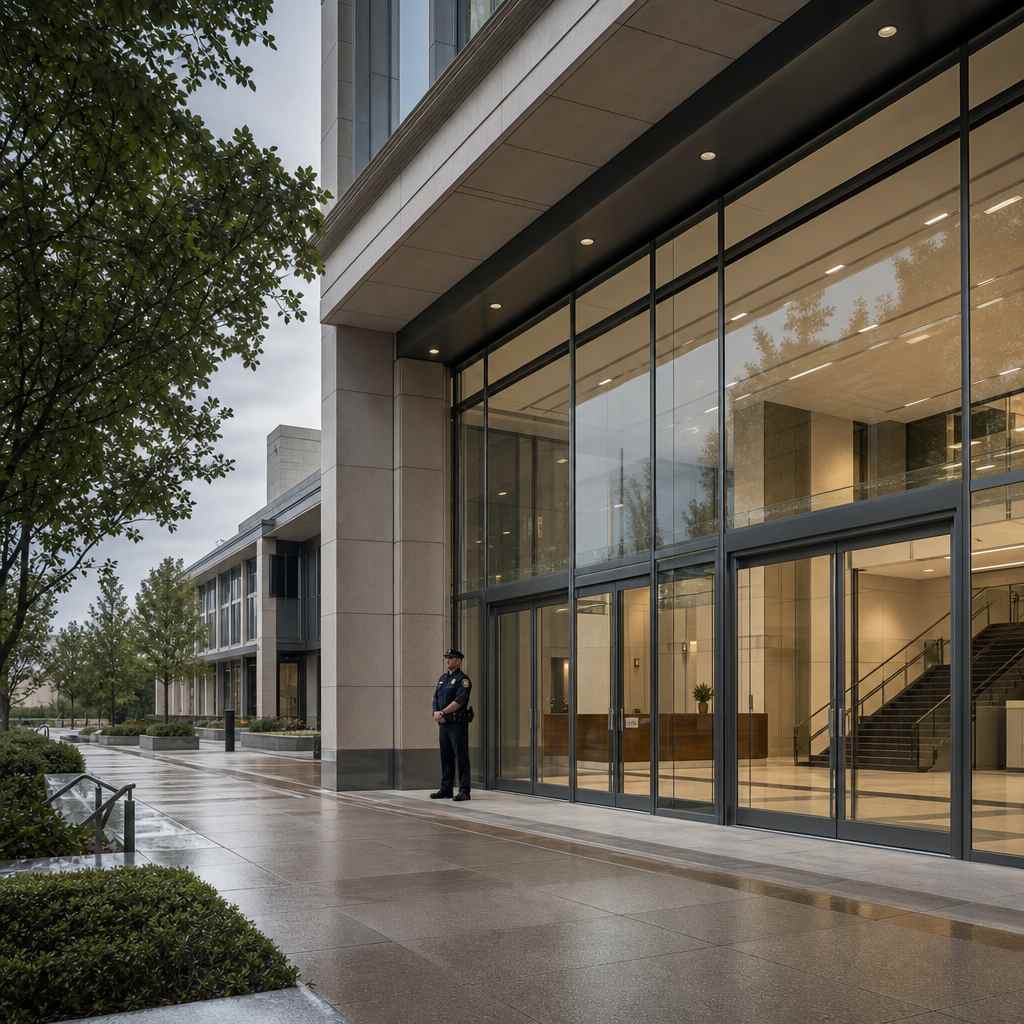
Between 2023 and 2025, high profile incidents including vandalism during protests, targeted break ins at city data centers, and attempted arson at courthouses have intensified the focus on government building security. Independence, Ohio added bulletproof glass to its City Hall entryway in direct response to rising security threats-a decision increasingly common across municipal buildings nationwide.
Unlike private facilities, government buildings operate with open public access, predictable hours, and concentrations of sensitive records. City and county administration buildings, police substations, 911 centers, public utility offices, and permit counters all feature street-facing glass that creates weak points in the entire building envelope. Government buildings are rated from Level 1 to Level 4 for security, yet many public facilities still operate with standard glass that was never designed to handle active threats.
Budget realities mean security upgrades must deliver multiple benefits. Security glazing can also provide insulation and energy efficiency benefits alongside protection, giving facility managers a stronger case for capital investment. And because civic architecture depends on openness, security glazing can improve building security while maintaining openness and visibility-preserving natural light and public trust rather than turning buildings into fortresses. Security glazing can reduce repair costs and minimize disruptions from vandalism, making it a sound long-term investment.
Threat Scenarios for Government and Municipal Buildings
Security glazing is one layer within a broader physical security strategy. Security systems should be part of a comprehensive security strategy to be most effective, but glazing addresses the specific vulnerability where attacks physically engage windows and doors. Different types of glazing can protect against forced entry, vandalism, and ballistic threats.
Forced entry remains the most common scenario, and many facilities now rely on forced entry security glazing for doors and windows to withstand prolonged attacks. Glass doors are frequent targets for opportunistic and premeditated attacks-a disgruntled individual with a hammer at a city hall entrance, or an after-hours smash-and-grab at a permit counter. Security glazing can significantly slow down attempts to breach windows and doors, buying critical minutes for police response and building lockdown.
Ballistic threats target reception lobbies, council chambers, and police report counters, making active shooter mitigation solutions for glass openings a critical layer in overall preparedness. The goal of ballistic protection is survivability and egress time-giving building occupants cover to evacuate-rather than making every window bulletproof.
Blast and vandalism turn broken glass into secondary projectiles. Security glazing minimizes injuries from flying glass during emergencies, and security glazing enhances safety by holding shattered glass together within the frame. Riot glass and containment-grade systems absorb repeated impacts from bricks, Molotov cocktails, and coordinated vandalism during civil unrest.
Human impact situations at social services intake areas and behavioral health centers require glazing that prevents lacerations when agitated individuals strike interior partitions. Environmental threats-hurricane debris, tornado pressure surges-also benefit from laminated and polycarbonate systems that maintain structural integrity even when the glass fractures.
Security Glazing Options for Windows and Glass Doors
Municipal security glazing is not one product but a spectrum. The right choice depends on risk zone, budget, and the balance between protection and aesthetics across vulnerable glass areas, drawing from a range of safety and security glass solutions for windows and doors.
Containment-grade and forced-entry glazing includes products like DefenseLite Pro impact security glazing and RiotLite: thick polycarbonate shields in custom frames that mount over existing glass. Security glass is designed to withstand prolonged physical attacks from tools-sledgehammers, crowbars, bricks-keeping broken glass secured and delaying breach. These systems provide impact resistance on ground-floor storefronts, controlled entry points, and glass doors without replacing existing window assemblies. Security glazing provides a critical barrier that protects against forced entry and ballistic attacks.
Ballistic protection products like BulletShield retrofit bullet-resistant glazing use glass-clad polycarbonate or laminated composites rated to UL 752. Bulletproof windows can resist multiple types of ballistic threats, and bulletproof windows can absorb ballistic energy and resist penetration. ArmorPlast AP75 can stop several rounds from a 9mm handgun, and ArmorPlast is available in ballistic-grade with varying UL 752 ratings-making it suitable for transaction windows, court clerk counters, and council dais backstops. Bulletproof doors prevent break ins and shield occupants from gunfire at main entrances and secure areas. Laminated glass is engineered to resist specific threat levels without clouding visibility, preserving sightlines for staff and visitors. Transparent security glazing maintains architectural aesthetics while ensuring security across public institutions.
Blast-mitigating glazing serves federal government buildings and critical municipal infrastructure, where understanding GSA/ISC blast resistant performance standards helps define appropriate protection levels. The USAW 400 Series windows meet Department of Defense blast requirements, making them appropriate for emergency operations centers and water treatment control rooms where blast resistance is a primary concern.
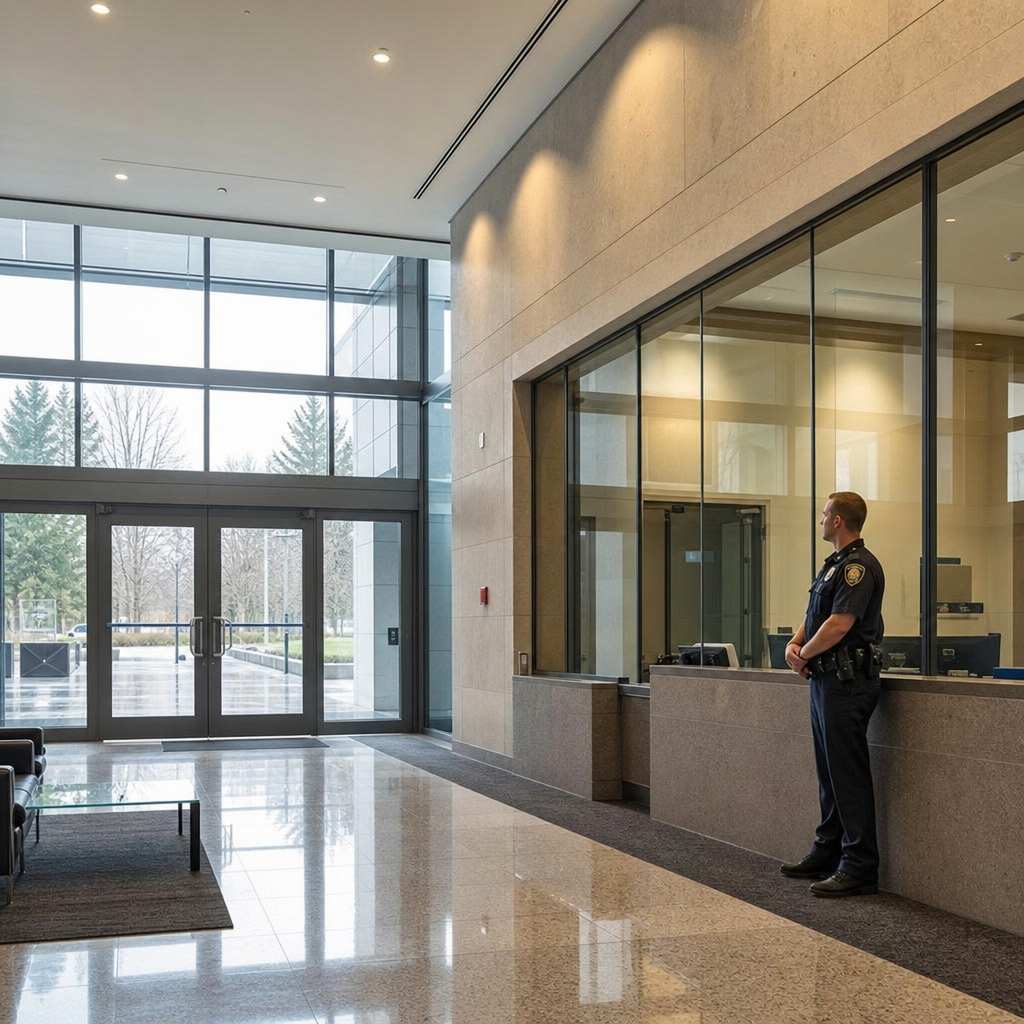
Glass doors and entryways receive retrofitted shields, full door conversion kits, and reinforced framing that transform vulnerable openings into hard targets while preserving ADA clearances. For door glass specifically, these systems protect employees and visitors at the most exposed individual elements of a building.
Security window film and security films can reduce shard hazards after breakage, but alone they offer limited resistance under prolonged attacks or high-caliber firearms. They fit as a supplemental layer in lower-risk zones but should not replace dedicated polycarbonate or ballistic glass systems where real world conditions demand more.
Retrofit vs. Replacement in Existing Government Buildings
Full window replacement removes existing frames and glass entirely. Retrofit security glazing mounts over or inside existing frames. For many buildings-especially government facilities with aging infrastructure-retrofit is the faster, less disruptive, and more cost-effective path to a secure environment.
Retrofit avoids disturbing asbestos-containing materials often found around older frames, preserves historic exteriors on buildings like 1930s courthouses and mid-century city halls, and shortens project timelines. Over-glazing or secondary glazing-interior-mounted ballistic or forced-entry shields behind existing glass-works well on upper floors, occupied offices, and buildings where exterior alterations are restricted by a local historic preservation commission. These approaches protect people and records without altering the facade.
Full replacement remains necessary when frames show severe corrosion, when egress windows no longer meet building codes, or when energy efficiency and acoustic performance are primary drivers alongside security, similar to how storefront security solutions for glass doors and windows balance protection with visibility in retail environments. A new construction public safety headquarters, for example, might specify factory-built ballistic windows from day one.
The phasing flexibility of retrofit glazing is a major advantage for municipal budgets. Municipalities can upgrade highest-risk entrances and customer-service zones in Phase 1, then extend protection to secondary windows as future funding becomes available-spreading costs across fiscal years with minimal disruption to daily operations.
Standards, Ratings, and Compliance for Municipal Security Glazing
Government building security decisions should be based on recognizable test standards, not marketing terms like “unbreakable.” Here are the frameworks that matter:
| Standard | What It Covers | Municipal Relevance |
|---|---|---|
| ASTM F1233 | Forced entry resistance (tools, impacts, time-to-breach) | Ground-floor windows, glass doors, storefronts |
| UL 752 (Levels 1–8) | Bullet resistance by caliber | Transaction windows, police counters, courtrooms |
| GSA / ISC Criteria | Blast hazard and stand-off distance | Federal buildings, critical infrastructure |
| ANSI Z97.1 | Safety glazing in hazardous locations | All public buildings with glass in doors and near floors |
| IBC | Building code compliance for safety glazing | Mandatory across public facilities |
Security glazing systems must comply with ANSI Z97.1 standards. The International Building Code mandates safety glazing in hazardous locations, and Impact Security’s products are engineered to satisfy or exceed these requirements while adding forced entry and bullet resistance.
For ballistic ratings, UL 752 Level 1 covers 9mm handgun threats common at service counters; Levels 3–4 address higher-caliber handguns; and Levels 6–8 protect against rifle rounds at exterior windows of federal government buildings. Match ratings to your threat assessment rather than defaulting to the highest-and most expensive-level.
Facility managers should request third-party test reports, certification letters, and engineering details from any provider. These documents are critical for submittals to city councils, risk managers, and insurance carriers seeking proof that security measures meet recognized standards.
How a Municipal Security Glazing Project Works with Impact Security
Impact Security delivers a turnkey process designed for B2G procurement and occupied government buildings, backed by the company’s advanced security glazing expertise and background. From initial consultation to certified installation, the goal is professional installation with minimal disruption to public services.
Typical workflow:
- Remote consultation – Share floor plans, elevations, and security concerns.
- On-site assessment – A certified dealer or factory rep documents existing glass types, frame conditions, access control systems, and potential threats across each zone.
- Zone-based security plan – Lobbies, council chambers, HR offices, IT rooms, and evidence rooms each receive tailored recommendations-DefenseLite Pro for forced entry zones, BulletShield for ballistic zones, security screens for lower-risk areas.
- Procurement coordination – Impact Security works within city and county procurement rules, prevailing wage requirements, and Buy American compliance.
- Custom fabrication – Panels are built at U.S. facilities in Marietta, GA and Glendale, AZ with edge detailing and sub-framing engineered for each existing window and door system.
- Installation – Work is completed during off-hours or weekends to keep customer service counters open, with dust and noise controls in occupied buildings.
- Post-installation support – Warranties, maintenance guidance for polycarbonate surfaces, and staff training on how glazing behaves during active threats.
FAQs About Municipal Building Security Glazing
These questions address what city managers, risk officers, and public works teams most often ask when evaluating security glazing for public institutions and other public institutions.
How is security glazing different from standard tempered or laminated glass used in public buildings?
Standard glass-even tempered-is designed to break safely, not to resist attacks. Security glazing combines multiple layers of polycarbonate, specialized interlayers, and reinforced framing to delay forced entry and stop or slow bullets. Impact Security’s systems are tested as complete assemblies to forced-entry and ballistic standards, not simply “thicker glass.” Standard glass found in many buildings offers almost no resistance against determined criminal activity.
Can we upgrade glass doors and storefronts in an occupied government building without closing to the public?
Yes. Most municipal projects are phased by entrance, with professional installation completed after hours or on weekends. Temporary barriers, clear signage, and coordination with security staff maintain safe public ingress and egress. City halls, clerk offices, and court facilities typically remain open throughout the process.
Is ballistic protection necessary for all municipal windows, or only certain areas?
Ballistic glazing is typically reserved for higher-risk zones-police report desks, courtrooms, cash-handling transaction windows, and EOC control rooms-based on a formal threat assessment. ArmorPlast AP75 can stop several 9mm handgun rounds at service counters where handgun threats are most credible. Containment-grade forced-entry glazing is often the right fit for other public-facing areas, balancing cost and protection. Bulletproof windows can absorb ballistic energy and resist penetration where the threat level demands it.
Will security glazing make our building look like a fortress?
Modern retrofit systems from Impact Security are designed to be unobtrusive, with clear glazing, low-profile frames, and color-matched trims that blend with existing storefronts or historic façades. From the street, most visitors do not notice the added shield, preserving the openness expected of civic spaces-while staff feel the added physical security immediately.
How long does a typical municipal security glazing project take from approval to completion?
Smaller projects-a single entrance and a few offices-often complete within six to ten weeks from purchase order. Multi-building campus upgrades can span several months with phased installation. Key timing drivers include procurement cycles, design approvals, fabrication lead times, and scheduling around court calendars and council meetings in educational settings, religious institutions, and government facilities alike.
How should we budget for security glazing and show return on investment to our council?
Present security glazing as risk reduction: avoided losses from break ins, lower vulnerability to external threats, reduced downtime after incidents, and potential insurance premium benefits. A phased approach-starting with critical entrances and high-occupancy chambers-spreads costs over fiscal years while demonstrating early success. This strategy helps protect employees, visitors, and mission-critical operations without requiring a single large capital outlay.
Why Choose Impact Security for Government & Municipal Glazing Projects
Impact Security is a U.S.-based manufacturer and installer focused on security glazing for public buildings, commercial properties, and institutional facilities since 2016. For municipal and government buildings specifically, Impact Security brings direct experience with B2G procurement, familiarity with facility security levels, and the engineering depth to respect historic preservation and access control requirements.
Nationwide coverage through certified installers-supported by fabrication centers in Marietta, Georgia and Glendale, Arizona-ensures consistent quality across city, county, and state portfolios. The turnkey delivery model covers risk assessment input, engineering support, custom fabrication, professional installation, and ongoing service, reducing the coordination burden on understaffed public works departments.
Proven product families serve every threat zone: DefenseLite polycarbonate security glazing systems for forced entry and riot protection on doors and windows, BulletShield for ballistic protection at counters and chambers, and custom safe-room glazing for mayors’ offices or 911 command spaces. Impact Security provides complete documentation packages for RFPs and participates directly in council or stakeholder presentations to explain technical details in accessible terms-helping facility managers and risk officers defend their recommendations with confidence.
Next Steps: Plan a Security Glazing Upgrade for Your Municipal Building
Municipal building security glazing is a practical, high-impact way to harden vulnerable glass doors and windows against forced entry, ballistic threats, and active threats without sacrificing the openness that civic architecture demands. To protect people and operations across your facilities:
- Identify your highest-risk buildings and entrances.
- Gather floor plans, photos, and any existing threat assessments.
- Schedule a consultation with Impact Security.
- Use a phased upgrade strategy aligned with your capital plan.
Solutions can be tailored to tight municipal budgets, and many security upgrades are completed without extensive construction, relocation, or public disruption. Request a free security glazing assessment from Impact Security today-and start strengthening the buildings that serve your community against the next decade of evolving threats.