Table of Contents
Why Glass Doors Need Security Glazing Now
How Security Glazing for Glass Doors Works
Common Threats and How Security Glazing Addresses Them
Types of Security Glazing Used in Glass Doors
Retrofit vs. Replacement
Key Performance Standards
How Impact Security Designs and Installs Security Glazing
FAQs About Security Glazing for Glass Doors
Why Choose Impact Security
Next Steps
Why Glass Doors Need Security Glazing Now
Standard glass doors are the weakest link in virtually every building envelope. A determined intruder with a hammer or crowbar can breach most commercial door glass in under sixty seconds. Glass door systems benefit from being paired with security glazing for improved safety, transforming that vulnerability into a meaningful barrier.
Security glazing is specifically designed to resist intentional attacks, whether from bad guys swinging tools or projectiles from firearms.
Between 2020 and 2025, smash-and-grab retail crime surged, active shooters targeted schools and healthcare facilities, and criminal attacks against government buildings and police stations escalated. These trends have pushed building owners, facility managers, and school leaders to rethink every glass opening in their property.
This article is written for security directors, school administrators, and public-sector decision-makers evaluating how to protect people behind existing glass doors.
Impact Security is a U.S. manufacturer and installer of retrofit security glazing systems, including DefenseLite and BulletShield, that strengthen existing door glass without full replacement. Learn more about Impact Security, LLC and its security glazing expertise.
How Security Glazing for Glass Doors Works
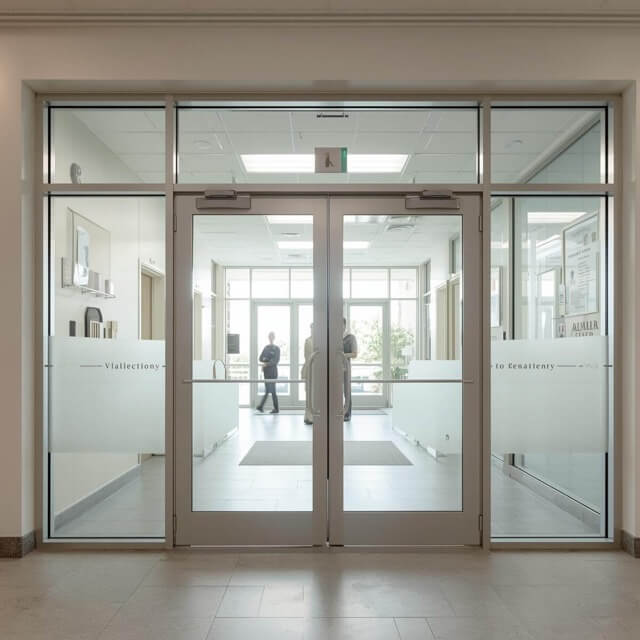
Security glazing is not one product. It is a spectrum that ranges from laminated glass to polycarbonate shields to full bullet-resistant glass assemblies, each engineered for a specific threat level. Laminated glass consists of multiple sheets of glass bonded with a plastic interlayer such as PVB or ionoplast. When struck, smash-resistant glass cracks like a spiderweb, but the interlayer holds everything together in the frame, denying entry.
Modern security glazing provides delayed intrusion by absorbing impact energy across layers. DefenseLite polycarbonate overglaze security panels absorb and deflect energy from repeated attempts with tools, bats, or bricks. Unlike solid barriers, visibility and natural light are maintained with security glazing, so lobbies and storefronts stay welcoming.
Performance levels matter. Basic safety glass handles accidental human impact. Forced entry resistant glazing withstands sustained tool attacks. Bullet resistant glazing stops projectiles at certified calibers. Blast resistant systems manage bomb blast overpressure. Note that “bullet resistant” is the accurate term; no glass is truly bulletproof glass, because performance requirements depend on the caliber, velocity, and number of shots.
Critically, security glazing systems should include strong door frames and high-quality locks. The strongest glass panes fail if the frame or hardware gives way first.
Common Threats to Glass Doors and How Security Glazing Addresses Them
Glass doors face four primary modern threats: forced entry by tools, smash-and-grab theft, ballistic attack from active shooters, and bomb blast from explosives.
- Forced entry: Burglars and rioters target doors first. High-performance glazing withstands heavy impacts from tools like sledgehammers and pry bars, buying critical minutes instead of seconds. Security glazing provides crucial time for authorities to respond before a criminal flees.
- Smash-and-grab: Retail stores, pharmacies, and jewelry shops lose millions annually. Commercial security window and door solutions protect against smash-and-grab attacks by keeping the opening intact even after repeated attempts, while preserving merchandising visibility. Vandalism protection is enhanced when using security glazing for storefronts.
- Ballistic threats: Bullet resistant glazing installed in door vision lites and sidelites at police stations, courthouses, financial institutions, government buildings, and schools supports active shooter mitigation for vulnerable facilities by stopping projectiles from penetrating lobbies and reception areas.
- Bomb blast and explosion: When an explosion shatters unprotected glass, small fragments become lethal projectiles. Blast-resistant glazing is engineered to remain attached during explosions, keeping glass shards from injuring people on the interior or exterior.
Security glazing also delivers secondary benefits: it can improve sound insulation and UV protection, contributing to noise reduction and occupant comfort. When combined with insulated glass units, it can also support energy efficiency goals.
Types of Security Glazing Used in Glass Doors
No single material fits every risk. Most facilities layer materials to hit a specific threat level and budget. Security glazing can be selected for different threat levels, from basic delay to maximum protection.
- Laminated glass: Two layers or more of glass bonded with PVB, ionoplast, or structural interlayers. Typical thicknesses range from 5/16″ to 7/16″ for forced entry classes. Safety against injury is provided when glass breaks by holding shards together. Safety glazing is designed to reduce injuries from accidental impacts, and laminated glass exceeds that baseline.
- Polycarbonate and acrylic shields: Polycarbonate is extremely impact resistant and is suitable for high risk environments like daycare centers, retail stores, and school lobbies. Products like DefenseLite mount over existing door glass and resist repeated attacks without shattering. Security glass can include laminated glass and polycarbonate-faced composites, depending on the threat.
- Bullet resistant glass: Ballistic glass assemblies stack glass and polycarbonate in varying levels of thickness, tuned to UL 752 or EN 1063 standards. BulletShield retrofit ballistic panels are common in police stations, financial institutions, and secure reception doors.
- Security films: Security window film and glazing solutions are applied over existing glass to improve impact resistance and hold broken glass together. Multi layer thin films offer modest delay and flying-glass mitigation, but plastic film alone is not equivalent to a dedicated clear security glazing system when facing serious forced entry or rifle threats.
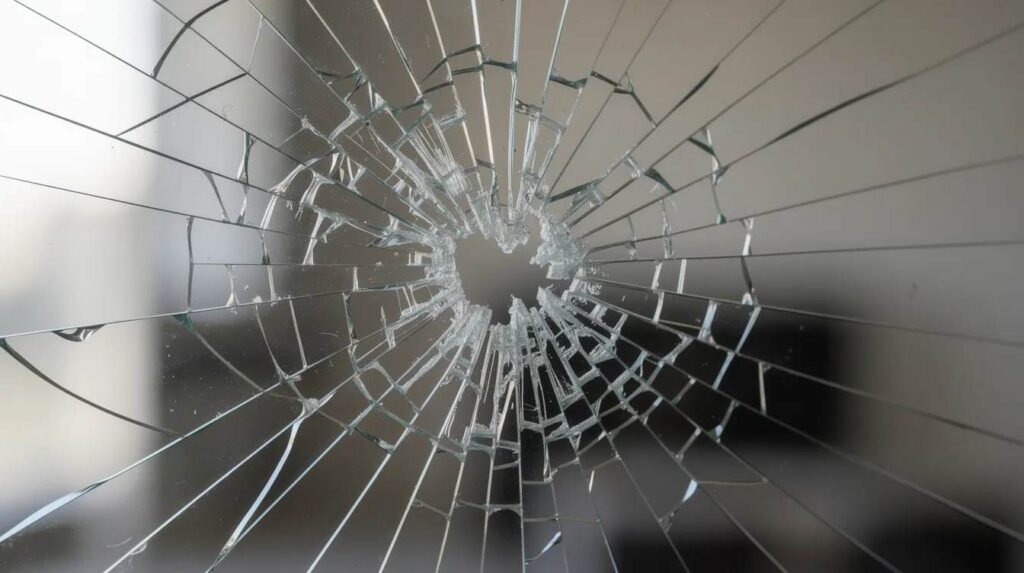
Every system is tested as a complete assembly: glazing, frame, anchors, and hardware certified together.
Retrofit vs. Replacement: Strengthening the Glass Doors You Already Have
The most common question from building owners: “Do we need to rip out every glass door, or can we upgrade what’s in place?”
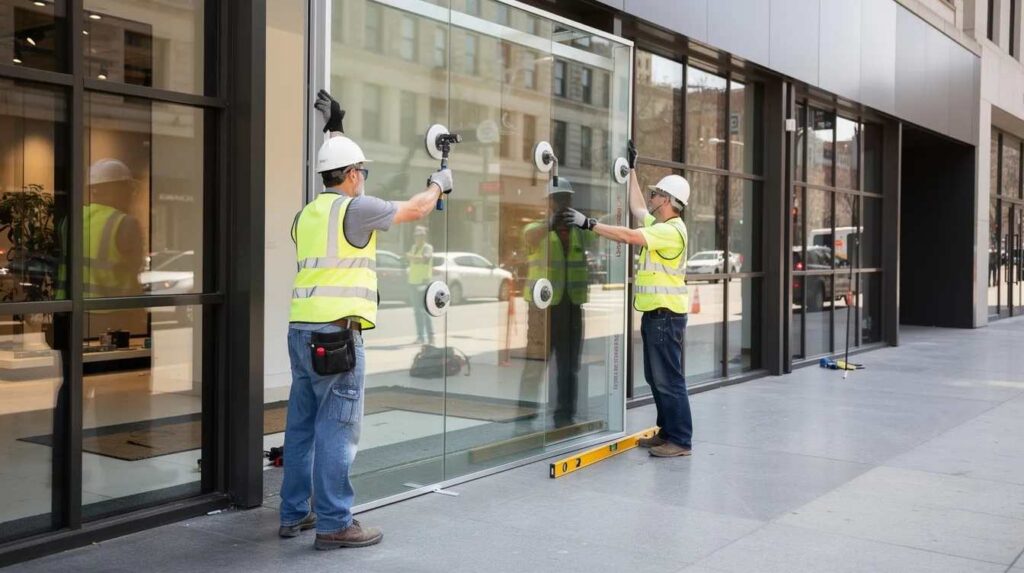
A retrofit security glazing system like forced entry security glazing overlays such as DefenseLite and BulletShield mounts over existing door glass using vented aluminum extrusions and security tipped anchors, secured with tough structural adhesives. This framing system creates a standoff cavity with dynamically moving air between the primary window and the shield, which prevents condensation buildup and unsightly moisture problems, as detailed in DefenseLite product FAQs on vented overglaze systems. The approach protects the existing glazing conditions while adding forced entry or bullet resistant protection designed to the specific threat.
Interior-mounted shields keep entrances operable while preventing intruders from reaching through broken glass to operate locks. Security glazing enhances glass door safety by providing forced entry resistance, and high-performance glazing acts as a significant deterrent against forced entry before an attack even starts. Security glazing can also improve energy efficiency when combined with insulated glazing systems, as the added layer deflects energy and reduces thermal transfer.
Full replacement makes sense when existing windows and frames cannot handle the load, or when the threat demands certified ballistic or blast-rated doors with steel frames. New courthouses and embassies typically go this route. But for most retail, school, and healthcare facilities, an efficient retrofit installation saves substantial cost and schedule. Individual doors often retrofit in hours; a chain retailer rolled out DefenseLite across hundreds of storefront openings in roughly three months. Retrofits leverage existing glazing frames and the existing floor plan, eliminating structural changes.
Key Performance Standards and What They Mean for Your Doors
Marketing terms are not enough. Serious security glazing for glass doors should carry third-party test certifications.
| Standard | What It Tests | Example |
|---|---|---|
| ASTM F1233 / ASTM F1915 | Forced entry resistance under tool and flame attacks | Classes 1.1–2.0 for varying levels of attack duration |
| UL 752 | Ballistic resistance by caliber and shot count | Level 3 UL 752 ballistic resistant glass standards withstand three shots of .44 Magnum |
| GSA/ISC / UFC 4-010-01 | Blast resistance, fragment control | Glazing must meet stringent safety standards for standoff distances |
| ANSI Z97.1 / CPSC 16 CFR 1201 | Human-impact safety baseline | Required for all doors and adjacent glazing |
UL752 ballistic standards define levels of forced entry protection from Level 1 through Level 8, corresponding to threats from 9mm handguns up to 7.62mm rifles. Bullet-resistant glass meets UL752 ballistic standards and is essential for schools, police stations, and government buildings. BulletShield systems meet forced entry and UL 752 ballistic standards through rigorous testing.
Always request test reports for the exact configuration proposed, including glass thickness, interlayer type, polycarbonate gauge, framing system, and anchorage details.
How Impact Security Designs and Installs Security Glazing for Glass Doors
Impact Security specializes in retrofit security glazing for existing glass doors and storefronts, operating nationwide through certified dealers using patented technology.
The process follows four phases:
- Assessment: Security specialists walk each facility, map high-risk doors and sidelites, and define threat scenarios across forced entry, ballistic, and blast requirements.
- Engineering and fabrication: Systems are custom-fabricated at facilities in Marietta, GA and Glendale, AZ. Each shield and frame is sized to existing door glass, hardware clearances, and code performance requirements.
- Installation: Technicians prep glazing frames, mount vented aluminum extrusions, fasten polycarbonate or laminated shields, and verify door operation and egress compliance on every floor.
- Maintenance: Hard-coat polycarbonate resists scratching and UV degradation. Periodic hardware inspections and certified dealer support keep systems performing.
Schools can install security glazing to protect entryways and windows during summer breaks. One Midwestern school district retrofitted all main entry doors during summer 2025. BulletShield systems can withstand multiple gunshots in schools, and bullet resistant glazing is necessary in schools today. Security glazing enhances safety in K-12 and higher education by creating an affordable solution that does not require campus reconstruction. A large healthcare network hardened ER doors after a 2023 incident, using BulletShield to protect people in triage and waiting areas. Bullet-resistant glass is essential for school safety today.
FAQs About Security Glazing for Glass Doors
How much does it cost to add security glazing to existing glass doors?
Pricing varies by threat level, glass size, and whether the project is a retrofit or full replacement. Basic forced entry retrofits cost substantially less per opening than certified bullet resistant upgrades. Retrofits typically cost a fraction of demolishing and replacing entire door assemblies and surrounding storefront framing. Contact Impact Security for a detailed quote based on your existing glazing conditions and volume.
Will security glazing make our glass doors look like prison doors?
Modern laminated glass and polycarbonate shields are optically clear and virtually invisible once installed. Custom powder-coated framing matches existing door finishes to maintain brand and architectural aesthetics. Many hotels, retail chains, and Class A offices use security glazing without guests realizing it is there.
Can we still use and egress through glass doors normally after retrofit?
Yes. Certified retrofit systems are engineered so doors swing, latch, and close normally. Panic hardware continues to function, and installations respect life-safety codes for egress, clearances, and accessibility. Impact Security installers test every opening after installation to confirm smooth operation.
Is security window film enough for forced entry or active shooter protection?
Film alone provides limited delay. Determined attackers with tools can penetrate filmed doors relatively quickly, and film does not turn ordinary glass into ballistic glass. BulletShield can stop bullets and slow active shooters, while film cannot. Film works as a supplemental measure but is not a primary defense for high-risk facilities. Bullet-resistant glazing protects government buildings from forced entry far more effectively than film.
How long does it take to retrofit security glazing on a typical facility?
A typical timeline runs one to two weeks for assessment and engineering, several weeks for fabrication, then days for on-site installation. Individual doors can often be upgraded in hours. Most retail, school, or healthcare retrofits are phased to minimize downtime and completed after hours.
What maintenance do security glazed doors require over time?
Laminated glass requires care similar to standard glass. Polycarbonate shields use abrasion-resistant hard coats and should be cleaned with non-abrasive, non-ammonia cleaners. Routine checks of door hardware, fasteners, and frame anchors should be part of annual security inspections. Impact Security provides maintenance guidance through its certified dealer network.
Why Choose Impact Security for Secure Glass Doors
Impact Security is a specialized U.S. partner for strengthening existing glass doors across commercial, educational, healthcare, and government facilities. The company delivers turnkey capability from threat assessment through in-house fabrication and professional installation by certified dealers nationwide.
Products like DefenseLite and BulletShield are independently tested to UL 752 and forced entry standards. Security glazing can withstand multiple forced entry attempts, and security glazing is engineered to delay forced entry and reduce injury from breakage. Experience spans schools, police stations, government buildings, hospitals, retail stores, and corporate campuses.
Retrofit expertise means protecting people and assets using existing door frames and glass where possible, reducing cost, downtime, and waste. Impact Security provides responsive support, warranty coverage, and the ability to scale from a single high-risk entrance to multi-state portfolios, delivering security glass solutions that match the threat.
Next Steps: Upgrading Your Glass Doors with Security Glazing
Glass doors do not have to remain the weakest point in your building. With the right security glazing, they actively protect people, assets, and operations on every floor.
Contact Impact Security for a site assessment, send door and storefront drawings, or schedule a virtual walk-through to discuss forced entry, bullet-resistant, and blast protection options. Prioritize your main lobby doors, employee entrances, loading docks, and any glass doors adjacent to critical operations.
Build a phased security glazing plan starting with the highest-risk, most public-facing locations. As threats and codes evolve through 2026 and beyond, retrofit security glazing keeps your glass doors adaptable without recurring major construction.