Table of Contents
Why Anti Intrusion Glass Protection Is Critical Now
What Is Anti Intrusion Glass Protection?
Why It Matters in 2026
How Retrofit Systems Work
Levels of Protection: Forced Entry, Riot, Ballistic, Blast
Comparison vs. Standard Safety Glass and Window Film
Typical Applications: Retail, Schools, Government, Healthcare, Finance
Understanding Ratings and Testing Standards
Mistakes to Avoid When Hardening Glass
How Impact Security Designs Retrofit Solutions
Project Timeline: From Assessment to Installation
FAQs about Anti Intrusion Glass Protection
Why Choose Impact Security
Next Steps and How to Request a Free Assessment
Introduction: Why Anti Intrusion Glass Protection Is Critical Now
Between organized retail crime rings, civic unrest, and active shooter incidents across the U.S. from 2020 through 2025, one vulnerability keeps appearing in after-action reports: glass. In the 2023 Covenant School shooting in Nashville, the attacker breached locked doors by firing through adjacent glass panels. At Sandy Hook, a similar tactic was used to bypass a secured entrance. During urban protests in 2020, businesses with standard storefront glass watched their interiors get looted in seconds. The common thread is that doors and windows – not walls or roofs – are where most intrusions begin.
Anti intrusion glass protection refers to engineered systems designed to stop or delay forced entry through glass openings. These include retrofit polycarbonate shields, reinforced framing, and security glazing that mount over existing windows and doors – without tearing out what is already there. Traditional tempered or laminated glass alone is not built to resist a person swinging a hammer, wielding a crowbar, or firing a weapon with destructive intent.
Impact Security is a U.S.-based manufacturer and installer founded in 2016 and headquartered in Marietta, Georgia, specializing in retrofit anti intrusion glass systems like DefenseLite and BulletShield for businesses, schools, and government facilities nationwide.
The word anti traces its origin to Greek, meaning “against” or “opposed,” and passed through Latin and Middle English before becoming one of the most recognized prefix forms in modern language. As both a preposition and prefix, it signals opposition – from antacid neutralizing acid in the body to antibacterial substances used in patient care. The concept even crossed into popular culture when singer Rihanna titled her eighth album ANTI, a new album distributed through Roc Nation Records after she departed Def Jam, featuring songs and tracks that pushed genres in an opposite direction from her earlier sound, with contributions from songwriter Kanye West and even Paul McCartney. The opening track and lead single captured a dark, centered attitude that divided expectations – a poem written in sounds rather than words, exploring love, relationships, and the feeling of moving against the current. In building security, however, anti carries a more urgent meaning: these systems are purpose-built to stand in direct opposition to intrusion, not simply slow it down.
This guide will walk you through how modern anti intrusion glass protection works, how it is tested, what it costs, and how to plan a project without replacing all your existing glass.
What Is Anti Intrusion Glass Protection? (Clear Definition and Core Concepts)
Anti intrusion glass protection is a layered approach to securing building openings. It combines retrofit polycarbonate shields, reinforced framing, and – where the threat demands it – ballistic or blast-rated panels, all working together to keep attackers outside. Anti-intrusion glass is made with laminated layers, and the glass typically includes a polyvinyl butyral interlayer that absorbs energy on impact. Security glass is designed to resist forced entry and breakage, while anti-intrusion glass can resist physical attacks from tools like hammers and crowbars.
The core elements of these systems include clear polycarbonate or specialty glazing shields (such as DefenseLite Pro) installed over existing glass, anchoring and compression-fit framing systems engineered to transfer impact loads into surrounding structure, and optional upgrades like BulletShield for ballistic resistance or RiotLite for high-abuse riot and vandalism scenarios. Multiple layers of interlayer in anti-intrusion glass absorb energy and keep shards assembled rather than scattering dangerously inward.
It is important to understand the distinction between anti intrusion and ballistic protection. Anti-intrusion glass is designed to resist forced entry by delaying and physically preventing breach, while bullet-resistant glass can withstand impacts from bullets and projectiles. Sometimes both capabilities are combined in a single system for facilities facing elevated threats. Laminated glass consists of two glass layers with a plastic interlayer, and while standard laminated glass provides some resistance, it is not the same as a purpose-built anti intrusion system.
Consider a concrete example: a typical unprotected convenience store front door can be breached in under thirty seconds with a hammer. Install a DefenseLite shield over that same door, and the system can resist attacks for ten to thirty minutes – enough time for law enforcement response. These systems are virtually invisible from outside, preserving natural light and brand image while upgrading security in a way every person inside the building benefits from.
Why Anti Intrusion Glass Protection Matters for Businesses and Institutions in 2026
The threat land has shifted dramatically over the past decade. Organized retail crime has surged, with over 70% of retailers reporting increases in case values in recent surveys. Total retail shrink now represents roughly $90 to $112 billion per year across the country. Smash-and-grab attacks targeting pharmacies, electronics stores, jewelers, and cannabis dispensaries have been recorded in every major U.S. metro from Paris, Texas to Portland, Oregon. Glass doors and storefront windows are the kiss of death for security when left unprotected – they are almost always the first failure point, not walls or locks.
Anti-intrusion glazing provides better occupant safety compared to standard glass. Beyond retail, the consideration extends to schools facing active shooter risks, hospitals managing volatile behavioral health situations, and government buildings positioned as targets during political unrest. Anti-intrusion glass protection improves home security by offering forced entry deterrence, and the same principle applies at far greater scale to commercial and public buildings where women, men, and children depend on physical barriers for safety.
The operational cost of a glass breach is more than the glass itself. Direct loss of goods and cash, costly emergency board-ups, weeks of business downtime, and deep staff trauma all compound. For school districts and healthcare providers, the liability question looms: did leadership take reasonable steps to harden known vulnerabilities? In a world where tested solutions exist, that question carries weight.
Anti intrusion glass protection also fits naturally into a broader physical security strategy. It is not a replacement for access control, cameras, or alarms – the effectiveness of anti-intrusion glass depends on the overall security system in place. But electronics alone cannot physically stop a person from entering through shattered glass. Anti intrusion glazing, including DefenseLite overglaze systems, adds the physical barrier that gives every other system time to work. Some risk managers and insurance carriers have announced they now look with favor on hardened glazing as a risk-reduction measure, potentially influencing premiums and coverage terms.
How Retrofit Anti Intrusion Glass Systems Work (Without Full Window Replacement)
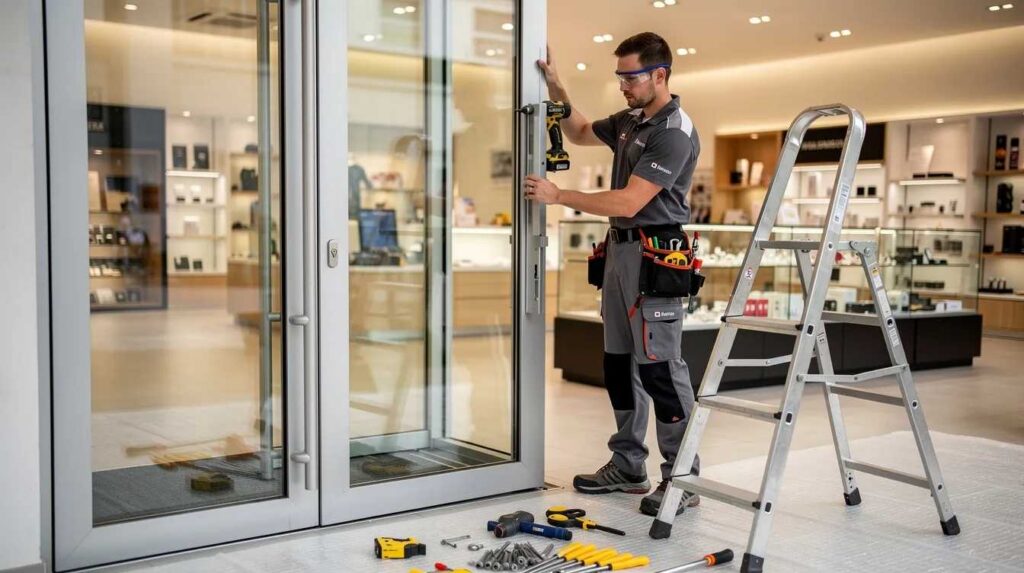
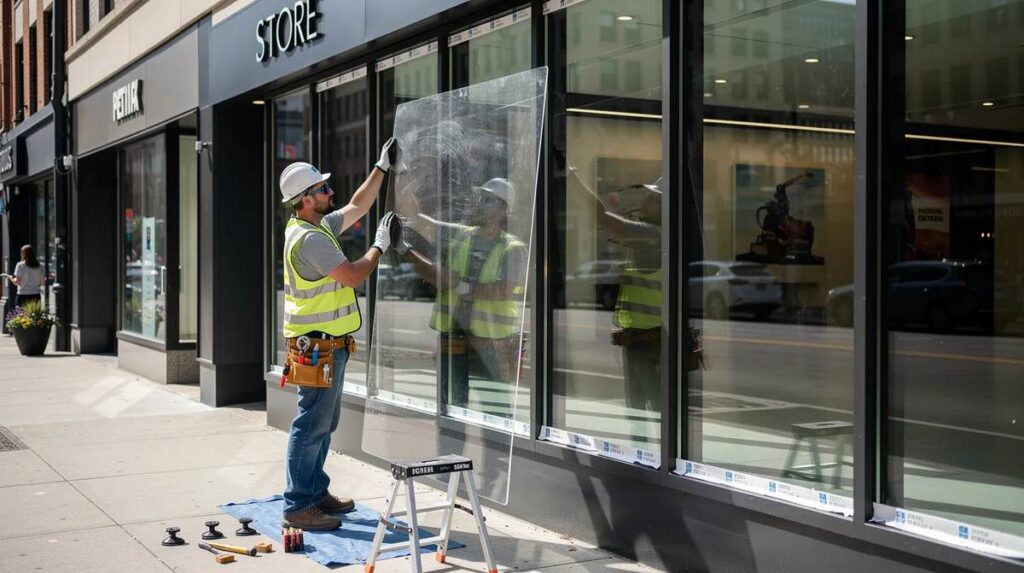
Retrofitting is the idea at the heart of Impact Security’s approach: rather than demolishing existing storefronts or curtain walls and starting from scratch, custom-fabricated shields are mounted over what is already in place. This avoids permitting delays, demolition costs, and extended closures that would otherwise disrupt operations.
The typical configuration involves a custom-sized clear shield – made of polycarbonate or specialty laminate – fitted to each opening. A robust aluminum or steel framing system anchors the shield into existing mullions or surrounding structure. Stand-off mounting creates a protective barrier in front of the original glass, turning the existing pane into a secondary “catcher” rather than the first line of defense. This type of glass can reduce the risk of injury from shattering because even if the original glass behind the shield cracks under extreme force, shards are contained rather than projected inward. Anti-intrusion glass also blocks up to 99% of UV rays to protect indoor furnishings – an added benefit that many facility managers appreciate.
When an attacker strikes the shield with a hammer, bat, or brick, energy spreads across the shield surface and transfers into the frame. The shield flexes under load but does not shatter, denying access to latches, handles, or interior space. Most retrofits are installed from the interior side where possible, which protects fasteners and frames from tampering by an ex-employee or opportunistic intruder working after dark.
Custom solutions accommodate doors, sidelites, transoms, and large curtain-wall storefronts of every kind. For example, a retail chain with fifty stores can harden front doors and main display windows across several weekends per region with minimal closure – demonstrating the scalability of these systems. Anti intrusion retrofits can also be combined with energy-saving or noise-reducing options for a multi-performance upgrade when the thought of addressing multiple building needs at once makes sense.

Levels of Protection: Forced Entry, Riot, Ballistic, and Blast
Not all threats are equal, and anti intrusion glass protection is not one-size-fits-all. Impact Security designs systems on a spectrum – from basic forced-entry delay up to ballistic and blast resistance – so that every facility can match its protection to credible risks.
Forced Entry and Smash-and-Grab: Systems like DefenseLite Pro are engineered to withstand repeated blows from blunt objects. Anti-intrusion glass can withstand impacts from blunt objects and can withstand significant impact without breaking, creating a barrier that outlasts an attacker’s patience or time window. These systems are tested against common attack tools and benchmarked under standards like ASTM F1233.
Riot and Vandalism: Solutions like RiotLite handle prolonged abuse – thrown objects, sustained prying, and the destructive force of crowds. During 2020 urban unrest, businesses with hardened glazing recorded far less damage than neighbors relying on standard glass or plywood. The sounds of tools striking a properly engineered riot protective window shield without creating an opening often cause attackers to move on.
Ballistic Resistance: BulletShield is a retrofit ballistic glazing option that can be installed over existing glass to meet common handgun or rifle threat levels under UL 752 or NIJ ballistic resistance standards. Bullet-resistant glass options can withstand impacts from bullets and projectiles, and ballistic systems are still part of anti intrusion strategy because they help keep shooters outside and give occupants time to reach safe rooms while law enforcement responds.
Blast and Pressure Events: Some projects require blast-mitigating glazing that keeps shards contained during explosions – common in federal, military, and critical infrastructure applications. These designs follow project-by-project engineering review and are built around specific pressure-loading calculations.
The voice of experience from security professionals is consistent: start with the most vulnerable openings, understand your threat profile, and scale protection over time as budget allows. Property owners should never feel disappointed by taking early action on their highest-risk glass even if full coverage is not yet in the budget.
Anti Intrusion Glass vs. Standard Glass, Films, and Bars
Many decision-makers weigh anti intrusion glass protection against cheaper or more familiar options. Understanding the trade-offs helps avoid the same old mistakes that leave buildings vulnerable.
Standard Tempered or Laminated Glass: Tempered glass is heat-treated for increased strength and safety, but it is designed to shatter into small fragments upon impact – offering occupant safety in accidents, not resistance to intentional attack. Laminated glass can withstand up to 5 minutes of sustained physical attack in some configurations, and when struck, laminated glass cracks but remains intact due to a shatter-retention mechanism. However, standard laminated glass is not specifically engineered for prolonged forced entry scenarios. Not all security glass makes a building break-in proof, but it increases the time needed for entry.
Security Window Film: Security window film can provide shatter resistance and improve window security, and security films are designed to delay entry and deter opportunistic burglars. However, films rely heavily on the existing frame’s strength. Determined attackers can eventually push the film and broken glass out of the frame with sustained effort. By contrast, DefenseLite-style retrofits provide a rigid, engineered barrier independent of the original glass.
Bars, Grilles, and Roll-Down Shutters: These offer intrusion resistance, but the drawbacks are significant: a “prison-like” appearance that can woo customers away rather than attract them, code and egress challenges, and risk of trapping occupants during emergencies. Women and men working night shifts in buildings with barred windows have reported feeling caged rather than safe.
Modern anti intrusion glazing is virtually invisible, requires no daily operation like roll-down grilles, and can enhance acoustics and energy performance alongside security. In practical terms, the breach timeline comparison tells the story: no protection means seconds to entry, film alone may buy a few minutes, while a retrofit anti intrusion shield often causes attackers to abandon the attempt entirely.
Typical Applications: From Retail Storefronts to Schools and Government Buildings
Impact Security focuses on B2B and B2G projects across the U.S. where glass protection directly affects safety, continuity, and mission-critical operations.
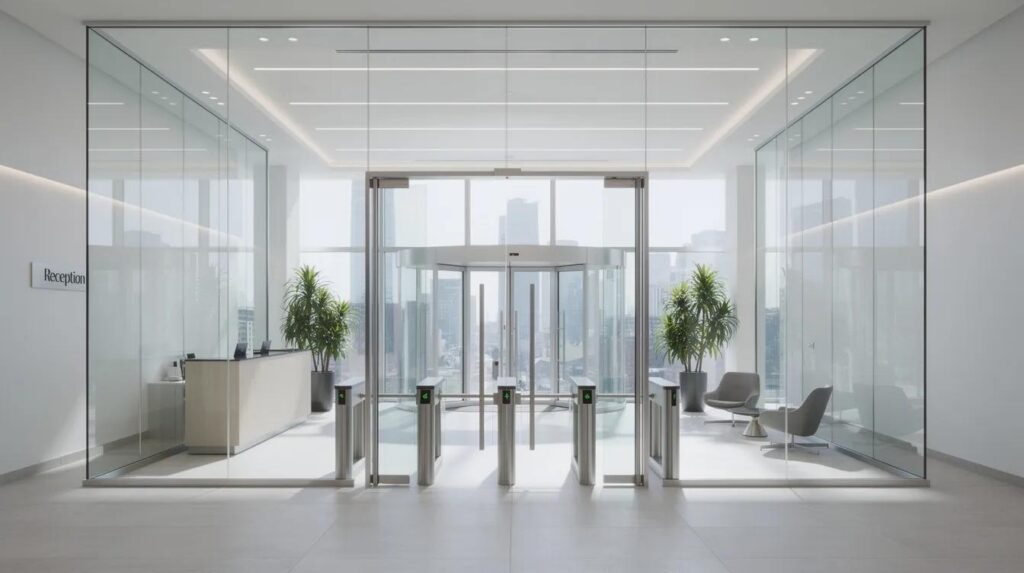
Retail and Commercial Storefronts: Jewelers, electronics retailers, cannabis dispensaries, pharmacies storing controlled drugs and substance inventories, and national apparel chains all rely on anti intrusion glass protection to shield display windows, entrance doors, and back-of-house loading access. Security glazing can significantly delay intruders attempting forced entry, which is critical when high-value goods are visible from the street.
Schools and Universities: Common vulnerabilities include entry vestibules, classroom sidelites, and office windows near main entrances. Research analyzing active shooter events found that four of six successful building breaches involved glass adjacent to doors, and no successful breach occurred where doors had no glass. Retrofit security glazing directly addresses this vulnerability, giving locked-down students and staff precious time.
Government and Critical Infrastructure: City halls, police stations, courthouses, DMV offices, and utility control centers face risks from both political unrest and targeted violence. Anti-intrusion glass is often used in high-security environments like banks, and these government facilities frequently pair forced-entry and ballistic-resistant solutions to meet agency standards.
Healthcare and Financial Institutions: ER entrances, pharmacy windows, behavioral health units, bank lobbies, and drive-thru transaction windows all need protection from external threats and sometimes internal aggression within patient and visitor populations.
Industrial and Logistics: Distribution centers and warehouses with high-value inventory protect office fronts and dock-area glass from smash-and-grab attempts, especially during off-hours.
Impact Security works nationwide through certified installers and fabrication centers in Marietta, GA and Glendale, AZ to support multi-site portfolio rollouts of every scale.
Understanding Ratings, Testing Standards, and Real-World Performance
Anti intrusion glass protection should be evaluated based on independent testing and verified standards, not marketing claims alone. The performance of anti-intrusion glass is verified by standards like ASTM F1233 and UL 972, which provide the industry’s common language for measuring resistance.
ASTM F1233 is the primary standard for security glazing materials and systems. It tests assemblies under multiple attack types: blunt tools, sharp tools, ballistic impact, and even thermal and chemical exposure. The key metric is how long the system resists creation of an opening large enough for a person to pass through or for contraband to be extracted – not whether the glass stays visually perfect.
A newer standard, ASTM F3561, was published around 2022 and simulates an active shooter attack followed by forced entry. It fires multiple rounds in specific patterns, then subjects the weakened glazing to heavy pendulum impacts mimicking tool strikes. This reflects real-world threat escalation and provides multiple levels of increasing severity that facility managers can specify.
For ballistic ratings, UL 752 classifies resistance levels by caliber and number of rounds. BulletShield retrofits are tested as full assemblies – glazing plus framing – not just as standalone panels, because real-world performance depends on the entire system working together.
Lab conditions can differ from field attacks, where improvised tools and unpredictable methods add variables. However, properly engineered systems are designed to outperform test scenarios and create enough delay for response. One Midwestern pharmacy chain experienced multiple break-ins before installing DefenseLite; after installation, attempted attacks left visible marks on shields but did not result in entry or loss. That kind of real-world data matters more than any title on a spec sheet.
Common Mistakes to Avoid When Planning Anti Intrusion Glass Upgrades
Investing in anti intrusion glass protection without avoiding common pitfalls can lead to wasted spend and persistent security gaps. Here are the mistakes that keep getting repeated:
Treating glass as an afterthought. Many facilities over-invest in cameras and alarms while leaving glazing unaddressed. Electronics track and record events but cannot physically stop a person from stepping through shattered glass. Position glass hardening as a primary element of your security plan, not an optional add-on.
Assuming safety window film is good enough. Film holds shards together and deters opportunistic attempts, but determined attackers with tools can still breach film-protected glass in minutes. For locations storing cash, controlled substances, or valuable inventory, film alone leaves a critical gap.
Protecting only front doors. Attackers exploit the weakest path. Side entrances, rear doors, and large display windows are frequently targeted. A comprehensive perimeter assessment helps identify all critical points – not just the ones visible from the parking lot.
Ignoring code, egress, and ADA requirements. DIY bars or improvised grilles can create life-safety hazards and code violations. Professionally engineered retrofit systems from Impact Security are designed with egress and accessibility in mind, ensuring occupants can still evacuate during emergencies.
Choosing products without installation expertise or warranty. Even strong panels fail if anchorage is weak. Impact Security invests in a nationwide dealer network and provides engineered drawings so systems perform as tested and are backed by warranties and ongoing service.
Involve physical security, facilities, and risk management teams early. A structured threat and vulnerability assessment should come before final product selection – not after.
How Impact Security Designs and Delivers Anti Intrusion Glass Solutions
Impact Security is a turnkey provider: engineering, fabrication, and installation of DefenseLite, BulletShield, RiotLite, and custom safe-room solutions across the U.S. since 2016. Learn more about Impact Security, LLC as a company and its focus on advanced retrofit security glazing.
The process starts with an assessment. A site walk-through – either in person or via detailed photos and drawings – identifies vulnerable openings and prioritizes them by risk. The team discusses credible threats (smash-and-grab, active shooter, riot, ballistic, blast) and operational constraints including hours of operation, access limitations, and budget cycles. Every person involved in the decision gets a clear understand of what each protection level delivers.
Engineering and system design follows. Custom measurements are taken for each opening, with careful consideration of existing frames, substrates, and structural conditions. The appropriate system is selected – DefenseLite Pro, BulletShield, AccessShield, or a fully custom configuration – along with any energy or acoustic performance add-ons. Engineered drawings and attachment details are created to meet load requirements and any applicable government or corporate standards.
Panels are fabricated in Marietta, GA and Glendale, AZ to support national coverage and maintain reasonable lead times. Quality checks, labeling, and coordination with certified installers minimize on-site modifications. Installation timing per opening is measured in hours rather than days, with the ability to work off-hours so business operations continue uninterrupted.
Impact Security’s role does not end at installation. Ongoing support covers expansions, damage repair, and system upgrades as threats and operational needs evolve over time.
Project Timeline and Cost Factors for Anti Intrusion Glass Protection
Facility managers and security directors need practical guidance on timelines and budgets when planning anti intrusion glass protection across one or many sites.
Typical Project Timeline:
| Phase | Duration |
|---|---|
| Assessment, measurements, and proposal | 1–3 weeks |
| Engineering and fabrication | 4–8 weeks |
| On-site installation (small facility) | 1–3 days |
| Multi-site rollout | Phased regionally |
| Highly custom ballistic or blast projects may require longer fabrication windows. |
Key Cost Drivers:
- Size and number of openings (doors, sidelites, curtain walls)
- Level of protection (forced-entry only vs. ballistic or blast)
- Complexity of existing framing and accessibility (ground floor vs. upper floors)
- Scheduling needs (after-hours, compressed timelines, secure-facility escorts)
Retrofits are consistently more cost-effective than full replacement of storefronts or curtain walls, especially when factoring in demolition, permitting, and extended downtime. Per-opening costs climb with size and protection level, but the savings compared to full tear-out are substantial.
Cost Control Strategies:
- Phase projects to protect the highest-risk openings first
- Standardize configurations across a portfolio for economies of scale
- Coordinate glazing upgrades with other renovations to share labor and access costs
Request a detailed, no-obligation estimate from Impact Security that includes line-item pricing for different protection levels. This gives stakeholders the information they need to make informed trade-offs.
FAQs: Anti Intrusion Glass Protection
These FAQs address the most common questions facility managers, security teams, and procurement officers raise when evaluating anti intrusion glass protection.
How is anti intrusion glass protection different from bulletproof glass?
Anti intrusion systems focus on delaying and preventing entry through glass using impact-resistant shields and frames. Bullet-resistant glazing is engineered to stop specific firearm threats. Some systems, like Impact Security’s BulletShield, combine both intrusion delay and ballistic resistance by mounting ballistic-rated shields over existing glazing. For many retail and commercial environments, forced-entry protection is the primary goal, with ballistic upgrades reserved for higher-risk facilities like government buildings or schools in elevated threat areas.
Will retrofit security glazing change how my building looks?
Modern anti intrusion glass protection is designed to be visually unobtrusive, using clear, optically correct materials and low-profile framing that blends with existing storefront systems. Most customers and visitors do not realize a DefenseLite or BulletShield system is installed unless it is pointed out – a sharp contrast to roll-down gates or exterior bars. Impact Security can match existing frame colors and finishes, and many clients find their lobbies looking cleaner and more modern after installation.
Can anti intrusion glass systems be installed on any existing window or door?
Most standard commercial aluminum storefronts, glass doors, and curtain walls can be retrofitted, along with many steel and some wood-framed openings. Each project requires a site-specific assessment. The key consideration is whether surrounding structure can accept secure anchors and carry impact loads; if not, Impact Security’s engineers may recommend reinforcement or alternative configurations. Unusual shapes, sidelites, transoms, and large glass expanses are common in projects and are handled through custom-fabricated panels and framing.
How long do anti intrusion glass systems last, and what maintenance is required?
High-quality polycarbonate and security glazing systems are designed for multi-year service life, with coatings that resist yellowing and surface degradation. Basic maintenance mirrors standard glass care: regular cleaning with approved non-abrasive cleaners and soft cloths, avoiding harsh chemicals. Impact Security provides specific care instructions, and periodic inspections of fasteners, seals, and surface wear can be integrated into normal facility maintenance routines.
Will anti intrusion glazing interfere with emergency egress or fire codes?
Systems designed and installed by Impact Security are engineered with life safety in mind, ensuring egress doors and required pathways still function during emergencies. Unlike improvised bars or gates that can block exits, properly designed retrofit shields integrate into door or frame assemblies without preventing doors from opening when hardware is activated. Involve local fire marshals and code officials early in planning; Impact Security supplies documentation and engineered details to support code review.
How much does anti intrusion glass protection cost compared to replacing all my glass?
Retrofits typically cost significantly less than full demolition and replacement of storefronts or curtain walls, especially when factoring in downtime and permitting. Many clients start with a pilot location or a subset of openings to prove performance and refine budget before rolling out to additional sites. Contact Impact Security for a customized quote with options by protection level and opening type for side-by-side comparison with full replacement costs.
Why Choose Impact Security for Anti Intrusion Glass Protection
Impact Security delivers purpose-built anti intrusion glass protection for real-world threats as a turnkey solution for businesses and government entities across the United States.
Core differentiators include:
- Exclusive DefenseLite and BulletShield retrofit systems engineered specifically for forced-entry and ballistic threats
- Deep experience protecting retail chains, schools, government facilities, hospitals, and financial institutions since 2016
- In-house engineering, U.S. fabrication centers in Marietta, GA and Glendale, AZ, and a nationwide network of certified installers
Impact Security takes a consultative approach: threat-based and site-based recommendations rather than generic products. The team coordinates with security integrators, architects, and general contractors on complex projects, ensuring every action taken aligns with the facility’s broader security posture.
Impact Security’s systems have been used to protect facilities during real civil unrest, attempted break-ins, and ongoing organized retail crime challenges. Lab test data, video demonstrations, and real-world performance case studies are available on request for any prospective client who wants to verify performance before committing.
Working with Impact Security means one accountable partner from initial assessment through long-term service – not juggling multiple vendors for design, fabrication, and installation. That single point of accountability eliminates the gaps and finger-pointing that leave facilities exposed.
Next Steps: How to Get Started with Anti Intrusion Glass Protection
Delaying action on glass vulnerability is a gamble. Every week without protection leaves the weakest point in your building envelope exposed to threats that are not decreasing in frequency or severity.
Getting started is straightforward:
- Gather photos or plans of vulnerable glass areas – entrances, storefronts, vestibules, lobby windows
- List recent security incidents, near misses, or concerns raised by staff and leadership
- Reach out to Impact Security to request a free, no-obligation assessment and estimate
After contacting Impact Security, expect a focused discussion about goals, threats, and budget. You will receive a prioritized plan showing which openings to protect first and with what level of security glazing, along with a clear implementation timeline that fits around business hours or academic calendars.
Treat anti intrusion glass protection as part of your 2026 security roadmap, alongside access control, surveillance, and staff training. The most resilient facilities are those where every layer of defense works in concert.
Contact Impact Security today to schedule a site assessment and begin hardening your glass vulnerabilities before the next incident occurs. A free estimate is a small step that can prevent an enormous loss.