Glass is the weakest link in most buildings. A delay forced entry window system changes that equation by turning seconds of vulnerability into minutes of resistance, giving authorities time to respond and would be intruders a reason to walk away. This guide covers how these systems work, what glazing options exist, how to retrofit your building without full replacement, and what to demand from any vendor before you sign.
Table of Contents
What a Delay Forced Entry Window System Is
Why Intruders Target Glass First
How Delay Forced Entry Systems Work
Glazing Options: Laminated Security Glass, Polycarbonate, and Riot Glass
Retrofitting Existing Windows, Doors, and Patio Doors
Testing, Ratings, and What “Forced Entry Resistant” Really Means
Design and Installation Process
Common Mistakes to Avoid
FAQs About Delay Forced Entry Window Systems
Why Choose Impact Security
Next Steps: Assessing Your Building and Requesting a Quote
What Is a Delay Forced Entry Window System?
A delay forced entry window system is a purpose-built glazing and framing assembly that keeps intruders out for minutes instead of seconds, even after the window glass is broken. The goal is not creating some mythically unbreakable surface. Forced entry resistant window systems are designed to slow down intruders rather than make entry impossible. The primary benefit is creating a time barrier that delays intruders long enough for alarms, police, or on-site security to respond.
These systems resist intruders for several minutes rather than seconds, acting as a primary deterrent against casual break ins. They protect employees, students, and assets by keeping attackers outside during those critical first minutes. DefenseLite is a retrofit security glazing solution from Impact Security that preserves visibility and curb appeal while delivering this protection. Common applications include retail chains, K–12 schools, hospitals, banks, government facilities, and vulnerable glass patio doors in multifamily complexes.
Why Intruders Target Glass First
About 2.5 million burglaries occur in the US annually, and a disproportionate share of commercial forced entry happens through glass doors, sidelites, and storefront windows. The reason is simple: standard tempered glass shatters into small cubes that can be pushed out in under ten seconds. That makes any unprotected glass opening an easier target than a reinforced door or concrete wall.
Typical attack tactics include smash and grab theft with sledgehammers or bricks—especially targeting vulnerable retail storefronts—prying at the lock stile of entry resistant doors through adjacent glass, and targeting rear or side sliding windows where intruders can work unseen, which is why specialized storefront security solutions for glass doors and windows are critical for many businesses.
Reinforcing windows can deter burglars from targeting your home or building in the first place. Reinforced glass can protect against smash-and-grab theft by eliminating the quick payoff that motivates most opportunistic criminals. Beyond inventory loss, a single successful breach causes business interruption, insurance complications, staff trauma, and reputational harm. These systems reduce damage from smash-and-grab attacks by preventing easy access through shattered glass.
How Delay Forced Entry Window Systems Work
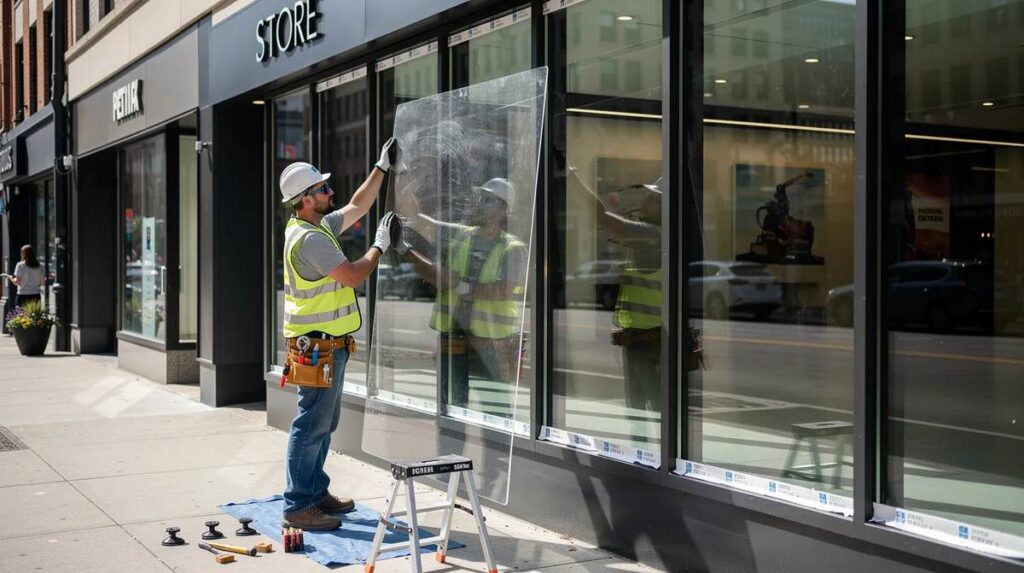
The core concept is straightforward: turn fragile glass openings into layered security assemblies that absorb and flex under attack while staying in place. Delay forced entry window systems transform vulnerable glass openings into robust barriers through three components working together:
- Outer shield: Laminated security glass, polycarbonate, or hybrid materials that absorb repeated impacts
- Reinforced window frame: A specialty frame engineered to resist prying and brute force
- Secure anchoring: Fasteners and substrates properly anchored into the surrounding wall or structure
The system is engineered so that multiple heavy impacts create loud, obvious commotion but do not yield a person-sized opening quickly. This “time and noise” principle is what makes entry prevention effective. These systems reduce successful break ins by increasing the time to breach windows, and they allow time for police or security personnel to arrive before access is gained. They support a layered security approach that may include secure doors and surveillance, creating multiple obstacles for any intruder.
What these systems do not do by default: they are primarily for forced entry prevention. Ballistic protection requires specific packages like Impact Security’s BulletShield, tested to standards such as UL 752.
Security Glazing Options: From Laminated Security Glass to Polycarbonate Shields
There is no single burglar proof glass. Security comes from matching the right glazing type and thickness to your threat assessment and budget. Here are the primary categories of security glazing and security products available:
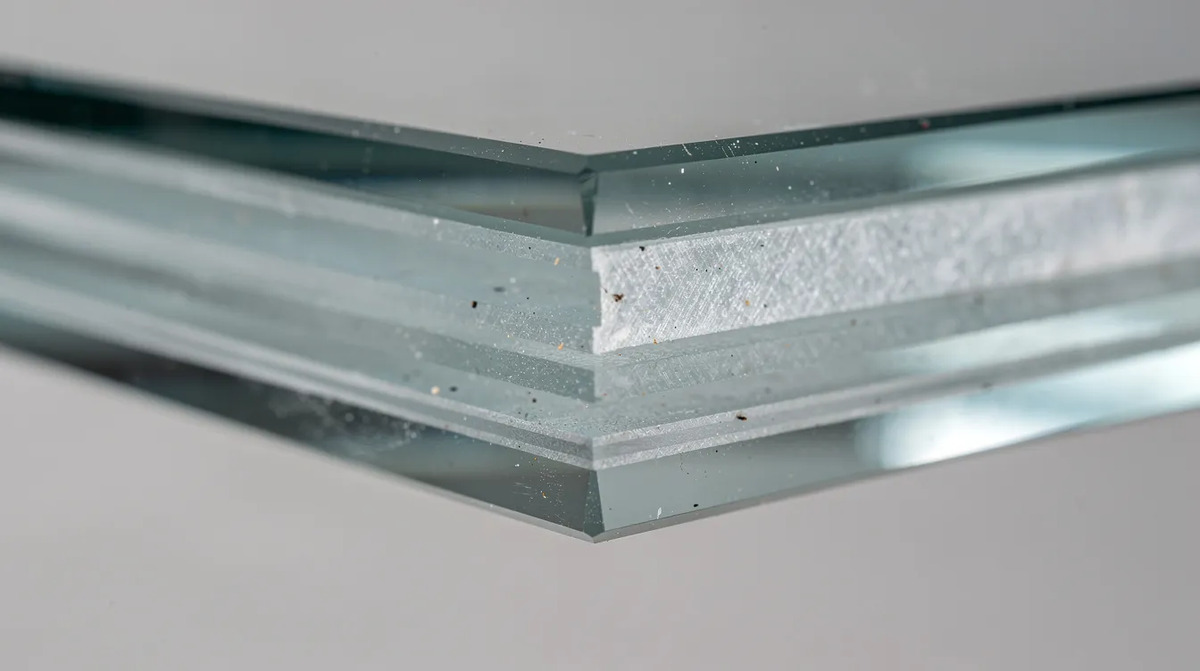
Laminated security glass bonds two or more glass plies with polymer interlayers (PVB or SGP/ionoplast) that hold shards together under repeated blows and forms the basis of many forced entry security glazing systems. SGP interlayers offer roughly 100 times the stiffness of PVB, making them the preferred choice for high-security applications. Riot Glass® laminated security glass consists of multiple reinforced layers for sustained forced entry protection. ACE security laminates are up to seven times thicker than window tints, providing a far more formidable barrier than film alone, especially when used as part of tested systems like RiotLite window film solutions meeting ASTM F3561. Reinforced glass can delay forced entry by minutes, and many of these systems provide protection against vandalism and riots.
Glass-clad polycarbonate and riot glass hybrids combine a glass surface with a polycarbonate core, delivering exceptional impact resistance. Riot Glass can withstand blows from common burglary tools, and Riot Glass® can completely deny access to your business under sustained attack. Riot Glass products can resist UL 752 Level 7 ballistic attacks, and Riot Glass can resist ballistic attacks from an AK-47 rifle.
Polycarbonate security glazing is lightweight and virtually unbreakable. ArmorPlast® polycarbonate security glazing is virtually unbreakable, and ArmorPlast® polycarbonate glazing can resist ballistic attacks from rifles, including an AK-47. Polycarbonate panels are significantly harder to break than standard glass, though they typically require abrasion-resistant coatings to maintain optical clarity over time.
Key trade-offs to evaluate with your security glazing specialist:
| Factor | Laminated Glass | Polycarbonate | Glass-Clad Hybrid |
|---|---|---|---|
| Optical clarity | Excellent | Good (coated) | Very good |
| Impact resistance | High | Very high | Very high |
| Weight | Heavier | Lighter | Moderate |
| Scratch resistance | High | Lower (needs coating) | High |
| Cost | Moderate | Moderate–High | Higher |
Retrofit Solutions for Existing Windows, Doors, and Patio Doors
Impact Security specializes in adding forced entry resistant shields over existing glass, making it an ideal retrofit solution for occupied buildings where full replacement is disruptive and expensive, while systems like DefenseLite can also deliver secure, energy-efficient glazing benefits as part of the upgrade. A retrofit frame stands slightly off the existing glass, creating a clear physical barrier that absorbs impact before it reaches the original pane, often leaving the base glass untouched even after a severe attack.
Retrofit solutions work across a range of openings: aluminum storefronts, curtain walls, school entry vestibules, sliding glass and patio doors, glass sidelites flanking forced entry resistant door assemblies, and interior safe-room partitions, with options such as DefenseLite PRO retail security glazing tailored specifically for high-loss storefront environments. For facility managers, this means shorter installation windows (often overnight or off-hours), minimal mess, preserved aesthetics and daylighting, and the ability to standardize across multi-site portfolios. After an attempted break in, damaged shields can typically be replaced individually without rebuilding frames or replacing underlying insulated glass units.
Testing, Ratings, and What “Forced Entry Resistant” Really Means
Not all “strong” glass is tested for forced entry. Credible delay forced entry window systems are validated through rigorous testing against standardized attack protocols. Key standards include, and it is essential to understand how engineered overglaze systems like DefenseLite compare to traditional security glass film in break resistance:
- ASTM F588: Tests window frame and hardware resistance to prying and penetrating tools
- ASTM F1233: Evaluates the entire assembly (glazing, frame, anchors) across ballistic, physical, and chemical threats, the same holistic performance focus addressed in DefenseLite product FAQs
- ASTM F3561: Simulates ballistic weakening followed by mechanical forced entry-reflecting active shooter scenarios
- UL 972: Certifies burglary-resisting glazing materials for storefront security glass
“Delay time” is assessed by measuring how long a test team takes to create a human-sized opening using prescribed tools. Reinforced glazing and secure anchoring make windows much harder to breach, and even adding three to five minutes of resistance drastically changes outcomes for authorities time to respond. The difference between forced entry rated glazing and bullet resistant glazing is important: forced entry focuses on tools and time to breach, while ballistic standards test specific calibers. Always ask vendors for test reports covering the complete assembly-not just the glass pane alone.
Design and Installation: How Impact Security Builds a Delay Forced Entry System
Impact Security delivers a turnkey process from its Marietta, GA headquarters and Glendale, AZ fabrication center:
- Site assessment: Mapping all vulnerable entry points and common entry points, noting door hardware, patio doors, high-value display areas, and evaluating existing frames and substrates
- Engineering: Selecting appropriate materials matched to potential threats, sizing forced entry resistant framing, and detailing attachment methods for building movement and impact loads
- Fabrication: Manufacturing panels and frames to exact specifications at U.S.-based facilities
- Installation: Scheduling work during off-hours using trained, certified installers who protect interior finishes and verify that all doors and windows operate correctly afterward
- Documentation: Delivering as-built drawings, warranty information, cleaning guidelines, and integration notes for alarm contacts or glass-break detectors
The installed system addresses several factors-from materials and components to long-term performance and safety compliance.
Common Mistakes to Avoid When Choosing Forced Entry Window Protection
Many properties remain vulnerable because they invest in partial or mismatched solutions. Here are the most frequent errors:
Overreliance on security window film alone. While 3M security window film delays forced entry by minutes and 3M security window film holds shattered glass in place, security film is not equivalent to a dedicated forced entry window system with rigid glazing and secure framing. An 8-mil security film withstands repeated blows effectively, but the film’s ability to resist sustained attack depends entirely on the window frame holding it in place. Window security film and blast mitigation film serve important roles, but they are not a standalone physical barrier. You cannot buy a true delay system at a hardware store.
Ignoring weak frames and hardware. Even the strongest security glass fails if the frame or anchorage is weak. Intruders often simply pry the sash or frame away from the wall when the glass resists direct breakage.
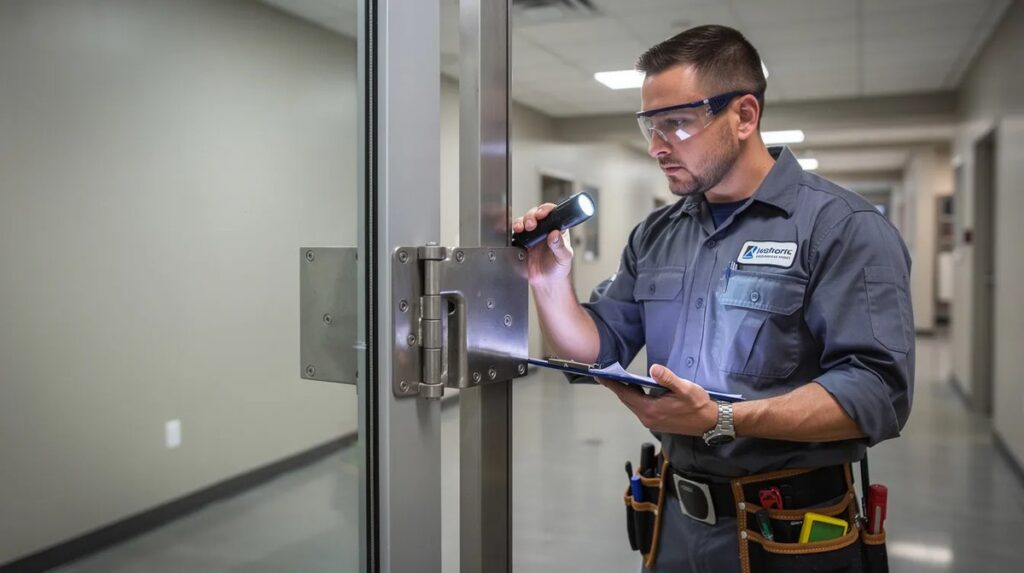
DIY or non-specialist installation. Small gaps, improper fasteners, or weak substrates create failure points even when the glazing itself is strong. Work with a security glazing specialist who can tailor solutions to specific risk profiles, budgets, and operational constraints.
FAQs About Delay Forced Entry Window Systems
These questions come up frequently from facility managers, school leaders, and security teams evaluating forced entry protection options for their buildings.
How long can a delay forced entry window system actually hold off an intruder?
Performance depends on product, framing, and installation, but properly engineered systems extend intrusion times from seconds for standard glass to several minutes under sustained attack. A window that resists repeated strikes increases the likelihood that an intruder will abandon the attempt. Most smash-and-grab criminals give up if they cannot gain access quickly.
Can these systems be added to my existing windows and doors, or do I need full replacement?
Impact Security specializes in retrofit solution designs that mount over existing glass in storefronts, curtain walls, and entry doors, preserving the base frames whenever structurally feasible. In very old or compromised frames, reinforcement or selective replacement may be recommended for true forced entry prevention performance.
What’s the difference between forced entry resistant glass and bullet-resistant glass?
Forced entry systems are tested for tools and impact-how long they delay entry under hammers, crowbars, and brute force. Ballistic glazing is tested to UL 752 levels for specific calibers. Some assemblies, like Impact Security’s BulletShield, combine both forced entry and ballistic performance against ballistic attacks, but they are specified differently during design.
Will a forced entry system change how my building looks?
Modern solutions use clear, low-profile frames and optically clear laminated or polycarbonate glazing, maintaining storefront views and natural light. This stands in sharp contrast to bars, roll-down shutters, or security screens that make a property look like an easier target for bad guys who assume valuable items are inside.
How much maintenance do these systems require?
Maintenance is typically minimal: periodic visual inspections, cleaning with approved non-abrasive products, and prompt replacement of any shield that has sustained severe impact. Impact Security provides maintenance guidelines and can coordinate inspections after attempted forced entry or severe storms.
Are forced entry window systems compatible with alarms and access control?
Yes. Retrofits are designed to work with door contacts, glass-break detectors, and monitored alarms. Sensors can be re-mounted on the new shield without obstruction. Involve your electronic security integrator early so glazing and detection devices work together for both entry prevention and rapid response, creating a complete security system.
Why Choose Impact Security for Forced Entry Resistant Glazing
Impact Security focuses exclusively on protective glazing and has engineered thousands of forced entry resistant installations across the U.S. since 2016, backed by a dedicated team whose history and mission are detailed on the company’s About Impact Security page. The company operates with a B2B and B2G focus, in-house engineering, U.S.-based fabrication centers in Marietta, GA and Glendale, AZ, and a national network of certified installers.
What sets Impact Security apart is retrofit expertise-turnkey design and installation that hardens existing glass in schools, retail chains, healthcare facilities, banks, and government buildings with minimal downtime. Complementary product families including DefenseLite, BulletShield, RiotLite, and AccessShield allow customers to address forced entry, ballistic threats, and riot protection within a single integrated glazing strategy. Delay forced entry window systems can enhance resilience against multiple threats across an entire property. Every installation comes with tested and documented performance data, long-term warranties, and responsive service for multi-location rollouts.
Next Steps: Assessing Your Building and Requesting a Quote
Treat every glass opening as a critical security asset. Walk your property and identify every vulnerable window, door, and patio door. Gather basic drawings or photos, note any past break ins or vandalism, and consider what level of protection your security needs demand.
Engage Impact Security by requesting a free estimate, scheduling a remote or on-site threat assessment, and discussing your budget and operational constraints with a security glazing specialist. Involve facility management, security directors, and insurance risk advisors early so the chosen system aligns with broader safety objectives.
Upgrading glass with a modern forced entry resistant retrofit is one of the fastest, most visible ways to reduce risk and protect people, inventory, and operations. Request your free estimate today.