Table of Contents
Why Retail Glass Door Security Can’t Wait Until After the Next Break-In
Why Retail Glass Doors Are a Primary Target
How Forced Entry Really Happens at Glass Doors
Security Film vs. Security Glazing Retrofits
Designing a Layered Security Strategy
Professional Assessment and Installation
Why Choose Impact Security
FAQs: Retail Glass Door Security in 2026
Strengthen Your Retail Glass Doors Before the Next Incident
Introduction: Why Retail Glass Door Security Can’t Wait Until After the Next Break-In
Over 60% of retail forced entries involve glass doors. That number alone should make every store owner and facilities manager reconsider what stands between their inventory and a determined intruder carrying a heavy object at 2:00 a.m.
The tension is real: you want attractive commercial storefront doors that invite customers inside your retail space, but standard tempered glass shatters completely upon impact. It offers zero resistance to a sustained attack. This article walks you through the physical protections that actually work-security glazing retrofits for existing glass, hardware upgrades including key cylinder replacements, and how these layers integrate with alarms and cameras.
Impact Security, maker of the DefenseLite system, specializes in retrofitting existing glass rather than replacing entire storefront systems. Throughout this guide, you will learn how glass doors are attacked, which solutions prevent or delay entry attempts, and how to work with a professional installer to secure a commercial storefront without sacrificing curb appeal.
Why Retail Glass Doors Are a Primary Target for Forced Entry
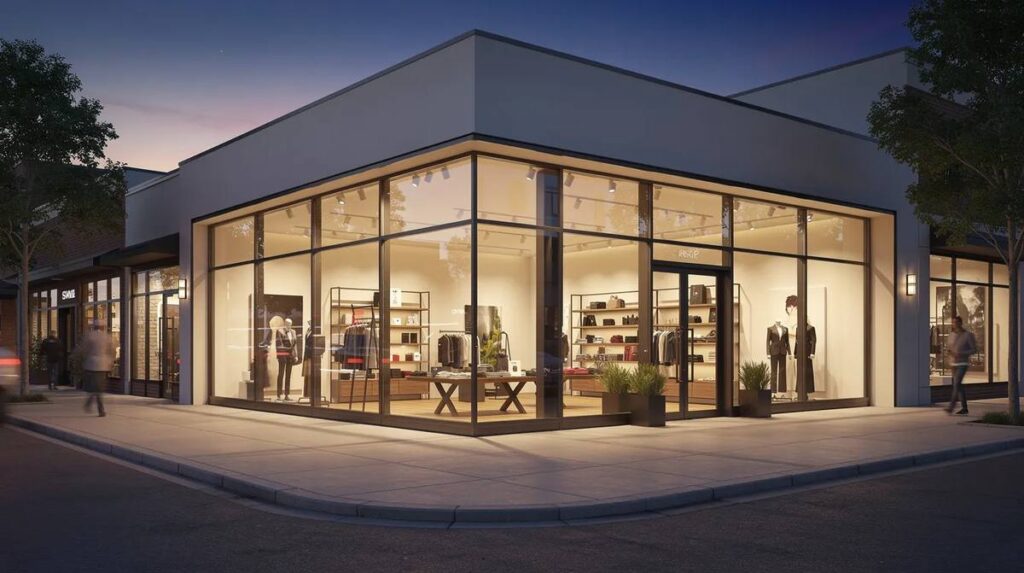
Transparent glass doors showcase inventory and cash wraps, signaling exactly what is worth stealing. A standard commercial glass door-typically an aluminum narrow-stile frame with treated glass-meets building code for safety but is not designed to handle a crowbar, brick, or battery-powered saw.
Roughly 65% of storefront breaches involve simple prying tools. Once the glass breaks, thieves reach inside, turn the thumb-turn or manipulate an exposed key cylinder, and they are through the door in seconds. Three common attack patterns dominate U.S. retail crime in 2025–2026:
- Quick smash-and-grab raids on small retailers where a single heavy object opens the door
- Organized flash-mob attacks on brand-name stores in malls and urban center locations
- Targeted overnight forced entry attempts on pharmacies, electronics shops, and jewelry stores
Unprotected glass doors create more than theft risk. They trigger business interruption-board-ups, emergency glass replacement, lost trading hours-and potential liability for employees and visitors who encounter a breach scene the next morning.
How Forced Entry Really Happens at Glass Doors (And Where Standard Doors Fail)
Understanding where a typical commercial glass door fails helps you understand where to spend money reinforcing it.
The glass layer is the obvious weak point. Standard tempered glass in storefront doors shatters completely on impact, leaving an open hole. Laminated glass keeps shards intact during breakage and resists longer, but it can still be cut or beaten through given enough time. Neither qualifies as true security glass on its own compared to purpose-built forced entry security glazing for doors and windows.
Door hardware is the next vulnerability. Many retail glass doors rely on mortise locks or surface vertical rods with shallow bolt throw. Digital locks prevent forced entry through shallow locking bolts by using heavy-duty deadbolt mechanisms, and multi-point locking systems secure doors at multiple locations rather than just one. Frames matter too-aluminum storefront framing can be pried away from the wall if anchorage into the building structure is weak.
Picture a typical 2:00 a.m. scenario: two blows with a heavy object open a hole in the glass, a hand reaches inside to operate the thumb-turn, and intruders clear high-value merchandise in under 90 seconds. Meaningful retail glass door security must slow or stop each of those steps-strengthening existing glass, improving hardware engagement, and anchoring the system to the building itself.
Security Film vs. Security Glazing Retrofits for Glass Doors
Not all glass protection performs the same. The two most common retrofit approaches are security film and engineered polycarbonate overglaze shields within broader safety and security glass solutions for windows and doors.
Security film is a multi-layer polyester sheet adhered directly to existing glass. High-quality security film can withstand multiple strikes from heavy objects and helps hold shards together, but security films can withstand multiple strikes without preventing shattering-the underlying glass still breaks. It is a delay-only approach that works best as an entry-level upgrade for lower-risk locations, especially when compared with engineered DefenseLite security glazing systems.
Polycarbonate retrofit shields are a different category entirely. Polycarbonate is 250 times stronger than standard glass materials. Products like ArmorPlast AP25 and DefenseLite overglaze security systems sit within a broader family of bulletproof windows, doors, and glass security solutions that provide a glass-like appearance with polycarbonate strength, creating a virtually unbreakable barrier that absorbs and disperses impact energy rather than shattering. Polycarbonate shields maintain 90% transparency for storefront visibility, so your store still looks open and inviting.
For retailers facing higher threats, Riot Glass offers bullet-resistant security glazing with a UL 752 Level 1 rating, and Riot Glass also offers unbreakable door conversions with that same UL 752 Level 1 rating for complete forced entry resistance, similar in concept to AccessShield reinforced door retrofit systems used to harden primary entry points and comprehensive bulletproof window and door security film solutions.
Modern retrofit systems install over existing glass on commercial storefront doors with low-profile framing, preserving day-to-day door usage, ADA accessibility, and the clean appearance customers expect, as outlined in detailed DefenseLite product FAQs on retrofit performance. For many retailers, security film is where the conversation starts, but those facing repeated smash-and-grab risk or protecting higher-value inventory need a true forced-entry resistant shield such as DefenseLite PRO retail loss-prevention glazing.
Designing a Layered Security Strategy for Commercial Storefront Doors
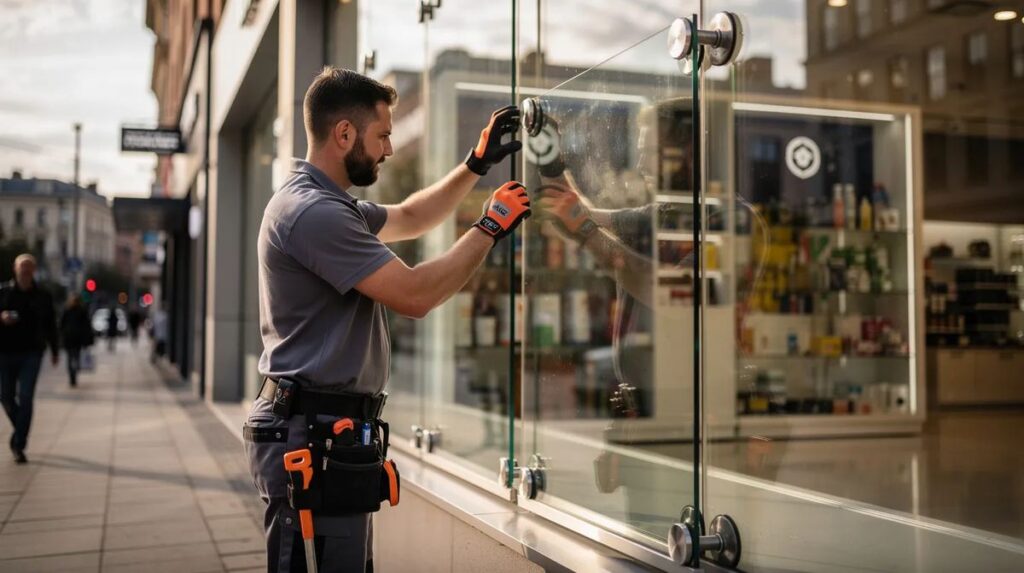
Retail glass door security requires a layered approach. No single product handles every threat, so effective glass door security combines physical reinforcement and electronic monitoring into a system that deters, delays, and detects, with storefront security solutions for glass doors and windows forming the core physical barrier and optional energy-efficient security glazing retrofits improving comfort and operating costs.
Start at the glass layer. Retrofit existing glass with forced-entry resistant security glazing shields. Where budgets are tight, high-performance security film buys time. Layered security measures significantly increase the time required for a break-in attempt-every added second raises the chance that intruders give up or police arrive.
Upgrade hardware and locks. Digital locks use heavy-duty deadbolt mechanisms for security and can be installed on existing glass doors without drilling. High-end digital locks use double-action deadbolts for added security. Digital locks provide real-time entry logs via smartphone apps, giving you visibility into who accessed the store and when. Magnetic locks integrate with alarm systems for enhanced security at after-hours entry points. Reinforce hinges with security pins, and install protected escutcheons over key cylinders.
Add supplemental barriers. Rolling gates and roll down shutters act as a robust physical barrier for retail spaces, though they only protect during closed hours. Interior grilles or bollards in front of vulnerable glass doors handle vehicle-ramming threats while preserving the open storefront look.
Tie in electronic detection. Glass break detectors trigger alarms upon detecting the sound of breaking glass. High-definition surveillance cameras serve as both a deterrent and a record-keeping tool. Access control systems improve management of who enters and exits retail spaces, while electronic access control systems can maintain entry logs and simplify credential management. Retail security systems encompass monitoring technologies and physical barriers working together. Bright and uniform lighting enhances security by reducing hiding spots around commercial storefront doors.
The ideal configuration for a strip-center or mall tenant pairs DefenseLite shields over all glass doors and sidelites, upgraded hardware on the primary entrance, monitored video at the entry, and closing-time policies ensuring storefront doors are fully latched and locked.
Professional Assessment and Installation: Getting Glass Door Security Right the First Time
DIY fixes-taping glass, generic film kits, or improvised bars-rarely address the full door system and can void warranties or violate fire-egress compliance. A professional security glazing assessment from Impact Security typically includes a site walk-through of all glass doors and windows, measurement of existing glass thickness, review of door hardware and key cylinder condition, and discussion of local crime trends.
Retrofit security glazing for commercial storefront doors must account for thermal expansion, flexing under repeated impacts, and robust anchoring so the shield stays attached even when attacked around the edges. Installation preserves smooth door swing, weather seals, and panic hardware. Impact Security fabricates commercial security window and door solutions such as DefenseLite systems at U.S. facilities in Marietta, GA and Glendale, AZ, and works through certified dealers nationwide to deliver turnkey service from assessment through warranty support, including regional programs like Austin, TX security glazing estimate services.
Before requesting a quote or using regional Dallas, TX window security glazing estimate forms, gather your door sizes, number of glass doors and sidelites, current lock type, recent loss history, and any landlord or corporate design standards for your storefront. This helps your installer create an accurate, budget-aligned recommendation.
Why Choose Impact Security / DefenseLite for Retail Glass Door Security
Impact Security has specialized in retrofit security glazing since 2016, engineering and manufacturing systems that strengthen existing glass rather than forcing expensive full door replacement. The Impact Security company profile outlines how the DefenseLite system is designed to protect commercial storefront doors across environments-from national retail chains and single-location jewelers to pharmacies, schools, office buildings, and government facilities.
The team coordinates with facility managers, architects, and security consultants to achieve alignment with brand aesthetics, landlord requirements, and building codes. Protection remains in place 24/7, unlike gates that only close at night. Installation is convenient and minimally disruptive, and the result is a robust, nearly invisible shield that outlasts security film by years, especially when specifying DefenseLite Pro high-threat glazing for locations with elevated risk.
A nationwide network of certified installers, documented case studies, and the ability to scale from a single storefront door to a multi-state property portfolio make Impact Security a master resource for retail glass door security, and they actively expand this reach through their DefenseLite dealer program for security contractors.
FAQs: Retail Glass Door Security in 2026
How can I secure a commercial glass door without replacing the entire unit?
Retrofit security glazing shields install directly over existing glass, reinforcing it from the inside or outside without removing the door. Pair that with upgraded key cylinder hardware, reinforced strike plates, and improved anchoring. Most modern storefront doors can be upgraded this way, and polycarbonate is 250 times stronger than standard glass, making the retrofit far more resistant than the original door.
Is security film enough to stop a smash-and-grab on my storefront doors?
Security film delays a breach by holding shards together after impact, but the glass still breaks. A determined intruder with a heavy object can eventually tear through. For higher-risk locations, an engineered polycarbonate shield-such as ArmorPlast AP25, which offers a glass-like appearance with unbreakable strength-provides substantially greater resistance to forced entry.
Will adding security glazing to my glass doors make my storefront look like a fortress?
No. High-quality retrofit systems use optically clear polycarbonate with slim framing designed to preserve the clean appearance of commercial storefront doors. Customers and visitors typically cannot tell the shield is there, so your curb appeal stays intact.
Can security glazing be installed on glass doors that already have access control or panic hardware?
Yes. When properly designed, retrofit systems accommodate existing hardware and maintain free egress. The installation can be coordinated with access control vendors, making the system suitable for retail, healthcare, schools, and government buildings, including specialized hospital security glazing and safety solutions.
How long does it take to upgrade the glass doors at a typical retail store?
Many single-storefront projects can be measured in one visit and installed in a day or two, depending on the number of doors and sidelites. Impact Security schedules off-hours installation when possible to minimize downtime so your business stays open during normal hours.
Does security glazing help against other threats like riots or severe weather?
Forced-entry resistant shields also add resilience against thrown objects during civil unrest and can handle flying debris in certain storm scenarios. For elevated threats, specialized ballistic or blast-resistant systems are available-products that achieve higher protection levels while still fitting over existing glass.
Strengthen Your Retail Glass Doors Before the Next Incident
Commercial glass doors and storefront doors are often the first-and sometimes only-barrier between high-value inventory and a determined intruder armed with a heavy object. Upgrading existing glass with engineered security glazing retrofits provides 24/7 protection without sacrificing the open, inviting look that brings customers inside your store.
Contact Impact Security through the DefenseLite project inquiry form for a no-obligation assessment. Share photos or drawings of your current glass doors and receive a tailored recommendation for DefenseLite or related systems that fit your risk profile and budget. Multi-location retailers and property managers can ask about national programs and standardized specifications for commercial storefront doors across entire portfolios.
The key takeaways are simple: every day without proper protection is another day your business, your employees, and your inventory remain at risk. Secure your glass doors now-before the next preventable loss becomes your headline.