Table of Contents
Ballistic Glass Door Protection at a Glance
How Ballistic Glass Doors Work (and Why They’re Not Truly “Bulletproof”)
Understanding Bullet Resistance Ratings: UL 752 and Real Threat Levels
Beyond Bullets: Forced Entry, Riot, and Blast Performance
Retrofit Ballistic Glass Door Protection vs. Full Bullet Resistant Door Replacement
Selecting the Right Ballistic Door Solution for Your Facility
Industries and Facilities That Benefit Most
Why Choose Impact Security
FAQs About Ballistic Glass Door Protection
Next Steps
Ballistic Glass Door Protection at a Glance
If your facility relies on glass doors as its primary entrance, those doors are likely your weakest security point. Ballistic glass door protection addresses this vulnerability by combining ballistic glazing and reinforced framing into a system engineered to resist bullets and forced entry. Truly bulletproof doors do not exist, but modern bullet resistant glass doors can be independently tested to UL 752 Levels 1 through 8 for predictable, documented ballistic protection.
Impact Security specializes in retrofit ballistic glazing systems, including BulletShield, that mount directly over existing glass doors, often eliminating the need for full door replacement. Ballistic glass provides high-level protection against armed threats across K-12 schools, government buildings, hospitals, luxury retail, banks, and houses of worship.
Here is what this guide covers:
- How ballistic doors actually stop projectiles and absorb energy
- Real testing standards and how to match them to your threat profile
- Retrofit vs. full replacement: cost, timeline, and performance tradeoffs
- A step-by-step selection framework for facilities managers
- How Impact Security manages projects from assessment to installation
How Ballistic Glass Doors Work (and Why They’re Not Truly “Bulletproof”)
The phrase “bulletproof door” sounds reassuring, but it is a marketing term. In physical security, the correct language is bullet resistant doors or ballistic doors, because every product is rated against specific firearms, calibers, and shot counts – not every possible threat.
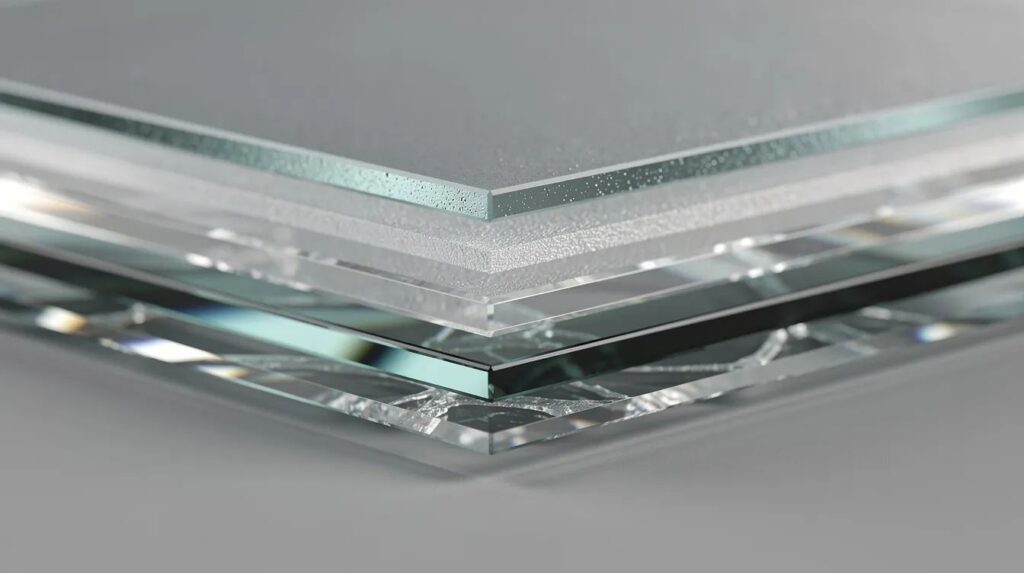
Ballistic glazing is built in multiple layers: outer glass plates absorb the initial strike, polymer interlayers like polyvinyl butyral deform to capture energy, and inner layers of polycarbonate or acrylic catch remaining fragments. Ballistic glazing can be made from glass or polycarbonate, and polycarbonate is stronger than all glass ballistic glazing for a given thickness. These layers work together as a protective barrier, stopping bullets while ballistic glass limits collateral risk by holding fragments together rather than showering occupants with debris. Ballistic glass also preserves natural light in building interiors, unlike opaque armored panels, and significantly outperforms ballistic window film solutions that only delay breach without fully stopping bullets.
A bullet resistant glass door is a complete system: ballistic glazing, reinforced aluminum or steel frame, secure hardware. If any component falls short, the system fails. Under attack, the surface may craze or crater, but the panel and frame stay anchored, denying fast entry and buying critical response time.
How does this compare to regular glass with safety window film? Film helps with smash-and-grab fragmentation but does not provide certified bulletproof windows and doors, along with glass security measures or resist rifle fire. It is far thinner and cannot deliver the same level of protection as a true ballistic glass door and window security system.
- Ballistic glass can be made from polycarbonate or glass combinations
- Multiple layers absorb, deform, and capture projectile energy
- All glass and framing must be rated together as a system
- Film is not a substitute for certified ballistic resistance
Understanding Bullet Resistance Ratings: UL 752 and Real Threat Levels
UL 752, published by Underwriters Laboratories, is the global standard for ballistic resistance used across the door and window industry. Ballistic glass systems can protect against different levels of threats based on their UL rating, and UL 752 ratings range from Level 1 to Level 8. Each UL level defines how many shots, from what weapon and ammunition, the system must stop without penetration.
Here is what the most commonly specified levels mean in practice:
- Level 1: Resists three shots from a 9mm handgun (124-grain FMJ). Appropriate for offices, clinics, and many school entries.
- Level 3: Resists three shots from a .44 Magnum handgun. Often specified for police lobbies and courthouses.
- Level 7: Withstands five rounds from a .30 caliber rifle such as an AK-style platform firing at over 3,000 fps. Specified for critical infrastructure and high security government facilities facing threats from high powered rifles.
Ballistic doors must have matching frame resistance for a UL 752 rating to be meaningful. A tested glazing panel in an ordinary frame provides no real bullet resistance. Ballistic doors must include bullet resistant glazing and framing rated to the same level, and the entire assembly should be independently tested as a unit.
Ballistic doors can withstand multiple shots from firearms at their rated level, and threat-level selection should always start with a documented assessment. Impact Security works alongside architects, security experts, and end-users to match the appropriate UL level to the actual threat rather than guessing, accounting for varying levels of risk across different facility types, often evaluating bulletproof glass options for ultimate ballistic resistance as part of the process.
Beyond Bullets: Forced Entry, Riot, and Blast Performance
Most real incidents do not involve gunfire alone. Attackers may shoot through glass and then use blunt tools to breach the opening. That is why forced entry protection matters as much as ballistic performance. Ballistic glass can delay forced entry by absorbing impacts from sledgehammers, prying bars, and repeated strikes that would shatter regular tempered glass in seconds.
Standards like ASTM F3561 test glazing systems first under ballistic attacks, then under sustained physical attacks with tools, measuring how long the system denies access under combined threat. This is increasingly specified for schools and public buildings after incidents where attackers exploited ordinary glass to gain entry, and recent school security updates on reinforcing window and door glass highlight how critical this testing has become for choosing forced entry security glazing and forced entry resistant doors and windows.
Ballistic doors provide protection against forced entry and blasts, and ballistic glass can be part of a layered security system that addresses break ins, smash-and-grab attempts, mob violence, and even chemical damage from vandalism, especially when integrated into a comprehensive strategy for forced entry protection. Bulletproof windows and ballistic windows in storefronts have held during forced entry attempts where standard tempered glass failed within seconds, particularly when paired with DefenseLite impact-resistant overglaze security systems.
- Combines bullet resistance with resistance to physical attacks
- Addresses smash-and-grab, riot, and tool-based forced entry
- Delays breach long enough for lockdown and law enforcement response
- Impact Security systems can be engineered to address ballistic, forced entry, and riot threats simultaneously
Retrofit Ballistic Glass Door Protection vs. Full Bullet Resistant Door Replacement
There are two primary paths to ballistic glass door protection:
- Retrofit ballistic glazing shields mounted over existing glass doors, sidelites, and storefronts
- Full replacement with factory-built custom bulletproof doors and armored doors installed with new frames
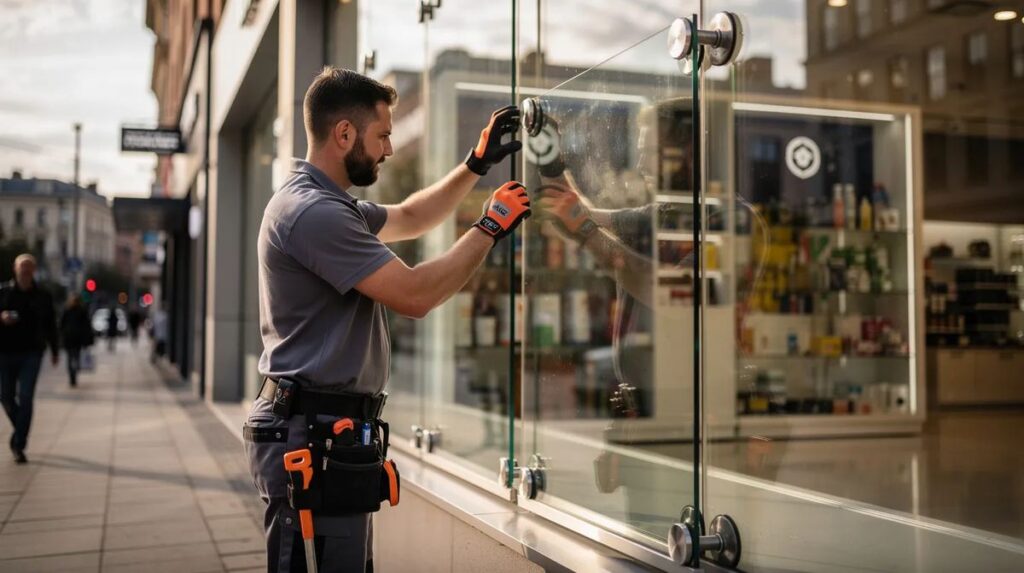
Impact Security’s BulletShield retrofit bullet-resistant security glazing panels and related systems install over existing aluminum storefront or entry doors with mounting brackets and proprietary anchoring. In higher-risk applications, these can be complemented with DefenseLite Pro advanced impact security glazing for added forced entry resistance. Many projects are completed after hours or on weekends with minimal disruption. Systems accommodate custom sizes and a range of door sizes, and components can be pre assembled to reduce on-site labor. Existing pull handles, pivot hinges, hardware, and access control remain functional.
| Factor | Retrofit Shield | Full Replacement |
|---|---|---|
| Cost | Lower (typically $45–$90/sq ft installed) | Higher ($70–$350+/sq ft) |
| Timeline | 4–8 weeks from measure to install | 8–12+ weeks for fabrication |
| Disruption | Minimal; often after-hours | Significant; structural work |
| Aesthetic impact | Preserves building’s aesthetics | New door style and frame |
| Best for | Most commercial, school, government entries | Heavily damaged openings, major remodels |
Ballistic doors can be retrofitted onto existing frames in most cases. Full replacement is more appropriate when frames are deteriorated, when the highest threat levels demand fully certified assemblies, or during major renovations, making purpose-built bulletproof doors for high-security areas the better choice. Either way, the goal is the ideal solution for your specific risk profile.
Selecting the Right Ballistic Door Solution for Your Facility
With so many options available, a structured approach saves time and budget. Here is a practical framework:
Step 1 – Define the threat. Handgun vs. rifle, lone attacker vs. group, opportunistic crime vs. targeted violence. Coordinate with local law enforcement to identify realistic security threats in your area, especially if you are developing a broader active shooter mitigation strategy for windows and doors.
Step 2 – Identify critical openings. Prioritize main front door entries, vestibules, interior lobby doors, secure reception areas, and any exterior secondary entries commonly propped open. Every window and glass door near public access is a potential vulnerability, and many workplace environments now rely on retrofitting with advanced ballistic protection rather than full reconstruction to address those weak points.
Step 3 – Set performance goals. Determine whether you need maximum protection (high UL level for ballistic threats) or a balance of bullet resistance and forced entry delay. Consider life safety delay time, deterrence value, and asset protection for medications, data rooms, or restricted space, where bullet-resistant UL 752 wall panels may also be appropriate alongside ballistic doors.
Step 4 – Integrate with existing systems. Ballistic door upgrades must work alongside access control, electrified hardware, ADA operators, and fire/life-safety egress to control access without compromising code compliance.
Step 5 – Plan the budget. Retrofits on existing glass doors cost significantly less than new ballistic doors. Higher UL 752 levels increase weight, thickness, and hardware requirements. Multi-phase upgrades prioritized by risk let you protect the most vulnerable openings first.
Impact Security provides site assessments, engineering, fabrication, and dedicated project management, helping you move from concept to enhanced security without guesswork, backed by a specialized team focused on advanced security glazing systems and integrated interior protection platforms like SafeSuite forced-entry and ballistic interior protection systems.
Industries and Facilities That Benefit Most from Ballistic Glass Door Protection
Ballistic doors are ideal for schools and government buildings, but the need extends much further. Here are the sectors where bullet resistant glass doors deliver the greatest impact:
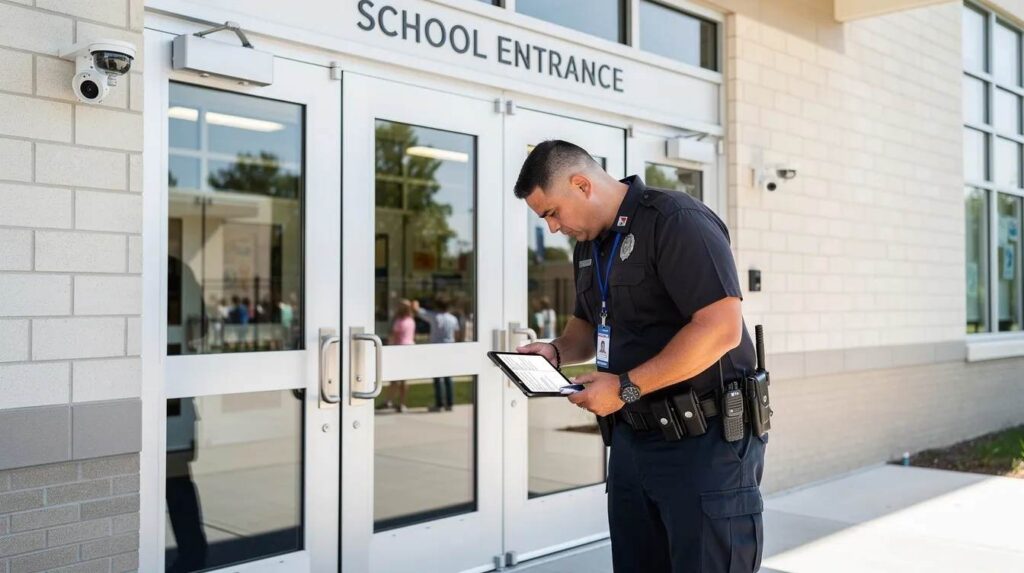
- K-12 schools and universities: Main entries, secure vestibules, office doors. School boards increasingly require high level protection after nearby incidents.
- Municipal and government buildings: Courthouses, city halls, council chambers, and payment windows serving the public.
- Law enforcement: Public lobby security doors, interview rooms, evidence storage entries.
- Healthcare: Hospitals, urgent care, behavioral health units, and pharmacies storing controlled substances. Ballistic glass maintains visibility while providing security in sensitive clinical environments.
- Financial institutions: Bank entries, night depository vestibules, and high security transaction areas.
- National retail and luxury boutiques: All glass storefront doors and mall entrances vulnerable to smash-and-grab.
- Houses of worship and community centers: High public traffic with limited on-site security solutions that can benefit from dedicated bullet-resistant glass security solutions for churches.
Impact Security operates nationwide through certified dealers and installers, with fabrication in Marietta, Georgia and Glendale, Arizona. This enables consistent lead times for multi-site rollouts, whether you need to protect a single property or hundreds of locations, and also creates opportunities for glazing and security contractors interested in becoming a certified DefenseLite dealer.
Why Choose Impact Security for Ballistic Glass Door Protection
Impact Security is not a generic door supplier. The company is an industry leader in retrofit ballistic glazing and forced entry resistant systems, offering a full range of security solutions engineered for real-world threats.
- Specializes in retrofit ballistic glass door protection that preserves existing frames and hardware
- Turnkey service from assessment, engineering, and fabrication through professional installation
- Products are independently tested for ballistic resistance, forced entry resistance, and impact performance
- Founded in 2016, U.S.-based manufacturing in Georgia and Arizona, serving B2B and B2G customers nationwide
- Deep experience across schools, government, healthcare, and national retail
- Post-installation support: warranties, maintenance guidance, and the ability to expand systems as risk profiles change
When your goal is enhanced security without sacrificing the open, welcoming feel of glass entries, Impact Security delivers security solutions built on expertise, not guesswork.
FAQs About Ballistic Glass Door Protection
These are the questions facilities managers and security directors most often ask when evaluating bullet resistant glass doors and retrofit systems.
Do bulletproof doors really exist?
No door is truly bullet proof in absolute terms. The industry uses “bullet resistant” or “ballistic,” with performance defined by UL 752 levels for specific firearms and shot counts. A properly rated ballistic door or bullet resistant glass door can deliver extremely high level protection within those tested conditions, but no product resists every possible threat.
Can I retrofit my existing glass doors with ballistic protection?
In most commercial, school, and government buildings, existing aluminum or steel-framed glass doors can be upgraded with retrofit ballistic glazing shields. Impact Security specializes in this approach and can survey, engineer, and install custom systems without major structural changes, covering a wide range of door sizes and configurations.
How much do ballistic glass door upgrades cost?
Costs vary by size, UL level, framing complexity, and whether work is retrofit or full replacement. Retrofit ballistic glazing is often significantly more cost-effective than new ballistic doors. Request a site-specific estimate, since averages can be misleading without details like door count and existing conditions.
Will ballistic doors still look like glass doors?
Modern ballistic glazing, especially polycarbonate-based or hybrid systems, remains clear and allows full vision. Ballistic glass maintains visibility while providing security, and many installations are indistinguishable from standard tempered glass to casual observers. This preserves building’s aesthetics and an open, welcoming style.
How long does it take to get ballistic glass doors installed?
Typical retrofit projects require 4 to 8 weeks from field measurement through fabrication and install. Custom bullet resistant door fabrication for full replacements often takes 8 to 12 weeks or longer. Many upgrades can be completed during off-hours or school breaks to minimize disruption.
Do ballistic glass doors affect emergency egress or fire code compliance?
When properly engineered, ballistic door retrofits maintain required clear openings, hardware function, and life-safety egress in accordance with applicable building and fire codes. Impact Security coordinates with code officials, architects, and fire marshals to ensure compliant installations.
Next Steps: Plan Your Ballistic Glass Door Protection Project
Ballistic glass door protection is ultimately about buying time, preserving life, and hardening the most vulnerable openings in your facility against modern threats. Whether you are facing budget pressure or an urgent safety mandate, the process starts with understanding what you have and what you need to protect.
Take these steps now:
- Inventory your existing glass doors, sidelites, and vestibules
- Identify high-traffic public entrances and critical interior doors
- Gather drawings or photos of your openings to share during an initial consultation
Contact Impact Security for a free, no-obligation assessment and budgetary estimate for ballistic glass door retrofits or new ballistic door packages. You can reach the team through the online request form, schedule a phone consultation, connect with a certified local dealer or installer in your area, or submit project details directly through the DefenseLite contact form for security glazing projects.
Investing in bullet-resistant glass doors is less about the hardware itself and more about choosing to protect your staff, students, customers, and community before the next incident forces the decision for you.