Table of Contents
Why Protective Glazing for Commercial Doors Matters in 2026
How Protective Glazing Differs From Standard Commercial Door Glass
Best Materials for Commercial Security Glazing
Key Performance Ratings: Forced Entry, Ballistics, Energy, Noise, and Fire
Designing Protective Glazing Specifically for Commercial Doors
Retrofit Protective Glazing vs. Full Door Replacement
Building Codes, Compliance, and Professional Installation
Maintenance, Inspections, and Long-Term Performance
Why Choose Impact Security and DefenseLite
FAQs About Protective Glazing for Commercial Doors
Next Steps for Upgrading Your Commercial Doors
Introduction: Why Protective Glazing for Commercial Doors Matters in 2026
Since 2020, smash and grab attacks, organized retail crime, and targeted violence against public buildings have exposed a hard truth: commercial doors are often the weakest link in a building’s security. A standard commercial glass door can be breached in under 30 seconds when an attacker breaks the glass near the latch-bypassing locks, access control systems, and alarms entirely.
Protective glazing for commercial doors enhances security by delaying forced entry, giving occupants time to shelter and law enforcement time to respond. These solutions range from laminated glass and polycarbonate retrofit shields to ballistic-rated composites, and they differ significantly from the standard tempered or annealed glass found on most doors and windows today. Security glazing can delay intruders and give law enforcement more time to respond-turning minutes of vulnerability into minutes of protection.
Whether you manage corporate offices, government buildings, school campuses, or retail chains, making door security a top priority doesn’t have to mean ripping out every entrance. Impact Security’s DefenseLite brand offers retrofit security glazing solutions for commercial doors, windows, and storefronts across the United States-delivering enhanced security, energy efficiency, and noise reduction without full door replacement. This guide covers materials, ratings, design considerations, building codes, and how to choose the right partner for your property.

Understanding Protective Glazing vs. Standard Commercial Door Glass
Most commercial buildings use tempered glass in their door assemblies. Tempered glass is four to five times stronger than standard glass and meets building code requirements for safety glazing. It can withstand sudden temperature changes and, when broken, tempered glass crumbles into small, blunt pieces rather than dangerous shards. That’s a safety feature-but not a security feature.
The distinction matters. When tempered glass breaks, the entire lite collapses, creating an open entry point. Protective glazing, by contrast, is engineered to stay intact under repeated attack. It plays a vital role in preventing unauthorized entry by maintaining a physical barrier even after the glass is cracked or struck multiple times. Commercial door glass must withstand high foot traffic and abuse while still resisting deliberate attack-something tempered glass alone was never designed to do.
The effectiveness of protective glazing depends on matching it to specific risks and building codes. The main threat categories include:
- Smash-and-grab theft and vandalism
- Prolonged forced entry with tools
- Ballistic attack and blast overpressure
- Extreme weather-borne debris
Modern retrofit systems like DefenseLite overglaze security panels create a secondary shield over existing commercial glass, addressing these security risks without replacing the original door or hardware. These same systems can also improve energy efficiency, noise reduction, and UV control when properly engineered.
Core Material Options for Protective Glazing on Commercial Doors
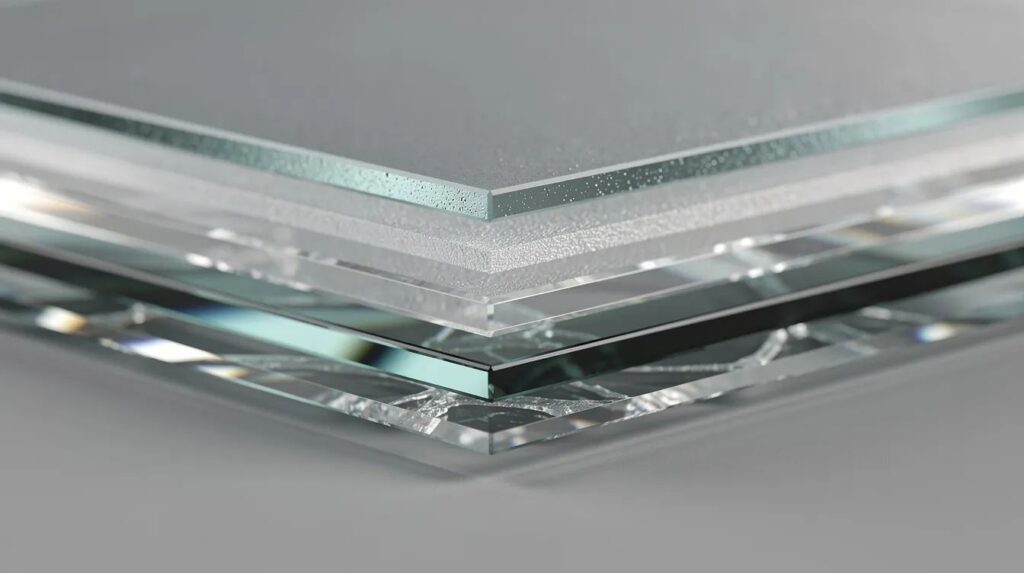
Protective door glazing is rarely a single piece of glass. It typically combines glass, interlayers, and engineered plastics to meet specific performance goals. Here are the primary materials used in commercial security glazing:
Laminated glass is constructed from two or more layers of glass bonded with a PVB or ionoplast interlayer. Laminated glass holds together when shattered, enhancing security by keeping fragments adhered to the interlayer. It blocks up to 99% of UV rays, protecting interiors from sun damage. Laminated glass reduces noise transmission, creating quieter environments in busy buildings. It is resistant to impact and weathering, ensuring durability across seasons. Laminated glass is ideal for preventing smash-and-grab burglaries because even when cracked, the barrier remains largely intact.
Polycarbonate and glass-clad polycarbonate offer extreme impact resistance at lower weight. Products like ArmorPlast AP25 provide a virtually unbreakable barrier for glass doors. Polycarbonate is not commodity plastic-it is an engineered security glazing material with abrasion-resistant coatings, making it the ideal choice for doors in high risk environments. Impact Security’s DefenseLite and BulletShield systems use clear, coated polycarbonate or glass/polycarbonate composites mounted over existing glass panels to deliver forced entry and ballistic performance.
Insulated glass units (IGUs) combine two or more panes with low-E coatings and gas fill. Insulated glass units reduce heat transfer for energy efficiency while hosting laminated or security layers on the threat side.
Fire rated glass is required in fire corridors and stair towers, with ratings from 20 to 90 minutes. Fire-rated glass can withstand high temperatures for safety and must be considered when adding any retrofit shield to maintain the assembly’s fire resistance.
Security films can also be retrofitted to existing doors for enhanced protection at lower cost, though they don’t match the performance of full polycarbonate or laminated systems against sustained attack compared with DefenseLite vs. security glass film systems. Security glazing includes laminated glass and polycarbonate options designed for impact resistance-choosing the right one depends on your threat profile and building requirements.
Key Performance Ratings: Forced Entry, Ballistics, Energy, Noise, and Fire
Selecting security glass for commercial doors should be based on verified test standards-not marketing terms like “unbreakable.”
Forced entry resistance is measured by standards like ASTM F1233 and the newer ASTM F3561, which simulates an active shooter scenario followed by physical assault. ASTM F3561 assigns Levels 1 through 8, with Level 8 representing maximum protection. Security glazing can prevent forced entry through glass doors by withstanding repeated forced entry attempts with heavy tools and blunt-force impacts. Impact-resistant glazing protects against heavy tools and extreme weather events.
Ballistic ratings follow UL 752, covering Levels 1 through 8:
| UL 752 Level | Caliber | Typical Application |
|---|---|---|
| Level 1 | 9mm FMJ | Retail, schools |
| Level 3 | .44 Magnum | Financial, government |
| Levels 4–8 | Rifle (.30-cal, 5.56mm, 7.62mm) | Military, high-security |
Ballistic-rated glazing is engineered to resist bullets and mitigate blast effects. Many commercial doors in financial institutions, government buildings, and schools now specify Level 1–3 ballistic glazing.
Energy performance matters too. Adding secondary glazing or upgraded IGUs to commercial doors can reduce U-values significantly. Studies show polycarbonate layers over existing glass dropped U-values from 5.80 to 2.85 W/m²·K, with visible transmittance maintained around 60–70%.
Noise reduction is another benefit. Laminated glass and secondary polycarbonate shields can reduce noise by up to 40%, critical for doors facing busy streets or transit areas.
Fire resistance ratings for glazed doors are tested as a complete system-glass, frame, and hardware together. Adding non-combustible secondary shields is permissible in many assemblies, but always verify with your code authority. Tempered glass can withstand sudden temperature changes and exposure to extreme heat, but it does not offer fire resistance on its own.
Always request test reports and listing documentation from vendors so that commercial security decisions are based on certified performance.
Designing Protective Glazing Specifically for Commercial Doors
Door glazing design is more complex than fixed storefront glass because doors move, latch, and endure thousands of cycles daily. Full-lite glass doors require different protective strategies than narrow vision lites in hollow metal doors.
Integration with door frames and hardware is critical. Reinforced aluminum or steel framing, continuous hinges, and security-grade locks must work as one system. Edge engagement-anchoring the protective shield into the surrounding frame, not just the existing glass stop-prevents prying and kick-in failures in sensitive areas.
Balancing visibility and security is achievable. Clear glazing preserves natural light and aesthetic appeal while still hardening the entry. Impact Security designs custom DefenseLite panels that follow existing door rail profiles and hardware locations, maintaining the welcoming appearance of high traffic areas while dramatically increasing protection.
Accessibility remains non-negotiable. Upgraded door glazing must not interfere with ADA-compliant hardware, free egress, or door closer performance. Sightlines for security staff and cameras in secure zones must stay clear. These security features work best when they’re invisible to daily users but present a formidable barrier to anyone attempting unauthorized access.
Retrofit Protective Glazing vs. Full Door Replacement
Businesses face two project paths: retrofitting protective glazing over existing commercial doors, or replacing entire door assemblies with new security-rated systems.
Retrofits offer compelling advantages for most commercial properties:
- Lower cost (approximately $45–$90 per square foot for DefenseLite systems)
- Minimal disruption to occupied buildings
- Preservation of existing door hardware and access control systems
- Faster lead times-often weeks rather than months
- Ability to phase upgrades across multiple entrances
Retrofit protective glazing is the ideal choice for retail chains combating smash and grab events, schools hardening entrances during breaks, and public buildings with architecturally significant doors. In 2024, Impact Security retrofit dozens of retail locations with DefenseLite over existing aluminum and glass doors, cutting project time and cost compared to full replacement while delivering verified forced entry resistant doors and windows.
Full door replacement makes sense when frames are severely corroded, fire-rated door assemblies are non-compliant, or a project demands fully integrated ballistic, blast, and fire ratings in a single assembly.
From a lifecycle perspective, retrofit energy-efficient security glazing systems can extend the life of existing commercial doors while improving energy efficiency and noise reduction-often delivering measurable ROI through reduced break-ins, lower insurance premiums, and better occupant comfort.
Building Codes, Compliance, and Professional Installation
Protective glazing projects must respect building codes, fire and life-safety standards, and door hardware requirements. Building codes mandate safety glazing in hazardous locations, including doors, sidelites, and glass within 24 inches of a door opening.
Adding secondary glazing or heavier laminated units changes door leaf weight and operation. Professional installation ensures compliance with safety standards by recalibrating closers, adjusting hinges, and verifying that doors latch and self-close as required. Improperly installed glass can lead to breakage and injury, and professional installation minimizes risks of air leaks and security vulnerabilities.
Impact Security’s commercial security window and door solutions installation process follows a clear sequence:
- Site assessment – surveying doors, frames, and hardware conditions
- Measurement and engineering – custom panel design at fabrication centers in Marietta, GA and Glendale, AZ
- On-site installation – expert installation by certified DefenseLite dealers
- Sealing and final inspection – verifying operation, latch engagement, and code compliance
The risks of DIY or non-specialist installation on commercial doors include misaligned hardware, compromised fire ratings, and security gaps that defeat the purpose of the upgrade.
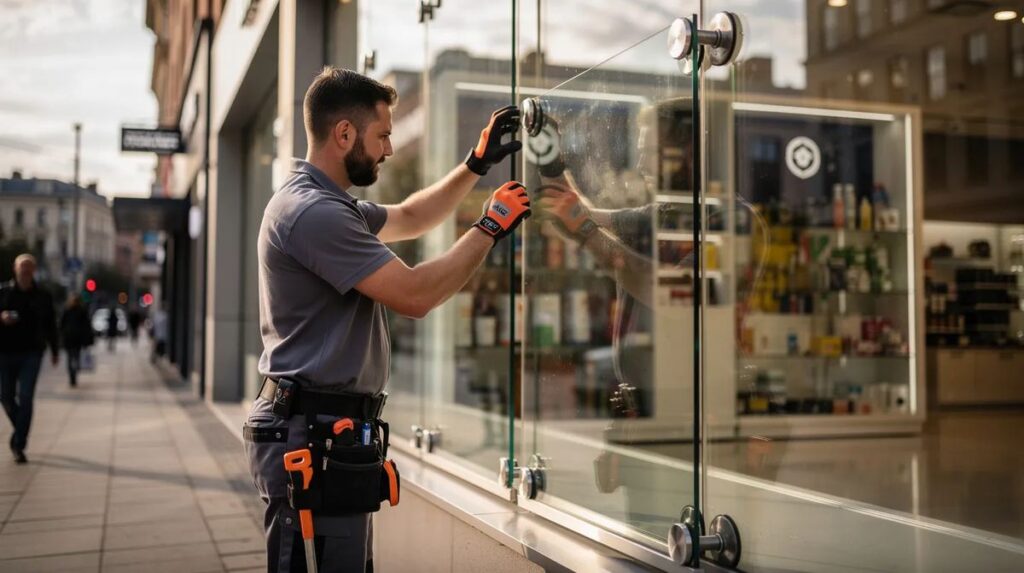
Impact Security works through certified dealers and installers nationwide to ensure quality, warranties, and post-install service for businesses and government clients meeting the highest standards.
Maintenance, Inspections, and Long-Term Performance of Door Glazing
Protective glazing for commercial doors is a long-term asset that requires ongoing maintenance to preserve clarity, energy performance, and security ratings. In demanding commercial environments, a simple inspection routine keeps systems performing:
- Quarterly checks: Look for impact damage, frame loosening, sealant deterioration, signs that glass has separated or delaminated in IGUs, and changes in door operation
- Cleaning: Use non-abrasive cleaners and soft cloths; avoid ammonia-based products on coated polycarbonate
- Professional service: Call for help when you see visible cracks in laminated glass, warping of polycarbonate, chronic door closing issues, or evidence of tampering
Routine inspections by professionals identify potential weaknesses before they become failures. Regular inspections help identify weaknesses in glass door security that daily users might overlook. Track occupant feedback and utility bills to verify noise reduction and thermal comfort across seasons.
Impact Security offers periodic site reviews for major accounts, replacement of damaged security shields, and options to upgrade to higher threat levels if a facility’s risk profile changes-creating confidence that your valuable assets remain protected over time.
Why Choose Impact Security and DefenseLite for Protective Glazing on Commercial Doors
Impact Security is a U.S.-based manufacturer and installer specializing in retrofit security glazing for commercial doors, windows, and storefronts since 2016. The company delivers engineering-driven solutions tested to verified standards for forced entry, ballistic, and blast resistance, as outlined in their company overview at Impact Security.
Core differentiators include:
- Tested performance: DefenseLite Pro achieves ASTM F3561 Level 8 forced entry resistance; BulletShield delivers UL 752 ballistic ratings up to Level 8
- Product range: DefenseLite Pro forced entry glazing for forced entry, BulletShield for ballistic mitigation, RiotLite for civil unrest, and AccessShield for secured transaction openings
- Nationwide reach: certified installer network across the United States with fabrication in Marietta, GA and Glendale, AZ
- Turnkey service: risk assessment, glazing recommendations, coordination with architects and security consultants, custom fabrication, professional installation, and warranty-backed aftercare
A national pharmacy chain deployed DefenseLite across dozens of locations to combat repeat break-ins, reducing successful intrusions to zero at retrofitted stores. A public school district upgraded entry doors with ballistic-rated shields during a summer break, providing peace of mind to staff and families without disrupting the school year.
Impact Security solutions preserve the appearance of commercial doors while dramatically improving commercial security, energy performance, and occupant safety. Every project is built to withstand impact and protect what matters most inside your building.
FAQs About Protective Glazing for Commercial Doors
These FAQs address common questions from facilities managers, security directors, and architects planning door upgrades.
What is the best protective glazing option for high-traffic commercial doors?
For additional detail on system capabilities and options, see the DefenseLite product FAQs.
For most high-traffic entries, polycarbonate retrofit shields like DefenseLite offer the best combination of durability, forced entry resistance, and low maintenance. Laminated glass is a strong alternative when optical clarity and noise reduction are priorities. The right choice depends on your threat profile-polycarbonate excels against repeated blunt-force attack, while laminated glass performs well against single-event impacts and provides superior UV protection.
Can I add protective glazing to my existing aluminum or hollow metal doors?
Yes. Retrofit systems like DefenseLite are engineered to mount over existing commercial door glass without replacing frames or hardware. Most standard aluminum and hollow metal doors can be upgraded within days. Your installer will assess frame condition, door weight capacity, and closer settings before fabrication.
How does protective glazing affect energy efficiency and noise reduction?
Adding secondary glazing or upgraded IGUs to commercial doors measurably lowers U-values and improves acoustic performance. Polycarbonate over-glazing can cut heat transfer nearly in half, and laminated glass or secondary shields can reduce noise by up to 40%-a significant benefit for street-level entries and transit-adjacent buildings.
Is protective glazing for commercial doors required by building codes?
Building codes require safety glazing in hazardous locations but do not typically mandate security glazing. However, many school districts, government agencies, and financial institutions now specify forced entry or ballistic-rated glazing as part of their security measures. Security glazing exceeds minimum safety standards, and more facilities are adopting it as a best practice.
How long does security glazing on doors typically last?
Quality polycarbonate shields with UV-resistant coatings typically last 10–15 years before needing replacement. Laminated glass can last 20+ years with proper care. Environmental exposure, cleaning practices, and level of physical abuse all affect service life. Regular inspection ensures you catch any degradation early.
What does a typical project with Impact Security and DefenseLite look like?
The process starts with a free site assessment, followed by a tailored proposal covering security, energy, and noise goals. The company fabricates custom panels at its facilities, and certified technicians install them, typically completing most door upgrades in one to two days per location. Final inspection confirms code compliance, hardware operation, and occupant access before handoff.
Next Steps: Upgrading Protective Glazing on Your Commercial Doors
Evolving threats, tightening insurance requirements, and proven retrofit technology make this the right time to evaluate the glazing on your commercial doors. Start with a few practical steps:
- Inventory all exterior and critical interior doors with glass
- Assess your current risk level and any recent security incidents
- Gather existing door and hardware specs
- Prioritize entrances to upgrade first
Engage your internal stakeholders-security, facilities, finance, and risk management-so that protective glazing decisions align with broader capital and security plans.
Contact Impact Security to request a free estimate and schedule a site assessment with a certified DefenseLite dealer program. You can also contact DefenseLite directly to discuss specific projects. Solutions are available nationwide for both B2B and B2G clients, and every proposal is tailored to your building type, threat level, and performance goals. Secure your doors before they become the weak point in your property’s defenses.