Table of Contents
What Is Riot Protective Glass and How Does It Stop Smash-and-Grab Attacks?
Riot Protective Glass vs. Security Film vs. Ballistic Glass
How Impact Security Designs and Installs Riot Protective Glass Systems
Why Retrofit Beats Full Replacement
When Is It Time to Upgrade to Riot Protective Glass?
Riot Protective Glass FAQs
Why Choose Impact Security for Riot Protective Glass?
Next Steps: Request a Riot Protective Glass Assessment
Since 2020, organized smash-and-grab crews, civil unrest, and coordinated looting events have forced property owners across the United States to rethink how they protect their most vulnerable openings: glass doors, storefront windows, and curtain walls. Riot protective glass is the physical security solution that has emerged as the standard for commercial and government buildings that need real forced entry prevention, not just alarms that sound after the damage is done.
In this guide, you will learn:
- What riot protective glass actually is and how it differs from standard tempered or laminated glass
- How it compares to security film and ballistic glass in real-world performance, cost, and use cases
- What the design, engineering, and installation process looks like with Impact Security
- How much it costs and how long installation takes
- When it makes sense to upgrade and what questions to ask before committing
- Why Impact Security’s turnkey approach matters for multi-site operators, schools, and government agencies
Whether you manage a single retail location or a national portfolio of high-risk facilities, the information here will help you make a confident, well-informed decision about hardening your glass.
What Is Riot Protective Glass and How Does It Stop Smash-and-Grab Attacks?
Riot protective glass refers to retrofit security glass systems engineered to physically prevent forced entry, looting, and vandalism at existing commercial, institutional, and government buildings. Unlike traditional glass upgrades that require full tear-out and replacement, riot glass systems are designed to mount directly over your current windows and doors, transforming vulnerable openings into high-performance barriers without disrupting your building’s appearance.
How These Systems Work
The core technology behind most riot protective glass relies on layers of polycarbonate and reinforced framing that absorb and distribute impact energy rather than shattering on contact. Products like DefenseLite Pro use rigid, multi-layer polycarbonate shields installed in heavy-duty framing systems that are securely fastened over existing glass. The laminated design of riot protective glass allows it to flex under impact without breaking, absorbing blow after blow instead of failing catastrophically the way tempered or annealed glass does.
Impact Security’s RiotLite security film laminates take a different approach, using thick security film laminates applied to the interior glass surface to hold shards together and reinforce the substrate. This is particularly useful where adding external shields is impractical due to architectural constraints.
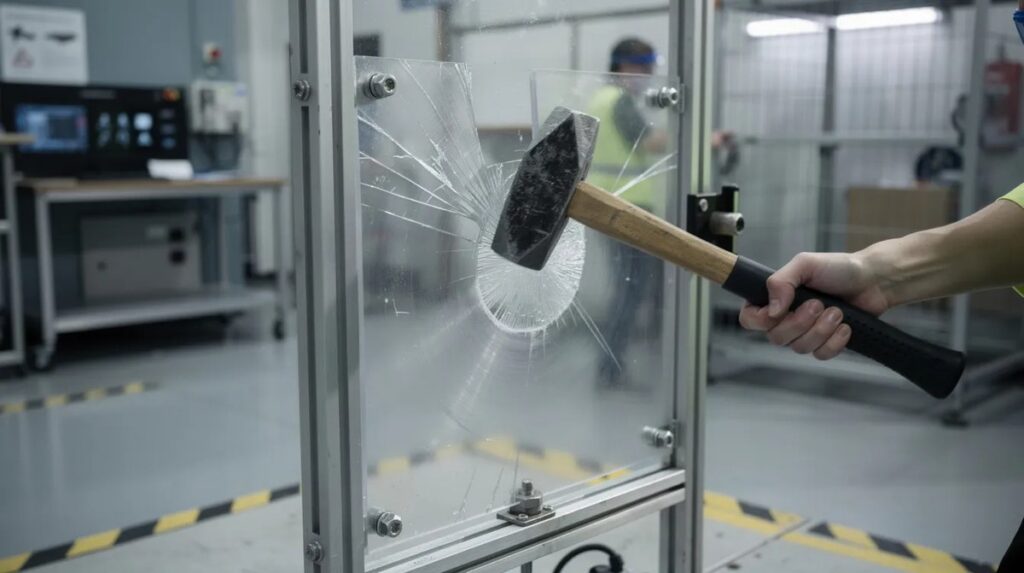
Riot Glass is a patented system for maximum security, and the numbers back it up. Smash-proof anti-theft glass panels like DefenseLite’s riot protective glass are 250 times stronger than regular glass, and it has achieved a 100% success rate in stopping break-ins across installed locations. Riot Glass stops sledgehammers, bricks, and bats, and it is constructed to withstand repeated blows from heavy tools like sledgehammers and crowbars. DefenseLite’s riot protective glass is nearly unbreakable under the kinds of sustained, multi-tool attacks that define modern smash-and-grab crimes.
How Standard Glass Fails
To understand why riot protective glass matters, it helps to know why standard options fall short:
- Tempered glass shatters into small, blunt pieces on impact. It offers zero forced entry resistance once broken. A single sledgehammer blow creates a walk-through opening.
- Annealed glass is even weaker, fracturing into dangerous shards with minimal force.
- Standard laminated safety glass holds fragments together better than tempered glass, but it is not designed to withstand sustained, repeated attacks from determined rioters or organized theft crews.
Riot protective glass is designed to resist forced entry and damage from civil unrest at a level none of these standard options can match. It provides maximum protection against forced entry by keeping the opening sealed even after dozens of strikes.
Real Attack Methods This Glass Is Built to Stop
Since 2020, attack methods have escalated. Organized smash-and-grab crews use sledgehammers, bricks, crowbars, and battery-powered saws to breach storefronts in under 60 seconds. “Flash mob” style thefts involving 10 to 80 people have hit luxury retailers, pharmacies, and electronics stores in broad daylight. In one widely reported incident, a Sunnyvale, California jewelry store lost approximately $2 million in merchandise when roughly 20 thieves breached standard glass in under two minutes.
Riot protective glass is engineered specifically for these scenarios. It utilizes layers of polycarbonate and reinforced framing to absorb impacts that would instantly destroy conventional glazing. Most riot protective glass panels are between 4 to 6mm thick, and riot protective glass systems are typically 4 to 6mm thick depending on the protection level specified. Even at this relatively slim profile, Riot Glass stops sledgehammers, bricks, and bats effectively, keeping the barrier intact and the opening sealed.
Impact Security’s systems have been lab-tested to rigorous forced entry standards, including ASTM F3038, which subjects glazing to timed attacks by six adversaries using combinations of tools. Riot Glass passed the Miami-Dade Large Missile Impact Test, confirming performance against high-velocity debris as well.
Invisible Protection, Open Storefronts
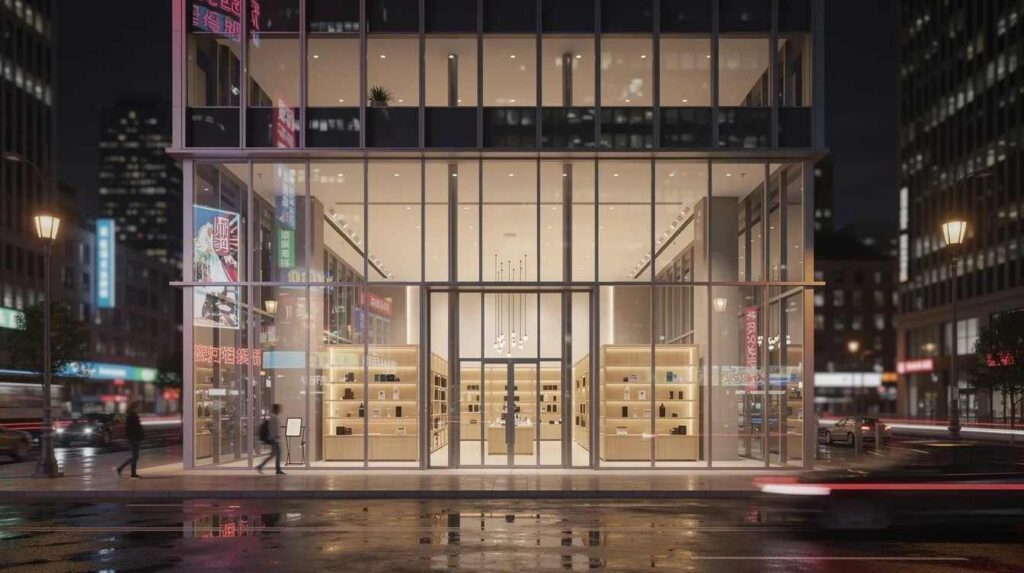
One of the most common concerns from retail operators and property owners is whether security glass will make their building look like a fortress. The answer is no. Riot protective glass maintains clarity while providing high-level security. From the street, the system appears as normal glass, and the framing extrusions are slim, with powder-coated or anodized finishes that match existing storefronts. Riot protective glass can act as an invisible shield against smash-and-grab theft, preserving the brand-forward, open-concept storefront that customers expect, without sacrificing visual appeal.
The system is virtually invisible to passersby and occupants alike. You get the visual appeal of an open, welcoming façade with the structural performance of a hardened barrier.
Threat Types Addressed
Riot protective glass addresses a range of physical threats across various settings:
- Riot conditions and mob attacks – sustained, multi-person assaults with improvised weapons
- Smash-and-grab burglary – rapid forced entry targeting high-value merchandise
- Targeted vandalism – rocks, bats, graffiti etching, and thrown objects
- Wind-borne debris – many systems of riot protective glass also meet hurricane impact standards, providing secondary storm protection
It enhances safety by protecting individuals during riots or active threats, keeping dangerous glass fragments contained and preventing breach of the building envelope. Impact Security focuses on B2B and B2G applications: retail chains, schools, government facilities, hospitals, banks, and other public-facing buildings across the United States.
Riot Protective Glass vs. Security Film vs. Ballistic Glass
Security glass is an umbrella term that covers a wide spectrum of products. The most common options facilities managers evaluate are security window film, riot protective glass (polycarbonate overglazes), and ballistic glass. Each occupies a different tier in terms of protection level, cost, and intended use case, and understanding the differences will cancel out confusion and help you avoid a costly error in specification.
Security Film (Safety Film)
Security film, sometimes called safety film, is a thin polyester or PVB-based laminate bonded to the interior surface of existing glass. Products from manufacturers like 3M are widely available and relatively inexpensive, but riot protective window glass systems based on polycarbonate shields offer far greater impact resistance.
- What it does well: Holds glass shards together after breakage, reducing laceration risk. Provides a minor delay against casual break-in attempts. Offers some blast and shatter safety.
- Where it falls short: Film cannot withstand prolonged, concentrated impacts from tools like sledgehammers or crowbars. A determined attacker can breach film-protected glass in seconds. It does not physically deny entry in the way a rigid barrier does.
- Cost: Typically $8 to $20 per square foot installed, making it a reasonable first step but not a standalone solution for high-risk locations.
Riot Protective Glass / Polycarbonate Overglaze (e.g., DefenseLite Pro, RiotLite)
This is where forced entry resistance steps up dramatically. DefenseLite PRO riot protective glass systems use multi-layer, rigid polycarbonate or laminated panels mounted in engineered framing over existing glass.
- What it does well: Designed for long-duration forced entry resistance, dramatically increasing the time required for breach. Riot Glass protection is more effective than boarding and roll-down gates because it maintains clear sightlines for surveillance cameras and pedestrians while providing superior impact resistance. Laminated security glazing is often recommended for retail storefronts to prevent smash-and-grab theft because it creates an “unbreakable” perception that deters most attackers within the first 30 to 60 seconds.
- Where it falls short: Higher cost than film. Not rated for ballistic threats unless specifically engineered for that purpose.
- Cost: DefenseLite riot protective glass costs between $40 to $75 per square foot installed for non-ballistic forced entry systems.
Ballistic Glass / Ballistic Overglaze (e.g., BulletShield)
Ballistic glass is a multi-ply polycarbonate and laminate stack engineered to stop specific projectiles. These systems are rated under UL 752, with levels ranging from Level 1 (three rounds of 9mm handgun) up to Level 7 and beyond (rifle-caliber threats), and are part of broader polycarbonate glass security solutions for high-risk facilities.
- What it does well: Stops bullets. Also delivers inherently high forced entry resistance due to the thick, multi-layer construction.
- Where it falls short: Significantly heavier and more expensive. Can introduce slight optical distortion. Requires robust framing and potentially structural modifications.
- Cost: Starts at approximately $150 per square foot and increases substantially at higher UL levels.
Different types of riot protective glass vary in their resistance to forced entry and ballistic threats, so the right choice depends entirely on your threat profile.
Scenario-Based Recommendations
Consider an urban pharmacy chain experiencing repeated smash-and-grab attempts. The primary threat is blunt-force entry by organized crews, not firearms. Riot-protective glass, such as storefront security solutions for glass doors and windows like DefenseLite Pro, is the right fit: it physically denies entry, preserves visibility for surveillance, and avoids the budget impact of ballistic-grade systems.
Now consider a city hall council chamber where elected officials are concerned about both civil unrest and potential armed threats during contentious public meetings. Here, a combined forced entry and ballistic solution like BulletShield, rated to the appropriate UL 752 level, addresses both threat vectors.
Impact Security conducts site-specific risk assessments to help facilities managers choose the right level. Their guidance on protecting storefront glass during protests and riots emphasizes combining layers, such as existing laminated glass plus a riot protective shield, to create very high levels of real-world security without the cost of full tear-out and replacement. You do not always need to replace your entire glazing system to achieve meaningful protection.
How Impact Security Designs and Installs Riot Protective Glass Systems
Impact Security specializes in turnkey retrofit security glazing, handling every phase from initial assessment and engineering through fabrication, professional installation, and long-term warranty service. With fabrication centers in Marietta, Georgia and Glendale, Arizona, the Impact Security, LLC team serves clients nationwide across commercial, educational, healthcare, and government sectors.
The Process, Step by Step
Site Assessment and Threat Analysis
Every project begins with a walkthrough, either in-person or virtual, to catalog every vulnerable opening: doors, storefront windows, curtain walls, transoms, and sidelites. The assessment team discusses specific threats with stakeholders, including local crime trends, prior break-ins, ballistic risks, and any history of civil unrest. They also review local building codes, fire egress requirements, landlord restrictions, and brand standards to account for all constraints before recommending a system.
Engineering and Specification
Based on the threat analysis, Impact Security’s engineering team selects the appropriate product system. DefenseLite Pro is typically specified for high-risk urban retail and government buildings. RiotLite offers a cost-optimized riot protection option for moderate-threat locations. BulletShield addresses environments where ballistic threats are identified. Custom measurements ensure the system fits existing frames, including older or irregular openings. Integration with existing access control, panic hardware, and egress requirements is addressed at this stage to ensure code compliance and operational continuity.
Fabrication
Polycarbonate or laminate shields are custom-cut and edge-finished at Impact Security’s fabrication centers. Framing is powder-coated or anodized to match or complement the existing storefront system, maintaining the building’s visual appeal. Quality checks are completed before panels ship to the local certified installer. You can watch product testing videos on the company’s website to see how panels perform under sustained impact before committing to a specification.
Professional Installation
Riot protective glass systems are designed for retrofit applications, which means they install over existing doors and windows without requiring removal of the current glazing. Coordination with the client minimizes business disruption; most retail and healthcare installs are scheduled for nights or off-hours. A typical storefront retrofit is completed in one to three nights, depending on size and complexity. Heavy-duty framing systems are used to securely install riot protective glass, with tamper-resistant fasteners and continuous perimeter sealing for weatherproofing and security. DefenseLite’s riot protective glass is installed by certified dealers who perform a final inspection, clean the system, and demonstrate operation to facilities staff, and the DefenseLite product FAQs explain system details, performance, and maintenance considerations.
Warranty and Long-Term Maintenance
Impact Security offers warranties ranging from 7 to 15 years depending on the product and exposure conditions. Polycarbonate hard coats are typically warranted for 7 years, and frame finishes carry their own warranty periods. To keep the system performing, use non-abrasive cleaners to clean polycarbonate and coated surfaces. If a panel is damaged in an incident, you can remove and replace individual sections rather than overhauling the entire glazing system, which dramatically reduces repair cost and downtime.
Riot protective glass reduces the need for repairs by minimizing property damage in the first place. When an attack occurs, the system absorbs the impact, the glass behind it typically remains intact, and the facility stays secure.
Why Retrofit Beats Full Replacement
The retrofit approach offers several advantages over full glass replacement that facilities managers and property owners should add to their evaluation:
- Faster deployment – critical during active periods of civil unrest or immediately after a break-in, when lead times for custom replacement glass can stretch weeks
- Lower total project cost – riot protective glass is installed over existing glass, eliminating demolition and disposal costs
- Less disruption to tenants and customers – most installations happen without closing the business
- Preservation of historic or architecturally sensitive facades – the existing glass and framing stay in place, and the retrofit is easy to integrate without altering the building’s character
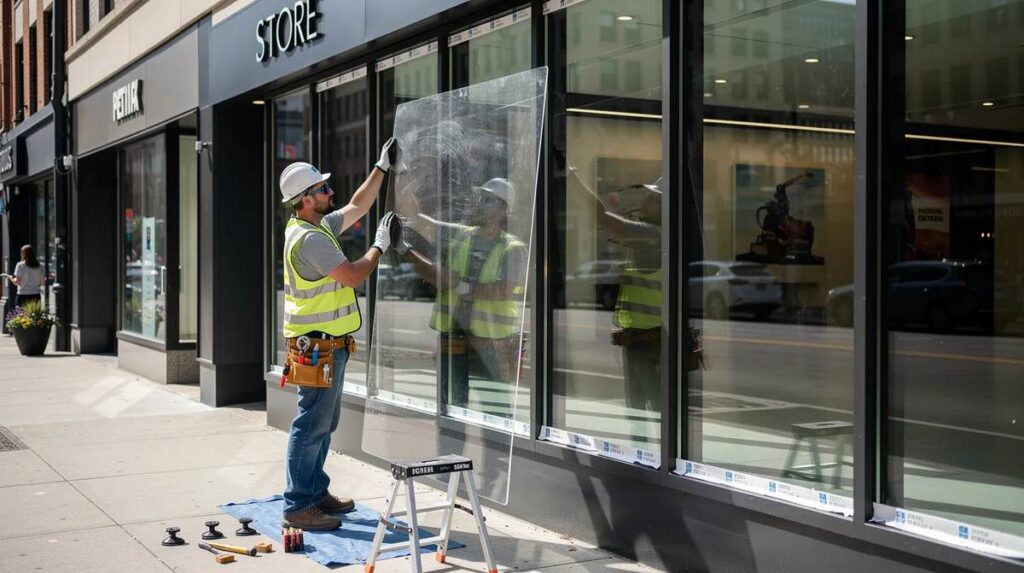
Riot Glass can retrofit existing window openings across virtually any commercial frame type, and it is used in high-risk areas such as retail stores, government facilities, and schools nationwide. Impact Security works through certified dealer-installers across the country, making it practical for multi-site retail chains, school districts, and government agencies to standardize on one security glass platform and roll it out portfolio-wide; interested stakeholders can contact DefenseLite to initiate project discussions and share specifications.
When Is It Time to Upgrade to Riot Protective Glass?
Not every property needs riot protective glass today, but waiting until after an incident is the most expensive and disruptive path. Here are the trigger events and warning signs that indicate it is time to act:
- Recent local riots, protests, or politically charged events that have turned violent or resulted in property damage in your area
- A pattern of smash-and-grab incidents in the neighborhood or across your retail portfolio, even if your specific locations have not yet been hit
- High-value merchandise displayed near windows – jewelry, electronics, pharmaceuticals, firearms, luxury goods – that makes your storefront a target
- Existing storefronts relying only on standard tempered glass and burglary alarms, which do not physically stop entry and only notify you after the damage is done
- Board-ups becoming frequent or ongoing – plywood is costly, projects a negative brand image, and signals vulnerability to looters
- Insurer recommendations or internal risk assessments highlighting glazing as a critical vulnerability that could affect coverage or premiums
This type of glass can lower insurance costs by reducing the risk of break-ins, which is an important factor for people managing property budgets across multiple locations.
Conduct a Basic Glazing Audit
If any of the above apply to your property, perform a simple assessment before requesting a quote:
- Identify all ground-floor and accessible glass openings
- Note the framing type, age, and condition of each opening
- Document previous damage incidents, impact marks, or repair history
- Gather photos and floor plans to share with Impact Security for preliminary pricing
The most common error facilities managers make is assuming their current glass will hold because it has not been tested yet. Proactive upgrades ahead of election cycles, high-profile trials, or known protest events are far less costly than emergency responses. Both 2020 and 2024 demonstrated how quickly conditions can change and how fast demand for protective glazing can exceed supply. Do not wait for the next news cycle to learn this lesson firsthand.
Riot Protective Glass FAQs
Is riot protective glass the same as bulletproof glass?
No. Riot protective glass is engineered primarily for forced entry resistance: stopping repeated blows from tools, thrown objects, and sustained physical attacks. Ballistic glass, sometimes called bulletproof glass, is designed to stop projectiles from firearms and is rated under standards like UL 752. Impact Security offers BulletShield for situations requiring true ballistic protection. Some systems combine both forced entry and ballistic resistance, but they are distinct product categories with different construction, cost, and weight profiles.
How much does riot protective glass cost per square foot in 2026?
For non-ballistic forced entry systems, most commercial projects fall in the $40 to $75 per square foot installed range. Ballistic-rated systems start at approximately $150 per square foot and increase based on UL level, panel size, and framing complexity. Security film options run $8 to $20 per square foot. Actual pricing depends on scope, threat level, frame condition, and location. Request a site-specific quote to get accurate numbers for your budget.
Can you retrofit riot glass over my existing storefront without replacing the windows?
Yes, in most cases. Riot Glass is installed over existing doors and windows, preserving the original glazing behind a rigid protective shield. This works with the majority of commercial aluminum storefront frames. Exceptions arise when frames are severely deteriorated, structurally inadequate for the added weight, or when local code requires replacement due to material degradation. Impact Security evaluates frame condition during the site assessment and will recommend the right approach for your specific situation.
Will riot protective glass change how my building looks?
Riot protective glass maintains clarity while providing high-level security. The polycarbonate panels offer approximately 84% light transmission in IGU configurations, and the slim framing extrusions are color-matched to existing systems. Most customers, tenants, and passersby do not notice any change. Common comments from facilities managers after installation center on how little visual difference there is, with the only noticeable change being fewer break-ins and less damage.
Does riot protective glass affect emergency egress or fire code compliance?
Systems are engineered to maintain the egress function of doors, including panic hardware, exit signage, and rated door closers. Impact Security works directly with Authorities Having Jurisdiction (AHJs), architects, and code officials to ensure every installation meets relevant fire and life safety codes. This is a critical consideration that should not be overlooked, and it is one reason why working with a specialized manufacturer rather than a general glazier matters.
How long does installation usually take, and will I have to close my business?
Smaller retail storefronts are typically completed overnight or over a single weekend. Larger or more complex projects may take two to three nights. Many businesses remain fully open during phased installations, with work scheduled during off-hours to minimize disruption. For multi-site rollouts, Impact Security coordinates installation schedules across locations to optimize labor and reduce total project timelines.
How does riot protective glass perform in hurricanes or severe storms?
While riot protective glass is not marketed as a dedicated hurricane glazing system, Riot Glass passed the Miami-Dade Large Missile Impact Test, confirming meaningful resistance to high-velocity wind-borne debris. Many systems of riot protective glass also meet hurricane impact standards, providing a secondary layer of storm protection that standard glass simply cannot offer. In coastal or storm-prone regions, this dual-purpose performance can be a significant advantage for property owners evaluating their options.
Why Choose Impact Security for Riot Protective Glass?
Impact Security is a leading manufacturer and installer of retrofit security glazing in the United States, founded in 2016 and headquartered in Marietta, Georgia. The company serves B2B and B2G clients nationwide through a network of certified dealers and installers, with fabrication centers positioned for rapid fulfillment across the country.
Here is what sets Impact Security apart in a market with no shortage of security glass providers:
Specialized Focus on Hardening Existing Glass
Impact Security’s entire business is built around one thing: making existing glass openings in buildings resistant to forced entry, ballistic threats, and civil unrest. This is not a sideline product for a general glass company. Every engineering resource, product line, and installer training program is dedicated to this mission.
A Proven Product Family for Every Threat Level
The company offers a complete range of options to protect your property at the right level:
- DefenseLite Pro – rigid polycarbonate shield systems for high-risk retail, schools, and government buildings facing forced entry and riot threats
- RiotLite – security film laminate retrofit for moderate-threat environments where cost optimization matters
- BulletShield – ballistic-grade overglaze systems rated under UL 752 for facilities facing armed intrusion risk
- Custom safe-room solutions – for high-value areas, executive suites, or evidence rooms requiring the highest level of containment
Each product is engineered for specific threat scenarios, so you are never paying for more protection than you need or accepting less than the situation demands.
Engineering-Driven Approach
Impact Security provides in-house engineering support for complex openings, curved glass, historic facades, and integration with existing security hardware and access control systems. This matters because every building is different, and off-the-shelf solutions frequently fail at the framing and anchorage level.
Turnkey Service from Assessment to Warranty
You work with a single partner from the initial site assessment through fabrication, installation, and warranty service. There is no finger-pointing between the glazier, the framing contractor, and the product manufacturer, because Impact Security handles all of it.
Experience with Critical Facilities
Impact Security has delivered riot protective glass systems for national retail chains, school districts, federal and local government buildings, hospitals, and financial institutions. In one widely cited example, a national sporting goods and apparel retailer installed riot glass across more than 300 locations after experiencing repeated storefront break-ins. After installation, stores that were previously targeted reported that looters attempted breaches during civil unrest but were denied access, with the glass resisting every attempt.
Speed and Scalability
For multi-site operators, Impact Security can mobilize quickly to harden hundreds of doors and windows across regional or national portfolios. Coordinated scheduling minimizes downtime, and standardized specifications across locations simplify procurement and ongoing maintenance.
Next Steps: Request a Riot Protective Glass Assessment
If you manage a property with vulnerable glass openings, the smartest time to act is before the next incident, not after.
Here is how to get started:
- Request a free, no-obligation site assessment or virtual walkthrough. Impact Security’s team will catalog your glazed openings, discuss your threat profile, and recommend the right system for your risk level and budget.
- Send floor plans or photos of your most vulnerable glass openings to get preliminary pricing and a scope estimate.
- Connect with a local certified Impact Security dealer/installer in your region for hands-on evaluation and installation scheduling.
Have a location at risk before the next protest season or election cycle? Let the Impact Security team help you harden your glass now, before you need it.
Multi-site operators in retail, healthcare, banking, education, and government should ask about standardized riot protective glass specifications that can be rolled out portfolio-wide, ensuring consistent protection and simplified maintenance across every location.