Table of Contents
Why Storm Resistant Security Windows Matter
What Are Storm Resistant Security Windows?
How Impact Resistant Storm Windows Are Built & Tested
Security Benefits Beyond the Storm
Energy Efficiency, Noise Reduction & Everyday Comfort
Codes, Hurricane Zones & When They’re Required
Retrofit vs. Replacement
Cost, Insurance & Lifecycle ROI
How the Impact Security Retrofit Process Works
FAQs About Storm Resistant Security Windows
Why Choose Impact Security
Next Steps & Free Assessment
Introduction: Why Storm Resistant Security Windows Matter in 2026
The 2020–2025 Atlantic hurricane seasons brought record-breaking landfalls, and the 2024 Midwest derecho events proved that severe storms don’t respect geographic boundaries. At the same time, smash-and-grab incidents, campus security threats, and civil unrest have forced facility owners to rethink every vulnerable glass opening. Storm resistant security windows have become a priority for schools, retailers, and government buildings that can’t afford to treat weather protection and physical security as separate problems.
This article focuses on impact resistant windows that combine hurricane resistant performance with forced-entry and riot resistance-not basic residential hurricane windows. These systems use laminated impact glass, reinforced frames, and engineered anchoring to protect against both flying debris and deliberate attack. Impact resistant storm windows in this category provide permanent protection without the need for activation like shutters, and they can withstand winds up to 170 mph.
You’ll learn how these systems are built and tested, how retrofit security glazing from Impact Security can upgrade existing glass, what codes apply in hurricane zones and beyond, and how to evaluate ROI across enhanced security and energy efficiency.
What Are Storm Resistant Security Windows? (And How They Differ From Standard Impact Windows)
Storm resistant security windows are integrated glazing systems engineered for both extreme weather-hurricanes, tornadoes, severe storms-and physical attack, including forced entry and rioting. For retail applications, specialized storefront security solutions for glass doors and windows use clear shields to prevent smash-and-grab theft while maintaining merchandising visibility. They use impact resistant glass or clear polycarbonate composites combined with structural framing, mechanical anchors, and sealants that tie into the existing window or curtain wall system. These windows help maintain a building’s structural integrity during the high-pressure changes that occur in hurricane-force winds and tornado events.
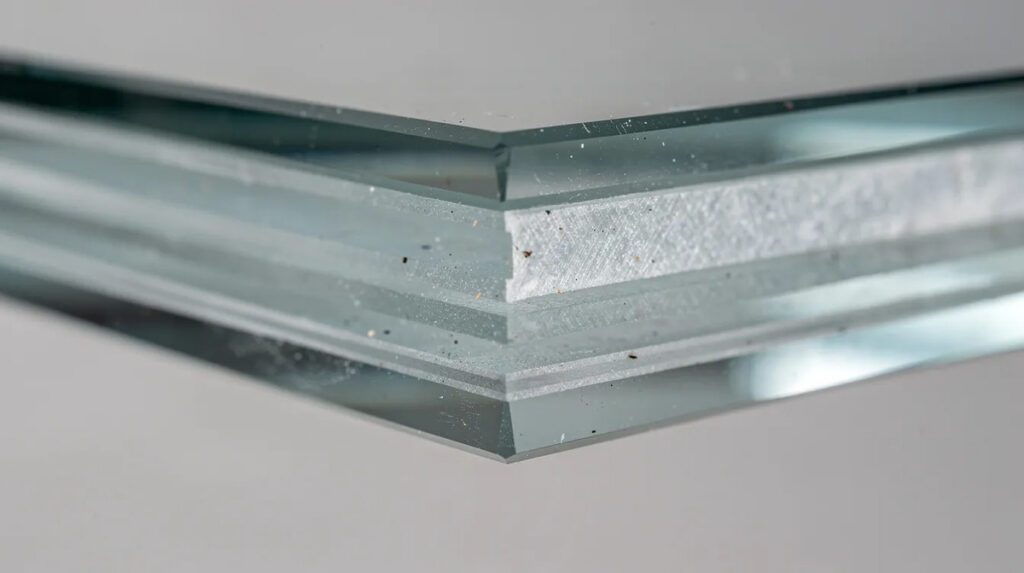
At their core, impact resistant windows use laminated glass with a plastic interlayer. Laminated glass consists of two panes bonded to a strong, flexible inner layer, which keeps dangerous shards attached after breakage and maintains the building envelope against wind and water intrusion. The outer pane absorbs the initial debris impacts while the inner layers hold the assembly together.
Here’s how the main product categories compare:
- Standard residential hurricane impact resistant windows – Full window replacement designed primarily for storm protection in hurricane prone areas. Limited forced-entry resistance.
- Add-on impact resistant storm windows – Secondary storm windows installed over existing glass for weather performance, often seasonal.
- Retrofit security glazing systems (e.g., DefenseLite, BulletShield) – Custom-fabricated shields from Impact Security installed over existing glass in commercial and public buildings, combining storm protection with forced-entry, riot, and ballistic resistance.
You’ll see many terms used interchangeably in the market: impact windows, hurricane windows, storm resistant glass, impact glass, security glazing, and “storm shields.” For most B2B and B2G projects, retrofitting existing glass with storm resistant security glazing avoids full tear-out and keeps facilities operational-a significant advantage for occupied buildings.
How Impact Resistant Storm Windows Are Built & Tested
True hurricane impact resistant windows and security glazing systems are engineered and lab tested as complete assemblies-glass, frame, and anchorage together-not just “thick glass.”
Impact Resistant Glass Construction
The glazing in these systems features two or more panes of glass bonded with interlayers such as PVB or SentryGlas (SGP). In high-security applications, polycarbonate or hybrid glass-clad polycarbonate adds forced-entry and ballistic capability. These layers prevent the glass from scattering into dangerous shards after breakage, preserving the building envelope against wind-driven rain and pressure differentials.
Impact windows are engineered to survive repeated impacts from flying projectiles at high speeds. Frames for impact resistant windows are made from aluminum or vinyl, and reinforced frames in impact windows ensure durability against high wind loads. Extruded aluminum framing with internal stiffeners-similar to systems used in ICC 500 and FEMA 361 storm shelter designs-transfers loads through continuous anchoring into concrete, steel, or CMU substrates.
Testing Standards
Certified impact windows are tested according to local building code standards for hurricane zones. Key tests include:
- Large missile impact – A 9-lb 2×4 lumber fired at approximately 34 mph per ASTM E1996/E1886. Impact windows are tested against two-by-four boards and steel balls to verify the assembly stays intact.
- Cyclic wind pressure – Repeated positive and negative pressure cycles simulating Category 3–5 hurricane wind loads and wind speeds.
- Water infiltration and air leakage – Ensuring the assembly resists wind-driven rain under sustained pressure differentials.
High design pressure ratings indicate a window’s ability to withstand extreme wind loads. Impact resistant windows have a PG rating of 50 for hurricane resistance, confirming performance under severe conditions. Proper installation is crucial for the performance of impact-rated windows-without correct anchoring and sealing, even the best glazing assembly can fail.
Impact Security’s systems are engineered and tested to relevant industry standards for forced entry, ballistic resistance, and storm performance, giving a multi-threat profile that goes well beyond typical residential hurricane windows.
Security Benefits Beyond the Storm: Forced Entry, Riots & Active Threats
For schools, retailers, banks, healthcare facilities, and government buildings, enhanced security is often the primary driver-with hurricane resistance and impact resistance as valuable added benefits. Impact resistant windows are generally more secure against forced entry compared to standard glass windows, and they can play a key role in active shooter mitigation strategies for glazed openings.
Forced-Entry Resistance
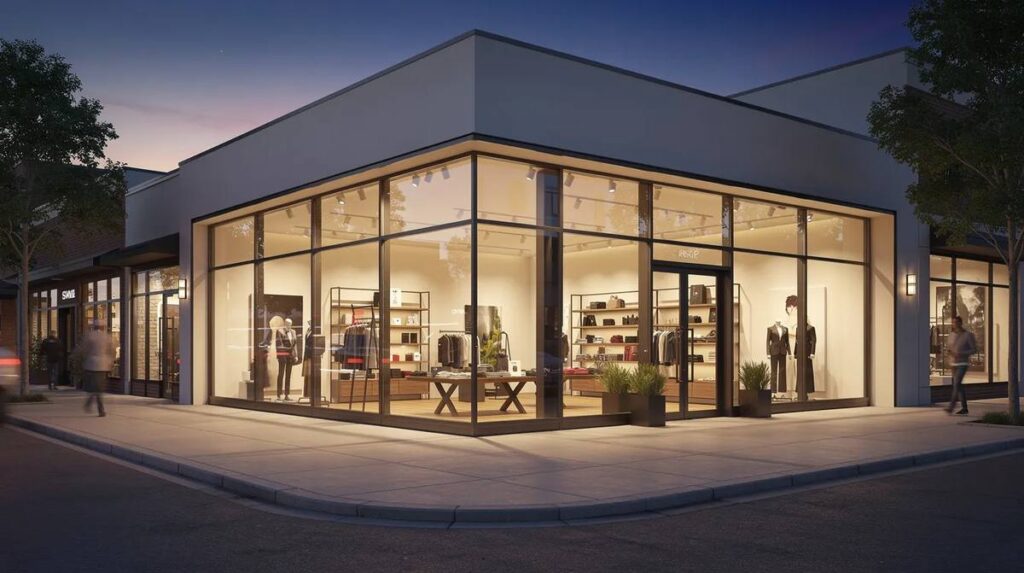
Standard tempered glass fails in seconds under a deliberate attack. Storm resistant security windows can effectively deter burglaries due to their robust design. Laminated impact glass and polycarbonate shields, including DefenseLite overglaze forced-entry systems, delay intruders using bats, sledgehammers, bricks, or pry bars. A broader ecosystem of bulletproof windows, doors, and security window films can be combined with these shields to harden high-risk entries and storefronts. Impact resistant windows resist break-ins better than standard windows and deter home invasions effectively. In documented school retrofit cases, forced-entry attempts were thwarted entirely-shields stayed in frame under repeated physical blows.
Riot and Vandalism Protection
Resistant glass and retrofit shields such as RiotLite riot and vandalism protection withstand thrown objects (rocks, bricks, bottles) and blunt tools for extended periods. In one lab-documented case in Mesa, AZ, riot laminate held up under nearly an hour of sustained physical assault without breaching. Impact resistant windows enhance home security during storms and break-ins while maintaining clean sightlines-no heavy bars or roll-down shutters needed.
Ballistic-Resistant Options
Systems like BulletShield retrofit ballistic security glazing can be engineered to meet specific UL 752 ballistic test levels while still providing storm resistant and impact resistant performance. These storm resistant security windows create a clear, architectural solution that doesn’t advertise “fortress” aesthetics but significantly hardens vulnerable glass openings.
Energy Efficiency, Noise Reduction & Everyday Comfort
Storm resistant security windows are a building performance upgrade-not just hurricane protection but year-round energy savings, comfort, and acoustics. Retrofit overglaze systems like DefenseLite impact-resistant security panels add another insulating and protective layer to existing glass without altering the building’s appearance.
Impact windows are known for their energy efficiency due to multi-pane construction. When a retrofit shield is installed over existing glazing, it creates an added insulating airspace similar to a custom storm window. Low e coatings and spectrally selective tints on impact resistant glass reduce solar heat gain in hot-humid climates along the Gulf Coast and cut cooling loads significantly. Sealed frames prevent drafts and maintain indoor temperatures, while improved air tightness around reinforced frames reduces conditioned air loss.
Impact resistant windows improve insulation and reduce energy costs. In a GSA-evaluated retrofit, low-E panels achieved up to 41% reduction in heating load. Commercial buildings with glass-heavy facades and long operating hours see meaningful improvements in thermal insulation and thermal performance, translating directly to lower HVAC runtimes and more stable temperature changes throughout the day. Impact resistant windows can reduce energy bills significantly over time, helping improve energy efficiency across an entire facility portfolio.
Many impact resistant windows also deliver measurable acoustic benefits. Laminated glass and multi-layer constructions reduce external noise from traffic, aircraft, and playgrounds. Impact windows significantly reduce outside noise compared to standard windows-a critical benefit for K–12 schools along busy roadways where classroom speech intelligibility matters.
Laminated glass blocks up to 99% of UV rays, and laminated interlayers can block most uv rays while still admitting natural daylight. This uv protection helps preserve interior finishes, merchandise, and artwork, making these systems valuable even in buildings outside of hurricane zones. Impact resistant windows can block up to 99% of uv rays, reducing fading and extending the life of furnishings.
Codes, Hurricane Zones & When Storm Resistant Security Windows Are Required
Different regions have different requirements for hurricane resistant and impact resistant glazing. Compliance is critical for both safety and liability. Impact resistant windows are required by code in some Florida regions, and the regulatory landscape continues to expand.
Key Hurricane Zones
- Florida’s high velocity hurricane zone (HVHZ) – Miami Dade and Broward counties require impact resistant windows or approved storm protection for new construction and substantial renovations.
- Gulf Coast and Atlantic seaboard – States like South Carolina and Texas fall within wind-borne debris regions where the International Building Code requires impact resistant or protected openings. Local building codes define the specific requirements.
- Commercial and institutional facilities – Schools, emergency operations centers, and hospitals may be subject to ICC 500 and FEMA safe-room requirements for certain building sections.
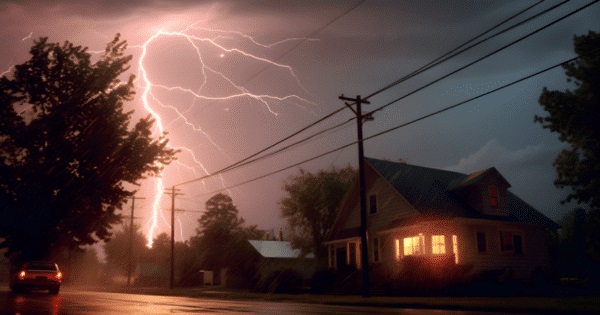
During hurricane season, buildings in coastal areas face the highest risk, but even outside formal hurricane zones-in tornado alley and urban areas with elevated security risk-owners increasingly specify impact resistant storm windows and security glazing as a resilience strategy. The need for storm protection extends well beyond the traditional hurricane belt.
Florida law requires insurers to offer discounts for impact resistant windows, creating a financial incentive alongside the code mandate. Working with manufacturers and engineers who understand local code paths, product approvals, and how hurricane-resistant windows interact with other life-safety systems (egress, fire rating, ADA) is essential for compliant projects.
Retrofit vs. Replacement: Choosing the Right Approach for Existing Buildings
Facility managers upgrading existing buildings face two primary paths: full replacement with new hurricane impact resistant windows, or retrofitting existing glazing with advanced security storm window systems such as DefenseLite Pro high-strength impact glazing.
Full Replacement
- Appropriate for aging, leaky, or structurally inadequate frames
- Higher disruption-removal of frames, interior finishes, electrical-and longer schedules
- Often specified in complete façade renovations or new construction
- Useful to install impact resistant windows and doors impact resistant windows simultaneously
Retrofit Security Glazing
- Custom-fabricated shields (DefenseLite, BulletShield, RiotLite) installed over existing storefronts, doors, and curtain walls
- Minimal disruption to interior operations; work can be phased during off-hours
- Avoids landfill waste from tearing out structurally sound frames and glass
- Maintains existing building envelope warranties where possible
How to decide: Assess the age and condition of existing windows, energy performance, and leak history. Evaluate the threat profile-hurricanes, smash-and-grab, ballistic risk, or a combination. Consider budget, timeline, and whether the building must remain operational during upgrades. You can protect your home or facility without a complete tear-out in many cases.
Engaging Impact Security early for a site assessment and engineered recommendations aligned with local codes and owner risk tolerance is the most efficient path forward.
Cost, Insurance & Lifecycle ROI
Storm resistant security windows cost more upfront than standard windows, but the combined benefits of impact resistance, enhanced security, and energy savings create compelling lifecycle value.
Cost Factors
- Size and complexity of openings (doors, large curtain wall panels, shaped glass)
- Performance level required (hurricane only, hurricane + forced entry, hurricane + ballistic)
- Labor and access conditions (occupied school vs. new shell building)
Installing impact resistant windows can cost 20 to 40 percent more than standard glass windows. However, the financial offsets are substantial.
Financial Offsets
- Insurance premiums – Quality impact windows can provide potential insurance discounts in hurricane prone areas. Impact resistant windows can reduce home insurance premiums, and may lower insurance premiums in hurricane zones through documented wind-mitigation credits. Florida’s My Safe Florida Home program offers grants up to $10,000 per household.
- Avoided losses – Reduced storm damage, break-in losses, vandalism, and business interruption.
- Energy savings – Improved thermal performance and air sealing produce measurable energy cost reductions over 5–10+ years. Commercial buildings with high window-to-wall ratios have documented 25%+ total energy reductions after glazing upgrades.
- Property value – Impact resistant windows can increase your home’s market value, making them a sound capital investment.
Look at total cost of ownership over 10–20 years, not just first cost. Request a customized ROI analysis from Impact Security for your specific portfolio or facility.
How the Impact Security Retrofit Process Works
Impact Security’s turnkey approach is engineered for B2B and B2G facilities, not a DIY product. For project-specific questions, you can reach the team directly through the DefenseLite contact portal for security glazing projects. Here’s how it works:
Step 1 – Threat & Site Assessment. On-site review of existing windows, doors, storefronts, and curtain walls. Discussion of threat scenarios (strong winds, high winds, forced entry, active shooter, blast) and code requirements for the project’s jurisdiction.
Step 2 – Engineering & System Selection. Matching openings to specific retrofit solutions-DefenseLite Pro for forced-entry, BulletShield for ballistic protection, or custom storm/security combinations. Structural calculations and hardware layout to meet impact and load requirements.
Step 3 – Fabrication. Custom fabrication in Impact Security’s facilities in Marietta, GA and Glendale, AZ with tight quality control on glazing, framing, and hardware.
Step 4 – Professional Installation. Certified installers coordinate with facility schedules to minimize disruption. Installation details maintain fire egress, ADA accessibility, and existing envelope warranties.
Step 5 – Final Inspection, Documentation & Warranty. Walkthrough with the owner, delivery of test reports and engineering documentation. Explanation of care, maintenance, and long-term service support.
FAQs About Storm Resistant Security Windows
Do I need storm resistant security windows if my building is not in a hurricane zone? Yes. Even outside hurricane zones, severe storms, tornadoes, and security threats make resistant windows a smart investment. Buildings in tornado alley and urban areas with elevated crime benefit from the same multi-threat protection.
What’s the difference between impact resistant glass and safety window film? Safety film adds a thin layer to existing glass but cannot match the impact resistance of laminated glass or polycarbonate shields. Film may hold shards together briefly, but it won’t withstand hurricane force winds, withstand hurricane force winds from flying projectiles, or resist sustained forced-entry attacks.
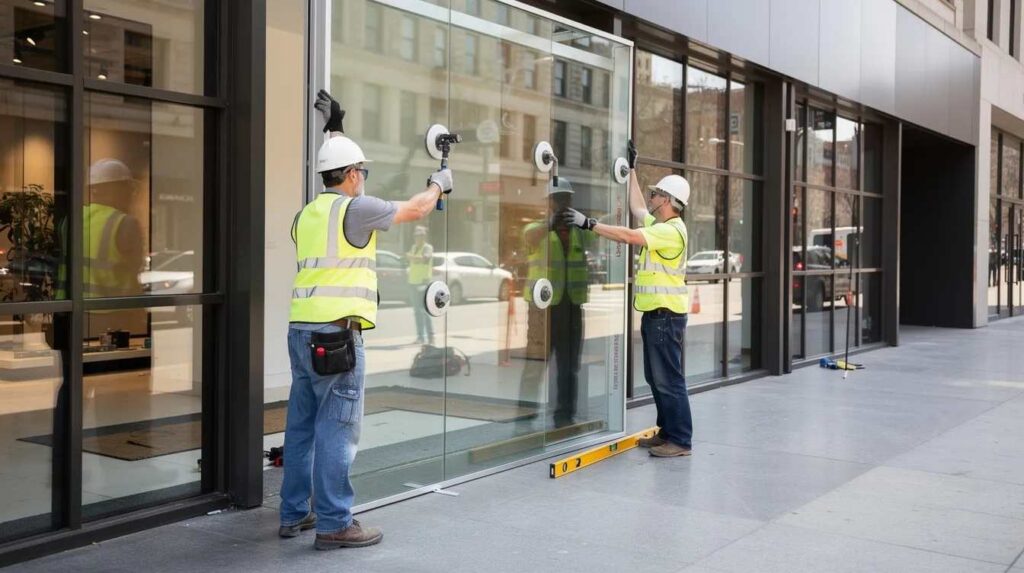
Can impact resistant storm windows be added without replacing my existing glass? Absolutely. Retrofit systems from Impact Security are designed to be installed over existing storefronts, curtain walls, and doors without removing the original glazing-keeping your building operational during the upgrade.
Will storm resistant security windows make my building look like a fortress? No. Modern retrofit shields are optically clear and nearly invisible from both inside and outside, maintaining the architectural intent of the original design.
How long does a typical retrofit project take for a school or retail store? Most retrofit installations are completed within days to a few weeks depending on the number of openings and complexity, with work often scheduled during off-hours to avoid disrupting operations.
Can these systems help with energy efficiency and noise reduction? Yes. The added insulating airspace, low e coatings, and improved air sealing improve thermal insulation and reduce outside noise. Many facilities report noticeably more stable indoor temperatures and quieter interiors after retrofit.
Are there specific certifications or test reports I should ask for? Request test documentation covering the entire assembly-glass, frame, and anchorage-under the specific standards you need: ASTM E1996/E1886 for hurricane impact, ASTM F588 for forced entry, and UL 752 for ballistic resistance. Confirm results are from an accredited lab.
Why Choose Impact Security for Storm Resistant Security Windows
Impact Security is a U.S.-based manufacturer and installer focused exclusively on retrofit security glazing for commercial, institutional, and government customers since 2016, with a deep company background in advanced security glazing systems.
What sets Impact Security apart:
- Turnkey capabilities: assessment, engineering, fabrication, installation, and ongoing service
- Specialized product lines-DefenseLite, BulletShield, RiotLite, AccessShield-tailored to different threat levels including storm resistant, forced-entry, and ballistic requirements
- Nationwide network of certified dealers and installers, with fabrication hubs in Marietta, GA and Glendale, AZ
- Deep experience with K–12 schools, federal and state buildings, hospitals, national retail chains, and financial institutions
- Engineering depth to coordinate with architects, security consultants, and general contractors familiar with ICC 500, FEMA safe-room guidance, hurricane impact standards, and ballistic/forced-entry test protocols
Impact Security maintains long-term relationships with facility owners across multi-site rollout projects and provides strong post-installation support-because storm resistant security windows are a long-term building investment, not a one-time purchase.
Next Steps: Request a Storm Resistant Security Window Assessment
If you’re responsible for protecting a school campus, retail portfolio, healthcare facility, or government building, the next step is straightforward: request a free site assessment from Impact Security.
Our team can evaluate your existing windows against hurricane zones, forced-entry threats, ballistic requirements, and energy goals-then engineer a retrofit solution matched to your risk profile, budget, and timeline. Share existing plans or security assessments so we can design a compatible glazing solution from the start.
Contact Impact Security by phone, through our online contact form, or connect with a local certified dealer to get started.