Table of Contents
Introduction: Why Courthouse Security Glazing Can’t Wait
How Civil Unrest and Forced Entry Threaten Courthouse Glass
Courthouse Hardening: Balancing Forced Entry and Ballistic Protection
Security Glazing Options for Courthouses and Government Buildings
Retrofitting Historic Government Buildings and Courthouses
Understanding J Series–Style Compression Sub-Framing and Other Retrofit Systems
Key Considerations When Selecting Courthouse Security Glazing
Why Choose Impact Security for Courthouse and Government Building Glazing
FAQs
Next Steps
Introduction: Why Courthouse Security Glazing Can’t Wait
Glass is the weakest link in almost every courthouse in the country. Standard annealed or tempered windows in doors, lobbies, and ground-floor facades shatter in seconds under a thrown brick, a sledgehammer, or a single round of gunfire. Once that glass fails, building occupants face flying shards, uncontrolled access, and zero delay before an attacker enters.
Courthouse security glazing solves this by turning existing windows and doors into physical barriers that resist forced entry and ballistic threats without making the building look fortified. Security glazing options include forced entry and ballistic grades, and modern systems maintain visibility while enhancing safety in courthouses, preserving the open, democratic character courts require.
The urgency is real. During 2020 protests, rioters smashed windows at federal courthouses in Portland, Oakland, and Columbus, gaining entry and setting fires. Incidents continued through 2024 and into 2025, when over 120 residential break-ins occurred during LA protests alone-demonstrating that civil unrest creates cascading security failures well beyond the protest site.
This article covers retrofit solutions-like DefenseLite and BulletShield from Impact Security-that mount over a building’s existing windows to avoid costly full replacement. You’ll learn about threat types, glazing systems, courthouse hardening tactics, how j series–style compression sub framing works, selection criteria, and why Impact Security is the go-to partner for justice facilities and federal buildings alike.
How Civil Unrest and Forced Entry Threaten Courthouse Glass
Modern courthouses must remain open to public access-transparent, accessible, welcoming. That openness creates exposure. Large glass lobbies, sidelites, and storefront-style entrances sit at street level, often directly along protest routes in downtown civic centers.
Common threats to courthouse glass include:
- Thrown objects: bricks, landscaping pavers, frozen bottles targeting large panes and doors
- Coordinated forced entry: sledgehammers, pry bars, and heavy tools wielded by multiple attackers
- Incendiaries: Molotov cocktails thrown at entry vestibules
- Targeted gunfire: shots directed at lobbies, clerk counters, or judge parking areas
Standard tempered glass fails instantly under these attacks. Broken glass creates flying shards that injure staff and visitors, and the breach grants immediate access to rioters or lone attackers. Security glazing minimizes injury risks from sharp flying fragments and acts as a first line of defense during civil unrest.

When law enforcement response is delayed by crowd size or geography, forced entry resistance becomes decisive. Glazing that adds 5–15 minutes of delay is often the difference between a contained incident and a full breach.
Courthouse zones commonly hit first:
- Main public entries and vestibules
- Glass lobbies and curtain walls
- Payment, records, and transaction windows
- Probate and family court offices at ground level
- Exterior windows along sidewalks and protest routes
Security glazing also reduces liability by holding shards in place, cutting laceration injuries to the visiting public, security personnel, and officers.
Courthouse Hardening: Balancing Forced Entry and Ballistic Protection
Courthouse hardening is the coordinated upgrade of glazing, reinforced doors, framing, and sightlines designed to keep the justice system functioning during emergencies. It prevents forced entry and mitigates civil unrest risks across every vulnerable opening.
The two primary performance objectives are:
- Forced entry protection against tools, riot weapons, and heavy tools used by crowds
- Ballistic protection using bullet-resistant glass rated against handgun threats and, where warranted, rifles
Risk assessments for county, state, and federal courthouses typically prioritize openings in this order:
| Zone | Primary Requirement |
|---|---|
| Ground-floor public entrances | Forced entry + handgun ballistic |
| Screening and clerk counters | Handgun ballistic (UL 752 Level 1–3) |
| Judge and jury areas | Discreet ballistic upgrades |
| Secure corridors and holding areas | Forced entry resistance + visibility |
Applicable standards include ASTM F1233, a standard for forced entry testing protocols; ASTM F3038, a standard for timed forced entry resistance; and UL 752 ballistic performance standards that assess bullet resistance levels across defined threat levels. Construction of security glazing varies based on the assessed threat level for each opening.
Effective courthouse security includes layered protection strategies. Security glazing works alongside access control, alarms, cameras, ballistic wall panels, and trained deputies-never as a stand-alone fix.
Security Glazing Options for Courthouses and Government Buildings
No single glazing type fits every opening. Courthouses typically mix several security glazing options based on threat level, budget, and visibility needs across three categories: enhanced glass and films, retrofit polycarbonate systems, and bullet-resistant systems for ballistic-grade protection.
Impact Security specializes in retrofit security glazing systems-DefenseLite for forced entry protection and BulletShield ballistic protection-that install over existing glass to minimize demolition and downtime during daily operations.
Safety & Security Film, Laminated Glass, and Upgraded Framing
Security film applied to existing courthouse glass holds shards together, reduces flying-glass injuries, and provides marginal forced entry delay. Comparing DefenseLite to security glass film highlights that while film can delay forced entry attempts by holding shards together, it works best when combined with mechanical edge retention and reinforced frames.
Laminated glass units bond two or more glass plies with interlayers such as PVB or ionoplast. Laminated security glass holds together when impacted, preventing easy entry, and can meet certain forced entry benchmarks in lower-threat areas like office sidelites and interior windows. Multi-layer configurations make security glazing effective against blunt force attacks.
Upgrading or reinforcing frames, hardware, and locks alongside any glass upgrade is essential-weak aluminum curtain walls or corroded steel frames defeat the purpose of strong glazing. These options work best for interior partitions, low-risk offices, or incremental upgrades when budgets are tight.
Retrofit Polycarbonate Glazing Systems for Forced Entry Protection
Retrofit polycarbonate systems like Impact Security’s DefenseLite mount over existing glass to create a clear protective shield. Polycarbonate glazing is up to 250 times stronger than standard glass, and advanced polycarbonate security glazing systems provide protection up to 250 times stronger than standard glass by absorbing repeated impacts without shattering.
Performance highlights:
- Riot glass can withstand impacts from sledgehammers and crowbars for extended periods
- Containment grade forced entry solutions deny access long enough for law enforcement to respond
- Riot glass can be retrofitted without drilling into existing frames, making retrofitting preferred to avoid full-frame replacement costs
Ideal courthouse placements include entry vestibules, lobby glass walls, ground-floor facades along protest routes, and large street-facing windows in city halls or district attorney offices. Clear, UV-stable polycarbonate preserves natural light and visibility, avoiding the barricaded appearance of bars or roll-down shutters. High-performance security glazing is also engineered to withstand severe weather, adding durability beyond security alone.
Ballistic Glazing and Bullet Resistant Glass for High-Risk Areas
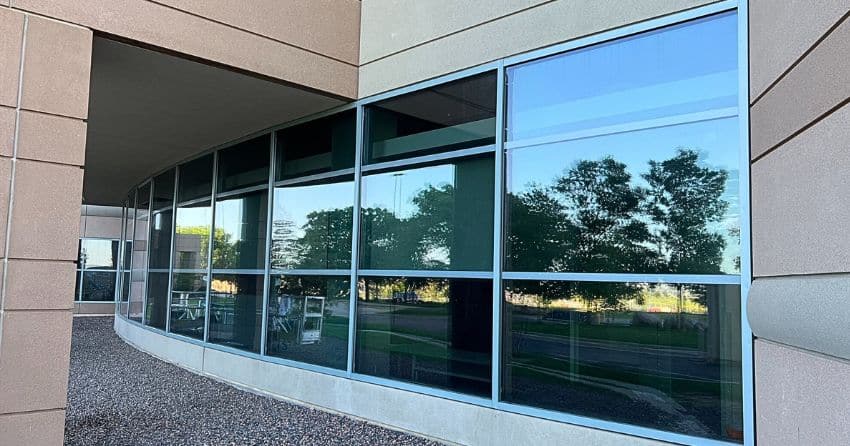
Ballistic glazing consists of multi-layer systems- glass-clad polycarbonate with specialized interlayers-engineered to stop bullets while maintaining structural performance. In high-threat environments, forced entry and ballistic-resistant glazing systems are made using laminated glass with interlayers, and they withstand penetration from bullets and projectiles across rated threat levels.
Riot glass can achieve UL 752 ballistic ratings for high-risk applications. Levels commonly specified for courthouses:
- Level 1–2: Handgun threats at clerks’ windows, payment counters, and screening stations
- Level 3+: Judges’ benches, secure corridors, and law enforcement facilities adjoining courtrooms
Impact Security’s BulletShield can be retrofitted over existing glass to provide handgun-level bullet-resistant protection while increasing forced entry resistance. Ballistic glazing maintains visibility even after impact from bullets, and it is essential for courthouses and high-security buildings. Courthouse security glazing is used in judge’s chambers and public transaction counters where staff remains stationary.
Coordinate ballistic-rated glass with ballistic fiberglass panels in walls and judges’ benches to eliminate soft bypass points. Ballistic glazing increases weight and thickness, so early coordination with architects is needed to confirm framing capacity and egress compliance. Ballistic attacks and active threats demand that no surrounding structure is left unprotected.
Retrofitting Historic Government Buildings and Courthouses
Securing 19th- and early-20th-century courthouses presents unique challenges. These historic buildings often sit on main squares directly along protest routes, and preservation rules from Historic Preservation Commissions limit changes to original wood sash, stone mullions, and exterior sightlines.
Non-invasive retrofit strategies used by Impact Security include:
- Interior-mounted security glazing that leaves the historic exterior frame untouched
- Color-matched sub-framing that sits within existing framing conditions
- Reversible attachments that avoid drilling into historic stone or cast iron
Typical historic window types-double-hung wood sash from the 1880s, leaded glass transoms, early steel casements-can all be shielded without replacing original glass. Benefits include preservation of historic architecture, reduced construction noise, shorter court closures, and continued eligibility for preservation funding. These approaches work equally well for other historic government buildings, city halls, and police stations that share similar constraints, particularly when combined with broader active shooter mitigation strategies that address modern threat scenarios.
Understanding J Series–Style Compression Sub-Framing and Other Retrofit Systems
Compression-fit sub-framing- often referred to as J series sub-systems in the market-supports security glazing inside existing openings without penetrating the primary frame. The J series approach clamps around the perimeter of the opening using specialized gaskets.
How these frames work:
- Installed inside or over the existing frame with no or minimal drilling
- Compression-fit sub-framing distributes impact energy across the frame perimeter
- Energy-absorbing gaskets keep panels seated during severe attack
- Compatible with both forced entry and ballistic glazing panels
The Riot Glass J Series meets ASTM F3808 for 15-minute forced entry resistance, delivering containment grade performance against multiple attackers using hand tools. The J Series meets ASTM F3808 for 15-minute forced-entry resistance even under sustained assault, and riot glass meets ASTM F3808 standards for 15-minute forced-entry resistance as verified by third-party testing, similar to the enhanced strength offered by DefenseLite Pro impact security glazing.
These frames are especially valuable in historic government buildings where drilling into original stone or wood is restricted, concrete or masonry openings where adding reinforcement is disruptive, and multi-tenant justice facilities that must stay operational during phased installation. They integrate seamlessly with existing openings to protect public spaces without altering daily operations.
Key Considerations When Selecting Courthouse Security Glazing
Courthouse security glazing decisions should be data-driven-based on threat assessments, code requirements, and operational needs.
Major decision factors:
- Threat profile: History of civil unrest, proximity to protest routes, presence of high-profile trials, gang activity, or targeted ballistic threats
- Performance needs: Non-ballistic forced entry only versus combined forced entry and ballistic protection; added durability for blast considerations near high-risk targets
- Building type: Historic courthouse versus 1990s justice center-structural limits of existing framing matter
- Budget and phasing: Prioritize main entry doors, vestibules, and high-traffic public counters; plan multi-year upgrades
- Aesthetics: Maintaining an open feel while discreetly integrating security measures to protect secure areas
- Code compliance: Operable windows and doors must still meet life-safety codes, ADA requirements, and fire department expectations
Insist on third-party testing documentation (ASTM, UL, NIJ)-not anecdotal hammer-test videos. Require detailed shop drawings for each opening and coordination with the sheriff’s office, facilities team, and local fire marshal.
Why Choose Impact Security for Courthouse and Government Building Glazing
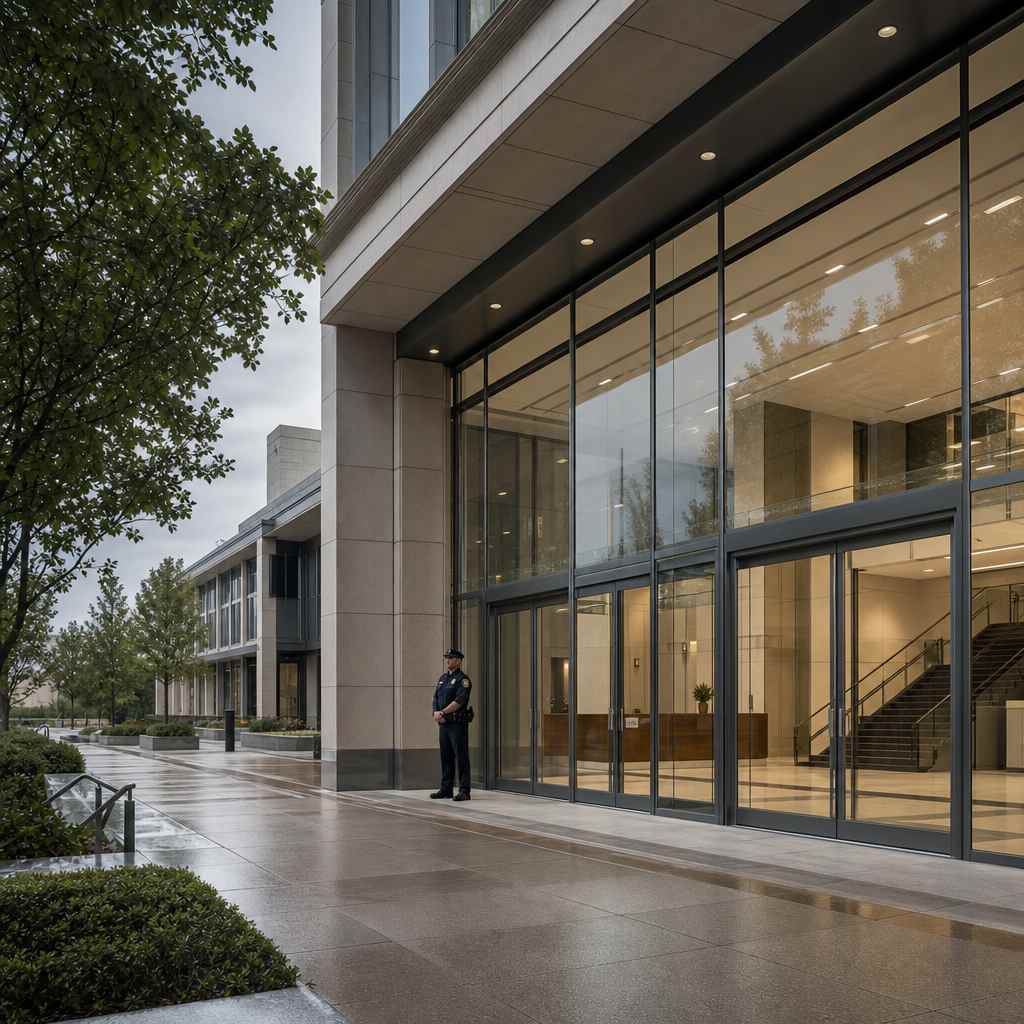
Impact Security is a B2B/B2G specialist focused on retrofit security glazing across the United States-courthouses, city halls, police stations, correctional facilities, financial institutions, and federal buildings, as detailed in their company profile and capabilities.
Core offerings for courthouses:
- DefenseLite: Forced entry and riot-resistant retrofit shields for doors, windows, and curtain walls
- BulletShield: Ballistic retrofit panels that create bullet-resistant glass assemblies to prevent bullet penetration
- Custom solutions: Safe-room and secure transaction window configurations for judges, clerks, and prosecutors
Turnkey delivery includes threat and vulnerability assessment, engineering and testing alignment, U.S. fabrication in Marietta, GA and Glendale, AZ, certified installation teams, and ongoing warranty support, leveraging experience from storefront and glass door security solutions in similarly exposed environments. Installation teams work nights and weekends to avoid interrupting court dockets, coordinate with marshals and sheriff’s departments, and follow chain-of-custody protocols throughout construction.
Impact Security’s experience spans dozens of government building portfolios. Security companies that only supply glass leave framing, engineering, and installation to others-Impact Security handles it all, from five-shot ballistic testing verification to final inspection, and dedicated DefenseLite contact channels help facilities teams coordinate these projects efficiently.
FAQs: Courthouse Security Glazing, Ballistic Protection, and Retrofit Projects
Is bullet resistant glass the same as bulletproof glass, and what UL 752 level do most courthouses need? Bullet resistant means tested to a specific UL 752 level; no product is truly “bulletproof.” Most courthouses specify Levels 1–3 for handgun threats at public counters and screening stations. Rifle-rated levels (4+) are reserved for high-risk zones with documented ballistic threats.
Can we retrofit security glazing onto existing wood or aluminum frames from the 1970s? Yes. Compression-fit sub framing and over-glazing systems mount to existing framing conditions without full replacement. If the primary frame is structurally weak, targeted reinforcement may be needed, but full window replacement is rarely necessary.
How long does a typical courthouse hardening project take for 20–50 openings? From assessment through installation: typically, 3–6 months for moderate retrofit phasing. Historic or large-scale projects may take 9–12 months. Per-opening downtime is minimal since systems install over existing glass.
Will security glazing make our courthouse look like a fortress? No. Clear polycarbonate and ballistic glass appear visually similar to standard glazing. Frames can be color-matched, and fasteners concealed. The goal is to protect without sacrificing transparency or public access.
How does security glazing interact with existing alarm and access control systems? Security glazing complements-not replaces-metal detectors, cameras, and access control. Glass-break sensors may need recalibration after installation, but the systems work together as physical barriers within a layered security strategy.
What maintenance is recommended after installation? Annual inspections covering seal integrity, frame anchorage, optical clarity, and gasket retention. After any forced entry or ballistic event, immediate inspection is required even if no penetration occurred.
Can we phase installation over several fiscal years? Absolutely. Prioritize main entrances and highest-risk courtrooms first, then expand to lobby facades and other windows. Phasing reduces per-year cost and scheduling impacts on daily operations.
How much more expensive is ballistic glazing compared to forced entry only systems? Ballistic systems typically cost 2–5 times more per opening due to thicker bullet resistant materials, heavier frames, and additional engineering. Spend the extra budget where staff are stationary behind glass and consequences of penetration are severe.
Next Steps: Planning a Courthouse Security Glazing Project with Impact Security
Unsecured glass remains the courthouse’s weakest link-but with the right glazing systems, it becomes a protective asset. Understand your threat environment; prioritize entries and public counters; use retrofit glazing and J-series–style compression sub framing to protect both modern and historic government buildings; and coordinate upgrades with broader courthouse hardening efforts.
Impact Security offers free assessments and cost estimates for facilities directors, county administrators, and security teams nationwide through certified dealers and installers. Gather basic data-photos, approximate opening sizes, existing framing types-to streamline your initial consultation.
Upgrade your glazing before the next wave of civil unrest, high-profile trial, or targeted threat. Reacting after an incident costs more in every way that matters.