Table of Contents
A Practical Approach to Ballistic Protection for Office Buildings
Understanding Ballistic Threats in Modern Office Buildings
Ballistic Standards and Protection Levels (UL 752, NIJ, ASTM)
Key Materials and Systems: From Bullet Resistant Glass to Fiberglass Wall Armor
Designing Ballistic Protection Into Office Layouts
Retrofit vs. New Construction: How Ballistic Protection Is Installed
Cost, Phasing, and Common Mistakes to Avoid
Industry and Tenant Use Cases: Offices, Government Buildings, and Beyond
FAQs About Ballistic Protection for Office Buildings
Why Choose Impact Security for Office Ballistic Protection
Next Steps: Planning Ballistic Protection for Your Office Building
A Practical Approach to Ballistic Protection for Office Buildings
Since 2020, workplace violence, active shooter incidents, and civil unrest have forced a hard reckoning for anyone responsible for office building security. Workplace homicides reached 524 in 2022, with gunshots accounting for roughly 83% of those deaths. Corporate campuses, multi-tenant towers, and government office facilities are no longer theoretical targets-they are documented ones.
Ballistic protection for office buildings is not a single product. It is a coordinated system of bullet resistant glass, ballistic panels behind walls and millwork, ballistic doors, and engineered framing designed to work together. Impact Security specializes in retrofit solutions that harden existing glass and openings-helping property owners protect personnel and visitors without full demolition or new construction.
This guide covers how to assess ballistic threats, understand rating standards, select materials designed for office environments, plan layouts, manage costs, and avoid the mistakes that compromise real protection.
Key takeaways:
- Match protection level to actual threat, not worst-case fantasy
- UL 752 is the standard that matters for office glazing and doors
- Retrofit systems can upgrade existing structures without replacing facades
- Phased budgeting makes ballistic upgrades practical for most capital plans
Understanding Ballistic Threats in Modern Office Buildings
Office risk profiles have shifted dramatically. More buildings feature public-facing lobbies, street-level storefront glass, and shared reception areas that expose occupants to external violent threats. Between 2020 and 2025, workplace violence incidents involving firearms were recorded across roughly 45 states in government and corporate office settings. Ballistic threats vary by building type and location, meaning a downtown financial tower faces different risks than a suburban tech campus.
In most office scenarios, the likely threat is a handgun-9mm, .357 Magnum, or .44 Magnum. Rifle threats are less common but relevant for government buildings, financial institutions, or critical infrastructure tenants. A threat and vulnerability assessment is crucial for determining appropriate protection levels; it should factor in local crime data, tenant mix, building access patterns, and which areas handle sensitive operations like payroll, HR, or executive decision-making.
Common vulnerable zones include:
- Glass lobbies and reception desks behind storefront windows
- Ground-floor conference rooms with large street-facing windows
- HR, payroll, and mailroom areas
- Executive offices and boardrooms with exterior exposure
- Loading docks and parking-level entries
An effective approach is to protect critical areas such as entrances and reception desks first. Layered security combines ballistic protection with access control and surveillance-cameras and badge readers detect threats, but physical barriers are the last line that actually stops bullets. Well-designed active shooter mitigation measures are intended to allow occupants time to seek safety during an incident. Many landlords and corporate tenants now align these upgrades with ESG commitments and duty-of-care policies.
Ballistic Standards and Protection Levels (UL 752, NIJ, ASTM)
Real ballistic resistance is measured by published standards, not marketing language. Calling something bulletproof glass means nothing without a certified rating. For office buildings, UL 752 is the primary specification for security glass, doors, and panels.
UL 752 includes 10 levels of bulletproofing. Levels 1 through 8 cover bullet resistance from small-caliber handguns to military-grade rifles. Level 1 protects against small-caliber handguns such as 9mm. Levels 2 and 3 handle .357 Magnum and .44 Magnum, respectively. Level 8 is designed to stop military-grade rifles. Higher UL 752 ballistic resistance levels provide greater protection but require heavier materials and structural reinforcement. Ballistic panels are tested to UL 752 standards for protection levels across this full range.
How these map to office spaces:
- Corporate lobby or public counter: UL 752 Level 1–3 (handgun threats)
- Government facilities or financial institutions with public access: Level 3–5
- Federal facilities, military installations, or law enforcement-affiliated tenants: Level 5+ for rifle protection
NIJ 0108.01 focuses on body armor standards and is sometimes referenced for ballistic panels, but UL 752 governs architectural glazing and doors in most office projects. ASTM F1233 covers security glazing system performance. ASTM F3561-22 addresses forced entry resistance after ballistic assaults, which often accompanies ballistic testing in high-security specifications.
Critically, system-level testing matters. Bullet resistant glass installed in an unrated frame creates a gap that bullets can exploit. Reinforced doors and frames are critical in ballistic protection systems-every component must carry a matching rating.
Key Materials and Systems: From Bullet Resistant Glass to Fiberglass Wall Armor
Effective ballistic protection in office buildings relies on a combination of bullet resistant materials working as an integrated system.
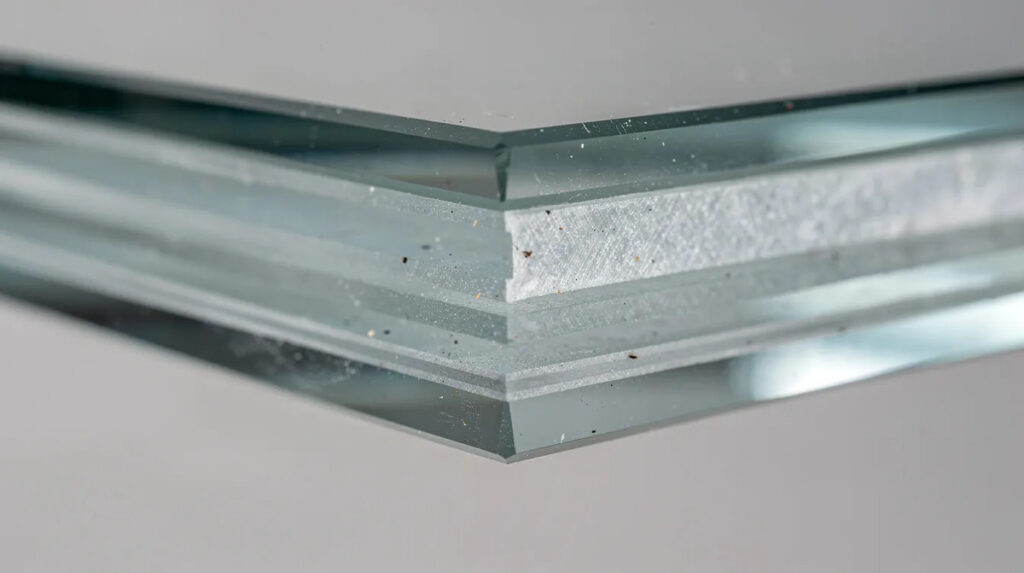
Bullet resistant glass comes in three main forms. Laminated glass uses multiple layers of glass bonded with interlayers-heavy but optically clear. Glass-clad polycarbonate is the industry standard for transparent barriers, combining a hard glass strike face with an energy-absorbing polycarbonate core. All-polycarbonate laminates are lightest but more prone to scratching. Building owners evaluating bullet proof glass options should balance clarity, weight, and long-term performance. Reinforced glass of any type must be paired with rated framing. Note that bulletproof window film cannot prevent bullets from penetrating standard windows-it helps with forced entry protection and shard retention only.
Ballistic panels are made from fiberglass, steel, or composites. Fiberglass bullet resistant panels are the most common lightweight option for walls and millwork. Bullet-resistant UL 752 wall panels can be installed behind drywall, making them ideal for upgrading existing walls, reception desks, and transaction windows without visible changes. Fiberglass panels can last decades if kept dry and intact. Steel ballistic panels require occasional rust protection in humid areas. Ballistic panels are available in UL Levels 1–8 for varying costs.
Ballistic doors come in aluminum, steel, and wood-veneer options that blend into Class-A office spaces. A bullet resistant door must have its leaf, frame, glazing lites, and hardware all rated to the same level. Reinforced doors with mismatched frames create exploitable weak points.
Framing and integration matter enormously-heavier ballistic resistant glass demands reinforced frames and proper structural anchoring. Standard storefront framing rarely supports ballistic loads without modification.
| Material | Weight | Clarity | Cost | Maintenance |
|---|---|---|---|---|
| Laminated glass | Heavy | Excellent | High | Low |
| Glass-clad polycarbonate | Moderate | Very good | Moderate-High | Low |
| All-polycarbonate | Light | Good | Moderate | Higher (scratching) |
| Fiberglass wall armor | Light | Opaque | Cost effective | Minimal |
Designing Ballistic Protection Into Office Layouts
Ballistic protection should be targeted, not scattered. The goal is protecting occupants in realistic threat scenarios while preserving the transparency and workflow that modern office spaces demand.
Priority zones for most buildings include lobby storefronts and entry vestibules, visitor check-in and security desks, ground-floor conference rooms adjacent to public sidewalks, HR and payroll areas, and executive offices with exterior exposure. Secure reception areas often include ballistic transaction windows to protect staff during face-to-face interactions.
Design strategies that work:
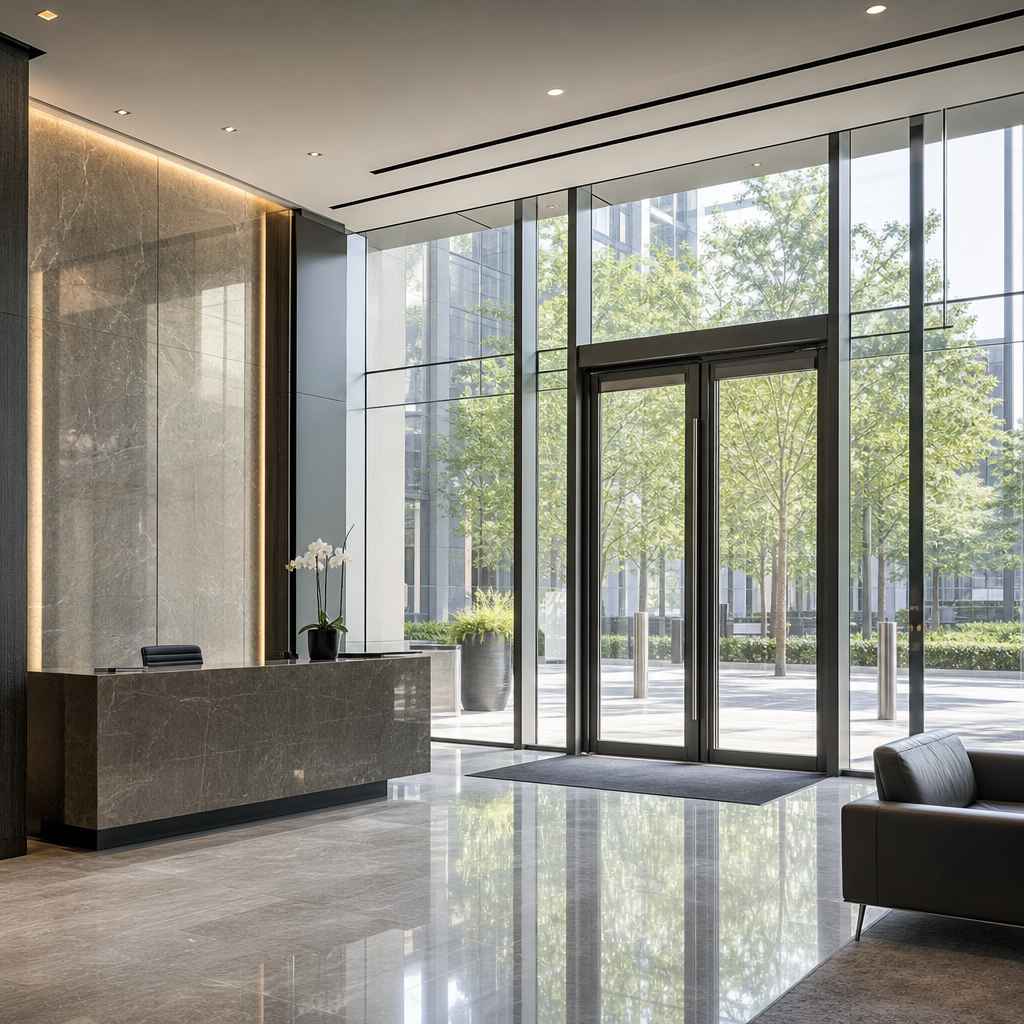
- Use bullet resistant glass for lobby curtain walls to maintain daylight and open views
- Back reception desks and transaction counters with bullet resistant fiberglass panels hidden behind millwork
- Create safe rooms using fiberglass wall armor, ballistic resistant doors, and ballistic glazing-safe rooms enhance building security by providing shelter during incidents
- Coordinate ballistic upgrades with interior designers early so finishes can be seamlessly integrated
Proper coordination of glazing, walls, doors, and frames eliminates weak points in security. Impact Security works from architectural drawings and BIM models to map threat trajectories against elevations and floor plans, then engineers custom retrofit systems around existing conditions. The result is a protected space that looks like a high-end office, not a bunker.
Retrofit vs. New Construction: How Ballistic Protection Is Installed
Most office projects in 2026 are retrofits. Property managers need added security on occupied floors without replacing entire facades or disrupting daily operations.
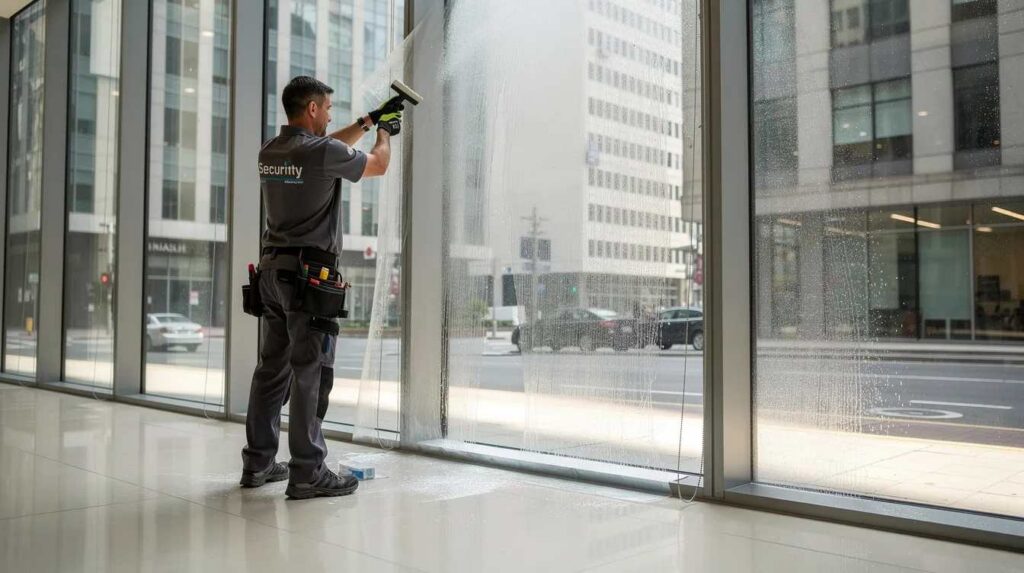
Retrofit glazing approaches include mounting ballistic shields like BulletShield retrofit security glazing over existing glass, creating a bullet resistant envelope without ripping out frames. Custom frames attach to existing curtain wall mullions or storefront systems, engineered for the added weight. Ballistic panels are anchored to wall studs for installation behind drywall, reception desk faces, and partition walls. Proper installation prevents sagging and gaps in ballistic systems. Ballistic materials must be installed with precise alignment and sealing to maintain their rated performance.
A typical retrofit process:
- Site assessment and measurement of existing openings
- Engineering and fabrication at Impact Security’s Marietta, GA or Glendale, AZ centers
- Phased on-site installation scheduled around business hours
- Dust control, noise management, and safety protocols for occupied spaces
For new construction, ballistic glazing, ballistic doors, and resistant panels can be fully integrated into the base building design. Architects coordinate ballistic resistance with blast protection, energy performance, and acoustics-but timelines run longer and coordination with structural and MEP consultants is essential.
Cost, Phasing, and Common Mistakes to Avoid
Cost drivers include the UL rating selected, glass type and thickness, panel coverage area, door count, and complexity of existing conditions. Bullet-resistant glass windows start at $2,000 each. Ballistic fiberglass panels are a cost-effective reinforcement option for reinforced walls and desk faces. Advanced retrofitting of workplace environments with ballistic wall systems allows owners to enhance security without full reconstruction. Costs vary based on protection level and installation complexity-rifle-rated systems cost significantly more than handgun-rated ones.
Smart budgeting means phasing by priority: lobby and reception in Year 1, conference rooms and HR in Year 2, executive offices in Year 3. Using retrofit shields over existing glass defers full replacement costs. Always request a site-specific estimate rather than relying on generic pricing.
Top mistakes to avoid:
- Treating bulletproof window film as a substitute for certified bullet resistant glass-no UL 752-listed film exists for ballistic protection
- Reinforcing windows but ignoring adjacent walls, creating gaps that bypass how much protection the glass provides
- Using uncertified products marketed as “bulletproof” without UL or ASTM testing
- Hiring installers without ballistic experience, leading to misaligned frames, gaps, or compromised ratings
- Over-specifying protection levels beyond realistic threats, straining budgets unnecessarily
Planning checklist:
- Complete threat assessment with security consultants
- Specify UL 752 and ASTM compliance for all components
- Require engineered drawings and expert installation
- Document everything for insurance and risk management teams
Industry and Tenant Use Cases: Offices, Government Buildings, and Beyond
Ballistic protection applies differently across tenant types. In commercial buildings with multi-tenant lobbies, bullet resistant panels behind reception desks and security glass at entry points are typical first upgrades. Ground-floor bank branches or jewelry stores within office towers may require higher ballistic levels to protect valuable merchandise and teller windows.
Government buildings and government agencies often require UL 752 Level 3+ ballistic glass at public counters and permitting windows. Government buildings may require protection against high-powered rifles near sally ports or secure areas. The Earle Cabell Federal Building incident in 2019 highlighted ballistic protection’s importance for public buildings and federal facilities.
Healthcare facilities often require ballistic protection in emergency areas. In June 2022, a shooting at Saint Francis Hospital prompted security upgrades across medical facilities nationwide. Ballistic panels are used in healthcare and education settings-bullet resistant panels are increasingly used in schools for enhanced safety.
Retail stores face threats from smash-and-grab thefts and robberies, and retailers are reinforcing spaces with advanced impact security glazing systems and other bullet resistant materials to combat theft. For high risk areas in financial institutions and professional services firms, discrete fiberglass wall armor behind finishes and ballistic transaction windows at cash-handling areas provide real protection without compromising aesthetics.
FAQs About Ballistic Protection for Office Buildings
These address the most common questions Impact Security receives from office and government facility clients.
How do I know what ballistic level my office building really needs?
The appropriate UL 752 level depends on likely weapon types, building location, tenant profile, and public accessibility. Most office spaces settle on Level 1–3 for lobbies and public counters, reserving higher levels for special-risk areas. A formal threat assessment involving security consultants and sometimes law enforcement input prevents both over-specifying (budget strain) and under-specifying (leaving vulnerabilities). Material selection should follow the assessment, not precede it.
Can I retrofit bullet resistant glass over my existing windows?
In many cases, yes. Retrofit ballistic shields mount over existing glazing to create a bullet resistant envelope. Feasibility depends on frame strength, mullion spacing, and structural anchoring-verified during a site survey. Benefits include faster installation, less disruption, and significant cost savings versus full window replacement.
Is bullet resistant film a safe alternative to ballistic glass?
No. As of 2026, no UL 752-listed bullet resistant film exists for standard office windows. Security film can hold broken glass together and provide forced entry resistance, but it does not stop bullets. Treat film as a supplemental measure for entry protection, not as a substitute for ballistic glazing.
Will ballistic protection make my office look like a bunker?
Modern solutions-clear ballistic resistant glass, slimline framing, and hidden fiberglass wall armor-are nearly indistinguishable from standard high-end finishes. Ballistic panels sit behind drywall, stone, or millwork. Ballistic doors match existing aesthetics in wood, aluminum, or glass-front designs. Impact Security routinely collaborates with architects to preserve brand identity and open, daylit office spaces.
How long does a typical office ballistic retrofit take?
Installers can complete a single lobby retrofit in a few nights or over a weekend. Multi-floor upgrades typically take place in phases over several weeks or months. Assessment, engineering, and fabrication take up most of the time, while installation teams schedule on-site work around tenant operations. Early planning helps coordinate timelines with lease turnovers or scheduled shutdowns.
Does ballistic protection also help with forced entry and vandalism?
Many bullet resistant materials inherently offer strong forced entry protection but forced entry and ballistic protection are distinct performance categories. Impact Security offers solutions tested for both UL 752 ballistic performance and forced entry resistance under ASTM standards, making them effective against smash-and-grab, rioting, and vandalism. Integrating both requirements into a single specification avoids gaps in building security.
Why Choose Impact Security for Office Ballistic Protection
We focus exclusively on retrofit security glazing and ballistic systems across the United States, with fabrication centers in Marietta, GA and Glendale, AZ and certified installers nationwide. Our Impact Security company profile details our expertise designing advanced security glazing systems that integrate seamlessly into existing buildings. Since 2016, we have protected thousands of openings across corporate offices, schools, healthcare, government buildings, and financial institutions using systems like DefenseLite, DefenseLite Pro, and BulletShield.
Our turnkey process covers threat level assessment, engineering, material selection, custom fabrication, professional installation, and ongoing warranty support. Every system is designed at the component level-security glass, frames, ballistic panels, and hardware working together as a tested assembly, not a collection of parts.
We work B2B and B2G, coordinating daily with facility teams, general contractors, architects, and security consultants. The result is physical security that performs under ballistic impacts while maintaining the aesthetics, energy performance, and acoustic comfort your building demands.
Next Steps: Planning Ballistic Protection for Your Office Building
Ballistic protection for office buildings is a practical, proven way to reduce risk from gun violence, armed robbery, and civil unrest without sacrificing design quality or day-to-day operations.
Your action roadmap:
- Gather building information-location, floor plans, existing glazing and doors, tenant types
- Schedule a Threat Level Assessment with Impact Security
- Review a phased upgrade plan prioritizing high-risk areas within your budget cycle
- Coordinate installation timing around tenant operations and renovations
Contact Impact Security for a free estimate, connect with a certified dealer in your area, or send your drawings for review using our dedicated Defenselite contact form. We serve private office owners and government agencies nationwide.
Proactive ballistic protection is an investment in people, business continuity, and long-term property value. The right time to start planning is now.