- Introduction
- Understanding Blast Resistance Technology
- Types and Applications of Blast Resistant Windows
- Rating Standards and Selection Process
- Common Challenges and Solutions
- Conclusion and Next Steps
- Frequently Asked Questions
Introduction
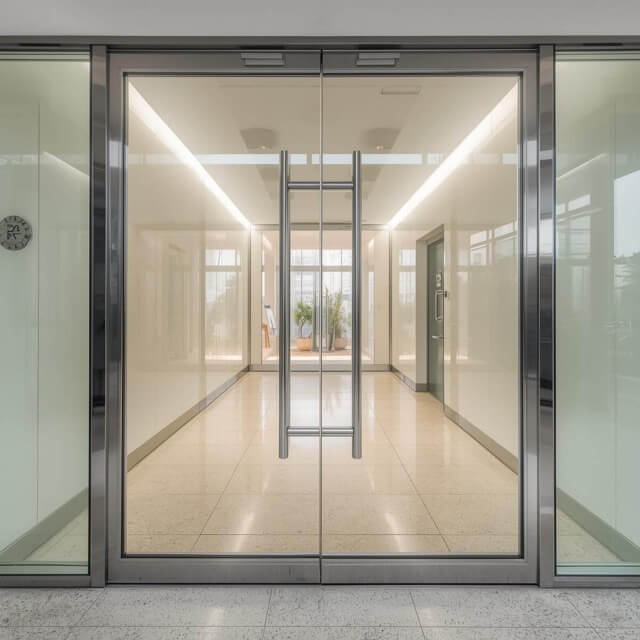

Blast resistant windows are specialized glazing systems engineered to withstand explosive forces and prevent dangerous glass fragmentation that causes the majority of blast-related injuries. These window systems combine advanced materials, reinforced frames, and precise engineering to protect building occupants from both direct pressure waves and flying glass debris during explosions.
This guide covers the essential aspects of blast protection glazing: the underlying technology, available window types, applicable rating standards, application-specific requirements, and the selection process from threat assessment to installation. The content is designed for architects specifying explosion protection, security professionals evaluating facility vulnerabilities, facility managers responsible for building safety, and building owners requiring anti-terrorism measures or industrial explosion mitigation.
Direct answer: Blast resistant windows are custom designed glazing assemblies that withstand specified overpressure and impulse loads while retaining glass fragments within the frame, preventing dangerous shards from becoming projectiles that injure building occupants.
By the end of this guide, you will understand:
- How blast protection technology differs from standard security glazing
- The materials and construction methods that enable explosion resistance
- Which rating standards apply to your building type and threat profile
- How to navigate the selection and specification process effectively
- Practical solutions for common implementation challenges
Understanding Blast Resistance Technology
Blast resistance refers to a glazing system’s engineered capability to absorb and dissipate explosive energy while preventing hazardous glass ejection into occupied spaces. This differs fundamentally from other security glazing types: forced entry glazing resists sustained physical attack, ballistic glazing stops bullets, and impact glazing withstands windborne debris. Blast resistant glazing must handle an entirely different threat—the dynamic pressure wave and sustained impulse that explosions generate.
When explosions occur, they produce a rapidly expanding pressure wave that strikes building surfaces. Conventional windows are highly susceptible to this force; standard glass shatters at incident pressures as low as 0.5 to 1.0 PSI. The resulting glass fragments become high-velocity projectiles that cause approximately 90% of all blast-related injuries in building incidents, according to documented research from the Whole Building Design Guide.
Blast Pressure and Glass Behavior
Blast overpressure describes the pressure above normal atmospheric pressure that an explosion creates, measured in pounds per square inch (PSI). Two values matter for window design: incident pressure (the pressure measured at an unobstructed surface) and reflected pressure (the amplified pressure when a blast wave strikes and reflects off a building surface). Reflected pressures are significantly higher and represent the actual load that glazing systems must withstand.
Impulse—the pressure integrated over time, measured in PSI-milliseconds (PSI-msec)—is equally critical. A vapor cloud explosion at a chemical facility may produce lower peak pressure but a longer-duration impulse that causes more sustained loading than a compact explosive charge. Glass behavior under blast involves progressive failure: initial cracking, followed by fragmentation, and finally the ejection of shards at velocities capable of causing severe injuries or fatalities.
The connection between glass fragmentation and the 90% injury statistic drives the entire design philosophy of blast resistant windows. The goal extends beyond structural survival to controlling what enters occupied spaces after the glazing cracks.
Protective Glazing Materials
Modern blast protection relies on three primary material categories, each offering distinct advantages depending on protection requirements and application constraints.
Laminated glass combines two or more glass lites with plastic interlayers, typically polyvinyl butyral (PVB). When the glass shatters, the interlayer retains fragments, preventing them from becoming airborne projectiles. Interlayer thickness varies from 0.030 inches for basic protection to 0.120 inches or more for high hazard level applications. This material provides good optical clarity and is commonly specified for government and commercial buildings.
Polycarbonate offers greater flexibility than glass and superior impact resistance. However, it may exhibit optical distortion, scratch susceptibility, and UV degradation over time. Polycarbonate is frequently used in hybrid configurations or where extreme fragment retention is required.
Hybrid glazing systems combine laminated glass outer layers with polycarbonate inner layers, balancing the optical clarity of glass with the flexibility and fragment retention of polycarbonate. These systems are increasingly specified for applications requiring both aesthetics and high protection levels.
The relationship between material choice and protection level is direct: higher pressure and impulse ratings generally require thicker interlayers, multiple glass plies, or hybrid construction. Frame design and anchorage must match glazing capability to create a balanced system where no component fails catastrophically.
Types and Applications of Blast Resistant Windows
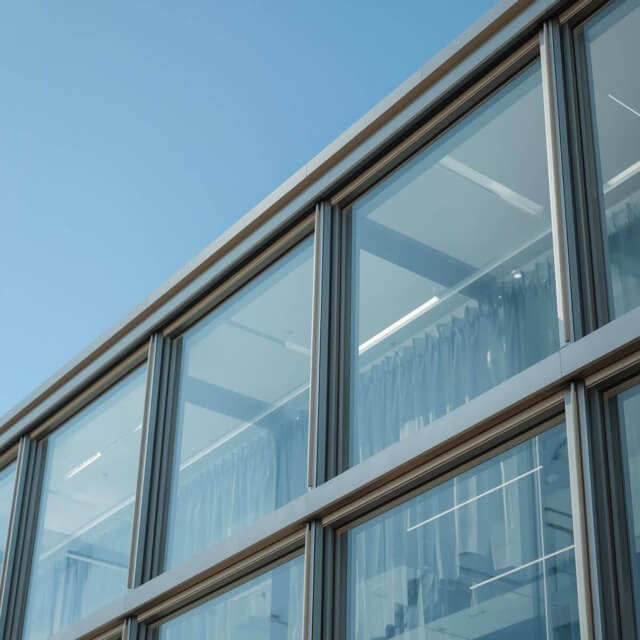
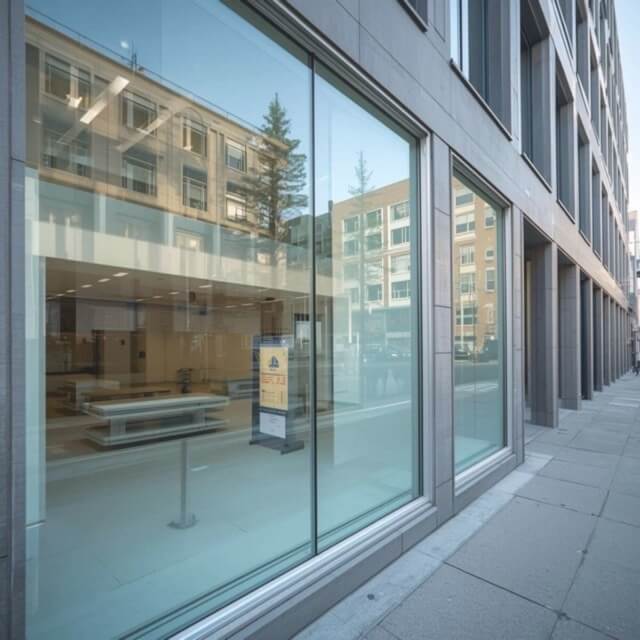
Building on the material foundations established above, blast resistant window systems are specified differently depending on the threat environment, standoff distances, regulatory requirements, and operational needs of specific facility types.
Industrial Facility Applications
Oil refineries, chemical plants, LNG facilities, and manufacturing operations face explosion threats from internal sources—vessel ruptures, vapor cloud deflagrations, and process accidents. These facilities require blast protection for control rooms, administration buildings, and any occupied structures within the potential blast radius.
Industrial blast threats present unique characteristics. Vapor cloud explosions typically produce lower peak pressures (often 2-6 PSI) but extended impulse durations that impose sustained loading on glazing systems. Internal vessel ruptures generate high pressures but shorter impulses. Windows must be designed to handle the specific threat scenarios identified in facility hazard assessments.
Integration requirements extend beyond the window system itself. Blast resistant windows in industrial settings connect with emergency response protocols, allowing safe sheltering during incidents. Site layout constraints often limit standoff distances, increasing required protection levels for buildings close to process units.
Government and Commercial Buildings
Federal buildings, embassies, courthouses, and critical infrastructure facilities must comply with Department of Defense (DoD) and General Services Administration (GSA) standards for anti-terrorism protection. These requirements define minimum glazing performance based on building category, occupancy, and threat assessment.
Commercial buildings in high-risk urban areas—financial districts, transportation hubs, and properties adjacent to potential targets—increasingly specify blast mitigation glazing as a security measure. The proximity to public roads, parking areas, and pedestrian zones often reduces available standoff distance, requiring higher protection levels to compensate.
Threat assessment directly determines protection level selection. A facility located 100 feet from vehicle access points faces different design basis threats than one with 500 feet of setback. Security professionals work with architects to translate threat analysis into specific pressure and impulse requirements that window systems must meet.
Residential Security Applications
High-security residences, executive protection facilities, and residential safe rooms represent a growing market for blast resistant glazing. These applications prioritize aesthetics alongside protection, requiring custom solutions that maintain residential appearance while providing genuine blast mitigation capability.
Aesthetic considerations significantly influence material and frame selection. Homeowners typically require minimal sightlines, clear vision, and integration with existing architectural styles. This often means accepting lower protection levels (GSA Condition 3a or 3b) in exchange for visual appeal and energy efficiency.
Custom designed solutions address residential requirements through careful material selection, frame finishing options (aluminum, steel, or hybrid profiles with architectural coatings), and integration with other security measures. Energy performance—U-factor and solar heat gain coefficient—requires attention to meet both comfort expectations and building codes.
Rating Standards and Selection Process
The complexity of blast protection standards reflects the technical challenge of predicting window behavior under explosive loading. Multiple standards exist, each developed for specific applications and testing different aspects of blast resistance.
Blast Rating Standards Comparison
| Standard | Primary Application | Test Method | Key Performance Metrics |
|---|---|---|---|
| UFC 4-010-01 (DoD) | Military and DoD facilities | Specifies design basis threats with explosive weights and standoff distances | Levels of Protection: Very Low, Low, Medium, High |
| GSA TS01-2003 / ISC | Federal civilian buildings | ASTM F1642 standard test method | Performance Conditions 1-5 (fragment distance classification) |
| ASTM F1642 | Universal testing standard | Air blast loading in controlled conditions | Pressure (PSI) and impulse (PSI-msec) at specified conditions |
| EN 13123 / EN 13124 | European applications | Shock tube and open-air blast testing | Classified resistance levels |
DoD UFC 4-010-01 establishes minimum requirements for all DoD construction and renovation projects. It defines protection levels based on acceptable damage and injury risk, with specific requirements that all windows and glazing must be designed to resist applicable pressures regardless of standoff distance.
GSA Performance Conditions classify glazing behavior by fragment hazard:
- Condition 1: No break
- Condition 2: Glazing cracks but is retained in frame
- Condition 3a: Fragments land within 3.3 feet of window
- Condition 3b: Fragments land within 10 feet of window
- Condition 4: Fragments strike witness panel at 2 feet or below
- Condition 5: Fragments strike witness panel above 2 feet
Building type determines which standard applies. DoD facilities follow UFC requirements. Federal civilian buildings use GSA/ISC criteria. Private commercial and industrial facilities often reference ASCE or adopt GSA standards voluntarily. International projects may require EN or ISO standard compliance.
Selection and Specification Process
The specification process follows a logical sequence from threat identification through final design integration:
- Conduct threat assessment: Identify potential explosive sources (charge weight and type), determine realistic standoff distances, and calculate incident and reflected pressures using established methodologies.
- Define required protection level: Based on risk tolerance, regulatory requirements, and stakeholder input, select target performance conditions (e.g., GSA Condition 3a, DoD Low Protection).
- Identify applicable standards: Determine which rating systems apply to your building type and jurisdiction; some projects require compliance with multiple standards.
- Select glazing materials and frame systems: Choose glass type (laminated, polycarbonate, hybrid), interlayer thickness, number of plies, frame profile, and anchorage method based on required pressure and impulse resistance.
- Verify design through testing or analysis: Review manufacturer test data for similar configurations or use predictive software tools to confirm that selected assemblies meet performance requirements.
- Integrate with architectural design: Coordinate window specifications with façade design, energy requirements, ventilation needs, and maintenance access while ensuring structural support is adequate.
- Develop installation specifications: Detail proper frame anchorage, glazing bite (frame overlap on glazing edge), gasket materials, and quality control procedures.
Consultation with blast resistant window manufacturers early in the design process prevents specification errors and identifies cost-effective solutions. Security professionals should review threat assessments, and structural engineers must verify that supporting walls and anchorage can resist the forces transferred through the frame system.
Common Challenges and Solutions
Implementation of blast resistant window systems presents predictable obstacles. Understanding these challenges in advance allows project teams to develop practical solutions during design rather than discovering problems during construction.
Retrofit Integration Difficulties
Existing buildings often lack the structural support required for blast resistant glazing. Frame anchorage must transfer significant forces to surrounding wall construction, and many older buildings have inadequate embedments, lightweight wall assemblies, or historic features that cannot be modified.
Solutions: Structural assessment early in project planning identifies deficiencies before design proceeds too far. Reinforcement options include adding steel sub-frames anchored to structural elements, installing secondary glazing systems inside existing windows, or applying retrofit security film as a lower-cost alternative accepting reduced protection. Historic buildings may benefit from interior secondary glazing that preserves exterior appearance while providing blast mitigation. Code compliance requires review by qualified engineers to ensure modifications meet both blast and building code requirements.
Cost and Budget Constraints
Blast resistant window systems cost significantly more than conventional glazing. Entry-level protection (EN 13123 Level 1) starts around $80-90 per square meter ($7-9 per square foot), while premium systems with high protection levels, operability, and thermal breaks may exceed $120-140 per square meter ($11-13 per square foot), plus structural modifications and specialized installation.
Solutions: Phased implementation allows spreading costs across multiple budget cycles, prioritizing highest-exposure façades first. Protection level optimization—selecting the minimum protection that addresses identified threats rather than over-specifying—reduces unnecessary expense. Threat assessment refinement may identify opportunities to increase standoff distance through site planning, reducing required protection levels. Value engineering with manufacturers can identify cost-effective alternatives that meet performance requirements.
Aesthetic and Functional Requirements
Blast protection requirements conflict with many architectural goals. Thicker glazing reduces light transmission, deeper frames increase visual obstruction, and laminated constructions may introduce optical distortion. Operable windows are significantly more difficult to make blast resistant than fixed glazing.
Solutions: Advanced interlayer materials (ionoplast, multi-ply PVB) improve clarity while maintaining protection. Minimal sightline frame profiles designed specifically for blast applications reduce visual impact. Thermal breaks integrated into frame construction address energy efficiency concerns. For operable requirements, manufacturers offer tested configurations (typically at lower pressure ratings) that provide both blast mitigation and functionality. Tinted or coated interlayers can address solar control while maintaining blast resistance.
Conclusion and Next Steps
Selecting blast resistant windows requires balancing protection requirements against practical constraints including budget, aesthetics, energy performance, and building structure limitations. The key decision factors are threat profile (defining required pressure and impulse resistance), applicable standards (determining test criteria and acceptance requirements), and integration needs (ensuring the window system works within the overall building design).
Immediate action steps:
- Commission a formal threat assessment identifying explosive sources, charge weights, and standoff distances relevant to your facility
- Determine which rating standards apply based on building type, ownership, and regulatory requirements
- Contact qualified blast resistant window manufacturers with preliminary requirements to understand available solutions and budget implications
- Engage structural engineers to assess existing or planned building construction for adequacy to support blast-rated systems
Related topics worth exploring include blast resistant doors (which must provide equivalent protection to maintain envelope integrity), blast resistant wall systems (particularly for new construction where integrated solutions offer advantages), and comprehensive building hardening approaches that address multiple threat types including forced entry, ballistic, and blast resistance in coordinated systems.
Frequently Asked Questions
What is the difference between blast resistant and bomb-proof windows?
“Blast resistant” describes windows designed and tested to withstand specified pressure and impulse loads while controlling glass fragmentation. Every blast resistant window has defined performance limits based on its rated pressure and impulse values. “Bomb-proof” is marketing terminology implying unlimited protection, which no product actually provides. Proper specification requires identifying the actual threat (charge weight and standoff) and selecting windows tested to resist those specific conditions.
How much do blast resistant windows cost per square foot?
Costs vary significantly based on protection level, size, operability, and frame material. Entry-level steel-framed fixed windows meeting EN 13123 Level 1 start around $7-9 per square foot. Mid-range systems meeting GSA Condition 3b or DoD Low Protection typically cost $15-25 per square foot. High-protection operable windows with thermal breaks and premium finishes may exceed $40-50 per square foot. Installation, structural modifications, and testing add additional project costs.
Can existing windows be upgraded for blast resistance?
Yes, through several approaches with varying effectiveness. Security film retrofit (applying laminated film to existing glass) provides limited protection at low cost but does not address frame and anchorage weaknesses. Glazing replacement (installing laminated glass in existing frames) improves fragment retention if frames have adequate bite and anchorage. Complete window replacement with blast-rated systems provides the most reliable protection but requires structural assessment to ensure wall construction can support the new systems.
What protection levels are recommended for different building types?
Recommendations depend on threat assessment rather than building type alone. General guidance: DoD and high-security government facilities typically require Medium to High protection (GSA Condition 2 or 3a). Commercial buildings in urban risk areas often specify Low to Medium protection (Condition 3b to 4). Industrial facilities vary based on proximity to process hazards—very high protection near process units, lower for support buildings with greater standoff. Residential applications commonly accept Condition 3a or 3b, balancing protection with aesthetics and cost.
How long does installation take for blast resistant window systems?
Installation duration depends on project scale, window type, and structural modifications required. Individual window units install similarly to conventional windows—typically 2-4 hours per opening for fixed glazing. Operable units and curtain wall systems require more time. Structural reinforcement for frame anchorage may add days to weeks depending on scope. Custom manufactured windows typically have 8-12 week lead times before installation begins. Complete façade replacement on large buildings may require months of phased installation.
Do blast resistant windows affect building energy efficiency and natural lighting?
Yes, though modern products minimize impact. Laminated glass with multiple interlayers reduces visible light transmission compared to clear single-pane glass—typically 70-80% transmission versus 90% for clear glass. Thicker assemblies increase thermal mass but may worsen U-factors if not designed with insulating glass units and thermal breaks. Manufacturers offer blast resistant windows with low-e coatings, argon-filled cavities, and thermally broken frames to meet energy code requirements. Specifying these features during design rather than as afterthoughts ensures both protection and energy performance goals are achieved.