Table of Contents
- Introduction
- Understanding Bullet Resistant Materials
- Types of Bullet Resistant Materials
- Advanced Selection and Implementation
- Common Challenges and Solutions
- Conclusion and Next Steps
- Frequently Asked Questions
Introduction
Bullet resistant materials are specially engineered substances—including metals, ceramics, composites, and transparent laminates—designed to absorb, deflect, or stop projectiles and provide ballistic protection for people and property. No material is truly “bulletproof”; instead, products labeled as bulletproof are actually bullet resistant, meaning they can withstand a certain number of rounds from bullets of specific calibers. These materials are used in a range of practical applications, including personal and architectural protection, as well as in armored vehicles.
This comprehensive guide covers the full spectrum of ballistic materials: material classifications, testing standards (NIJ, UL, EN), practical applications spanning body armor to architectural elements and vehicle armor, selection criteria based on threat assessment, and critical installation and maintenance considerations. Security professionals, architects, facility managers, and property owners facing decisions about protective barriers will find actionable guidance for their specific needs.
Direct answer: Bullet resistant materials work by dispersing kinetic energy through deformation, fracturing projectiles, or absorbing impact across multiple layers—with the right material choice depending entirely on the threat level, environment, weight constraints, and budget.
By the end of this guide, you will gain:
- Deep understanding of how different material types stop bullets and their protection mechanisms
- Familiarity with major ballistic standards (NIJ, UL, EN) and how to interpret protection levels
- Clear criteria for selecting the correct protection for specific threats and constraints
- Practical insights into weight, environmental durability, and multi-hit behavior
- Knowledge of cost drivers, installation challenges, and maintenance requirements
It is important to note that bulletproof products have limitations, and their protection level should always be evaluated according to established ballistic standards.
Understanding Bullet Resistant Materials
The distinction between “bulletproof” and “bullet resistant” matters critically for security planning. Every material has limits—for caliber, velocity, angle of impact, multi-hit behavior, and environmental degradation over time. Understanding how materials are tested and rated enables informed decisions that match protection to actual threats.
Ballistic Testing Standards
Three primary standards govern how bullet resistant materials are evaluated and classified:
NIJ (National Institute of Justice) Standards: The NIJ Standard 0108.01 classifies ballistic resistance performance for construction products, providing a framework for evaluating effectiveness. The previous NIJ Standard-0101.06 defined protection levels IIA, II, and IIIA for handguns, with III and IV for rifle threats. Level III testing uses 7.62×51mm NATO full-metal-jacket rounds at approximately 2,780 ft/s, while Level IV must stop armor-piercing .30-06 M2 AP bullets at roughly 2,880 ft/s. In April 2024, NIJ introduced Standards-0101.07 and 0123.00, reorganizing levels into “HG” (handgun) and “RF” (rifle) categories with intermediate rifle threat levels reflecting modern threat realities.
UL (Underwriters Laboratories) Classification: The Underwriter’s Laboratory has established eight levels of ballistic standards to evaluate bullet-resistant materials, providing a measurable way to assess effectiveness against specific threats. UL 752 specifically addresses architectural barriers—windows, walls, and doors—with lower levels resisting handgun threats and higher levels protecting against rifle or armor-piercing rounds. This standard defines ammunition types, shot counts, velocities, and addresses spall (fragment) concerns.
European Standards (EN 1063/EN 1522): These standards define classes BR1 through BR7 for glazing and cover windows, doors, and shutters, corresponding to specific calibers and velocities commonly referenced for transparent ballistic materials.
These standards connect directly to practical material selection: knowing your threat profile allows matching to the appropriate ballistic protection level defined by NIJ and UL 752, avoiding both under-protection (dangerous) and over-specification (costly and heavy).
How Bullet Resistant Materials Work
Ballistic protection operates on fundamental physics: a projectile carries kinetic energy (KE = ½mv²) that must be absorbed, dispersed, or redirected to prevent penetration.
Energy Absorption and Deflection: Materials stop bullets through several mechanisms. Hard materials like steel plates and ceramics can deform or shatter projectile tips, dissipating energy at the point of impact. Materials such as polyethylene and ceramic composites are valued for their excellent impact resistance, allowing them to absorb and disperse the kinetic energy of bullets effectively. Fiber-based materials like Kevlar absorb energy by stretching and delaminating across their structure. Transparent materials use multiple layers to spread shock waves progressively through the laminate stack.
Multi-Layer Protection Systems: Modern ballistic protection typically combines materials in layers. A hard front face (steel or ceramic) fractures or blunts the bullet while dissipating initial energy. Behind this, a backing layer of ductile or fiber-based material catches fragments and reduces penetration or backface trauma. Hard ceramic or steel plates are added to soft armor for high-risk tactical scenarios involving rifle threats.
Hardness vs. Toughness Trade-off: High hardness enables penetration resistance but often brings brittleness. Ceramics offer excellent protection by shattering incoming rounds, but may crack after a single impact. Metals provide toughness and multi-hit capability but add significant weight and may produce dangerous spall. Understanding this trade-off guides material selection for specific applications.
Types of Bullet Resistant Materials
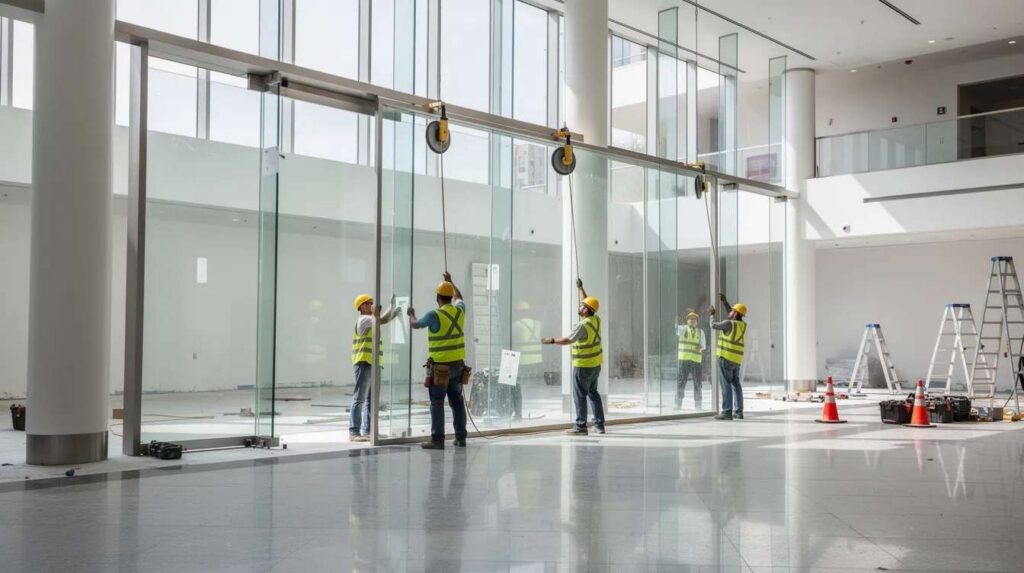
Each material class applies the protection principles above differently, with distinct advantages and limitations across weight, cost, durability, and application suitability. Traditional building materials like wood and steel have been used for structural purposes, but wood, while valued for its aesthetic and construction qualities, offers limited bullet resistance compared to modern solutions. Advanced bullet resistant materials, such as specialized metals, ceramics, and composites, provide a high level of protection against ballistic threats, significantly surpassing the defensive capabilities of traditional materials and helping specifiers compare different types of bulletproof materials ranked by performance.
Steel and Metal Alloys
Steel is a traditional bulletproof material known for its high strength and durability, with its bulletproof performance primarily determined by thickness and special surface treatment. Ballistic steel, often referred to as armor plate steel, is used for high-velocity protection in various applications.
AR500 Steel: This hardened steel achieves a Brinell Hardness Number (BHN) of approximately 460-540 HBW, with tensile strength around 1,655 MPa and yield strength near 1,480 MPa. However, steel weighs approximately 40.82 lb/ft² per inch of thickness—meaning even 0.5” AR500 steel approaches 20.4 lb/ft². This weight imposes significant structural loading on buildings and vehicles. Steel can be integrated into sustainable architecture due to its recyclability and energy efficiency.
Titanium Alloys: Grades such as Ti-6Al-4V offer high strength-to-weight ratios with densities around 4.4 g/cm³ compared to steel’s 7.8 g/cm³. Military applications favor titanium where weight reduction is premium, though costs remain significantly higher and fabrication more challenging.
Typical Applications: Blast walls, armored doors, shooting range barriers, and exterior building reinforcement. Steel is heavy and can be difficult to install, making it less aesthetically pleasing for buildings, but offers excellent durability and cost-effectiveness for Level III protection. Spall liners or coatings are essential to prevent dangerous fragment projection.
Advanced Ceramics
Ceramic materials, such as boron carbide and silicon carbide, are commonly used for bulletproofing due to their high hardness and ability to disperse the energy of bullets, making them effective at preventing penetration. Boron carbide is a hard, brittle ceramic material used to shatter bullets on impact. These ceramics are widely applied in armored vehicles and personal protective equipment, especially in military and security contexts.
Alumina (Al₂O₃): Density approximately 3.9 g/cm³ with hardness around 15 GPa Vickers. Entry-tier ceramic for Level III plates, offering lower cost but greater weight than advanced alternatives.
Silicon Carbide (SiC): Density approximately 3.2 g/cm³ with hardness around 26 GPa. Used in mid-to-premium Level III/III+ plates at 2-3× the cost of alumina but significantly lighter.
Boron Carbide (B₄C): Density approximately 2.5 g/cm³ with hardness around 35 GPa—the highest performance ceramic available. Used for Level IV armor stopping armor-piercing rounds. Typical Level IV plates (10”×12”) weigh approximately 5.5-7.5 lb with thickness around 0.5-0.9 inches using high-end ceramics.
Ceramic materials are lighter than steel and can effectively disperse the energy of bullets, but they are brittle and can crack after multiple impacts, requiring careful handling and installation, whereas lightweight bullet-resistant UL 752 wall panels offer an alternative for architectural retrofits where durability and ease of installation are priorities. Once a ceramic region is impacted, multi-hit capability in that spot diminishes significantly. Military vehicles utilize heavy-duty steel and ceramic armor systems to withstand high-velocity rounds and explosions.
Synthetic Fibers and Composites
Kevlar: This lightweight fiber material is used in bulletproof vests and helmets, known for its ability to absorb kinetic energy from bullets. Bulletproof materials are widely used in personal protection applications, including bulletproof vests, helmets, and shields, to safeguard individuals from ballistic threats. However, Kevlar may not be as effective against high-powered bullets compared to other materials and can degrade under UV exposure and moisture.
UHMWPE (Ultra-High-Molecular-Weight Polyethylene): Polyethylene (UHMWPE) is an even lighter material with high impact resistance, commonly used in modern concealable vests. These fibers achieve tensile strengths in the range of 2,400-3,500 MPa at densities around 0.97 g/cm³ (light enough to float on water), providing extremely high specific strength—approximately 15× steel by this metric. Environmental resistance is excellent: moisture absorption below 1%, operational range from -150°C to +80°C, with minimal degradation compared to aramid fibers.
Ballistic Fiberglass Panels: Ballistic fiberglass panels catch bullets through a delamination process, commonly used in building security applications and retrofitting workplace environments with advanced ballistic protection. Lightweight composites like UHMWPE and polycarbonate protect passengers in civilian armored cars without hindering mobility. Polycarbonate is a synthetic material—a type of thermoplastic polymer—valued for its impact resistance and transparency in protective applications.
Layering technique significantly impacts performance—fiber orientation, matrix choice, and ply construction all influence ballistic limits and failure modes.
Transparent Materials
Bulletproof glass and transparent barriers require balancing optical clarity with protection levels, presenting unique engineering challenges.
Polycarbonate: This transparent, high-strength plastic offers better impact resistance than ordinary glass, but it can yellow over time when exposed to ultraviolet rays, affecting its appearance and transparency; advanced polycarbonate glass security systems leverage these properties to provide forced-entry and ballistic protection while maintaining building aesthetics. Acrylic is a hard plastic typically used for low-level indoor protection, such as transaction windows.
Laminated Glass: Multiple layers of glass interleaved with polymer interlayers (PVB, ionoplast, or polycarbonate) create progressive energy absorption. Laminated glass is increasingly used in schools’ entry vestibules to enhance security during active threat situations.
Glass-Clad Polycarbonate (GCP): Glass-clad polycarbonate combines layers of glass and polycarbonate, providing a versatile solution with varying levels of ballistic resistance, but it can degrade over time due to UV exposure; for many projects, evaluating the best bulletproof glass options for ultimate ballistic resistance helps balance cost, weight, and performance.
Insulated Ballistic Glass: Insulated ballistic glass is a ballistic resistant material designed for properties requiring lower-level ballistic resistance, offering a balance between protection and energy efficiency.
Thickness Requirements: For small-handgun threats, ballistic glazing may be as thin as 6mm. For assault rifle threats (7.62×51mm NATO), thicknesses of 20-35mm are common. For high-stopping power or multi-shot rifle/API threats, glazing may exceed 70mm thickness. In the automotive industry, bulletproof materials are utilized for vehicle armor, providing protection for cars, military vehicles, and aircraft against ballistic attacks, while retrofit overglazing systems like BulletShield ballistic security panels protect existing doors and windows in fixed facilities.
Bulletproof materials are essential in building security, commonly used in the construction of bulletproof windows and doors and walls in high-risk environments such as banks, airports, and government facilities.
Advanced Selection and Implementation
Moving from material understanding to practical selection requires systematic evaluation of threats, constraints, and performance requirements.
Material Selection Process
Step 1: Conduct Threat Assessment Identify likely weapon systems, calibers, velocities, angles of impact, and expected shot counts. For buildings, consider probability of rifle threats based on location, crime data, or political risk. For police stations and government buildings, threats from large caliber handguns and rifles may be primary concerns.
Step 2: Determine Required Protection Level Map identified threats to NIJ HG/RF levels or UL/EN classes. Higher levels cost more and weigh more—avoid over-specification where rifle threats are genuinely unlikely.
Step 3: Evaluate Environmental Factors Consider UV exposure, temperature ranges, humidity, corrosion potential for metals, moisture effects on transparent laminates and fibers, and thermal cycling for indoor versus outdoor installations. Harsh environments demand materials with high temperature resistance and environmental stability.
Step 4: Calculate Weight and Space Constraints For architecture, assess structural support capacity. For vehicles, consider glazing weight impact on suspension and fuel efficiency. For body armor, evaluate wearer fatigue and required coverage area.
Step 5: Assess Budget and Maintenance Requirements Include initial material cost, installation cost, expected lifespan, inspection intervals, replacement protocols after impacts, and coating/cleaning requirements.
Application Comparison Matrix
| Criterion | Steel | Ceramics | Synthetic Fibers | Transparent Materials |
|---|---|---|---|---|
| Protection Level | Level III/III+ rifles | Level III+ to Level IV (AP) | HG levels, some RF1-RF2 | Handguns through rifles |
| Relative Weight | Heavy (~20 lb/ft² at 0.5”) | Medium-Light (with backing) | Very Light | Heavy (increases with level) |
| Relative Cost | Low-Medium | High | Medium | High |
| Durability | Very durable; rust/spall concerns | Cracks after impact; limited multi-hit | Good environmental resistance | Delamination; optical degradation |
| Best Applications | Exterior walls, doors, barriers | Hard armor plates, vehicle armor | Soft armor, interior panels, retrofits | Windows, vehicle glazing, secure counters |
| Selection Synthesis: Choose steel for budget-conscious perimeter protection where weight is manageable. Select ceramics when rifle/AP protection is required with weight constraints. Use synthetic fibers for personal protection or interior applications requiring flexibility. Specify transparent materials where visibility is essential—accepting higher costs and maintenance requirements. |
Special applications of bulletproof materials include protective panels for industrial equipment and space exploration, where high levels of impact resistance are required. Government facilities often require hybrid systems combining ceramic panels with fiber backings and transparent glazing for comprehensive protection, frequently incorporating bulletproof windows and doors with security window film to address both ballistic and forced-entry threats.
Common Challenges and Solutions
Implementing bullet resistant materials presents predictable obstacles with established solutions.
Weight and Structural Load Issues
Heavy steel or thick glazing causes significant load on frames, structural beams, and foundations. Over time, this can cause sagging or failure of supports.
Solution: Use lightweight ceramic-fiber composites where rifle protection is required. Conduct professional structural analysis before installation. Distribute load across multiple support points. Consider phased installation allowing incremental structural reinforcement. Avoid over-specification in lower-risk zones of a facility.
Environmental Degradation
Steel rusts without proper treatment. Aramid fibers degrade with UV and moisture exposure. Laminated glass delaminates over time. Polycarbonate yellows when exposed to UV rays.
Solution: Apply UV-resistant coatings and moisture barriers during installation. Select fiber types with superior environmental resistance (UHMWPE over aramid for exposed applications). Ensure proper edge sealing on glazing. Establish regular inspection schedules—quarterly for high-exposure installations, annually for protected interior applications. Replace degraded interlayers before failure occurs.
Cost and Budget Constraints
High-performance ceramics and rifle-rated transparent glazing represent significant investments, potentially exceeding project budgets.
Solution: Implement phased installation, prioritizing high-risk areas first (entry vestibules, reception areas, executive offices). Use cost-effective steel or polycarbonate in areas where rifle threats are unlikely. Explore hybrid material systems balancing cost against performance. Pursue bulk procurement for larger projects. Consider that the best bulletproof material for a specific application isn’t always the most expensive—it’s the one matching actual threat levels at sustainable cost.
Installation Complexity
Ballistic protection requires precision in framing, bonding, edge sealing, and avoiding stress points—particularly in glazing applications.
Solution: Work exclusively with certified installers experienced in ballistic materials. Conduct thorough pre-installation site surveys identifying structural limitations and installation challenges. Consider modular or prefabricated panels to reduce on-site complexity. Implement quality assurance testing after installation, including visual inspection and documentation for warranty purposes.
Conclusion and Next Steps
Proper bullet resistant material selection depends on accurate threat assessment, appropriate protection level determination, and careful matching of material properties to application constraints. Steel provides cost-effective protection where weight is acceptable. Ceramics deliver rifle and armor-piercing protection at lighter weights. Synthetic fibers enable flexible personal protection solutions. Transparent materials maintain visibility while providing calibrated protection levels.
Immediate Next Steps:
- Conduct a professional security assessment identifying realistic threats for your facility or application
- Determine required protection levels using NIJ, UL, or EN standards matching identified threats
- Request material samples and detailed specifications from qualified suppliers
- Obtain installation quotes from certified providers with demonstrated ballistic installation experience
- Plan for ongoing maintenance, inspection, and replacement protocols before installation begins
For comprehensive security planning, consider related protective measures including blast resistance, forced entry protection within a layered security strategy, and access control systems. The ASTM F3561-22 standard evaluates a barrier’s ability to resist forced entry after being subjected to a simulated active shooter attack, focusing on maintaining integrity to delay physical breaches rather than stopping bullets. Integrated security approaches combining ballistic protection with forced entry resistance and detection systems provide a layered defense appropriate for high-risk environments.
Frequently Asked Questions
What is the difference between bulletproof and bullet resistant materials?
“Bulletproof” suggests complete impermeability to all projectiles, which no material achieves. “Bullet resistant” accurately describes materials rated to withstand specific calibers and velocities for a certain number of impacts. All ballistic materials have limits—for caliber, velocity, angle of impact, multi-hit behavior, and environmental degradation. Responsible specification uses “bullet resistant” with specific protection level ratings.
Which bullet resistant material offers the best protection-to-weight ratio?
UHMWPE fibers and boron carbide ceramics offer the highest specific strength. Boron carbide is the lightest ceramic with extreme hardness (~35 GPa) and density of approximately 2.5 g/cm³. UHMWPE achieves tensile strengths of 2,400-3,500 MPa at densities around 0.97 g/cm³. When paired with appropriate backing materials, these represent the best bulletproof material choices for weight-sensitive applications requiring high protection levels.
How long do bullet resistant materials last before replacement?
Metal plates may last decades absent impacts, though require corrosion prevention. Ceramics need replacement after impact events. Transparent glazing typically suffers optical degradation or delamination after 10-20 years depending on UV exposure and environmental conditions. Fiber-based materials generally maintain performance well if protected from UV and moisture. Establish inspection schedules and replace materials showing degradation before protective capability diminishes.
Can bullet resistant materials be retrofitted to existing buildings?
Yes—steel or ceramic panels can be mounted to interior or exterior walls. Existing windows can be replaced with ballistic glazing or overlay systems. However, professional structural assessment is essential before installation. Frames and hardware must be compatible with new material weights. Working with experienced installers ensures retrofits maintain building envelope integrity while providing intended protection.
What maintenance is required for bullet resistant installations?
Clean surfaces regularly using appropriate non-abrasive methods. Repaint or recoat metal surfaces per manufacturer schedules. Inspect for cracks, delamination, moisture ingress, or coating degradation. Reseal glazing edges if seals show deterioration. Replace degraded interlayers in transparent materials. Document all inspections and maintenance activities. After any impact event, replace affected sections regardless of visible damage.
How much does bullet resistant material installation cost per square foot?
Costs vary significantly by material and protection level. Basic steel panels may range $20-$50/ft². Rifle-rated ceramic panels typically cost $200-$400+/ft². Transparent glazing costs escalate with protection level—handgun-rated glazing is significantly less expensive than rifle or AP-rated systems. Installation labor, structural reinforcement, and framing add substantial costs beyond raw materials. Obtain detailed quotes including all components for accurate budgeting.
Which materials work best for transparent applications like windows?
Laminated glass with polycarbonate or ionoplast interlayers provides the foundation for most architectural transparent protection. Glass-clad polycarbonate offers versatile protection levels suitable for a range of threats. For highest protection requirements where cost is secondary, transparent ceramics like aluminum oxynitride provide extreme performance. Selection depends on required protection level, optical clarity requirements, expected UV exposure, and budget constraints.
Are there building code requirements for bullet resistant materials?
Most U.S. jurisdictions lack specific building code sections mandating bullet resistance. Requirements typically appear in security standards, owner specifications, or industry guidelines rather than base building codes. UL, ASTM, and NFPA standards may be referenced. Coordination with safety and fire codes is essential—glazing must meet safety requirements (tempered, laminated), structural loads must comply with building codes, and egress requirements cannot be compromised. Consult local authorities having jurisdiction for specific project requirements.