Table of Contents
Luxury Retail Security in 2026: What’s Really Happening at the Storefront
Key Storefront Threats Facing Luxury Retailers Today
Designing a Luxury Storefront Security Strategy That Still Feels High-End
Storefront Hardening with Retrofit Security Glazing and Doors
Balancing Access Control, Technology, and Customer Experience
How Impact Security Helps Luxury Retailers Protect Storefronts
FAQs: Luxury Retail Storefront Security
Luxury Retail Security in 2026: What’s Really Happening at the Storefront
Luxury retail storefront security is no longer a background concern for store management – it’s a front-page operational priority. Luxury retailers face a 31% increase in theft-related crimes, and the attacks hitting flagship locations are faster, more coordinated, and more destructive than anything the luxury retail industry dealt with a decade ago. Between 2020 and 2025, smash-and-grab theft techniques surged across major U.S. cities, with a single Beverly Hills jewelry heist netting over US$2.6 million in broad daylight and flash-mob raids in Los Angeles producing losses between US$100,000 and US$300,000 per incident.
The vulnerability is almost always the same: large expanses of glass at street level, designed to showcase luxury goods like handbags, watches, and jewelry. These beautiful facades create a premium customer experience but also give organized theft rings a clear view of high-value merchandise and a fast breach point. Luxury retail requires balancing aesthetics with robust protection against crime – and that’s exactly what this article covers: how to harden existing storefronts with retrofit security glazing, layered access control, and advanced technology without compromising the brand experience. Impact Security, a U.S.-based manufacturer of retrofit systems like DefenseLite and BulletShield, specializes in solving this problem for luxury stores nationwide.
Key Storefront Threats Facing Luxury Retailers Today
Facilities and loss prevention teams at luxury retail stores are seeing a consistent pattern: attackers target the storefront glass, seize valuable merchandise fast, and exit before law enforcement can respond. Here are the core physical threats facing the industry right now:
- Smash-and-grab: Offenders shatter display windows or front doors with hammers, bricks, or spark plugs, reaching merchandise in seconds. Luxury retailers often experience smash-and-grab theft techniques because high-end items are easy to conceal and resell quickly on secondary marketplaces.
- Ram-raid / crash-and-grab: Stolen SUVs or trucks are driven directly into storefronts, exploiting standard tempered glass and aluminum framing. Chicago saw at least five ram-and-raid burglaries in a single week targeting high-end stores on the Magnificent Mile. In Seattle, a jewelry store lost approximately US$2 million in under two minutes during a single smash-and-grab.
- Kick-and-pry attacks: Forced entry through doors or sidelights using pry bars or crowbars, typically after hours.
- Coordinated flash-mob thefts: Organized retail crime rings conduct reconnaissance before thefts, then deploy 10–30 individuals who storm a boutique, grab luxury items from Louis Vuitton, Gucci, Cartier, and similar brands, and exit in under 60 seconds.
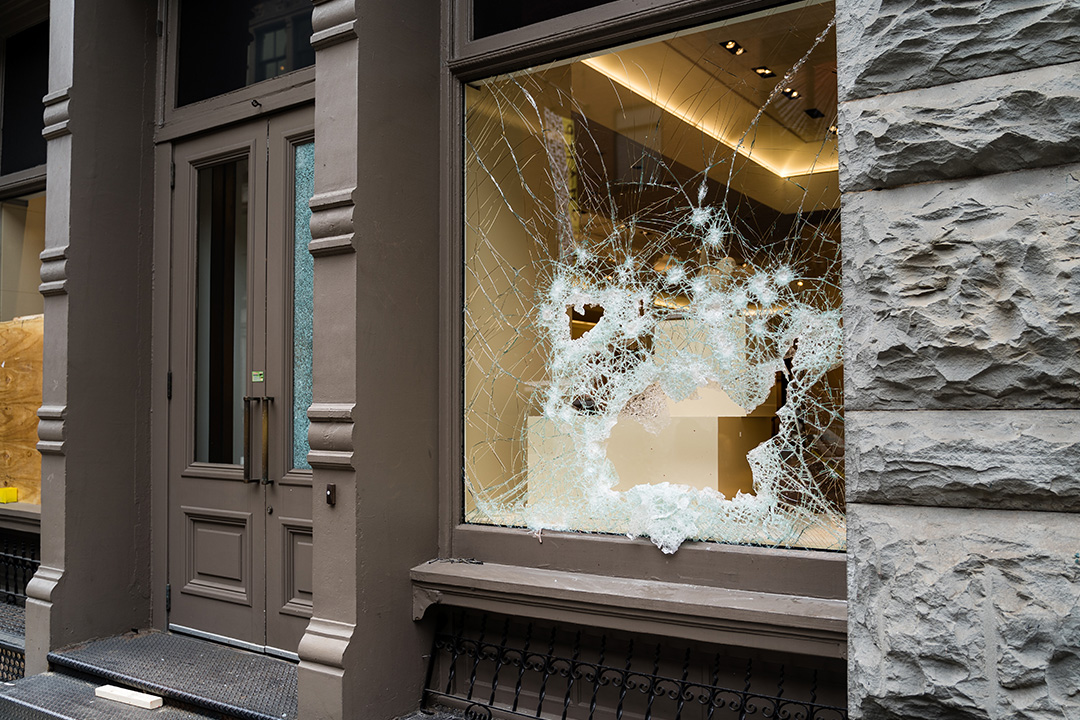
The US Jewelry Security Alliance reported 2,211 crimes last year, and the retail industry overall reported over US$112 billion in losses from organized retail crime and related theft in a recent year. Beyond theft, luxury brands on high-profile streets also face riot damage, vandalism, and politically motivated demonstrations. Cybercriminals target luxury brands for customer data theft as well, creating a digital-physical overlap where suspects coordinate via social media to plan which locations to hit. Electronic Article Surveillance (EAS) systems use tags that trigger alarm systems at exits, but they do little to stop a group that’s already breached the glass and plans to be gone in seconds.
Designing a Luxury Storefront Security Strategy That Still Feels High-End
The worst thing a luxury brand can do is turn its storefront into a fortress. Customers expect a positive shopping experience, not a checkpoint. The goal is a layered security strategy – what security professionals call “concentric rings” – that creates a secure environment without making it feel like one.
Luxury retail stores use a layered security strategy combining physical security, technology, trained staff, and operational procedures. Security teams develop tailored plans for each retail environment, working through three rings:
- Sidewalk and public realm: Bollards, planters, and bright façade lighting deter vehicle ramming and create stand-off distance. Surveillance cameras can help eliminate blind spots and monitor entrances from outside.
- Façade (glass, doors, frames): This is where retrofit security glazing, reinforced doors, and controlled access points restrict unauthorized entry to sensitive store areas.
- Interior: High-value items are secured in locked display cases or tethering systems. Staff manage flow, and store layout keeps the most expensive inventory away from the front line.
Deciding when and how to implement security measures often involves balancing customer comfort with theft prevention. Luxury retailers must balance security measures with inviting environments – and the choice of storefront security solutions for glass doors and windows matters enormously. Here’s how the main options compare:
| Option | Aesthetics | After-Hours Visibility | Disruption to Install | Relative Cost |
|---|---|---|---|---|
| Roll-down shutters/gates | Heavy, utilitarian | Blocks merchandising | Moderate | Moderate |
| Laminated glass replacement | Good | Full visibility | High (full tear-out) | High |
| Retrofit polycarbonate glazing (e.g., DefenseLite) | Nearly invisible | Full visibility | Low (over existing glass) | Moderate |
Many luxury brands want to keep window displays visible after hours, which makes ordinary shutters a poor fit. Consider a flagship jeweler rethinking its storefront after a 2024 smash-and-grab attempt: rather than boarding up, they pilot retrofit glazing on the most vulnerable display bays first, maintaining their brand presence on the street while dramatically increasing protection.
Storefront Hardening with Retrofit Security Glazing and Doors
The storefront glass is usually the first failure point in an attack and the fastest win when upgrading luxury retail security. Retrofit security glazing means mechanically attaching a clear polycarbonate overglaze security system over existing windows, creating a forced-entry resistant barrier without removing the storefront. Luxury retail security must preserve the client experience, and these systems do exactly that.
Impact Security’s DefenseLite security glazing system uses high-optical-grade, UV-coated polycarbonate mounted in a vented aluminum extrusion frame with structural adhesives and security-tipped anchors. In everyday terms, it’s a flexible, impact-absorbing shield – approximately 250 times stronger than standard glass – that resists repeated blows from hammers, bricks, and bats while the base glass behind it often stays intact. DefenseLite Pro impact security glazing delivers ASTM F3561 Level 8 forced-entry resistance.
Key features for luxury storefronts:
- BulletShield ballistic-rated retrofit: A ballistic-rated retrofit tested to UL 752 levels for locations where armed-robbery or active-shooter risk is a concern. This is a bullet-resistant glass alternative, not a conventional full-glass replacement.
- Virtually invisible installation: Shields are optically clear, frames are powder-coated or color-matched, and the system is compatible with existing aluminum curtain walls and glass doors.
- Minimal disruption: Installation avoids full tear-out, reducing downtime. It also provides UV reduction of approximately 99% and improved noise insulation, consistent with advanced DefenseLite polycarbonate security products.
- Door upgrades: AccessShield door lite re-glazing lets standard commercial doors accept protective panels without replacing the full assembly. Reinforced door frames, high-security locking hardware, crash bars, and buzz-in systems complete the entry hardening.

A practical rollout for retailers with multiple locations: start with the most vulnerable bays and doors at the highest-risk store, then standardize specs and extend DefenseLite across additional locations over 12–18 months as budget permits. Typical retrofit glazing costs run US$45–US$90 per square foot depending on threat level and site conditions, especially when specifying DefenseLite PRO retail security solutions.
Balancing Access Control, Technology, and Customer Experience
Luxury retailers often require customers to wait outside before entering, using controlled-entry tactics like buzz-in doors and appointment-only hours that feel exclusive rather than exclusionary. Access control systems limit entry during high-risk periods, while intercoms with cameras at main entries and remote unlock capability give store managers control without creating friction. Luxury brands require a higher level of customer service in security, and discreet security enhances the shopping experience without interruption.
Physical hardening works best alongside technology. Luxury retailers use surveillance cameras for security, and AI-powered video analytics monitor customer behavior in real-time – flagging crowding, loitering near display windows, or suspicious activity that could signal a smash-and-grab event forming at the entrance. Storefront lighting matters too: bright, even illumination around the façade with no dark recesses at doors eliminates hiding spots and deters after-hours break ins.
Staff are typically trained to recognize suspicious behavior and de-escalate confrontations. Training employees on security protocols enhances theft prevention across the entire retail store. Luxury retail security personnel deter theft and manage risk while security personnel enhance customer experience without disrupting shopping. Trained security staff monitor for suspicious behavior in stores, and luxury security guards maintain a discreet yet visible presence. Security professionals are trained to blend into premium environments so the brand experience stays intact. Established protocols for incident response can ensure effective and safe actions during emergencies. Sharing footage and incident data with law enforcement and regional retail coalitions helps identify repeat offenders and address patterns quickly.
How Impact Security Helps Luxury Retailers Protect Storefronts
Impact Security is a specialized U.S. partner for luxury retail storefront security, focused on strengthening existing glass with engineered retrofit systems rather than costly full replacements. Core offerings for luxury retailers include:
- DefenseLite Pro – forced-entry and smash-and-grab protection
- BulletShield – ballistic mitigation for high-risk locations
- RiotLite – civil-unrest and riot damage protection
- SafeSuite – custom safe-room and secure-display applications
The typical project process starts with an on-site risk assessment at the retail store, followed by engineering and fabrication at U.S. facilities in Marietta, GA and Glendale, AZ, professional installation by certified dealers, and ongoing warranty and service support with coverage up to 15 years. Every system is designed with aesthetic sensitivity for luxury brands – custom framing finishes, low-profile hardware, and alignment with architectural details so the protection is visually unobtrusive from both sidewalk and interior.
Impact Security works with national retail chains, luxury boutiques, and property owners in high-risk corridors across major metropolitan areas. If you’re a facilities director, loss prevention leader, or property manager responsible for protecting luxury store locations, request a free storefront security assessment from Impact Security to identify your most vulnerable points and get a clear plan to address them.
FAQs: Luxury Retail Storefront Security
These FAQs address the most common questions Impact Security hears from luxury retail store executives, facilities teams, and security professionals evaluating storefront upgrades.
How is luxury retail security different from standard retail security?
Luxury retail involves fewer, higher-value items per square foot, stronger brand expectations, and customers who expect a world-class shopping experience. Security solutions must deliver a high level of protection with minimal visual impact – stronger than standard retail but far more discreet.
Can we improve storefront security without replacing all of our glass?
Yes. Retrofit security glazing like DefenseLite and BulletShield FAQs explain how these systems are engineered to mount over existing glass, avoiding full replacement. This saves significant cost, reduces installation hours, and dramatically increases forced-entry resistance across your most vulnerable assets.
Will security glazing make our storefront look “bulky” or change the customer experience?
Modern polycarbonate shields are optically clear, low-profile, and designed to blend with existing framing. Most customers never notice the system unless it’s pointed out. Frame finishes can be color-matched to protect the store’s visual identity and inventory presentation.
How does security glazing perform against smash-and-grab or ram-raid attacks?
The flexible shield absorbs and redistributes impact energy, staying in place after repeated blows. While the shield may deform under extreme force, it is engineered to deny quick entry – buying critical minutes for law enforcement response and preventing the rapid merchandise grab that makes these incidents so costly.
Is this type of storefront security compatible with historic or architecturally significant buildings?
Retrofit systems mechanically attach to existing frames and can be custom-designed to respect heritage façades. Where full glass replacement is restricted by preservation rules, overglaze shields offer a way to create strong protection while maintaining the building’s original character.
How quickly can a luxury retail chain roll out storefront upgrades across multiple locations?
After an initial pilot and engineering phase, fabrication and installation can be standardized and phased store by store. Installation is typically scheduled during off-hours to avoid disrupting sales or the in-store shopping event. A range of certified installers nationwide enables faster scaling across geographies based on risk priority.